
The narrative of modern computing is inextricably linked with the story of Microsoft. More than just a company, Microsoft embodies the relentless pursuit of making complex technology accessible, shaping paradigms, and powering the digital revolution. Its inception was not merely a corporate event but a pivotal moment that would redefine how humanity interacted with machines, ushering in the era of personal computing. To understand the monumental impact and enduring legacy of this tech titan, one must first look back to its humble beginnings, to a time when the digital frontier was vast and largely uncharted.
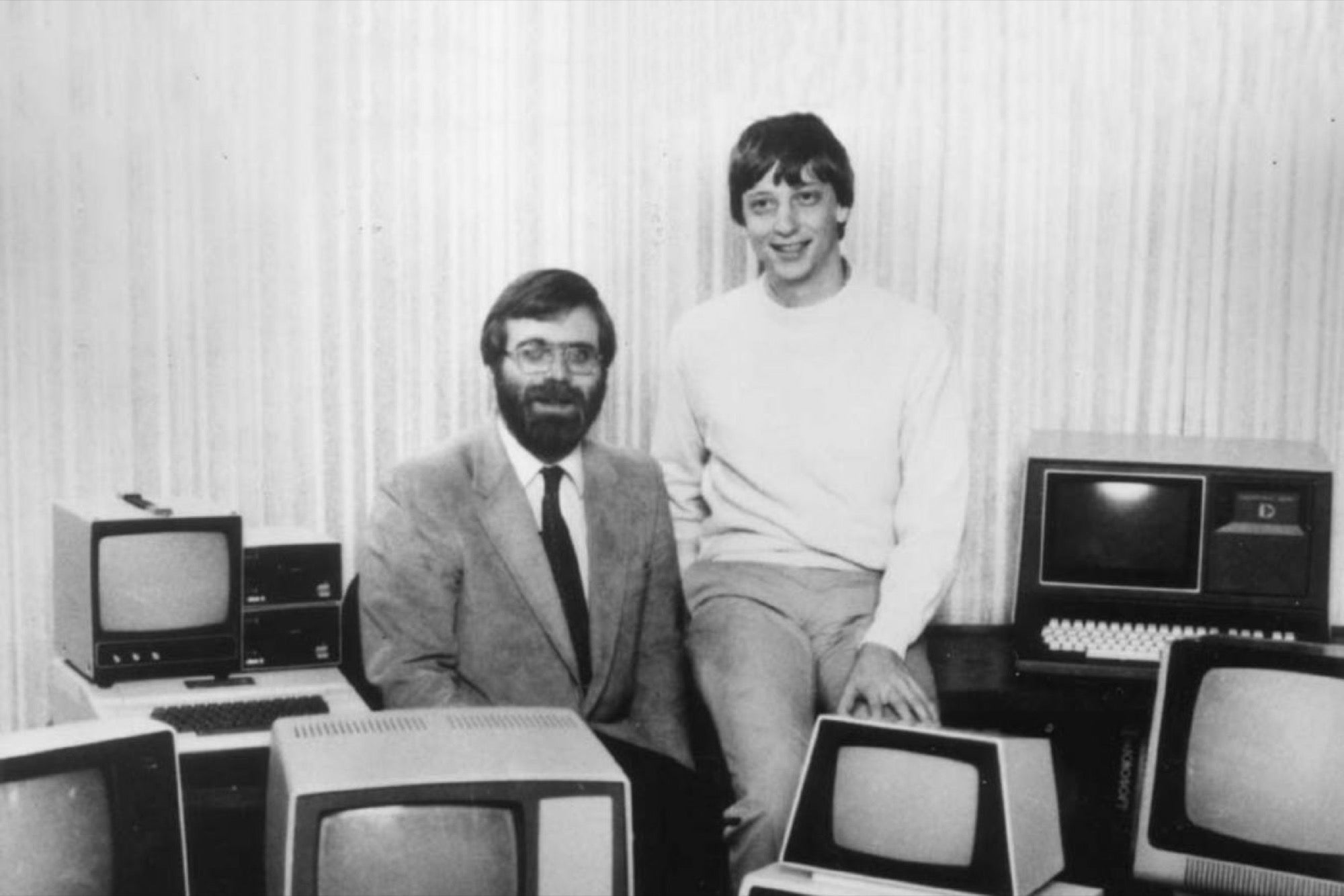
Microsoft was officially founded on April 4, 1975, by Bill Gates and Paul Allen in Albuquerque, New Mexico. This date marks the formal establishment of what would become the world’s largest software company, a firm whose influence would extend into nearly every facet of digital life. Their journey began not with a grand corporate strategy, but with a shared passion for computing and a prescient vision that software, not just hardware, would be the true catalyst for the computing revolution. In an era dominated by mainframe computers and the nascent stirrings of microprocessors, Gates and Allen saw a future where computers would be ubiquitous, powered by accessible and intuitive software. Their founding act was a direct response to this emerging opportunity, laying the groundwork for an enterprise that would grow to dominate operating systems, productivity software, and ultimately, cloud computing and artificial intelligence.
The Genesis of a Software Empire
The mid-1970s was a period of burgeoning innovation in electronics, particularly with the advent of microprocessors. This technological leap created an entirely new market segment: personal computers. Before they became a household staple, personal computers were the domain of hobbyists and enthusiasts, largely due to the lack of readily available and easy-to-use software. It was into this fertile ground that Bill Gates and Paul Allen, two childhood friends with an extraordinary knack for programming, planted the seeds of Microsoft.
A Shared Vision: Gates, Allen, and the Altair 8800
The spark that ignited Microsoft was the December 1974 issue of Popular Electronics, featuring the MITS Altair 8800. This microcomputer, built around Intel’s 8080 microprocessor, was heralded as the first affordable personal computer. For Gates and Allen, then students and former students at Harvard and Washington State University respectively, the Altair wasn’t just another gadget; it was a revelation. They instantly recognized its potential and, more crucially, its critical need for software. Without a programming language, the Altair was little more than an elaborate box of blinking lights.
Allen proposed to Gates that they could write a BASIC interpreter for the Altair, a high-level programming language that would make the machine accessible to a much broader audience than just electrical engineers. BASIC (Beginner’s All-purpose Symbolic Instruction Code) was already popular on minicomputers, known for its relative simplicity. Gates and Allen believed they could port it to the microcomputer architecture. Despite not having an Altair machine themselves, they plunged into development, with Allen flying to Albuquerque to demonstrate their interpreter. Against all odds, their BASIC interpreter worked, albeit after a frantic debugging session on a real Altair just hours before the presentation. This demonstration was a resounding success, leading MITS to license their software. The success of Altair BASIC was the first tangible validation of their vision and the very first product of what would soon be called “Micro-Soft” (a portmanteau of “microcomputer” and “software”).
The BASIC Breakthrough: A Foundational Product
Altair BASIC was more than just a successful initial product; it was a foundational piece of technology that proved the viability of software as a standalone industry. Before this, most software was custom-built for specific hardware by the hardware manufacturers themselves. Gates and Allen’s interpreter demonstrated that independent software vendors could create essential tools for general-purpose computers. This concept was revolutionary. Their BASIC interpreter not only provided a user-friendly interface for the Altair but also set a precedent for how software would be developed and distributed in the burgeoning personal computing market.
The early version of BASIC was technically advanced for its time, fitting into the Altair’s extremely limited memory. It allowed users to write, run, and debug programs directly on their personal computers, transforming the Altair from a complex hobbyist kit into a programmable device with real utility. This established Microsoft’s reputation early on as a company capable of delivering robust and innovative software solutions, a reputation that would serve them well in the years to come. The financial success from Altair BASIC provided the initial capital and confidence for Gates and Allen to formalize their partnership and expand their ambitions beyond a single product.
From Albuquerque to Redmond: Early Growth and Relocation
In its nascent stages, Microsoft operated out of Albuquerque, the home of MITS. This geographic proximity was strategic, allowing Gates and Allen to work closely with their primary client and refine their BASIC interpreter. However, as Microsoft grew and began to license its BASIC to other computer manufacturers, the limitations of their location became apparent. The technology talent pool in New Mexico was constrained, and their long-term vision extended far beyond merely supplying MITS.
By 1979, with a burgeoning client list that included Apple, Commodore, and Radio Shack, Microsoft had outgrown its original home. The decision was made to relocate to Bellevue, Washington, closer to the vibrant technology hub of Seattle, where both Gates and Allen had grown up. This move was crucial for attracting top engineering talent and positioning the company for its next phase of exponential growth. The relocation marked Microsoft’s transition from a promising startup to a serious player in the nascent software industry, ready to tackle larger challenges and seize even bigger opportunities.
Paving the Way for Personal Computing
The late 1970s and early 1980s were a crucible for the personal computer industry. Several companies were vying for dominance, but a cohesive vision for what a “personal computer” truly entailed, particularly on the software side, was still evolving. Microsoft, with its early success in programming languages, was uniquely positioned to play a critical role in standardizing and democratizing this technology.
The IBM PC Deal: A Pivotal Moment
Perhaps the single most impactful event in Microsoft’s early history, and indeed in the history of personal computing, was its partnership with IBM in 1980. IBM, the established giant of mainframe computing, was late to the personal computer game but recognized its growing importance. They approached Microsoft not for a programming language, but for an operating system for their forthcoming “IBM Personal Computer.” Crucially, IBM initially wanted Microsoft to provide the entire software stack—operating system, programming languages, and applications.
Gates, with characteristic foresight, recognized the immense leverage in owning the operating system. He famously directed IBM to another company for an operating system, but when that deal fell through, he quickly secured a license for a rudimentary operating system called 86-DOS (later Quick and Dirty Operating System, or QDOS) from Seattle Computer Products, purchased it outright for $50,000, and modified it to meet IBM’s specifications. This became PC-DOS for IBM. The genius of Gates’s strategy lay in the licensing agreement: Microsoft retained the rights to market the operating system to other computer manufacturers. This decision was a masterstroke that would fundamentally alter the trajectory of both Microsoft and the entire personal computing industry.
MS-DOS: The Operating System That Defined an Era
The operating system Microsoft provided for the IBM PC was rebranded as MS-DOS (Microsoft Disk Operating System) when licensed to other hardware vendors. IBM’s entry into the personal computer market legitimized the industry and spurred a wave of “IBM PC compatibles” – computers built by other manufacturers that could run the same software as the IBM PC. Because Microsoft retained the rights to MS-DOS and licensed it widely, MS-DOS quickly became the de facto standard operating system for these compatible machines.
MS-DOS, though command-line driven and often perceived as archaic by today’s standards, was revolutionary for its time. It provided a common software platform that allowed developers to write applications that could run on a vast array of different hardware configurations. This standardization fueled an explosion in software development, making personal computers exponentially more useful and appealing to businesses and individuals. From word processors to spreadsheets to databases, a rich ecosystem of applications flourished, all running atop MS-DOS. The ubiquity of MS-DOS cemented Microsoft’s position as a central and indispensable player in the computing world, generating massive revenue and giving the company unparalleled influence over the future direction of technology.

Early Software Innovation: Word, Excel, and Graphical Interfaces
While MS-DOS was the backbone, Microsoft was also simultaneously investing heavily in application software. Recognizing the need for powerful tools that leveraged the capabilities of personal computers, the company embarked on developing what would become its hallmark productivity suite. Word for MS-DOS was released in 1983, followed by Excel for the Macintosh in 1985 (and later for Windows). These applications, alongside others like PowerPoint, would eventually form the core of Microsoft Office.
More significantly, Microsoft began to recognize the limitations of the command-line interface. Inspired by the graphical user interfaces (GUIs) pioneered by Xerox PARC and popularized by Apple’s Macintosh, Microsoft started developing its own GUI. The first version of Microsoft Windows, released in 1985, was an ambitious attempt to bring a more intuitive, visual computing experience to PC users. While early versions of Windows were not immediate successes and largely ran atop MS-DOS, they demonstrated Microsoft’s commitment to pushing the technological envelope and laying the groundwork for a more user-friendly computing future. This early foray into GUI development was a crucial step towards the widespread adoption of personal computers by the general public, moving beyond the technically savvy.
Beyond the Founding: Establishing Market Dominance
Microsoft’s founding years laid the essential groundwork, but the subsequent decade saw the company leverage its initial successes to achieve unprecedented market dominance, fundamentally shaping the global technology landscape.
Windows: Democratizing Computing for the Masses
The true turning point for Microsoft and the widespread adoption of graphical user interfaces came with the release of Windows 3.0 in 1990. This version was a significant leap forward, offering a more stable and user-friendly experience than its predecessors. It was the first version of Windows to achieve broad commercial success, selling millions of copies and proving that the GUI was not just a niche feature but the future of computing for the masses. Windows 3.0 was swiftly followed by Windows 3.1, further solidifying its position.
The impact of Windows was transformative. It lowered the barrier to entry for computer usage, moving away from arcane commands to intuitive icons, menus, and mouse clicks. This democratization of computing made personal computers accessible to a much broader demographic, from office workers to students to home users. Windows became the standard, enabling a vast ecosystem of software and hardware development that profoundly accelerated technological progress and digital literacy worldwide. The revenue generated by Windows propelled Microsoft into an unparalleled position of power and influence.
The Rise of the Software Ecosystem
Microsoft’s strategic approach extended beyond just operating systems and productivity applications. The company fostered a thriving software ecosystem. By providing robust development tools, comprehensive documentation, and a massive user base, Microsoft encouraged independent software vendors (ISVs) to create applications for its platforms. This symbiotic relationship meant that as Windows gained users, more applications became available for Windows, which in turn attracted more users. It was a powerful network effect that amplified Microsoft’s dominance.
The company also invested in strategic partnerships and acquisitions, expanding its portfolio to include database management systems (SQL Server), development environments (Visual Studio), and later, gaming (Xbox) and enterprise solutions. This continuous expansion and ecosystem building ensured that Microsoft remained at the center of the computing world, constantly adapting and integrating new technologies into its pervasive platforms.
Strategic Partnerships and Early Competitors
Microsoft’s journey was also defined by its complex relationships with partners and competitors. The IBM partnership, while initially beneficial, eventually led to competition as IBM developed its own OS/2 operating system. However, Microsoft’s broader licensing strategy for MS-DOS and then Windows ensured its platform reached far more manufacturers than IBM’s, ultimately winning the operating system war.
Competitors like Apple, with its innovative Macintosh, presented a different challenge. While the Mac offered a superior GUI experience in its early days, its closed architecture and higher price point limited its market share compared to the open, more affordable PC platform running Windows. Microsoft also faced competition in various application categories, but its comprehensive suite and deep integration with the operating system often gave it a significant advantage. These competitive dynamics pushed Microsoft to innovate constantly, driving the evolution of both its products and the broader tech industry.
The Enduring Legacy of an Early Start
Microsoft’s founding was not merely the birth of a company; it was a seminal event that catalyzed the personal computing revolution. The vision, strategic decisions, and relentless innovation demonstrated by Gates, Allen, and their early teams laid a foundation that continues to influence the digital world today.
Cultivating a Culture of Innovation
From its earliest days, Microsoft fostered a culture deeply rooted in engineering excellence and innovation. The intense drive to solve complex technical problems, from fitting BASIC into limited memory to developing a robust graphical operating system, defined its early ethos. This culture attracted brilliant minds and encouraged a relentless pursuit of new technologies. While the company’s size and market power grew, this foundational commitment to R&D and product development remained a core tenet, albeit evolving over time. The early lessons learned about speed, adaptability, and the critical importance of software were ingrained into the company’s DNA, enabling it to navigate subsequent technological shifts.
Impact on the Global Technology Landscape
The impact of Microsoft’s early strategies—particularly its approach to operating system licensing and ecosystem development—cannot be overstated. By standardizing the software platform for personal computers, Microsoft accelerated the adoption of technology globally. It created countless opportunities for other businesses, from hardware manufacturers to software developers, IT professionals, and service providers. The PC revolution, powered largely by MS-DOS and then Windows, transformed industries, education, and daily life, setting the stage for the internet age and the subsequent explosion of digital innovation. Microsoft’s early vision of “a computer on every desk and in every home” became a reality, thanks to the foundational work done in its first decade.

Lessons from Microsoft’s Origin Story
The story of Microsoft’s founding offers valuable lessons for entrepreneurs and technologists alike. It highlights the importance of:
- Visionary leadership: Gates and Allen saw the future of personal computing before many others.
- Strategic acumen: The IBM deal and the licensing model for MS-DOS showcased brilliant business strategy within the tech domain.
- Technical excellence: Delivering robust and functional software was paramount to gaining traction.
- Adaptability: Evolving from programming languages to operating systems to graphical interfaces demonstrated a crucial ability to pivot and innovate.
- Ecosystem building: Creating a platform that supports and empowers other developers is a powerful multiplier.
In retrospect, the founding of Microsoft on April 4, 1975, was far more than a simple business registration. It was the moment a powerful idea took root, an idea that software would unlock the true potential of hardware, making computing accessible and transformative for billions worldwide. This early start, driven by two young visionaries, forever altered the course of technological development and laid the groundwork for the digital age we inhabit today.
aViewFromTheCave is a participant in the Amazon Services LLC Associates Program, an affiliate advertising program designed to provide a means for sites to earn advertising fees by advertising and linking to Amazon.com. Amazon, the Amazon logo, AmazonSupply, and the AmazonSupply logo are trademarks of Amazon.com, Inc. or its affiliates. As an Amazon Associate we earn affiliate commissions from qualifying purchases.