
The stock market, a complex tapestry woven from economic indicators, corporate performance, geopolitical events, and human psychology, is in a perpetual state of flux. Understanding its current drivers is paramount for investors, analysts, and anyone with a stake in global finance. Today’s market movements are not dictated by a single factor but rather a confluence of powerful forces, each interacting and influencing the others. From the actions of central banks to the latest tech innovation, and from global conflicts to shifts in investor sentiment, deciphering these dynamics is key to navigating the investment landscape. This article delves into the primary catalysts currently shaping the stock market, offering an insightful and professional perspective on the forces at play.

Macroeconomic Undercurrents: The Federal Reserve’s Grip
Perhaps no single entity holds more sway over the immediate and medium-term direction of the stock market than a nation’s central bank. In the U.S., the Federal Reserve’s monetary policy decisions ripple through every facet of the economy, directly impacting everything from corporate borrowing costs to consumer spending power and, consequently, equity valuations.
Inflationary Pressures and Interest Rate Hikes
A dominant theme in recent years has been the fight against inflation. Following periods of unprecedented monetary stimulus and supply chain disruptions, inflation surged, prompting central banks worldwide to adopt a hawkish stance. The Federal Reserve, in particular, embarked on a series of aggressive interest rate hikes aimed at cooling the economy and bringing price stability back into target ranges.
These rate hikes have profound implications for the stock market. Higher interest rates increase the cost of borrowing for companies, affecting their profitability and investment plans. For growth-oriented companies, whose valuations often hinge on future earnings, higher discount rates used in valuation models can significantly depress their present value. Similarly, higher rates make bonds more attractive as an alternative investment, drawing capital away from equities, especially those perceived as riskier. The market constantly scrutinizes inflation data – such as the Consumer Price Index (CPI) and Producer Price Index (PPI) – and the Fed’s subsequent policy statements for clues about future rate trajectories, reacting swiftly to any surprises. The narrative around “higher for longer” interest rates has been a significant headwind for parts of the market, particularly sectors sensitive to debt financing and future growth projections.
Employment and Consumer Spending Dynamics
The health of the labor market and consumer spending are critical barometers for the overall economy and, by extension, the stock market. A robust job market, characterized by low unemployment rates and consistent wage growth, typically signals a strong economy capable of driving corporate earnings. When people are employed and earning, they tend to spend, fueling demand for goods and services, which benefits businesses.
However, in an inflationary environment, a strong labor market can also be a double-edged sword. Persistent wage growth can contribute to “wage-price spirals,” making the Fed’s job of taming inflation more challenging and potentially necessitating further rate hikes. Therefore, the market carefully watches employment reports, such as non-farm payrolls and unemployment rates, alongside retail sales data and consumer confidence surveys. These indicators provide insight into the consumer’s ability and willingness to spend, which accounts for a substantial portion of economic activity. Any signs of weakening in these areas could signal an impending economic slowdown or recession, often leading to market apprehension, while sustained strength might indicate resilience, albeit with potential inflationary implications that worry the Fed.
GDP Growth and Recessionary Fears
Gross Domestic Product (GDP) growth is the broadest measure of a country’s economic activity. Positive GDP growth indicates an expanding economy, suggesting increased corporate revenues and profits, which generally bodes well for the stock market. Conversely, stagnant or negative GDP growth signals an economic contraction, often triggering fears of a recession.
Recessions are typically characterized by declining corporate earnings, increased unemployment, and reduced consumer spending, all of which are detrimental to stock valuations. The market is inherently forward-looking, meaning it often anticipates economic slowdowns or recoveries long before they are officially declared. Investors constantly weigh the probability of a “soft landing” – where inflation is controlled without a severe recession – against the risk of a deeper downturn. Signals from leading economic indicators, manufacturing and services PMIs, and analyst forecasts for corporate earnings are all scrutinized for clues about the economy’s trajectory and its potential impact on the stock market’s performance.
Corporate Performance and Sectoral Shifts
While macroeconomic factors set the broader stage, the fundamental performance of individual companies and specific industry sectors remains a primary driver of stock market movements. Investors ultimately buy shares in businesses, and those businesses’ ability to generate profits, innovate, and grow is crucial.
Earnings Reports and Future Guidance
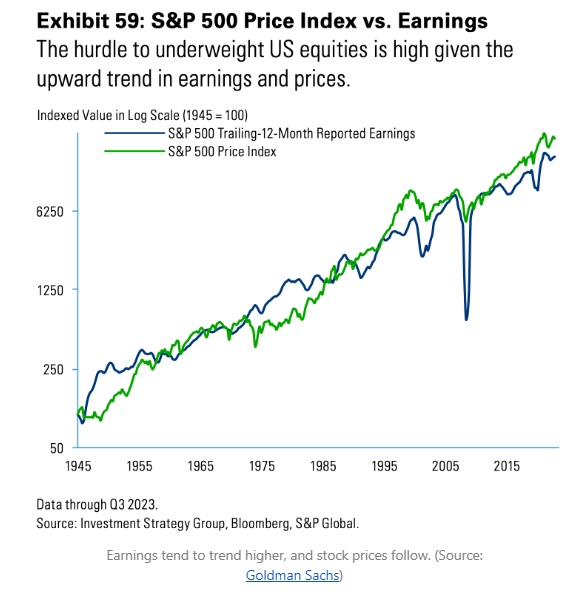
The quarterly earnings season is a pivotal period for the stock market. Companies report their financial results, detailing revenues, profits, and expenses, and crucially, provide guidance for their future performance. Strong earnings beats, coupled with optimistic forward guidance, can send a company’s stock soaring and often lift entire sectors. Conversely, earnings misses or downgraded outlooks can lead to sharp declines.
Beyond the headline numbers, investors dig into the details: profit margins, free cash flow, and management’s commentary on market conditions, competitive landscapes, and strategic initiatives. In an environment of economic uncertainty, guidance becomes even more critical, as it offers a glimpse into how corporate leaders perceive the economic winds ahead. Companies that demonstrate resilience, cost control, and the ability to pass on higher costs to consumers are often rewarded, while those struggling with profitability or demand weakness face investor skepticism.
Valuations and Market Concentration
Valuation metrics, such as Price-to-Earnings (P/E) ratios, Price-to-Sales (P/S) ratios, and Enterprise Value to EBITDA, are essential tools investors use to determine if a stock is fairly priced, overvalued, or undervalued. In periods of high market enthusiasm, valuations can become stretched, indicating that future growth expectations are already baked into the price, leaving less room for upside. When interest rates are higher, investors tend to demand lower valuations for the same level of earnings, as the risk-free rate of return (e.g., from bonds) becomes more attractive.
A notable characteristic of the modern stock market has been the increasing concentration of market capitalization in a handful of large-cap companies, particularly within the technology sector. These “mega-cap” stocks often have outsized influence on broad market indices like the S&P 500. Their strong earnings, dominant market positions, and ability to generate free cash flow have made them attractive, but their collective performance also means that the overall market’s direction is heavily dependent on these few giants. Shifts in investor sentiment towards these concentrated leaders can have a disproportionate impact on overall market performance.
Technological Innovation as a Market Catalyst
Technological innovation, while not an independent niche in this context, undeniably serves as a powerful catalyst for specific sectors and, consequently, the broader stock market. Breakthroughs in areas like artificial intelligence (AI), semiconductors, cloud computing, biotechnology, and renewable energy create new industries, disrupt existing ones, and open vast new markets.
Companies at the forefront of these innovations often experience rapid growth in revenue and profitability, attracting significant investor capital. For instance, the recent surge of interest in AI has propelled the valuations of companies involved in AI development, hardware (like advanced chips), and software solutions. This enthusiasm can lead to sector-specific rallies, where investors flock to capitalize on perceived future growth. However, it also introduces volatility, as expectations can run high, and market participants may try to discern which companies are genuine long-term beneficiaries versus those simply riding a speculative wave. The financial implications of these technological advancements – their ability to create new revenue streams, improve efficiency, and capture market share – are what make them such a potent driver for specific segments of the stock market.
Geopolitical Landscape and Global Interdependencies
In an increasingly interconnected world, geopolitical events and international relations cast long shadows over financial markets. Conflicts, trade disputes, and shifts in global power dynamics can introduce significant uncertainty, disrupt supply chains, and impact commodity prices, all of which directly influence corporate profitability and investor confidence.
International Conflicts and Supply Chain Disruptions
Major international conflicts, such as regional wars or prolonged political instability, have immediate and far-reaching consequences for the stock market. They can disrupt the flow of goods and services, leading to supply chain bottlenecks, driving up costs for businesses, and impacting their ability to deliver products. Energy prices, in particular, are highly sensitive to geopolitical tensions, with spikes in oil and natural gas prices impacting transportation costs, manufacturing expenses, and consumer discretionary spending.
Beyond direct conflict, trade disputes and protectionist policies can erect barriers to international commerce, affecting the revenues of multinational corporations and altering global economic growth forecasts. The market reacts to these events with heightened volatility, as investors attempt to price in the risks of disrupted operations, reduced demand, and increased input costs. Companies with significant international exposure or reliance on specific supply chains are particularly vulnerable to these geopolitical shocks.
Global Economic Slowdown and Currency Volatility
The health of major global economies, beyond just domestic borders, has a substantial impact on the stock market. A slowdown in key trading partners, such as China or the Eurozone, can reduce demand for exports from other nations, affecting the revenues of internationally focused companies. Interlinked economies mean that a recession in one major region can quickly cascade, leading to a broader global downturn.
Currency fluctuations also play a critical role. A strong U.S. dollar, for example, can make American exports more expensive for international buyers, hurting the sales and profits of U.S. multinational corporations. Conversely, it makes imports cheaper and can benefit companies that source components globally. The interplay between global interest rate differentials, trade balances, and geopolitical stability drives currency movements, which in turn impact the profitability of companies that operate across borders and convert foreign earnings back into their home currency. Monitoring global economic data and central bank policies from around the world is therefore essential for understanding the full scope of market drivers.
Investor Sentiment and Behavioral Economics
Beneath the veneer of rational economic models and fundamental analysis, the stock market is ultimately driven by human decisions, often influenced by emotions like fear, greed, and herd mentality. Understanding investor sentiment and behavioral economics provides crucial insights into market swings and irrational exuberance or panic.
The Fear and Greed Index: Gauging Market Mood
Investor sentiment, or the overall attitude of investors towards a particular market or asset, can be a powerful short-term driver. While fundamentals may dictate long-term value, sentiment can cause significant short-to-medium-term price deviations. Tools like CNN’s Fear & Greed Index attempt to quantify this sentiment by aggregating various indicators, including market momentum, option trading activity, junk bond demand, and market volatility.
When greed dominates, investors become more willing to take on risk, often pushing valuations higher than fundamentals might suggest, potentially leading to asset bubbles. Conversely, when fear takes hold, panic selling can exacerbate market downturns, even for fundamentally sound assets, as investors prioritize capital preservation over growth. Understanding this ebb and flow of collective emotion helps explain why markets can sometimes overreact to news, or why certain trends persist beyond what rational analysis might dictate. The interplay between institutional and retail investor behavior also shapes sentiment, with social media and accessible trading platforms often amplifying retail enthusiasm or apprehension.
Algorithmic Trading and Market Structure
The modern stock market is heavily influenced by technology, particularly through algorithmic trading and high-frequency trading (HFT). These automated systems, programmed to execute trades based on pre-defined rules and in milliseconds, account for a significant portion of daily trading volume. While they enhance market liquidity and efficiency, they can also contribute to flash crashes, rapid price movements, and increased volatility, sometimes exacerbating trends driven by human sentiment.
Algorithmic strategies might react to economic data releases, news headlines, or technical indicators, executing trades far faster than human traders. This changes the market structure, making it more complex and sometimes less predictable based purely on fundamental analysis. Understanding the impact of these technological shifts on market mechanics is crucial for investors, as it adds another layer to what is “driving” prices beyond traditional economic or corporate news.
The Policy Framework: Fiscal and Regulatory Impacts
Government policies, both fiscal and regulatory, establish the operating environment for businesses and individuals, thereby directly influencing economic activity and the attractiveness of various investments.
Government Spending and Taxation Policies
Fiscal policy, encompassing government spending and taxation, can be a potent economic stimulus or restraint. Large-scale government spending projects (e.g., infrastructure bills, green energy initiatives) can inject demand into the economy, create jobs, and boost specific industries, leading to increased corporate revenues and profits. Conversely, austerity measures or spending cuts can dampen economic activity.
Taxation policies also have a direct impact. Corporate tax cuts can significantly boost after-tax profits, encouraging investment and potentially share buybacks, which often translate into higher stock prices. Conversely, tax increases can reduce corporate profitability and investor returns. Personal income tax rates and capital gains taxes can influence individual savings and investment decisions. The market constantly assesses legislative proposals and government budgets for their potential economic impacts, with political stability and the ability of governments to pass policy also playing a role in investor confidence.

Regulatory Changes and Industry Outlook
Regulatory policies, whether pertaining to environmental standards, data privacy, financial oversight, or antitrust enforcement, directly shape the operational landscape for businesses. New regulations can create significant costs for compliance, limit certain business practices, or even restrict market entry, potentially impacting industry profitability. For example, stricter environmental regulations might increase costs for manufacturing firms but create opportunities for companies in renewable energy or environmental services.
Conversely, deregulation or favorable policy frameworks can reduce compliance burdens, encourage innovation, and open up new markets, benefiting specific sectors. The financial sector, for instance, is heavily regulated, and changes to banking laws, capital requirements, or consumer protection rules can profoundly affect bank profitability and investment strategies. Investors must keep a close eye on regulatory developments as they can fundamentally alter the competitive landscape and long-term outlook for various industries, making some more attractive and others less so.
In conclusion, the stock market is a dynamic entity, its direction steered by a complex interplay of macroeconomic forces, corporate fundamentals, geopolitical shifts, human psychology, and government policy. While the Federal Reserve’s battle against inflation and its impact on interest rates has been a central narrative, the resilience of corporate earnings, the transformative power of technological innovation, the unpredictability of global events, and the ever-present currents of investor sentiment all contribute to its daily gyrations. Navigating this multifaceted environment requires a continuous and nuanced understanding of these interconnected drivers, allowing investors to make informed decisions in pursuit of their financial goals.
aViewFromTheCave is a participant in the Amazon Services LLC Associates Program, an affiliate advertising program designed to provide a means for sites to earn advertising fees by advertising and linking to Amazon.com. Amazon, the Amazon logo, AmazonSupply, and the AmazonSupply logo are trademarks of Amazon.com, Inc. or its affiliates. As an Amazon Associate we earn affiliate commissions from qualifying purchases.