
The question “how are the stocks doing” is perhaps the most frequent query in the world of finance, yet the answer is rarely a simple percentage. At any given moment, the stock market is a complex tapestry woven from corporate earnings, macroeconomic data, geopolitical shifts, and the collective psychology of millions of investors. To understand the current state of the market, one must look beyond the daily fluctuations of the Dow Jones Industrial Average and delve into the structural forces driving today’s valuations.
Currently, the equity markets are navigating a period of significant transition. After a period of historic volatility characterized by aggressive interest rate hikes and inflationary pressures, the narrative has shifted toward resilience, the transformative potential of artificial intelligence, and the delicate balancing act performed by central banks. Understanding how stocks are performing requires an analysis of indices, the underlying health of corporate balance sheets, and the shifting preferences of both institutional and retail investors.
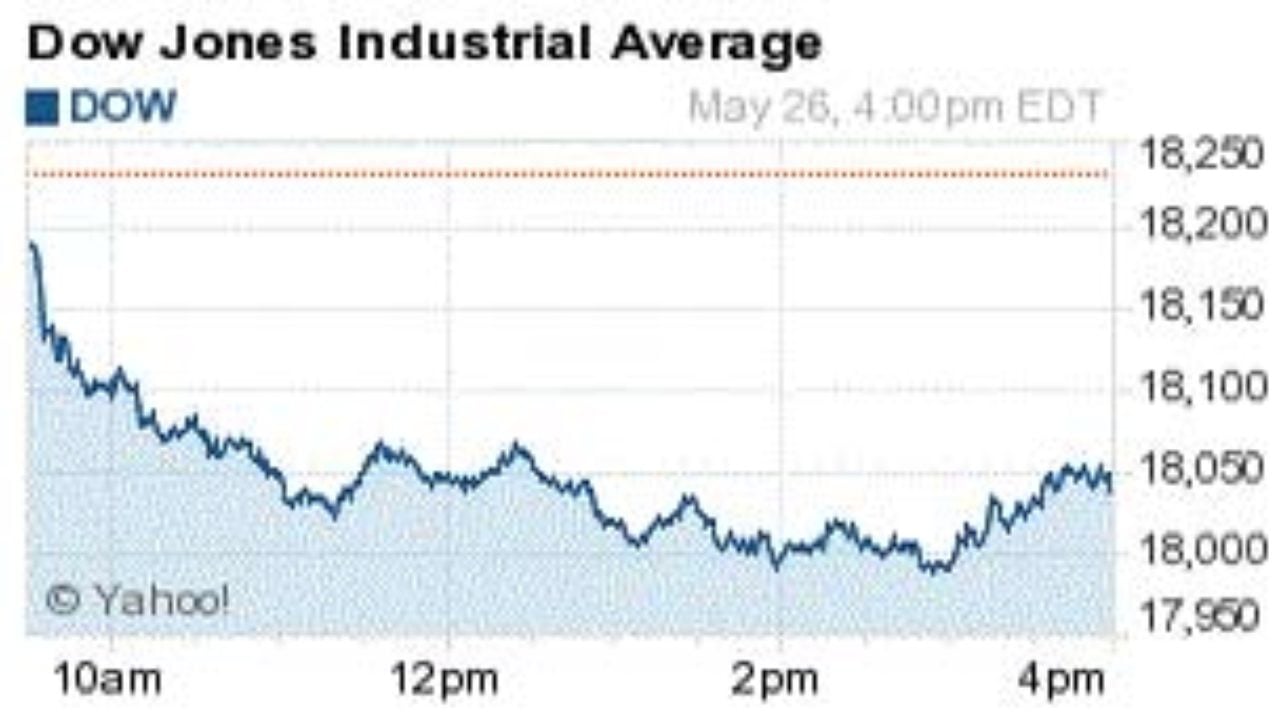
Decoding the Current Performance of Major Indices
When assessing how stocks are doing, the first point of reference is usually the major indices. However, a divergence has emerged in recent months that tells a story of a “two-tier” market. The S&P 500 and the Nasdaq Composite have largely outperformed broader market measures, driven heavily by a concentrated group of high-growth technology companies.
The Dominance of Large-Cap Growth
The performance of the S&P 500 has been heavily influenced by the “Magnificent Seven”—a group of tech giants that have leveraged their massive cash reserves and leadership in the artificial intelligence space to drive index returns. For much of the past year, these few stocks were responsible for a disproportionate share of the market’s gains. When an investor asks how stocks are doing, the answer often depends on whether they are looking at a market-cap-weighted index or an equal-weighted version. The former suggests a roaring bull market, while the latter reflects a more cautious, sideways movement for the average company.
The Struggle of Small Caps
In contrast to the tech-heavy indices, the Russell 2000, which tracks small-cap companies, has faced significant headwinds. Small-cap stocks are generally more sensitive to interest rates because they often rely on floating-rate debt and require consistent access to capital to fuel growth. The “higher for longer” interest rate environment has squeezed margins for these smaller players, leading to a performance gap between the giants of the industry and the burgeoning enterprises that represent the broader economy.
Macroeconomic Catalysts: Inflation, Rates, and the Fed
No analysis of stock performance is complete without addressing the Federal Reserve. The central bank’s dual mandate of price stability and maximum employment remains the primary compass for market direction. The transition from a “zero-interest-rate policy” (ZIRP) to a more restrictive stance has fundamentally changed how stocks are valued.
The Pivot Narrative
Market sentiment is currently tethered to the “pivot”—the point at which the Federal Reserve begins to systematically lower interest rates. Stocks have historically reacted positively to the anticipation of rate cuts, as lower borrowing costs boost corporate profitability and increase the present value of future cash flows. However, the timing of this pivot remains a moving target, dependent on Consumer Price Index (CPI) and Personal Consumption Expenditures (PCE) data. When inflation prints come in higher than expected, stocks often retreat as the “higher for longer” reality sets in.
Corporate Earnings Resilience
Despite the pressure of elevated interest rates, corporate earnings have remained surprisingly robust. Many large-cap companies used the low-rate era to refinance their debt at fixed, low levels, insulating them from the immediate impact of the Fed’s tightening cycle. This “earnings resilience” is a key reason why stocks have not faced the catastrophic downturn that many economists predicted at the start of the tightening cycle. Profit margins in sectors like technology and healthcare have remained healthy, providing a fundamental floor for stock prices.
Sector Performance: Winners, Losers, and the AI Premium
To truly understand how stocks are doing, one must look under the hood at specific sectors. The market is not a monolith; while some sectors are reaching all-time highs, others are languishing in bear market territory.
The Artificial Intelligence Secular Trend
The defining theme of the current market is undoubtedly Artificial Intelligence (AI). This is not merely a speculative bubble but a fundamental shift in how investors value productivity and future growth. Companies involved in the AI supply chain—from semiconductor manufacturers like Nvidia to cloud service providers and software firms integrating LLMs (Large Language Models)—have seen their valuations soar. This “AI premium” has created a halo effect, lifting the tech sector even as traditional valuation metrics, such as Price-to-Earnings (P/E) ratios, reach historically high levels.
Defensive vs. Cyclical Plays
Outside of tech, the performance has been mixed. Defensive sectors, such as Utilities and Consumer Staples, have seen varied interest. Traditionally, these sectors are seen as “bond proxies” and struggle when Treasury yields are high. However, as investors look for safety amidst geopolitical uncertainty, some capital has rotated back into these stable areas. Meanwhile, Cyclical sectors like Financials and Industrials are tracking the “soft landing” narrative. If the economy avoids a recession, these sectors stand to benefit from continued consumer spending and infrastructure investment.
Psychological Barriers and Technical Indicators
Stock performance is as much about human emotion as it is about mathematics. The current market environment is characterized by a tug-of-war between the “Fear Of Missing Out” (FOMO) and the fear of a looming recession.
Market Sentiment and the VIX
The CBOE Volatility Index (VIX), often referred to as the “fear gauge,” has stayed relatively low for extended periods, suggesting a level of complacency or perhaps a “new normal” where investors have become accustomed to geopolitical strife and fluctuating inflation data. However, low volatility can be a contrarian indicator, often preceding sharp corrections when unexpected news hits the wires. Monitoring sentiment indicators like the Put/Call ratio and investor surveys shows a market that is cautiously optimistic but highly sensitive to any shifts in the economic narrative.
Technical Levels and Breadth
Technical analysts point to “market breadth” as a vital sign of market health. Breadth refers to the number of individual stocks participating in a market rally. For much of the recent upward move, breadth was narrow, raising concerns about the sustainability of the trend. Recently, however, there have been signs of a “catch-up” trade, where sectors like energy and materials begin to participate. If more stocks join the rally, it provides a stronger foundation for the overall market, making the answer to “how are the stocks doing” much more positive for the average diversified investor.
Looking Ahead: Investment Strategies for a Changing World
As we look toward the future, the trajectory of the stock market will likely be determined by the successful navigation of the “last mile” of inflation. Investors are no longer operating in an environment where “a rising tide lifts all boats.” Success in today’s market requires a more nuanced approach.
The Importance of Diversification
In a concentrated market, the temptation to “chase performance” by over-weighting in top-performing tech stocks is high. However, prudent financial management dictates a return to the fundamentals of diversification. By spreading risk across different asset classes, sectors, and geographies, investors can protect themselves against the inevitable volatility that occurs when market leadership rotates.
Focusing on Quality and Cash Flow
In a high-rate environment, “quality” is the watchword. This means focusing on companies with strong balance sheets, low debt-to-equity ratios, and consistent free cash flow. Companies that can self-fund their growth without relying on expensive external financing are better positioned to weather economic downturns. For the individual investor, analyzing these fundamentals is more critical than ever to determine which stocks are actually “doing well” in terms of intrinsic value, rather than just price action.
The Long-Term Perspective
Ultimately, the question of how stocks are doing is a matter of time horizon. On a daily basis, the market is a voting machine, reacting to every headline and data point. On a long-term basis, it is a weighing machine, reflecting the true value created by global enterprises. While short-term fluctuations are inevitable, the historical trajectory of the equity markets has been upward, driven by human innovation and economic expansion. For those with a disciplined investment strategy, the current market—despite its complexities and contradictions—continues to offer opportunities for wealth creation and financial growth.
aViewFromTheCave is a participant in the Amazon Services LLC Associates Program, an affiliate advertising program designed to provide a means for sites to earn advertising fees by advertising and linking to Amazon.com. Amazon, the Amazon logo, AmazonSupply, and the AmazonSupply logo are trademarks of Amazon.com, Inc. or its affiliates. As an Amazon Associate we earn affiliate commissions from qualifying purchases.