
The question of when interest rates will decrease is a perennial concern for households, businesses, and investors worldwide. Interest rates, often viewed as the cost of borrowing money or the return on saving it, are a fundamental pillar of modern economies. Their movement up or down dictates everything from the affordability of mortgages and car loans to the profitability of business investments and the performance of stock markets. While the precise timing of rate reductions can be elusive, understanding the underlying economic forces and the central banks’ decision-making processes can provide invaluable insight. This article will delve into the mechanisms behind interest rate adjustments, the key economic indicators that signal a potential downtrend, and the profound implications for various facets of the financial world.
The Central Bank’s Role and Mandate
At the heart of interest rate policy lies the central bank – institutions like the Federal Reserve in the United States, the European Central Bank (ECB), the Bank of England, or the Bank of Japan. These entities are not merely government banks; they are stewards of economic stability, wielding powerful tools to influence money supply, inflation, and employment.
Monetary Policy and Economic Stability
Central banks primarily use monetary policy to achieve their mandates, which typically include maintaining price stability (controlling inflation), maximizing sustainable employment, and ensuring financial system stability. The primary tool for influencing the economy is the setting of a benchmark interest rate. When economic conditions warrant stimulation or cooling, the central bank adjusts this rate.
A decision to lower interest rates is almost always a response to specific economic headwinds or a pre-emptive measure to avoid a downturn. It signals the central bank’s belief that the economy needs a boost – perhaps because inflation is too low, unemployment is rising, or growth is stagnating. By making borrowing cheaper, the central bank aims to encourage consumer spending, business investment, and overall economic activity. Conversely, raising rates is typically a response to overheating economies and persistent inflation.
The Federal Funds Rate (or Equivalent Benchmark)
For many economies, the central bank targets a specific overnight interest rate that banks charge each other for short-term borrowing. In the U.S., this is the federal funds rate. While the central bank doesn’t directly set your mortgage rate, changes to this benchmark rate ripple through the entire financial system. Commercial banks adjust their prime lending rates, which in turn affect the interest rates on a wide array of consumer and business loans, from credit cards and personal loans to corporate bonds and home equity lines of credit.
When the central bank decides to cut rates, it typically does so by reducing its target for this benchmark rate. This reduction makes it cheaper for banks to borrow from each other, lowering their costs and enabling them to offer more attractive lending rates to their customers. The expectation is that this reduced cost of borrowing will spur demand, investment, and ultimately, economic growth.
Economic Signals That Trigger Rate Cuts
Central banks are data-dependent institutions. They don’t make arbitrary decisions; rather, they analyze a vast array of economic indicators to assess the health and trajectory of the economy. When these indicators collectively point towards a slowdown or a significant risk of recession, the likelihood of an interest rate cut increases dramatically.
Weakening Inflationary Pressures
One of the primary mandates of most central banks is price stability. If inflation, the rate at which prices for goods and services are rising, is consistently above the central bank’s target (often around 2%), they are likely to raise rates. Conversely, if inflation is trending downwards and looks set to fall below the target, or if there’s a risk of deflation (a sustained decrease in prices), the central bank might consider cutting rates. Lower inflation gives the central bank more room to cut rates without fear of overheating the economy further. A common scenario for rate cuts occurs when demand slackens, leading businesses to reduce prices or slow price increases, signaling a need for economic stimulus.
Slowing Economic Growth and Recession Concerns
A significant slowdown in Gross Domestic Product (GDP) growth is a strong signal for potential rate cuts. GDP measures the total value of goods and services produced within an economy. If GDP growth decelerates sharply or turns negative for two consecutive quarters, an economy is typically considered to be in a recession. Central banks often cut rates aggressively during recessions or when there is a strong forecast for one, aiming to stimulate demand and investment to pull the economy out of the slump. Indicators like manufacturing output, retail sales, and business investment data are closely watched for signs of economic weakening.
Labor Market Softening
The health of the labor market is another critical barometer. When unemployment rates begin to rise, job creation slows, or wage growth stagnates, it indicates a weakening economy. A robust labor market typically signifies strong demand and a healthy economy, giving central banks less reason to cut rates. However, a deteriorating job market suggests that businesses are struggling, demand is falling, and a recession may be imminent, making rate cuts a more probable response to support employment. Key metrics include the unemployment rate, non-farm payrolls (job growth), and average hourly earnings.
Global Economic Headwinds
No economy operates in isolation. Global economic conditions, geopolitical events, and international trade dynamics can significantly impact domestic economies. A global slowdown, trade wars, or major geopolitical crises can suppress demand, disrupt supply chains, and reduce export opportunities for a country. When faced with significant external threats that could drag down domestic growth, central banks may cut interest rates to buffer the economy from these shocks, making their exports more competitive and stimulating domestic demand.
The Profound Impact of Declining Rates
When interest rates go down, the effects ripple through every corner of the economy, creating winners and losers and altering financial strategies for individuals, businesses, and investors.
Boost for Borrowers and Spending
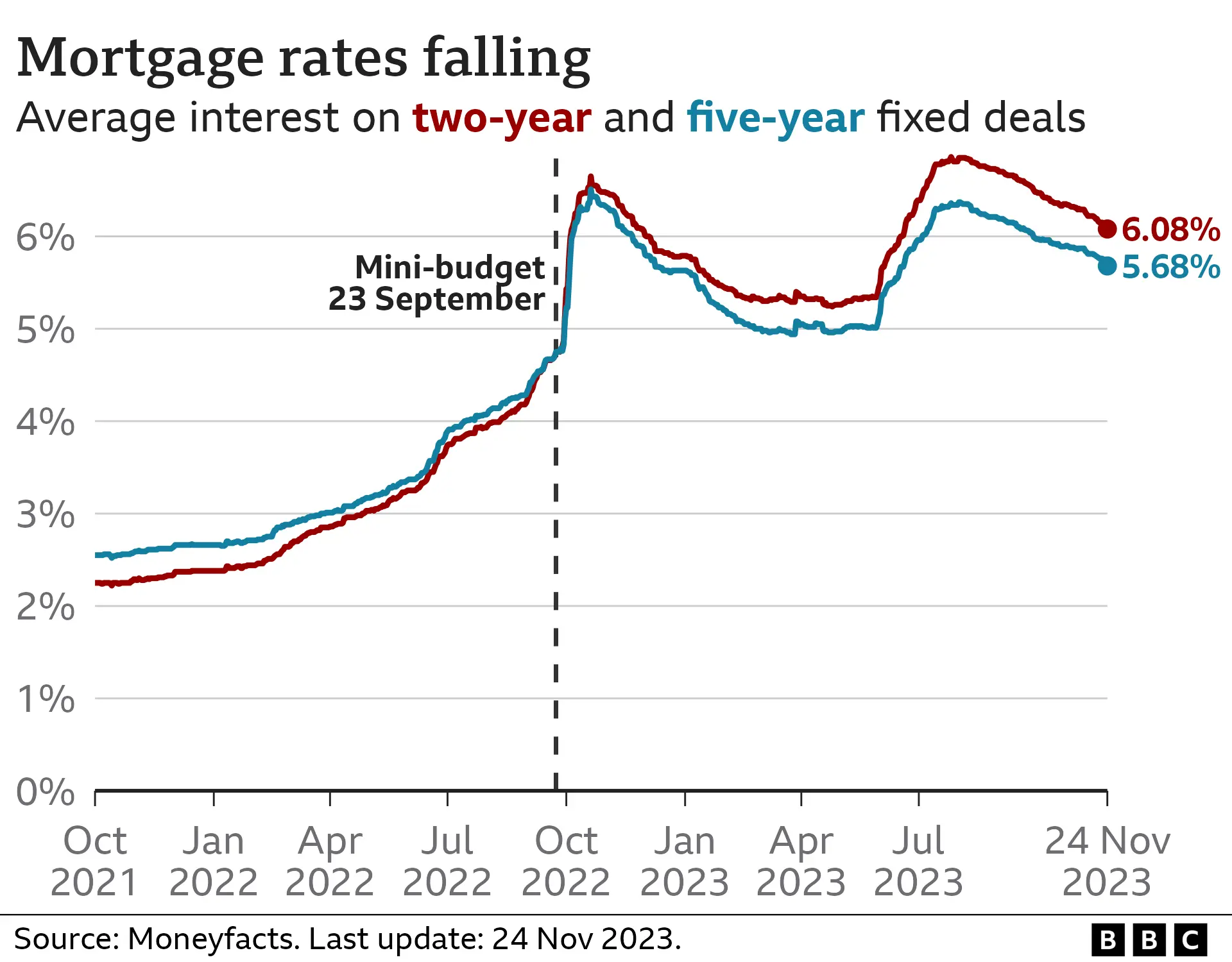
Perhaps the most direct and immediate impact of falling interest rates is the relief for borrowers. Mortgage rates tend to decrease, making homeownership more affordable and allowing current homeowners to refinance their existing mortgages at lower rates, thereby reducing monthly payments. This frees up discretionary income, potentially boosting consumer spending. Similarly, interest rates on car loans, personal loans, and credit cards may fall, making it cheaper to finance large purchases or carry balances. Businesses also benefit, as lower borrowing costs reduce the expense of financing new projects, expanding operations, or investing in capital improvements, which can stimulate job creation and economic growth.
Implications for Savers and Fixed Income Investors
While borrowers rejoice, savers and those reliant on fixed-income investments often face a less favorable environment. Lower interest rates mean less return on savings accounts, certificates of deposit (CDs), and money market accounts. Retirees and others living on fixed incomes may find their income streams reduced, prompting a search for higher-yielding, though potentially riskier, investments. Bond investors also see the value of newly issued bonds fall, as their yields decrease. However, existing bonds issued when rates were higher tend to increase in value when market rates fall, as their fixed, higher coupon payments become more attractive relative to new issues.
Impact on Asset Markets: Stocks, Bonds, and Real Estate
Declining interest rates can have a complex but generally positive effect on asset markets.
- Stock Market: Lower interest rates make borrowing cheaper for companies, potentially boosting their profitability and encouraging investment. Furthermore, lower rates make equity investments more attractive relative to lower-yielding bonds, often leading investors to shift capital into stocks, driving up share prices. The present value of future earnings also increases when discount rates (influenced by interest rates) are lower, making companies appear more valuable.
- Bond Market: As mentioned, existing bonds with higher yields become more valuable when new bonds are issued at lower rates. However, for new investors, lower rates mean lower returns on new bond purchases.
- Real Estate: Lower mortgage rates directly stimulate the housing market, making homes more affordable and increasing demand. This can lead to rising home prices. Commercial real estate also benefits from cheaper financing for development and acquisition, and potentially higher valuations as capitalization rates (which move inversely to interest rates) compress.
Strategies for Individuals and Businesses in a Lower Rate Environment
Understanding the implications of falling interest rates allows individuals and businesses to make informed financial decisions, optimizing their positions to capitalize on new opportunities or mitigate potential risks.
Refinancing Opportunities
For homeowners with higher mortgage rates, a declining rate environment presents a prime opportunity to refinance. Refinancing can significantly reduce monthly payments, save substantial amounts over the life of the loan, or even allow for a cash-out refinance to fund other needs at a lower cost. Similarly, individuals with high-interest personal loans, car loans, or even credit card debt should investigate consolidating or refinancing these debts into lower-interest options. Businesses can also refinance existing loans or issue new bonds at lower rates, reducing their debt servicing costs and freeing up capital for growth.
Investment Considerations
Savers and investors must re-evaluate their portfolios when rates fall. While traditional savings accounts offer meager returns, it might be an opportune time to explore other investment avenues.
- Stocks: With cheaper borrowing and potentially higher corporate profits, equity markets can be attractive. Investors might favor growth stocks or dividend-paying stocks as alternatives to low-yielding bonds.
- Bonds: If you already hold bonds, their value might increase. For new bond investments, consider diversifying into higher-grade corporate bonds or exploring bond funds that actively manage duration risk.
- Real Estate: Lower mortgage rates can make real estate investments more appealing, either through direct property ownership or through Real Estate Investment Trusts (REITs).
- Alternative Investments: Some investors might look towards alternative assets that are less directly tied to interest rate fluctuations, though these often come with their own set of risks.

Business Expansion and Capital Projects
For businesses, a low-interest-rate environment is often a green light for expansion. Cheaper financing reduces the hurdle rate for new capital projects, making investments in new equipment, technology, research and development, or facility expansion more financially viable. This can lead to increased productivity, competitive advantages, and long-term growth. Businesses might also find it advantageous to raise capital through issuing new debt or equity, taking advantage of favorable market conditions to fund strategic initiatives.
In conclusion, interest rates tend to go down when central banks perceive the economy as slowing, inflation as contained, or when significant risks threaten stability. This strategic move aims to stimulate borrowing, spending, and investment, thereby injecting vitality into the economy. While it offers a boon for borrowers and asset markets, it presents challenges for savers. By understanding these dynamics and anticipating the signals, individuals and businesses can better navigate the economic landscape and position themselves for financial success.
aViewFromTheCave is a participant in the Amazon Services LLC Associates Program, an affiliate advertising program designed to provide a means for sites to earn advertising fees by advertising and linking to Amazon.com. Amazon, the Amazon logo, AmazonSupply, and the AmazonSupply logo are trademarks of Amazon.com, Inc. or its affiliates. As an Amazon Associate we earn affiliate commissions from qualifying purchases.