
In the intricate world of finance, few metrics hold as much sway over the economic landscape as the prime interest rate. It’s a term frequently encountered in financial news, economic forecasts, and personal finance discussions, yet its precise definition and far-reaching implications are often not fully grasped. For individuals planning to borrow for a home, consolidate debt, or even launch a business, and for corporations making investment decisions, understanding the current prime rate is not merely academic—it’s a fundamental necessity. This rate acts as a benchmark, influencing everything from the cost of consumer loans to the profitability of business ventures, serving as a critical indicator of economic health and monetary policy.

The prime rate is more than just a number; it’s a dynamic reflection of broader economic conditions and the Federal Reserve’s strategic efforts to manage inflation, stimulate growth, or temper an overheating economy. Its movements, whether up or down, ripple through every facet of the financial system, affecting the cost of capital for banks, which in turn influences the rates offered to their most creditworthy customers. Consequently, staying informed about the current prime interest rate is not just good practice but a vital component of sound financial decision-making for both individuals and businesses aiming to optimize their financial strategies and mitigate risks in an ever-evolving market.
Understanding the Prime Rate: A Cornerstone of Lending
To truly appreciate the significance of current prime interest rates, one must first grasp its foundational role within the financial system. It’s not an arbitrary figure but a carefully determined benchmark that underpins a vast array of lending products and economic activities.
Defining the Prime Rate
At its core, the prime rate is the interest rate that commercial banks charge their most creditworthy corporate customers on short-term loans. While this definition might suggest a narrow application, its influence extends far beyond these elite borrowers. It serves as a base rate for many variable-rate loans offered to the general public, including credit cards, home equity lines of credit (HELOCs), adjustable-rate mortgages (ARMs), and various business loans. For instance, a credit card might advertise an annual percentage rate (APR) as “Prime + 8%,” meaning your actual rate fluctuates directly with changes in the prime rate. This makes it a crucial reference point for anyone with or contemplating variable-rate debt. It embodies the minimum lending risk perceived by banks for their most reliable clients, signaling the fundamental cost of borrowing in the economy. Therefore, when the prime rate moves, the cost of borrowing for millions of consumers and businesses often moves in lockstep, making it a critical indicator of financial accessibility and expenditure.
How the Prime Rate is Determined (Role of the Federal Funds Rate)
The prime rate is not set by a single entity or government body; rather, it’s largely influenced by the monetary policy decisions of the Federal Reserve (the Fed), specifically through its target for the federal funds rate. The federal funds rate is the interest rate at which commercial banks lend their excess reserves to other banks overnight. When the Federal Open Market Committee (FOMC), the Fed’s primary monetary policy-making body, decides to raise or lower the federal funds rate target, it directly impacts the cost of borrowing for banks.
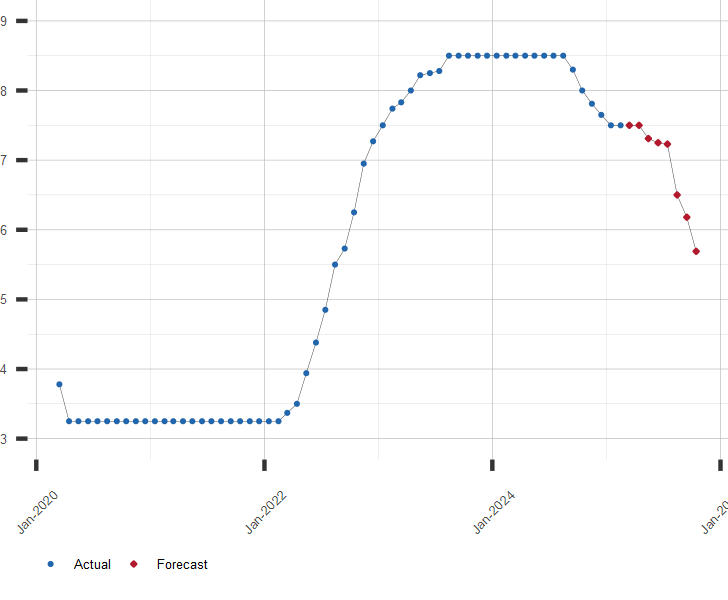
Historically, the prime rate has closely tracked the federal funds rate, typically running about three percentage points above it. This spread covers banks’ operational costs, profit margins, and the inherent risk associated with lending, even to their most creditworthy clients. For example, if the federal funds rate target is 2.25%, the prime rate will often be around 5.25%. This direct relationship means that every Fed meeting where interest rates are discussed is implicitly a discussion about the future direction of the prime rate, and by extension, the cost of borrowing across the economy. The Fed uses adjustments to the federal funds rate as a primary tool to manage inflation, employment, and economic growth, making the prime rate a downstream reflection of these broader macroeconomic objectives. Understanding this linkage is key to anticipating changes in borrowing costs and planning financial strategies accordingly.
The Dynamic Forces Influencing Prime Rate Fluctuations
The prime interest rate is not static; it’s a dynamic figure that responds to a complex interplay of economic indicators and policy decisions. Its fluctuations are a barometer of the broader economic climate, reflecting challenges and opportunities alike.
Federal Reserve Policy and Economic Indicators
The Federal Reserve plays the most significant role in influencing the prime rate. Its primary mandate is to achieve maximum employment and stable prices (low inflation) in the U.S. economy. To fulfill this dual mandate, the Fed frequently adjusts its target for the federal funds rate. These adjustments are not arbitrary; they are meticulously informed by a comprehensive review of various economic indicators. Key among these are inflation data (such as the Consumer Price Index and Personal Consumption Expenditures index), employment statistics (unemployment rate, job creation numbers, wage growth), Gross Domestic Product (GDP) growth, and consumer spending and confidence reports.
When inflation is high and the economy appears to be overheating, the Fed tends to raise the federal funds rate to cool down economic activity by making borrowing more expensive, which subsequently pushes the prime rate higher. Conversely, during periods of economic slowdown or recession, when deflation is a concern, the Fed typically lowers the federal funds rate to stimulate borrowing, investment, and consumer spending, leading to a reduction in the prime rate. These policy decisions are made after careful deliberation by the FOMC, and their announcements are eagerly anticipated by financial markets worldwide due to their profound impact on interest rates.
Inflationary Pressures and Economic Growth
Inflation is a critical determinant of interest rates, including the prime rate. When inflation is rising, the purchasing power of money diminishes over time. Lenders demand higher interest rates to compensate for this erosion of value, ensuring that the real return on their loans remains positive. This protective measure often translates into the Fed raising interest rates to curb inflation, which directly translates to a higher prime rate. Borrowers, in turn, face higher costs for debt.
Economic growth also plays a significant role. A robust economy, characterized by strong GDP growth, high employment, and increased consumer demand, often leads to higher inflation. In such an environment, the Fed might lean towards raising rates to prevent the economy from expanding too quickly and causing runaway inflation. Conversely, during periods of slow or negative economic growth, the Fed typically lowers rates to encourage borrowing and investment, aiming to stimulate economic activity. The health and trajectory of the economy, therefore, constantly influence the Fed’s decisions and, consequently, the movement of the prime rate.
Global Economic Events and Market Sentiment
While domestic factors are paramount, the prime rate is not immune to global economic events. Major international developments, such as geopolitical tensions, global financial crises, significant economic shifts in major trading partners, or widespread supply chain disruptions, can influence the U.S. economy and, by extension, the Fed’s monetary policy. For instance, a global economic slowdown might reduce demand for U.S. exports, dampen domestic economic growth, and potentially lead the Fed to lower rates. Conversely, global inflationary pressures or a flight to safety in U.S. assets could exert upward pressure on rates.
Market sentiment, often driven by investor confidence, speculative activity, and perceptions of risk, also plays a role. If markets anticipate a particular Fed action, bond yields might move in advance, influencing borrowing costs even before an official announcement. While the Fed primarily focuses on domestic conditions, it operates within a globalized economy, and external forces can necessitate adjustments to its strategy, which then feed directly into prime rate movements.
Impact of Prime Rate on Consumers and Businesses
The prime rate’s movements are not abstract economic phenomena; they have tangible, real-world consequences for the financial well-being of both individuals and corporations.
Effects on Borrowing Costs (Credit Cards, Mortgages, HELOCs, Business Loans)
One of the most immediate and significant impacts of changes in the prime rate is on the cost of borrowing. For consumers, this is evident in products like credit cards, which almost universally feature variable interest rates tied to the prime rate. A rise in the prime rate directly translates to higher monthly interest payments on outstanding credit card balances, making debt more expensive and potentially increasing the minimum payment due. Similarly, home equity lines of credit (HELOCs) and many adjustable-rate mortgages (ARMs) are structured with rates that adjust based on the prime rate plus a margin. When the prime rate increases, so do the interest payments on these loans, which can significantly impact a homeowner’s monthly budget.

Businesses, especially small and medium-sized enterprises (SMEs), also heavily rely on prime rate-linked loans for working capital, equipment purchases, and expansion projects. A higher prime rate means increased interest expenses, which can reduce profitability, slow down investment, and even impact job creation. Conversely, a falling prime rate makes borrowing cheaper, encouraging spending, investment, and economic growth for both consumers and businesses. This direct correlation highlights the prime rate as a fundamental factor in personal and corporate financial planning.
Impact on Savings and Investment Returns
While higher prime rates are generally unwelcome news for borrowers, they often present a silver lining for savers and investors. When the Fed raises rates, banks typically follow suit by offering higher interest rates on savings accounts, money market accounts, and Certificates of Deposit (CDs). This makes saving more attractive as individuals can earn a better return on their deposits, helping their money grow faster.
For investors, particularly those in fixed-income markets, rising rates can initially cause bond prices to fall. However, new bonds issued will offer higher yields, presenting opportunities for investors to lock in better returns over the long term. Conversely, falling prime rates mean lower returns on savings products, potentially incentivizing investors to seek higher yields in riskier assets. The prime rate, therefore, influences the opportunity cost of holding cash versus investing, and the attractiveness of different asset classes.
Consumer Spending and Business Investment Decisions
The prime rate acts as a key lever for influencing overall economic activity. When interest rates are low, borrowing is cheaper, encouraging consumers to take on debt for purchases like homes, cars, and major appliances. This stimulates consumer spending, which is a significant driver of economic growth. Businesses also find it cheaper to borrow for expansion, capital improvements, and hiring, leading to increased investment and job creation.
On the other hand, when the prime rate rises, borrowing becomes more expensive, cooling off demand. Consumers may postpone large purchases or reduce discretionary spending, while businesses might scale back expansion plans, delay investments, or even lay off workers to cut costs. The Fed uses these rate adjustments to fine-tune the economy—raising them to prevent overheating and inflation, and lowering them to stimulate growth during downturns. The ripple effect of prime rate changes on spending and investment decisions underscores its central role in the broader economic cycle.
Navigating a Changing Interest Rate Environment
Given the dynamic nature of the prime rate and its pervasive impact, it’s crucial for both individuals and businesses to adopt proactive strategies to navigate evolving interest rate environments effectively.
Strategies for Borrowers
For borrowers, understanding the current prime rate and its potential trajectory is paramount. If rates are rising, those with variable-rate debt (like credit cards, HELOCs, or ARMs) should consider strategies to mitigate increased costs. This might involve accelerating principal payments to reduce the overall balance, refinancing variable-rate loans into fixed-rate alternatives if available and advantageous, or consolidating high-interest debt into a single, potentially lower-rate loan. Homeowners with ARMs might explore refinancing into a fixed-rate mortgage to lock in predictable payments before rates climb further. Businesses should evaluate their debt portfolios, possibly hedging against rising rates or exploring longer-term, fixed-rate financing options for major investments to ensure cost predictability. Proactive debt management can significantly cushion the impact of higher borrowing costs.
Opportunities for Savers and Investors
Conversely, a rising prime rate environment can present attractive opportunities for savers and investors. Higher interest rates typically translate to better returns on savings accounts, money market funds, and Certificates of Deposit (CDs). Savers should actively seek out institutions offering the most competitive rates for their deposits, rather than leaving money in accounts with stagnant, low yields. For investors, particularly those building a fixed-income portfolio, rising rates mean new bond issues will offer higher coupon payments, enhancing future income streams. It might be an opportune time to invest in short-to-medium term bonds or bond funds, or to ladder CDs to take advantage of potentially increasing rates over time. Investors should review their portfolios and consult with financial advisors to identify opportunities to optimize returns in a higher-rate environment while aligning with their risk tolerance.
The Importance of Financial Planning and Professional Advice
Regardless of whether rates are rising or falling, the bedrock of successful financial navigation is sound financial planning. This involves regularly reviewing one’s budget, assessing current debt obligations, evaluating savings strategies, and aligning financial goals with the prevailing economic conditions. Understanding personal cash flow, creditworthiness, and long-term aspirations is essential.
Furthermore, seeking professional financial advice is invaluable. A qualified financial advisor can provide personalized guidance tailored to individual circumstances, helping to interpret economic signals, explain the nuances of interest rate changes, and recommend specific strategies for debt management, savings, and investment. They can help borrowers determine the best refinancing options, assist savers in identifying optimal deposit accounts, and guide investors in constructing resilient portfolios. In a constantly shifting financial landscape, informed decision-making backed by expert advice is the best defense against adverse conditions and the best pathway to capitalize on emerging opportunities.
Staying Informed: Reliable Sources for Prime Rate Updates
In a world where financial information is constantly flowing, knowing where to find accurate and timely updates on the prime interest rate is crucial for making informed financial decisions. Relying on reputable sources ensures that your financial planning is based on the most current and reliable data.
Official Federal Reserve Publications
The most authoritative source for understanding the factors influencing the prime rate is the Federal Reserve itself. The Federal Open Market Committee (FOMC) meets approximately eight times a year to assess economic conditions and make monetary policy decisions, including adjustments to the federal funds rate target. Following these meetings, the FOMC releases a statement outlining its decisions and rationale. Additionally, the Fed publishes minutes from these meetings, speeches by Fed officials, and various economic reports that provide deep insights into the central bank’s thinking and future outlook. These publications are invaluable for anyone seeking to understand the underlying drivers of prime rate movements directly from the source. They offer unparalleled transparency into the decision-making process that directly impacts the prime rate.
Reputable Financial News Outlets
Beyond the official channels, a plethora of reputable financial news outlets provide excellent coverage and analysis of prime interest rate movements and their implications. Major financial publications such as The Wall Street Journal, Bloomberg, Reuters, The Financial Times, and respected sections of general news outlets like The New York Times and CNN Business offer daily updates, expert commentary, and in-depth articles. These sources typically distill complex economic information into digestible formats, often providing forecasts and opinions from leading economists and market analysts. Subscribing to their newsletters or regularly checking their websites can keep you abreast of real-time developments, market reactions, and expert predictions regarding the prime rate and broader economic trends.
Consulting Financial Professionals
For personalized insights and interpretations of prime rate changes specific to your financial situation, consulting with a financial professional is highly recommended. Financial advisors, mortgage brokers, and bank representatives are often well-versed in current interest rate environments and can explain how these rates specifically impact your loans, savings, and investment strategies. They can provide tailored advice on whether to refinance a mortgage, when to open a CD, or how to adjust your investment portfolio in response to rate movements. While general news provides broad information, a financial professional can offer individualized guidance that helps you translate macroeconomic trends into actionable personal financial decisions, ensuring you make the most informed choices for your financial future.
Understanding the current prime interest rate is not merely an academic exercise; it’s a fundamental aspect of sound financial literacy that empowers both individuals and businesses to make strategic decisions. By staying informed through reliable sources and leveraging expert advice, one can effectively navigate the ever-changing landscape of interest rates, optimizing financial outcomes in a dynamic economy.
aViewFromTheCave is a participant in the Amazon Services LLC Associates Program, an affiliate advertising program designed to provide a means for sites to earn advertising fees by advertising and linking to Amazon.com. Amazon, the Amazon logo, AmazonSupply, and the AmazonSupply logo are trademarks of Amazon.com, Inc. or its affiliates. As an Amazon Associate we earn affiliate commissions from qualifying purchases.