
In an era defined by a multitude of digital subscriptions, from streaming services and productivity tools to specialized content platforms, managing recurring expenses has become a critical component of personal financial health. XM Radio, a long-standing player in the satellite radio landscape, often finds itself on the list of discretionary spending that individuals re-evaluate as they scrutinize their budgets. Cancelling such a service isn’t merely about discontinuing access; it’s a strategic financial decision that can significantly impact your monthly cash flow and contribute to broader financial goals. This article will delve into the financial motivations behind cancelling XM Radio, guide you through the process with a focus on maximizing financial benefit, and position this action within a comprehensive approach to personal finance.
Understanding the Financial Impact of Subscription Services
Before diving into the specifics of cancelling XM Radio, it’s crucial to acknowledge the collective weight of subscription services on our financial well-being. Each recurring charge, however small, contributes to an overall monthly outflow that can quietly erode savings potential or constrain disposable income.
The Hidden Costs of Recurring Charges: XM Radio as an Example
Many consumers initially subscribe to services like XM Radio for their convenience and perceived value. A few dollars here, a few dollars there – these amounts seem negligible in isolation. However, the cumulative effect over months and years can be substantial. For instance, a standard XM Radio subscription might cost around $15-$20 per month. Over a year, this equates to $180-$240. Over five years, that’s $900-$1200. While not exorbitant for everyone, it represents a non-insignificant sum that could be allocated elsewhere.
The “hidden cost” isn’t just the direct monetary outflow but also the opportunity cost. That $15-$20 a month, if invested consistently in a low-cost index fund, could compound into a far greater sum over the long term. For individuals struggling with debt, that money could accelerate debt repayment, saving them interest charges. For others, it could contribute to an emergency fund, a down payment for a house, or a retirement fund. Understanding this opportunity cost is a cornerstone of prudent financial management. The decision to keep or cancel XM Radio, therefore, isn’t just about whether you enjoy the service, but whether that enjoyment justifies the financial alternative uses of that capital.
Budgeting and Identifying Unnecessary Expenditures
Effective personal finance begins with a robust budget. A budget acts as a financial roadmap, detailing where your money comes from and where it goes. When constructing or reviewing a budget, subscription services like XM Radio often fall into the “discretionary spending” category, making them prime candidates for re-evaluation.
The process of identifying unnecessary expenditures requires an honest assessment of value. Ask yourself:
- Do I use XM Radio frequently enough to justify its cost?
- Are there free or lower-cost alternatives that meet my needs (e.g., local radio, free music streaming apps, podcasts)?
- Does this expense align with my current financial goals (e.g., saving for a down payment, paying off debt, investing)?
For many, the answer to these questions leads to the realization that XM Radio, while enjoyable, is not a financial priority. It’s often a relic of a past financial decision that hasn’t been re-examined in light of current financial circumstances or goals. Identifying it as unnecessary isn’t a judgment; it’s a step towards reclaiming control over your finances.
The Cumulative Savings: Small Cuts, Big Gains
The power of cancelling a single subscription like XM Radio lies in its representation of a broader principle: the cumulative effect of small financial adjustments. While saving $15-$20 a month might seem minor, imagine applying the same scrutiny to other recurring expenses – an unused gym membership, an underutilized streaming service, a premium app subscription. Suddenly, these small cuts can free up $50, $100, or even more per month.
This “found money” can then be strategically deployed. It can be directed towards high-interest debt, building an emergency fund, contributing to retirement accounts, or funding a personal investment portfolio. The psychological benefit is also significant: successfully cutting an unnecessary expense provides a sense of accomplishment and reinforces positive financial habits, encouraging further optimization. It demonstrates that taking control of your financial destiny doesn’t always require drastic lifestyle changes, but rather consistent, intelligent decision-making about your spending.
Navigating the Cancellation Process for Financial Freedom
The act of cancelling XM Radio, while seemingly straightforward, can sometimes involve navigating customer retention strategies. Approaching this process with a clear financial mindset is key to ensuring you achieve your objective of reducing expenses.
Preparing for the Call: Knowing Your Financial Priorities
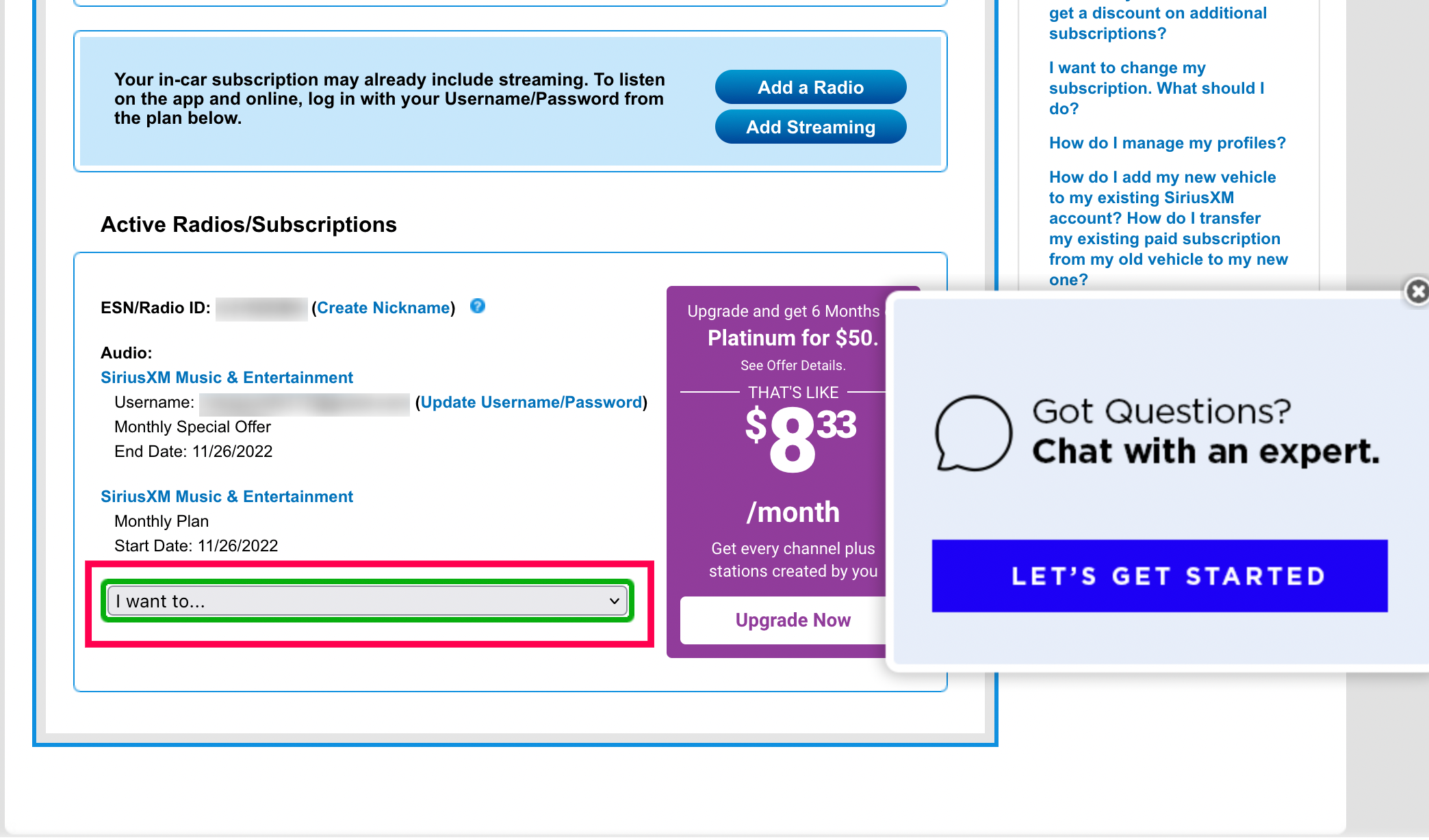
Unlike many online services, cancelling XM Radio typically requires a phone call. This direct interaction means you might encounter attempts to persuade you to stay. Before you dial, fortify yourself with your financial priorities.
- Be clear about your intent: Your goal is to cancel, not to negotiate a better deal (unless a better deal genuinely aligns with your budget and usage).
- Know your financial “why”: Is it to save money for a specific goal, to reduce overall expenses, or simply because you no longer derive sufficient value? Being able to articulate this (even if just to yourself) will strengthen your resolve.
- Gather account information: Have your account number, personal details, and possibly the last four digits of the payment method ready. This streamlines the administrative part of the call.
- Anticipate retention offers: Customer service representatives are often trained to offer discounts, paused subscriptions, or scaled-down packages to prevent churn. Be prepared to politely decline if these offers don’t meet your primary financial objective of eliminating the expense.
This preparation transforms the cancellation call from a potentially frustrating interaction into a focused, goal-oriented financial task.
The Retention Game: Evaluating Offers Against Your Budget
During the cancellation call, you will likely be presented with various offers. These can range from a reduced rate for a few months, a temporary suspension of service, or a different package altogether. From a financial perspective, it’s crucial to evaluate these offers critically:
- Is it truly a permanent saving? Many offers are introductory or time-limited. If your goal is to permanently reduce monthly outlays, a temporary discount only postpones the inevitable.
- Does it align with your usage? If you rarely use the service, even a reduced price might still be an unnecessary expenditure.
- What is the “cost of inconvenience”? Agreeing to a discounted rate might mean you have to call back to cancel again in a few months. Is the saving worth that future effort?
Remember, the primary objective is often to eliminate an expense to free up funds. Unless an offer genuinely provides significant, long-term value that fits perfectly within your re-evaluated budget and needs, politely decline and reiterate your request to cancel. Your financial discipline is the priority.
Documenting Your Cancellation for Peace of Mind
Once you have successfully navigated the conversation and received confirmation of your cancellation, it’s a financially prudent step to document the interaction.
- Note the date and time of the call.
- Record the name of the representative you spoke with.
- Request a cancellation confirmation number or email. This is critical proof that the service has been terminated.
- Check your bank or credit card statements in the following billing cycles to ensure that no further charges from XM Radio appear. If they do, you’ll have all the necessary documentation to dispute them effectively.
This meticulous record-keeping is a fundamental aspect of sound personal finance, protecting you against billing errors and providing an audit trail for your financial decisions. It transforms the act of cancellation from a one-off event into a properly closed financial transaction.
Maximizing Your Savings Post-Cancellation
Cancelling XM Radio is the first step; the true financial benefit comes from consciously managing the funds you’ve now freed up. This is where strategic allocation and ongoing financial discipline come into play.
Reallocating Funds: Investing in Your Financial Goals
The money you save by cancelling XM Radio should not simply disappear into general spending. To truly maximize the financial benefit, deliberately reallocate these funds.
- Automate transfers: Set up an automatic transfer from your checking account to a savings account, investment account, or debt repayment fund for the exact amount you were paying for XM Radio. This ensures the savings are immediately put to work.
- Accelerate debt repayment: If you have high-interest debt (credit cards, personal loans), direct the saved money towards these balances. The interest savings alone can be substantial and improve your credit score.
- Boost your emergency fund: A robust emergency fund provides financial security. Adding the freed-up cash bolsters this crucial safety net.
- Increase investments: If you’re on track with debt and savings, direct the money into a retirement account (401k, IRA) or a taxable investment account. Even small, consistent contributions can grow significantly over time thanks to compounding.
By intentionally reallocating the funds, you transform a cost-cutting measure into an active step towards achieving your personal financial goals.
Exploring Cost-Effective Alternatives
While the primary motivation for cancellation is financial, it’s natural to still desire entertainment or information. The market is saturated with cost-effective, often free, alternatives that can replace or supplement the value XM Radio once provided.
- Free music streaming: Services like Spotify Free, Pandora Free, YouTube Music, and internet radio stations offer vast music libraries and curated stations with ad support.
- Podcasts: A wealth of free podcasts covers every conceivable topic, from news and education to entertainment and storytelling, accessible via numerous apps.
- Local radio: Don’t underestimate the value of free, local terrestrial radio for news, weather, and music.
- Public library resources: Many libraries offer free access to audiobooks and digital magazines, providing endless hours of content.
Framing these alternatives from a financial perspective means understanding that quality entertainment doesn’t always have to come with a recurring price tag. By exploring and embracing these options, you satisfy your needs without compromising your commitment to financial prudence.
Regularly Reviewing Your Spending Habits
The act of cancelling XM Radio should not be a one-time event but rather a catalyst for ongoing financial health. Make it a habit to regularly review all your subscription services and spending patterns.
- Monthly or quarterly check-ins: Schedule dedicated time to review your bank and credit card statements. Look for recurring charges and assess their continued value.
- Ask “do I still need this?”: For every subscription, re-evaluate its necessity and alignment with your current lifestyle and financial goals.
- Embrace the “use it or lose it” mentality: If a service isn’t being actively used, it’s likely a candidate for cancellation.
This continuous review process is a cornerstone of agile personal finance, allowing you to adapt your spending as your life circumstances and financial objectives evolve. It empowers you to maintain control over your money, rather than letting your money control you.
The Broader Context: Why Financial Prudence Matters in the Digital Age
The decision to cancel XM Radio, when viewed through a financial lens, is emblematic of a broader, more critical approach to personal finance in today’s increasingly digital and subscription-driven economy.
Combating Subscription Fatigue and “Set-It-and-Forget-It” Spending
We live in an age of “subscription fatigue,” where consumers are overwhelmed by the sheer number of services vying for their recurring payments. The ease of signing up, often with a free trial, leads to a “set-it-and-forget-it” mentality, where subscriptions continue long after their utility has diminished. This passive spending can accumulate into a significant financial drain. Taking an active step like cancelling XM Radio is a direct counter to this passive consumption. It’s an assertion of conscious financial control over unchecked automatic payments. It fosters a mindset where every dollar spent is intentionally allocated, rather than simply allowed to flow out.
Empowering Yourself Through Financial Control
There is immense psychological and practical empowerment that comes with taking control of your finances. Each successful cancellation, each dollar saved, and each fund reallocated builds momentum. It transforms abstract financial goals into tangible progress. When you actively decide to cancel a service because it no longer aligns with your financial priorities, you are not depriving yourself; you are empowering yourself to make better choices for your future. This sense of agency is invaluable, reducing financial stress and increasing confidence in managing one’s economic life.

A Proactive Approach to Personal Financial Management
Ultimately, the lesson embedded in “how to cancel XM Radio” extends far beyond this particular service. It champions a proactive approach to personal financial management. Instead of reacting to a shrinking bank balance, a proactive approach involves regularly reviewing expenses, setting clear financial goals, and making deliberate decisions about where your money goes. It’s about building a sustainable financial ecosystem where your resources are optimized to serve your aspirations. By embracing such a mindset, cancelling an unwanted subscription like XM Radio becomes not just an act of frugality, but a powerful stride towards comprehensive financial well-being and freedom.
aViewFromTheCave is a participant in the Amazon Services LLC Associates Program, an affiliate advertising program designed to provide a means for sites to earn advertising fees by advertising and linking to Amazon.com. Amazon, the Amazon logo, AmazonSupply, and the AmazonSupply logo are trademarks of Amazon.com, Inc. or its affiliates. As an Amazon Associate we earn affiliate commissions from qualifying purchases.