
Relocating with a beloved canine companion can be one of life’s more complex logistical and emotional challenges. Beyond the heartwarming reunion, however, lies a significant financial undertaking. Understanding “how much to ship a dog” is paramount for any pet owner considering a move, whether across states or international borders. This isn’t merely a simple fee; it’s a multi-faceted investment encompassing transport, veterinary care, documentation, and various other essential services. Approaching this process with a clear financial strategy can alleviate stress and ensure your dog’s journey is as smooth and safe as possible, without unexpected budgetary surprises. This guide will meticulously break down the costs involved, help you navigate the financial intricacies, and offer strategies for optimizing your pet shipping budget.
Deconstructing the Core Costs of Pet Relocation
The primary driver of your pet shipping budget will be the method and nature of the transport itself. These foundational costs fluctuate widely based on several key variables, demanding a careful financial analysis from the outset.
Air Cargo vs. Ground Transport: A Cost-Benefit Analysis
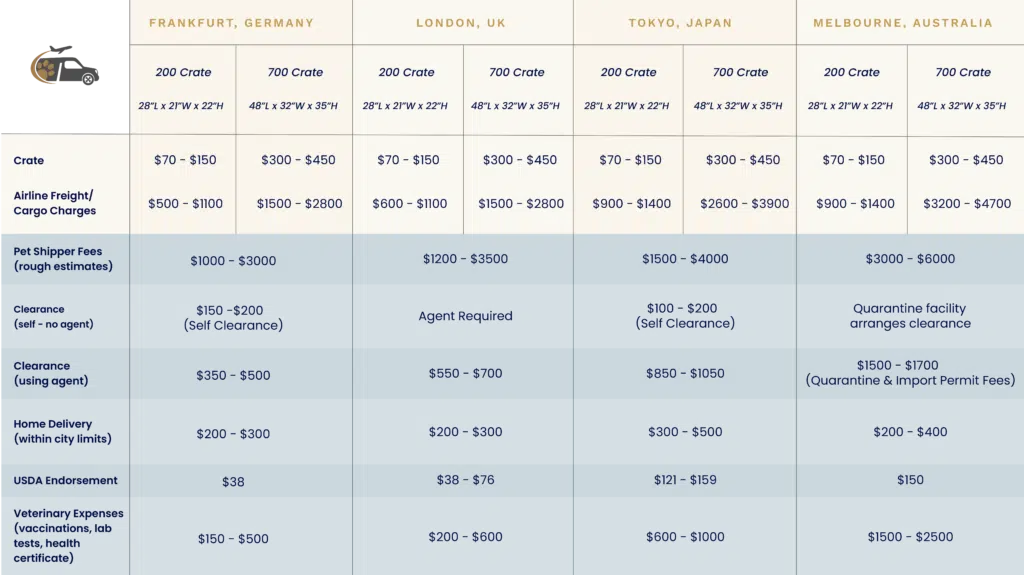
The choice between air cargo and professional ground transport often represents the largest financial decision. Air cargo, while typically faster, can be significantly more expensive. For domestic flights, prices can range from $250 to $1,000+, depending on the airline, the size of your dog, and the distance. International air cargo, with its added complexities of customs and extended flight times, can easily escalate to $1,000 to $5,000+, sometimes even reaching $10,000 for very large breeds or specialized routes. The financial benefit here is speed and often less stress for the animal due to shorter travel times. However, it requires precise scheduling and adherence to strict airline regulations, which themselves can incur costs if not met.
Professional ground transport, often utilizing dedicated pet transport vans, typically falls within a range of $300 to $1,500 for domestic journeys, though long-haul cross-country trips could reach $2,500+. While slower, it often provides a more personal touch, with regular stops and direct interaction with the driver. Financially, ground transport can be more economical for shorter to medium distances, and it eliminates many of the specific crate and health certificate requirements that airlines demand, potentially reducing ancillary expenses. A thorough cost-benefit analysis must weigh the financial outlay against the time sensitivity and your dog’s specific temperament and needs.
The Impact of Distance, Size, and Breed on Your Budget
Unsurprisingly, the farther your dog needs to travel, the higher the cost. Longer distances necessitate more fuel, longer travel times, and potentially overnight stays for ground transport, or more complex flight routes and layovers for air travel, all translating into increased financial expenditure.
The size and weight of your dog are critical financial determinants, particularly for air travel. Airlines base their cargo fees on volume and weight, meaning a Great Dane will cost substantially more to ship than a Chihuahua. A larger dog requires a larger, more expensive IATA-compliant crate, and may incur higher handling fees due to its size and the space it occupies. Expect a linear increase in costs as your dog’s size moves from small to medium, large, and extra-large.
Certain breeds, particularly brachycephalic (snub-nosed) dogs like Pugs, Bulldogs, and Boston Terriers, face restricted air travel due to respiratory risks. If air travel is permitted, it often comes with additional requirements or higher insurance premiums due to the perceived risk, adding to the financial burden. Some airlines may even refuse to transport them in cargo altogether, forcing owners to consider more expensive in-cabin options (if the dog is small enough) or professional ground transport, impacting their budget flexibility.
Urgent Shipments and Premium Services: Are They Worth the Investment?
Just like human travel, last-minute or urgent pet shipments command a premium. Expedited services for securing veterinary appointments, health certificates, or immediate flight bookings can add hundreds, if not thousands, to your bill. While tempting in a time-sensitive situation, these surcharges demand a careful financial evaluation.
Premium services, such as door-to-door full-service relocation agencies, offer comprehensive assistance from vet appointments to customs clearance and delivery. While their fees can range from $1,500 to $5,000+ domestically and $3,000 to $10,000+ internationally, they offer unparalleled convenience and peace of mind. For busy individuals or complex international moves, the financial investment in these services might be justified by the reduction in stress, time savings, and avoidance of costly errors. This investment mitigates the risk of financial penalties or delays due to incorrect paperwork or missed deadlines.
Navigating the Labyrinth of Ancillary Expenses
Beyond the core transport fee, a myriad of ancillary costs contributes significantly to the total financial outlay of shipping a dog. Overlooking these can lead to substantial budget overruns.
Veterinary Requirements: Essential Health Certificates and Vaccinations
A fundamental and non-negotiable expense is the comprehensive veterinary care required for travel. This typically includes a full veterinary examination, an up-to-date rabies vaccination, and other routine vaccinations. These initial costs can range from $50 to $200.
However, specific destinations, especially international ones, may require additional vaccinations, parasite treatments (e.g., tapeworm), blood tests (e.g., rabies titer test), and a detailed health certificate endorsed by a USDA-accredited veterinarian. The rabies titer test alone can cost $150 to $300, with results taking weeks. USDA endorsement fees can add another $38 to $173 per certificate. These medical necessities are not just regulatory hurdles but crucial investments in your pet’s health and the legality of their travel, preventing costly rejections or quarantine at the destination.
Crating and Supplies: More Than Just a Box
An IATA-compliant travel crate is a significant, mandatory expense. Prices vary based on size and material, ranging from $50 for a small carrier to $500+ for an extra-large, airline-approved cargo crate. It’s crucial not to skimp here; an unsuitable crate can lead to denied boarding and costly delays. Beyond the crate, consider essential supplies like water bowls (attachable to the crate), absorbent bedding, and perhaps a comfort item. While individually small expenses, they add up to ensure your dog’s comfort and safety. Investing in a good quality, appropriately sized crate is an investment in your pet’s well-being and prevents financial setbacks from having to purchase a new one last minute.

Pet Travel Insurance: Mitigating Financial Risk
While optional, pet travel insurance can be a wise financial investment, especially for long-distance or international shipments. Policies can cover aspects like flight delays, lost luggage (including the pet’s belongings), veterinary emergencies during transit, and even mortality. Premiums vary widely based on coverage scope, your dog’s breed, age, and declared value, typically ranging from $50 to $300 for a single trip. Considering the potential financial impact of a serious health issue or a lost pet during transit, this modest upfront cost offers significant financial protection against unforeseen events.
Customs, Brokerage, and Quarantine Fees: International Financial Hurdles
International pet shipping introduces a new layer of financial complexity. Customs duties, import taxes, and brokerage fees can accumulate rapidly. A customs broker, while adding to the expense (typically $150 to $500+), can be an invaluable financial aid by ensuring all paperwork is correct, preventing costly delays or fines.
Many countries have strict quarantine requirements, which entail mandatory stays in government-approved facilities. The fees for these quarantine periods can be substantial, often calculated daily, ranging from $20 to $100+ per day, for durations spanning weeks or even months. For example, countries like Australia or New Zealand have lengthy and expensive quarantine periods that must be factored into the overall budget from the earliest planning stages.
Strategies for Optimizing Your Pet Shipping Budget
While shipping a dog is inherently expensive, strategic planning can help mitigate costs and ensure you get the best value for your money.
Timing Your Move: How Flexibility Can Save You Money
Much like human airfare, pet shipping costs can fluctuate based on demand. Avoiding peak travel seasons (holidays, summer months) and booking well in advance can often secure better rates. Some airlines and ground transporters offer slight discounts for off-peak days or early bookings. Furthermore, being flexible with your travel dates can allow you to choose flights or routes that are less expensive, potentially saving hundreds of dollars. The financial benefit of flexibility extends to veterinary appointments and health certificate endorsements, allowing more time to find cost-effective options rather than relying on expedited, pricier services.
DIY vs. Professional Pet Relocation Services: A Cost Comparison
Deciding between managing the relocation yourself or hiring a professional pet relocation service is a critical financial juncture. DIY can appear cheaper on paper, as you only pay for the direct costs (vet, crate, airline fee). However, this route demands significant time investment for research, scheduling, paperwork, and coordination. The hidden costs of DIY can include unexpected fees due to incorrect paperwork, missed deadlines requiring costly rebookings, and the stress-induced consumption of your valuable time.
Professional services, while incurring a higher upfront fee (as discussed in Section 2.1.3), consolidate many of these tasks. They often have established relationships with airlines, customs officials, and vets, potentially streamlining the process and avoiding costly mistakes. For complex international moves, the financial outlay for a professional service is often a sound investment, offsetting potential financial pitfalls and reducing the overall risk.
Exploring Financial Assistance and Payment Plans
For certain groups, financial assistance might be available. Military families often have specific programs or benefits for pet relocation. Some animal welfare organizations or breed-specific rescues might offer grants or support for pet transportation in specific circumstances, particularly for adoptions. While not widespread, it’s always worth researching if you qualify for any such aid. Additionally, some pet relocation companies or airlines may offer payment plans, which can help manage the financial burden by spreading costs over time, albeit potentially with interest.
Avoiding Hidden Costs and Financial Pitfalls
The journey of shipping a dog is rife with potential financial traps. Proactive vigilance is key to safeguarding your budget.
Understanding Quotes: What to Look For and What to Question
When soliciting quotes from pet shipping companies, don’t just look at the bottom line. Scrutinize what is included and, more importantly, what isn’t. A low initial quote might exclude critical elements like veterinary fees, customs clearance, quarantine costs, or even the crate itself. Ask for an itemized breakdown of all potential expenses. Inquire about fuel surcharges, layover fees, seasonal price adjustments, and cancellation policies. A reputable company will provide a comprehensive, transparent quote. Compare several quotes to identify outliers and question any significant discrepancies. This diligence is crucial for accurate financial forecasting.
The Cost of Inadequate Preparation: Delays and Rebookings
Poor planning is perhaps the most significant source of hidden costs. Missing a critical veterinary appointment, failing to secure necessary health certificates in time, or providing an unsuitable crate can lead to denied boarding. This invariably results in costly rebooking fees for flights, additional boarding fees for your dog, expedited vet visits, and potentially, the need to purchase a compliant crate at inflated last-minute prices. Each delay is a direct hit to your budget and an added stressor for your pet. Investing time in meticulous preparation is a direct financial saving.

Making the Financial Investment for Your Pet’s Well-being
Shipping a dog is undeniably a significant financial undertaking. From the base transport fees to the array of veterinary, documentation, and ancillary expenses, the costs can quickly accumulate, often ranging from hundreds to several thousands of dollars, particularly for international or complex relocations. However, viewing these expenses not as a burden but as an essential investment in your pet’s safety, comfort, and ultimate well-being is crucial.
A well-planned and adequately budgeted pet relocation ensures that your beloved companion receives the best care during transit, minimizing stress and health risks. By understanding the financial landscape, diligently researching options, strategically timing your move, and carefully vetting service providers, you can ensure that this financial commitment translates into a successful, safe, and happy journey for your dog. Ultimately, the cost of shipping a dog is an investment in continuing the irreplaceable bond you share with your furry family member in a new home.
aViewFromTheCave is a participant in the Amazon Services LLC Associates Program, an affiliate advertising program designed to provide a means for sites to earn advertising fees by advertising and linking to Amazon.com. Amazon, the Amazon logo, AmazonSupply, and the AmazonSupply logo are trademarks of Amazon.com, Inc. or its affiliates. As an Amazon Associate we earn affiliate commissions from qualifying purchases.