
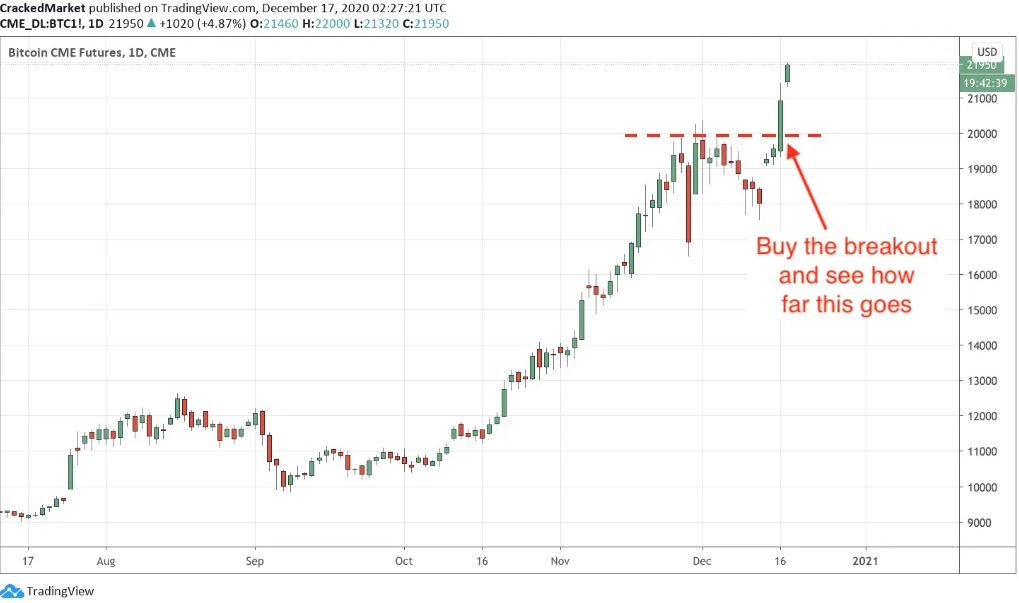
Bitcoin’s journey from an obscure digital experiment to a global financial phenomenon has been nothing short of extraordinary. Born in the aftermath of the 2008 financial crisis, it emerged as a decentralized, peer-to-peer electronic cash system, challenging conventional notions of money and banking. Over a decade later, it has cemented its position as the leading cryptocurrency, captivating investors, institutions, and even nations with its volatile yet often parabolic price movements. The perennial question on everyone’s mind, from seasoned investors to curious onlookers, remains: “How high could Bitcoin go?”
This isn’t merely a speculative inquiry; it’s a profound exploration into the future of finance, technology, and global economics. Bitcoin’s potential valuation hinges on a complex interplay of fundamental economic principles, ever-expanding adoption curves, evolving regulatory landscapes, and the intricate dance of market psychology. While no one possesses a crystal ball to predict its ultimate ceiling, by dissecting the core drivers, inherent challenges, and various valuation methodologies, we can construct an informed perspective on the digital asset’s profound upside potential and the factors that might temper its ascent. Understanding these dynamics is crucial for anyone seeking to navigate the nascent but rapidly maturing world of digital assets and appreciate Bitcoin’s potential role in future investment portfolios.
The Fundamental Pillars Driving Bitcoin’s Value
Bitcoin’s remarkable price appreciation stems from a unique combination of economic design, technological innovation, and its evolving narrative in the global financial landscape. These foundational elements underpin its perceived value and provide a basis for understanding its long-term potential.
Scarcity as a Core Economic Principle
At the heart of Bitcoin’s appeal is its absolute scarcity. Capped at a finite supply of 21 million coins, Bitcoin is designed to be deflationary, a stark contrast to the inflationary nature of fiat currencies, which can be printed at will by central banks. This programmed scarcity is reinforced by “halving” events, which occur approximately every four years, reducing the rate at which new bitcoins are created. Each halving significantly cuts the supply of new bitcoins entering the market, historically leading to periods of increased demand relative to supply and subsequent price appreciation. This predictable, unalterable supply schedule makes Bitcoin a unique asset in a world grappling with continuous currency debasement, solidifying its appeal as a potential store of value. The harder it becomes to mine new coins, and the closer it gets to its fixed cap, the more pronounced this scarcity effect becomes, driving up the value of each existing coin.
Expanding Adoption: From Retail to Institutional
The narrative of Bitcoin’s adoption has transitioned dramatically from a niche interest of tech enthusiasts to a significant consideration for mainstream finance. Retail adoption continues to grow globally, fueled by easier access through numerous exchanges, payment apps, and wallet services. However, the most significant recent catalyst has been institutional adoption. Large corporations like MicroStrategy and Tesla have added Bitcoin to their balance sheets. Major financial institutions, including investment banks and asset managers, are increasingly offering Bitcoin-related products and services, from custodial solutions to derivatives. The approval and launch of spot Bitcoin Exchange-Traded Funds (ETFs) in major markets marked a watershed moment, providing a regulated, accessible, and familiar investment vehicle for traditional investors who previously shied away from direct cryptocurrency ownership. This integration into traditional financial infrastructure broadens Bitcoin’s reach and legitimizes it as a serious asset class, drawing in trillions of dollars from managed funds and pension funds, thereby fueling further demand.
The “Digital Gold” Narrative and Macroeconomic Tailwinds
Bitcoin’s emergence coincided with a growing distrust in traditional financial systems and an era of unprecedented monetary expansion by central banks. This context fostered the “digital gold” narrative, positioning Bitcoin as a modern alternative to traditional safe-haven assets. Like gold, Bitcoin is decentralized, globally accessible, censorship-resistant, and possesses a fixed supply. In times of economic uncertainty, geopolitical instability, or rampant inflation, investors increasingly turn to assets perceived as hedges against traditional market volatility and currency devaluation. Bitcoin’s performance during periods of high inflation or global crises has often reinforced this narrative, leading many to view it as a superior form of money or a store of value that is immune to governmental control and manipulation. As global economies continue to grapple with inflationary pressures and fiscal policies, Bitcoin’s role as a digital hedge is likely to strengthen, attracting capital from those seeking to preserve wealth.
Navigating the Headwinds: Challenges to Bitcoin’s Ascent
While Bitcoin’s potential appears immense, its path to higher valuations is not without significant hurdles. These challenges, spanning regulatory uncertainty, technical limitations, and market dynamics, introduce elements of risk and can influence its price trajectory.
Regulatory Ambiguity and Global Responses
One of the most persistent and impactful challenges facing Bitcoin is the patchwork of global regulations. Governments worldwide are grappling with how to classify, regulate, and tax cryptocurrencies. Some nations have embraced digital assets, developing clear regulatory frameworks to foster innovation and protect investors. Others have adopted a more cautious or even hostile stance, implementing outright bans or restrictive policies, citing concerns about financial stability, money laundering, and consumer protection. This regulatory uncertainty creates a challenging environment for businesses operating in the crypto space, impedes institutional adoption in some regions, and introduces an element of risk for investors. Any major regulatory crackdown from a significant economic power could trigger widespread market sell-offs, while clear, favorable regulation could act as a powerful catalyst for growth. The lack of a unified global approach means Bitcoin’s price will remain sensitive to legislative developments, making regulatory clarity a crucial factor for sustained upward momentum.
Technical Scalability and Environmental Footprint
While Bitcoin’s underlying blockchain technology is robust, it faces inherent scalability limitations. The network’s current capacity to process transactions per second is relatively low compared to traditional payment systems, leading to higher transaction fees and slower confirmation times during periods of high network congestion. While solutions like the Lightning Network aim to address these issues by enabling off-chain transactions, widespread adoption and seamless integration are ongoing processes. Beyond scalability, Bitcoin’s energy consumption has become a prominent concern. The proof-of-work mining mechanism, while providing robust security, is energy-intensive. Critics often highlight its carbon footprint, leading to calls for more sustainable mining practices or even regulatory intervention. Although the industry is actively shifting towards renewable energy sources and more efficient mining hardware, the environmental narrative continues to be a point of contention and a potential headwind, especially for ESG-conscious institutional investors. Addressing these technical and environmental concerns is vital for Bitcoin to achieve broader utility and widespread acceptance.
Market Volatility and Investor Sentiment

Bitcoin is notoriously volatile. Its price can experience dramatic swings, often by 10% or more in a single day, and has seen multiple bear markets with 80%+ drawdowns. This high volatility, while offering significant upside potential, also presents substantial risk, deterring risk-averse investors and making it challenging for its use as a stable medium of exchange. Bitcoin’s price is heavily influenced by market sentiment, which can be swayed by a myriad of factors including macroeconomic data, geopolitical events, social media trends, and news regarding regulatory changes or major hacks in the crypto ecosystem. Fear, uncertainty, and doubt (FUD) can quickly trigger panic selling, while positive news can ignite frenzied buying. This inherent volatility and the often-irrational exuberance or despair of market participants mean that price discovery is a complex process, subject to significant emotional and speculative forces. Managing exposure to such an asset requires a deep understanding of market psychology and a long-term investment horizon.
Unpacking Valuation Models and Price Projections
Predicting Bitcoin’s future price is more art than science, given its novel nature and the dynamic environment it inhabits. However, various models and comparisons offer frameworks for envisioning its potential ceiling.
The Stock-to-Flow Model and its Controversies
One of the most widely discussed valuation models for Bitcoin is the Stock-to-Flow (S2F) model, popularized by the pseudonymous analyst PlanB. This model posits a relationship between an asset’s scarcity (stock) and its annual production (flow), suggesting that scarcer assets have higher values. The S2F model has historically tracked Bitcoin’s price remarkably well, particularly around halving events, predicting significant price increases as its scarcity ratio improves. It extrapolates Bitcoin’s future price based on its dwindling new supply relative to its existing circulating supply. However, the model has also faced criticism, particularly for its purely scarcity-driven approach, which may overlook other critical factors such as adoption, utility, and market demand. While insightful, the S2F model should be viewed as one tool among many, acknowledging that historical performance is not necessarily indicative of future results, especially as Bitcoin matures and its market dynamics evolve.
Network Effects and Market Capitalization Comparisons
Another approach to valuing Bitcoin involves analyzing its network effect and comparing its potential market capitalization to other established asset classes. Metcalfe’s Law suggests that the value of a telecommunications network is proportional to the square of the number of connected users of the system (n^2). Applying this to Bitcoin, its value could theoretically grow exponentially as its user base expands. As more individuals and institutions adopt Bitcoin, its network strengthens, increasing its utility and perceived value. Furthermore, investors often benchmark Bitcoin’s potential against traditional safe-haven assets like gold. With a global market capitalization of well over $10 trillion, if Bitcoin were to capture even a significant fraction of gold’s market share, its price per coin would be orders of magnitude higher than current levels. Comparisons are also drawn to other global assets like real estate, fiat currencies (M2 money supply), or even the total bond market, each suggesting astronomically higher potential valuations if Bitcoin becomes a global reserve asset or a primary store of wealth.
Analyst Forecasts and Cyclical Tendencies
Professional analysts and investment firms offer a broad spectrum of price predictions, ranging from conservative estimates to highly optimistic targets. Some forecast Bitcoin reaching hundreds of thousands of dollars within the next few years, while others envision a multi-million-dollar future over the coming decade. These predictions are often based on varying assumptions regarding institutional adoption, global macroeconomic conditions, technological advancements, and regulatory clarity. Moreover, Bitcoin has historically exhibited distinct four-year cycles, often correlating with its halving events. These cycles typically involve a post-halving bull run, followed by a significant bear market, before the cycle repeats. Understanding these cyclical tendencies, while not a guarantee of future performance, can offer insights into potential future price patterns and help long-term investors position themselves strategically, adopting strategies like dollar-cost averaging to mitigate the impact of volatility.
Bitcoin’s Place in a Modern Investment Portfolio
Integrating Bitcoin into an investment portfolio requires a careful consideration of its unique risk-reward profile, its potential for diversification, and the appropriate strategic allocation.
Risk, Reward, and Portfolio Diversification
Bitcoin stands out for its asymmetric risk-reward profile. While its volatility presents significant risks and potential for substantial drawdowns, it also offers unparalleled upside potential that can outperform traditional asset classes over longer time horizons. For portfolio diversification, the argument for Bitcoin is complex. Historically, Bitcoin has shown periods of low correlation with traditional assets like stocks and bonds, suggesting it could offer diversification benefits. However, during extreme market stress, correlations can sometimes increase. Investors must understand that Bitcoin is not a “risk-off” asset in the traditional sense, but rather a high-growth, high-risk asset that can potentially enhance portfolio returns if managed correctly. Its inclusion aims to capture significant growth opportunities rather than solely providing a safe haven, although its digital gold narrative can offer a hedge against inflation. A judicious approach involves understanding its correlation dynamics and how it behaves across different market cycles.
Strategic Allocation and Long-Term Horizon
Given Bitcoin’s volatility and speculative nature, a strategic allocation approach is crucial. Financial advisors often recommend a small, but meaningful, allocation for high-net-worth individuals and sophisticated investors, typically ranging from 1% to 5% of a total portfolio, depending on individual risk tolerance. This “barbell” strategy allows investors to participate in Bitcoin’s potential exponential growth without exposing the entire portfolio to its inherent risks. For most, a long-term investment horizon is paramount. Attempting to time the market with Bitcoin is exceedingly difficult and often leads to suboptimal outcomes due to its rapid and unpredictable price movements. Instead, adopting a “hold” strategy, combined with dollar-cost averaging (investing a fixed amount regularly, regardless of price), can help mitigate the impact of volatility and build a position over time, benefiting from its long-term upward trend. This patient approach acknowledges Bitcoin’s developmental stage and its journey towards broader adoption and maturation as a global asset.

Conclusion
The question of “how high could Bitcoin go” encapsulates a fascinating intersection of economics, technology, and human psychology. Its journey from a niche digital asset to a significant global financial instrument is propelled by its foundational scarcity, increasing mainstream adoption, and its compelling narrative as “digital gold” in an era of monetary expansion. These forces provide a robust framework for its continued ascent.
However, the path to its ultimate potential is fraught with challenges. Navigating the murky waters of global regulation, addressing concerns about scalability and environmental impact, and contending with its inherent market volatility will be critical determinants of its future trajectory. Various valuation models, from scarcity-driven frameworks to network effect theories and market capitalization comparisons, paint a picture of immense, albeit speculative, upside potential, with predictions ranging from hundreds of thousands to multi-million-dollar valuations in the long term.
For investors, Bitcoin offers a unique, asymmetric risk-reward profile and potential diversification benefits. However, it demands a clear understanding of its risks, a strategic approach to allocation, and, crucially, a long-term investment horizon. While predicting an exact price ceiling for Bitcoin is an exercise in futility, the confluence of its inherent design, accelerating adoption, and its growing importance in the global financial landscape strongly suggests that its journey towards higher valuations is far from over. As it continues to mature, Bitcoin is poised to remain one of the most compelling and potentially transformative assets of our time, warranting careful consideration in any forward-looking investment strategy.
aViewFromTheCave is a participant in the Amazon Services LLC Associates Program, an affiliate advertising program designed to provide a means for sites to earn advertising fees by advertising and linking to Amazon.com. Amazon, the Amazon logo, AmazonSupply, and the AmazonSupply logo are trademarks of Amazon.com, Inc. or its affiliates. As an Amazon Associate we earn affiliate commissions from qualifying purchases.