
The Fundamental Building Blocks of the Digital World
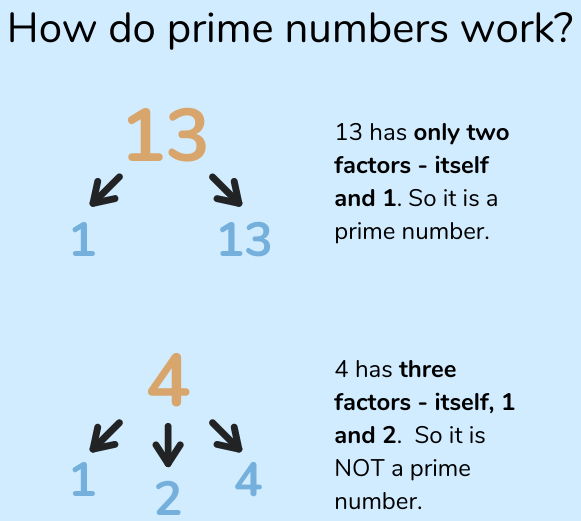
At first glance, the concept of a prime number might seem like a relic from an elementary mathematics class, an abstract concept confined to textbooks. However, these seemingly simple integers—natural numbers greater than 1 that have no positive divisors other than 1 and themselves—are anything but simplistic. In fact, prime numbers are the invisible architecture underpinning much of our modern digital existence, serving as the foundational logic for cybersecurity, advanced algorithms, and data integrity systems. They are not merely mathematical curiosities; they are the silent guardians of our online transactions, the orchestrators of data efficiency, and the enablers of sophisticated computational processes.

A Basic Definition Reimagined
To reiterate the core concept, primes are numbers like 2, 3, 5, 7, 11, and so forth. Their unique property of being indivisible by any number other than one and themselves makes them atomic components within the number system. This intrinsic “indivisibility” is precisely what grants them their immense power in technological applications. Unlike composite numbers, which can be broken down into a product of smaller primes (e.g., 12 = 2 x 2 x 3), primes stand alone. This fundamental characteristic, often referred to as the Fundamental Theorem of Arithmetic (which states every integer greater than 1 is either a prime number itself or can be represented as a product of prime numbers, and this representation is unique), is the bedrock upon which complex digital systems are built.
More Than Just Math: Primes in Computational Logic
The transition from pure mathematics to practical technology hinges on the computational properties of primes. While multiplying two large prime numbers together is a straightforward computational task, reversing this process—factoring a very large composite number back into its original prime components—is exponentially difficult for even the most powerful supercomputers. This asymmetry, this stark difference in computational effort between multiplication and factorization, is the critical lynchpin that elevates prime numbers from academic interest to an indispensable resource in the digital age. It’s this “hard problem” that forms the basis for securing vast amounts of data and ensuring the trustworthiness of digital communications.
Primes as the Bedrock of Cybersecurity
Perhaps the most impactful application of prime numbers in the digital realm is their role in cybersecurity. Without the unique properties of primes, the secure online world we inhabit would simply not exist. From encrypted messages to secure financial transactions, primes provide the mathematical assurance that our digital interactions remain private and protected from malicious actors.
Public-Key Cryptography Explained
The security of virtually all modern online communication and data storage relies on public-key cryptography, most famously exemplified by the RSA (Rivest–Shamir–Adleman) algorithm. At its heart, RSA leverages the computational difficulty of factoring large numbers. Here’s how it works:
When two large prime numbers, typically hundreds of digits long, are multiplied together, they produce an even larger composite number. This composite number forms part of a “public key,” which can be openly shared. Anyone can use this public key to encrypt a message. However, to decrypt the message, one needs the “private key,” which is derived from the original two prime numbers. Since it is computationally infeasible to factor the large composite number back into its two prime components within a reasonable timeframe (even for sophisticated attackers), the private key remains secure. This ingenious system allows individuals to securely exchange information without ever having to exchange a secret key beforehand.
Securing Online Transactions and Communications
The practical implications of prime-based cryptography are omnipresent. Every time you connect to a website via HTTPS, send an encrypted email, or engage in online banking, prime numbers are silently working to protect your data. Digital signatures, another critical security feature, also rely on prime number properties to verify the authenticity and integrity of messages and documents. These signatures ensure that a message truly originated from the claimed sender and has not been tampered with in transit. Even the burgeoning world of cryptocurrencies, like Bitcoin, utilizes cryptographic hash functions and digital signatures that, while not directly factoring large primes, are deeply rooted in the broader field of number theory that primes dominate. The resilience of these systems is directly proportional to the size and careful selection of the primes involved, making the ongoing search for larger and more robust primes a critical endeavor for digital security experts.
The Ever-Evolving Challenge of Prime-Based Security
While prime-based cryptography has served us incredibly well, the landscape of digital security is constantly evolving. The advent of quantum computing presents a theoretical threat to current cryptographic standards. Quantum computers, if fully realized, could potentially perform prime factorization much faster than classical computers, thereby rendering algorithms like RSA vulnerable. This impending challenge has spurred intense research into “post-quantum cryptography,” exploring new mathematical problems that are thought to be resistant to quantum attacks. However, even in this future-facing research, the fundamental understanding of number theory, where primes reside, remains paramount, informing the search for new cryptographic primitives.
Optimizing Algorithms and Data Management
Beyond cybersecurity, prime numbers play a crucial, if often unnoticed, role in optimizing various computer science algorithms and managing vast datasets. Their unique mathematical properties make them ideal for creating efficient and robust systems that handle everything from data storage to random number generation.
Hashing for Efficiency and Integrity
Hash functions are fundamental components in computer science, used for everything from database indexing to creating cryptographic checksums. A good hash function maps data of arbitrary size to a fixed-size value, known as a hash value or hash code. Primes are frequently incorporated into hash function design to minimize “collisions” – instances where different inputs produce the same hash value. By using prime numbers in calculations (e.g., as moduli in modular arithmetic operations), hash functions can more evenly distribute data across a hash table, leading to faster data retrieval and insertion operations. In distributed systems and blockchain technology, efficient hashing, often utilizing prime-related concepts, is critical for maintaining data integrity and network performance.
Random Number Generation for Simulations and Security
In computing, “randomness” is a highly coveted but elusive quality. True randomness is difficult to achieve algorithmically, so computers often rely on “pseudorandom number generators” (PRNGs). These algorithms produce sequences of numbers that appear random but are deterministically generated from an initial “seed” value. Prime numbers are frequently employed in PRNGs to ensure that the generated sequences have long periods (meaning they don’t repeat too quickly) and good statistical properties, making them suitable for simulations, statistical sampling, and even cryptographic applications where a degree of unpredictability is essential for security. The use of large primes in these algorithms helps to guarantee the statistical independence and uniform distribution of the generated numbers.
Error Correction Codes in Data Transmission
When data is transmitted across networks or stored on disks, errors can occur due to noise or corruption. Error correction codes are sophisticated mathematical schemes designed to detect and often correct these errors. While the mathematics behind these codes can be complex, many of them draw from abstract algebra and finite fields, which are intimately connected with prime numbers. Galois fields, whose order is always a prime number or a power of a prime number, are fundamental to constructing many powerful error-correcting codes. By embedding redundancy in the data based on these mathematical principles, systems can reconstruct original data even if portions of it are lost or corrupted, ensuring the reliability of data transfer and storage in critical applications.
The Quest for Gigantic Primes and Their Tech Implications
The pursuit of ever-larger prime numbers is not merely an intellectual sport for mathematicians; it has tangible benefits and implications for the tech industry, spanning from hardware testing to the development of new computational paradigms.
Mersenne Primes and Distributed Computing
One particular class of primes, Mersenne primes (primes of the form 2^p – 1, where p is also a prime), holds special significance. The Great Internet Mersenne Prime Search (GIMPS) project is a prime example of distributed computing, where volunteers around the world dedicate spare processing power from their computers to search for new Mersenne primes. While finding these primes might seem abstract, the computational effort involved pushes the boundaries of hardware and software. The GIMPS project, running on millions of personal computers, effectively acts as a global stress test for CPUs, memory, and network stability, identifying latent bugs and driving advancements in processor design and distributed algorithm optimization.
Benchmarking and System Stability
The intensive computations required to search for and verify large prime numbers serve as excellent benchmarks for computer hardware. Running prime-finding algorithms can stress-test a processor’s floating-point unit, cache, and memory architecture more effectively than many conventional applications. This helps manufacturers and system administrators assess the stability and performance limits of new chips and systems, ensuring reliability under demanding computational loads. Furthermore, the algorithms themselves, designed for extreme efficiency, contribute to the broader understanding of computational limits and the design of high-performance computing solutions.
Future Frontiers: What Next for Primes in Tech?
As technology continues its rapid evolution, so too does our understanding and application of prime numbers. Research continues into the distribution of primes, the properties of prime gaps, and the development of new prime number theorems. These theoretical advancements often lay the groundwork for future technological breakthroughs. From entirely new cryptographic schemes that might emerge from novel prime properties to advanced algorithms for artificial intelligence that could leverage number theoretic insights for more efficient processing, the interaction between prime numbers and technology remains a fertile ground for innovation. The quest for understanding these fundamental numbers is a testament to the enduring interplay between pure mathematics and practical engineering in the digital age.
Identifying Primes: Algorithms in Action
The ability to efficiently determine whether a number is prime is fundamental to many of the tech applications discussed. As numbers used in cryptography become astronomically large, the development of sophisticated primality testing algorithms becomes paramount.
From Trial Division to Advanced Primality Tests
The most intuitive method for checking primality is “trial division,” where one attempts to divide a number ‘n’ by all integers from 2 up to the square root of ‘n’. If no such divisor is found, ‘n’ is prime. While effective for small numbers, trial division becomes prohibitively slow for the immense numbers used in modern cryptography. For example, testing a 2048-bit number (roughly 617 decimal digits) with trial division is completely impractical.
This computational challenge led to the development of more efficient probabilistic primality tests, such as the Miller-Rabin test. These algorithms don’t guarantee primality with 100% certainty but can do so with an astronomically high probability, sufficient for practical cryptographic purposes. More recently, the AKS primality test, discovered in 2002, provides a deterministic polynomial-time algorithm for primality testing, meaning it can definitively prove primality in a reasonable (though still slow for cryptographic sizes) amount of time.

The Computational Cost and Its Tech Relevance
The efficiency of primality testing algorithms directly impacts the feasibility and security of cryptographic systems. Generating the large prime numbers required for RSA keys involves extensive primality testing. Faster algorithms mean quicker key generation and, potentially, more frequent key rotation, enhancing overall security. The ongoing research in computational number theory, much of which focuses on speeding up operations involving large primes, directly contributes to the resilience and performance of the digital infrastructure we rely upon daily. Understanding the nuances of prime numbers is not just an academic exercise; it’s a critical component in ensuring the continued security, efficiency, and robustness of our interconnected technological world.
aViewFromTheCave is a participant in the Amazon Services LLC Associates Program, an affiliate advertising program designed to provide a means for sites to earn advertising fees by advertising and linking to Amazon.com. Amazon, the Amazon logo, AmazonSupply, and the AmazonSupply logo are trademarks of Amazon.com, Inc. or its affiliates. As an Amazon Associate we earn affiliate commissions from qualifying purchases.