
In an era dominated by subscription services, Amazon Prime stands as one of the most pervasive and arguably transformative offerings in the digital marketplace. What began primarily as a fast shipping program has blossomed into a comprehensive ecosystem of benefits, touching nearly every aspect of consumer life, from entertainment to groceries. However, with its ever-expanding suite of features, the perennial question for budget-conscious consumers remains: “How much does Amazon Prime truly cost, and is it a financially sound investment?”
Navigating the various pricing tiers and understanding the true economic value of Prime requires more than just looking at the headline fee. It demands a detailed financial analysis of usage patterns, potential savings, and the opportunity costs involved. This article delves into the precise costs associated with an Amazon Prime membership, dissects its myriad benefits from a purely financial perspective, and provides strategies for maximizing its value while minimizing unnecessary expenditure, ensuring you make an informed decision about its place in your personal financial landscape.
The Evolving Landscape of Amazon Prime’s Price Tag
Understanding the cost of Amazon Prime is the first step in evaluating its financial viability. Like many subscription services, Prime’s pricing has evolved over time, reflecting both the expansion of its features and broader economic pressures. It’s crucial for consumers to be aware of the different pathways to membership and the specific price points associated with each.
Understanding the Core Subscription Tiers
Amazon Prime primarily offers two main subscription models for general consumers:
- Monthly Membership: This option provides flexibility, allowing subscribers to cancel at any time without a long-term commitment. As of recent updates, the monthly fee for an Amazon Prime membership is typically around $14.99. This is often suitable for individuals who anticipate needing Prime for specific short periods, such as during holiday shopping seasons, or those who prefer to spread out their payments without a larger upfront cost. However, the cumulative cost over a year for a monthly subscriber significantly exceeds that of an annual membership.
- Annual Membership: For most consistent users, the annual membership presents a more cost-effective solution. Priced at approximately $139 per year, this option offers a substantial discount compared to paying month-to-month. The annual model encourages longer-term commitment but provides significant savings, making it the preferred choice for regular Amazon shoppers and users of Prime’s digital content. When broken down, the annual cost averages out to roughly $11.58 per month, representing a clear financial advantage over the monthly plan if you intend to subscribe for a full year.
Special Discounts: Savings for Students and Qualifying Individuals
Amazon recognizes that not all financial situations are equal and offers reduced-price Prime memberships to specific demographics, making the service more accessible. These discounts can significantly alter the cost-benefit analysis for eligible individuals:
- Prime Student: For eligible college students, Amazon offers a significantly discounted Prime membership. Typically, this includes an extended free trial period (often six months) followed by a reduced annual fee, usually around $69 per year or $7.49 per month. This half-price offering makes Prime highly attractive to students, providing access to essential shipping benefits for textbooks and supplies, alongside entertainment for downtime, all while managing a tight student budget. Verification of student status, usually through a university email address, is required.
- EBT and Medicaid Holders: In an effort to make Prime’s benefits accessible to a broader audience, Amazon provides a discounted rate for customers who receive qualifying government assistance, such as EBT or Medicaid. These eligible individuals can typically subscribe to Prime for approximately $6.99 per month. This initiative aims to bridge the digital divide, offering financial relief while providing access to the convenience and savings Prime offers, particularly for essential household goods. This demonstrates Amazon’s awareness of socio-economic factors influencing purchasing power.
Historical Price Adjustments: A Look Back and What It Means for Your Budget
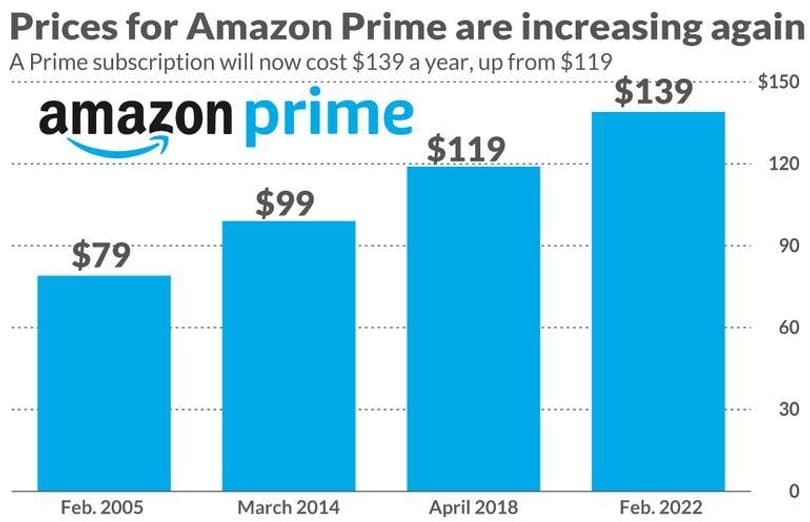
The price of Amazon Prime has not been static since its inception in 2005. Starting at $79 per year, it increased to $99 in 2014, then to $119 in 2018, and most recently to $139 in 2022. These price hikes are generally attributed to the continuous expansion of Prime’s benefits, including massive investments in Prime Video content, faster and more widespread shipping options, and the integration of new services like Amazon Music and Prime Reading.
From a financial planning perspective, understanding this history is crucial. It suggests that future price increases are a possibility, necessitating a periodic re-evaluation of Prime’s value against its cost. Subscribers should factor in potential future increases when assessing long-term financial commitments to the service. For budgeters, this means not just considering the current cost but also anticipating adjustments that might impact their financial outlay for the service in the coming years.
Beyond the Monthly Fee: Deconstructing Prime’s Financial Benefits
Simply knowing the cost of Amazon Prime is only half the equation. The true financial assessment lies in understanding the tangible and intangible monetary benefits it provides. For many, Prime isn’t just an expense; it’s an investment designed to save money and time, which, for many, equates to money.
Shipping Savings: The Unseen Value of Free, Fast Delivery
The cornerstone of Amazon Prime, and arguably its most compelling financial argument, is the free, expedited shipping.
- Eliminating Shipping Fees: For non-Prime members, standard shipping costs on Amazon can quickly add up. A typical order might incur a $5-$10 shipping fee. If an individual places just 10-15 orders per year that would otherwise incur a shipping charge, the annual Prime membership fee can be offset entirely by these savings alone. For frequent shoppers, the savings become exponential.
- Speed and Convenience as a Financial Asset: While not directly monetary, the speed of Prime shipping (often one-day or even same-day) offers significant convenience. This saves time, which can be reallocated to other productive activities, and reduces the need for last-minute, potentially more expensive purchases from local stores when items are needed urgently. For small businesses or those relying on just-in-time inventory, this efficiency can translate into real operational savings.
- Minimum Order Thresholds: Prime members bypass minimum order thresholds for free shipping, allowing them to purchase single, low-cost items without incurring additional fees. This flexibility can lead to more precise purchasing and less “filler” buying just to meet a free shipping minimum, ultimately saving money.
Digital Entertainment: A Cost-Benefit Analysis of Prime Video, Music, and Reading
Prime’s digital entertainment offerings are often cited as a major draw, but their financial value depends heavily on individual usage and existing subscriptions.
- Prime Video: Included with Prime, Prime Video offers a vast library of movies, TV shows, and original content. If a user would otherwise subscribe to a comparable streaming service (e.g., Netflix, Hulu) at a cost of $10-$15 per month, then Prime Video effectively offers a “free” or heavily discounted alternative. However, if a user already subscribes to multiple streaming services or rarely uses Prime Video, its financial value becomes negligible. For those looking to consolidate their entertainment budget, Prime Video can be a significant money-saver.
- Amazon Music Prime: This service provides ad-free access to millions of songs and thousands of curated playlists and stations. While not as extensive as Amazon Music Unlimited or Spotify Premium, it often suffices for casual listeners. If this replaces a paid music streaming service, the savings are clear. If a user needs a more comprehensive library or specific features, the basic Prime Music might not fully offset another music subscription, but it still adds value.
- Prime Reading and Free Books: Prime Reading offers a rotating selection of free eBooks, magazines, and comics. For avid readers, this can reduce spending on individual book purchases. Additionally, “First Reads” allows Prime members to download one free Kindle book per month from a curated selection before its official release. For someone who buys one or two books a month, these features can generate considerable savings over the course of a year.
Exclusive Shopping Advantages: Deals, Credits, and Early Access
Beyond shipping and entertainment, Prime offers several direct and indirect financial benefits related to shopping.
- Prime Day Deals: Prime Day is an annual sales event exclusively for Prime members, offering significant discounts across a wide range of products. Savvy shoppers who plan their purchases around Prime Day can realize substantial savings, especially on electronics, home goods, and Amazon devices. The key is to avoid impulse buying and to focus on genuinely needed items.
- Amazon Fresh/Whole Foods Market Discounts: Prime members often receive exclusive discounts at Whole Foods Market and can access free grocery delivery through Amazon Fresh (above certain minimums in eligible areas). For regular grocery shoppers, these savings and conveniences can be substantial, mitigating the cost of Prime through reduced food bills and transportation costs.
- Prime Exclusive Deals and Coupons: Throughout the year, Prime members have access to special deals, coupons, and early access to Lightning Deals. These can add up to considerable savings, particularly for those who frequently check Amazon for purchases.
- Amazon Photo Storage: Unlimited full-resolution photo storage in Amazon Photos is a valuable perk. For those paying for cloud storage services like Google Photos (after its free tier limits) or Dropbox, this can represent a direct financial saving, especially for users with large photo libraries.
Is Amazon Prime a Financially Sound Investment? Calculating Your ROI
The decision of whether Amazon Prime is a financially sound investment is highly individualized. It hinges on how effectively you utilize its various benefits relative to its cost. Calculating your personal Return on Investment (ROI) for Prime is essential for an informed decision.

Assessing Your Usage Habits: When Prime Pays for Itself
To determine if Prime is worth it, objectively assess your interaction with its services:
- Frequency of Amazon Purchases: If you make more than 10-15 purchases a year that would otherwise incur a shipping fee, Prime likely pays for itself in shipping savings alone.
- Digital Entertainment Consumption: Do you regularly use Prime Video, Music Prime, or Prime Reading? If these services replace other paid subscriptions or significantly reduce your spending on entertainment, they contribute positively to Prime’s ROI.
- Grocery and Whole Foods Shopping: If you frequently shop at Whole Foods or utilize Amazon Fresh, track your exclusive Prime discounts and delivery savings. These can be significant.
- Awareness of Exclusive Deals: Are you proactive in seeking out Prime Day deals and other exclusive offers? Maximizing these discounts can dramatically shift the financial scale.
A simple calculation involves tallying your estimated annual shipping costs without Prime, plus the cost of any streaming, music, or photo storage services Prime effectively replaces. If this sum exceeds $139 (or your specific annual fee), Prime is likely a good financial investment.
Hidden Costs and Opportunity Costs: What Else Could Your Money Buy?
While Prime offers numerous benefits, it’s crucial to consider potential downsides and alternative uses for your funds:
- Impulse Buying: The ease of Prime’s one-click ordering and fast shipping can lead to increased impulse purchases. These unplanned expenditures can quickly negate any shipping savings. Financial discipline is key.
- Opportunity Cost: The $139 annual fee, or the cumulative monthly payments, could be invested elsewhere. What could that money yield if put into a savings account, a low-cost index fund, or used to pay down high-interest debt? For some, foregoing Prime to accelerate debt repayment might be a more financially prudent choice.
- Lack of Full Utilization: If you only use Prime for shipping but never touch Prime Video, Music, or Reading, you’re paying for a bundle of services you’re not utilizing. In such cases, the value proposition diminishes considerably.
Practical Exercises: Estimating Your Personal Prime Value
Take a moment to perform a quick calculation:
- List your typical number of Amazon orders per month: Multiply this by an estimated shipping cost (e.g., $6 per order). Multiply by 12 for an annual total.
- Identify replaced subscriptions: If Prime Video replaces Netflix ($15/month), Prime Music replaces Spotify ($10/month), or Amazon Photos replaces another cloud storage ($5/month), sum these monthly savings and multiply by 12.
- Estimate grocery savings: If you use Whole Foods or Fresh, estimate average weekly/monthly savings from Prime discounts. Multiply by 12.
- Add up your estimated savings. Compare this total to the annual Prime membership cost. If your savings significantly outweigh the cost, Prime is likely a good value. If not, it might be time to reconsider.
Strategies for Optimizing Your Amazon Prime Spending
For those who find Prime beneficial, there are actionable strategies to ensure you’re getting the most bang for your buck and minimizing unnecessary expenditure.
Annual vs. Monthly: The Simple Math of Subscription Savings
As highlighted earlier, the annual membership at $139 offers a substantial discount over the monthly plan at $14.99. Over 12 months, the monthly plan would cost $179.88, meaning the annual plan saves you approximately $40.88 per year. If you anticipate using Prime consistently for more than nine months out of the year, the annual subscription is the clear financial winner. It’s a simple, yet often overlooked, optimization.
Leveraging Free Trials and Promotional Offers
Amazon frequently offers free trial periods for Prime, especially to new customers or those returning after a hiatus. These trials (typically 30 days, or six months for students) allow users to experience the full suite of Prime benefits without financial commitment. This is an excellent way to assess actual usage and value before subscribing. Always remember to set a calendar reminder to cancel before the trial ends if you decide it’s not worth the investment, to avoid automatic charges. Furthermore, keep an eye out for promotional offers that might bundle Prime with other services or offer temporary price reductions.
Account Sharing and Family Benefits: Maximizing Value Per Dollar
Amazon Prime allows households to share certain benefits, which can significantly enhance the value proposition for families. Through “Amazon Household,” two adults and up to four children can share Prime benefits like free shipping, Prime Video, and Prime Reading. This means a single annual membership fee can cover the needs of an entire family, effectively dividing the cost per individual user. For example, two adults splitting a $139 annual fee brings the individual cost down to $69.50 per person, making it an even more attractive financial proposition. This pooling of resources is a powerful way to maximize the utility and financial efficiency of a Prime subscription.
The Future of Prime’s Price: What to Expect and How to Adapt
The landscape of subscription services is dynamic, and Amazon Prime is no exception. As its offerings evolve and economic conditions shift, it’s wise to anticipate future changes and adapt your financial strategy accordingly.
Anticipating Further Price Changes: Industry Trends and Inflation
Given the historical trajectory of Prime’s pricing, it’s reasonable to expect further increases in the future. Factors like inflation, increasing operational costs for shipping and content production, and continued investment in new features (e.g., drone delivery, advanced AI services) will likely exert upward pressure on the subscription fee. Consumers should view Prime as a variable expense that requires periodic re-evaluation rather than a fixed cost. Being prepared for potential price hikes allows for better financial planning and avoids sticker shock.
Alternative Cost-Saving Measures: Exploring Prime-Adjacent Services
If the cost of a full Prime membership becomes prohibitive, or if you primarily use only one or two of its benefits, consider “Prime-adjacent” services. For example, you can still get free shipping on Amazon orders over a certain threshold (typically $35) without a Prime membership. Prime Video and Amazon Music Unlimited can also be subscribed to as standalone services, allowing you to pay only for the specific benefits you value most, albeit potentially at a higher individual cost than when bundled. This unbundling approach can be a strategic move for highly selective users.

Making Informed Decisions: A Continuous Financial Review
Ultimately, the decision of “how much Amazon Prime” is worth for you is a personal financial assessment that should be revisited regularly. Review your usage patterns, re-calculate your ROI, and compare it against the current cost. As your needs change, as Amazon’s offerings evolve, and as your financial situation fluctuates, your relationship with Prime should be re-evaluated. This continuous financial review ensures that your hard-earned money is always being allocated in the most efficient and beneficial way, making Amazon Prime an asset rather than a forgotten expense in your budget. By adopting a proactive and analytical approach, consumers can navigate the complexities of subscription economics with confidence and clarity.
aViewFromTheCave is a participant in the Amazon Services LLC Associates Program, an affiliate advertising program designed to provide a means for sites to earn advertising fees by advertising and linking to Amazon.com. Amazon, the Amazon logo, AmazonSupply, and the AmazonSupply logo are trademarks of Amazon.com, Inc. or its affiliates. As an Amazon Associate we earn affiliate commissions from qualifying purchases.