
Amazon, today an omnipresent titan in global commerce, cloud computing, and digital entertainment, began its storied journey not with an ambition to conquer every market, but with a singular, focused vision: to become the “Earth’s biggest bookstore.” This seemingly modest beginning in 1994, from the garage of founder Jeff Bezos in Bellevue, Washington, offers an unparalleled case study in brand strategy, corporate identity evolution, and market disruption. Understanding Amazon’s origin story is crucial for dissecting how a brand, rooted in a specific niche, successfully scaled to become a multifaceted global powerhouse, perpetually redefining its identity and market presence. Its trajectory from a pure-play online bookseller to the “everything store” and beyond is a masterclass in strategic brand development, relentless customer focus, and agile diversification.

The Humble Genesis: From Bookseller to Brand Visionary
In the nascent days of the internet, before widespread broadband adoption and consumer trust in online transactions, the idea of an internet bookstore was revolutionary. Jeff Bezos, then a successful hedge fund executive, saw the writing on the wall: the internet’s explosive growth presented an unprecedented opportunity for a business model that transcended geographical limitations. His calculated leap into this uncharted territory laid the groundwork for one of the 21st century’s most iconic brands.
Identifying a Niche: The Digital Bookstore Advantage
Bezos’s strategic choice to begin with books was far from arbitrary. Books possessed several characteristics that made them an ideal product for early e-commerce. They were non-perishable, relatively easy to ship, and standardized, meaning a copy of a book was identical whether bought in Seattle or Syracuse. More importantly, the sheer volume of books in print meant that even the largest physical bookstores, like Barnes & Noble or Borders, could only stock a fraction of available titles. The internet, however, offered an “infinite shelf space,” allowing Amazon to offer a selection orders of magnitude greater than any brick-and-mortar competitor. This concept, later popularized as “the long tail” by Chris Anderson, was at the core of Amazon’s initial value proposition, immediately differentiating its brand from traditional retailers. It wasn’t just about selling books online; it was about providing access to all books.
Crafting the Initial Identity: “Earth’s Biggest Bookstore”
From its inception, Amazon’s branding was aspirational and clear. The tagline “Earth’s Biggest Bookstore” wasn’t merely a boast; it was a concise articulation of its corporate identity and a direct challenge to the physical retail giants. This positioning immediately communicated a core brand promise: unparalleled selection. In an era where trust in online commerce was scarce, Amazon strategically built its brand around reliability, convenience, and a seemingly endless catalog. The initial logo, featuring a river and a “smile” arrow from A to Z, subtly hinted at its eventual ambition to carry everything from A to Z, but its primary messaging in the early days was unequivocally about books. The brand sought to instill confidence through its user-friendly interface, secure payment options, and transparent shipping processes, meticulously building the foundational trust required for future expansion.
The Customer-Obsessed Foundation: A Core Brand Pillar
Perhaps the most enduring and impactful aspect of Amazon’s early brand strategy was its unwavering focus on the customer. Bezos famously articulated Amazon’s philosophy: “Start with the customer and work backwards.” This wasn’t just a marketing slogan; it was deeply embedded in the company’s operational DNA and quickly became a defining pillar of its corporate identity. Features like one-click ordering, customer reviews (a revolutionary concept at the time), personalized recommendations, and a generous return policy all stemmed from this customer-centric approach. By prioritizing user experience, convenience, and satisfaction above all else, Amazon cultivated a loyal customer base, transforming initial transactions into long-term relationships. This customer obsession became the immutable bedrock of the Amazon brand, allowing it to pivot and expand while retaining a consistent and trusted identity in the minds of consumers. It created a brand known not just for what it sold, but how it sold it – with the customer always at the forefront.
Beyond Books: The Strategic Brand Diversification
Amazon’s initial success as a bookseller provided the capital, infrastructure, and, crucially, the customer trust necessary for its next ambitious phase: diversification. Bezos recognized early that the platform built for books could seamlessly accommodate other product categories, leveraging the same underlying technology, logistics network, and customer relationships. This strategic pivot was not just about selling more items; it was about fundamentally redefining the Amazon brand from a specialized retailer to a universal provider.
Expanding Product Categories: From Niche to “Everything Store”
The transition began cautiously but systematically. In 1998, Amazon started selling music and videos, followed quickly by electronics, toys, home improvement items, and more. This rapid expansion was a deliberate strategy to capture a larger share of consumer spending and to solidify its position as the premier online shopping destination. The brand messaging subtly shifted from “Earth’s Biggest Bookstore” to “Earth’s Most Customer-Centric Company,” and eventually, the informal but widely understood “everything store.” This required significant investment in technology, warehousing, and logistics, but the underlying brand promise remained consistent: vast selection, competitive pricing, and unparalleled convenience. The challenge was to integrate diverse product lines without diluting the core brand identity, ensuring that the seamless experience customers associated with buying books extended to buying anything else. This transition showcased Amazon’s brand agility, demonstrating its capacity to adapt its product offerings while maintaining a cohesive corporate identity centered on customer value.
Redefining the Brand Promise: Convenience and Selection at Scale
As Amazon expanded its catalog, its brand promise evolved. While “selection” remained a key tenet, “convenience” became increasingly paramount. The company invested heavily in making the purchasing process as frictionless as possible, from enhanced search capabilities to simplified checkout flows. The brand communicated this expanded value proposition through consistent messaging across all its channels, emphasizing the ease of finding and acquiring virtually any product from a single, trusted source. The Amazon website became a portal to a world of goods, effectively positioning the brand as a central hub for consumer needs. This redefined brand promise was not merely about selling more products, but about becoming an indispensable part of the consumer’s daily life, offering a solution to virtually any shopping need with minimal effort. This strategic broadening of its identity was critical in moving beyond a niche market to capture the broader retail landscape.
The Prime Catalyst: Deepening Brand Loyalty and Value Proposition
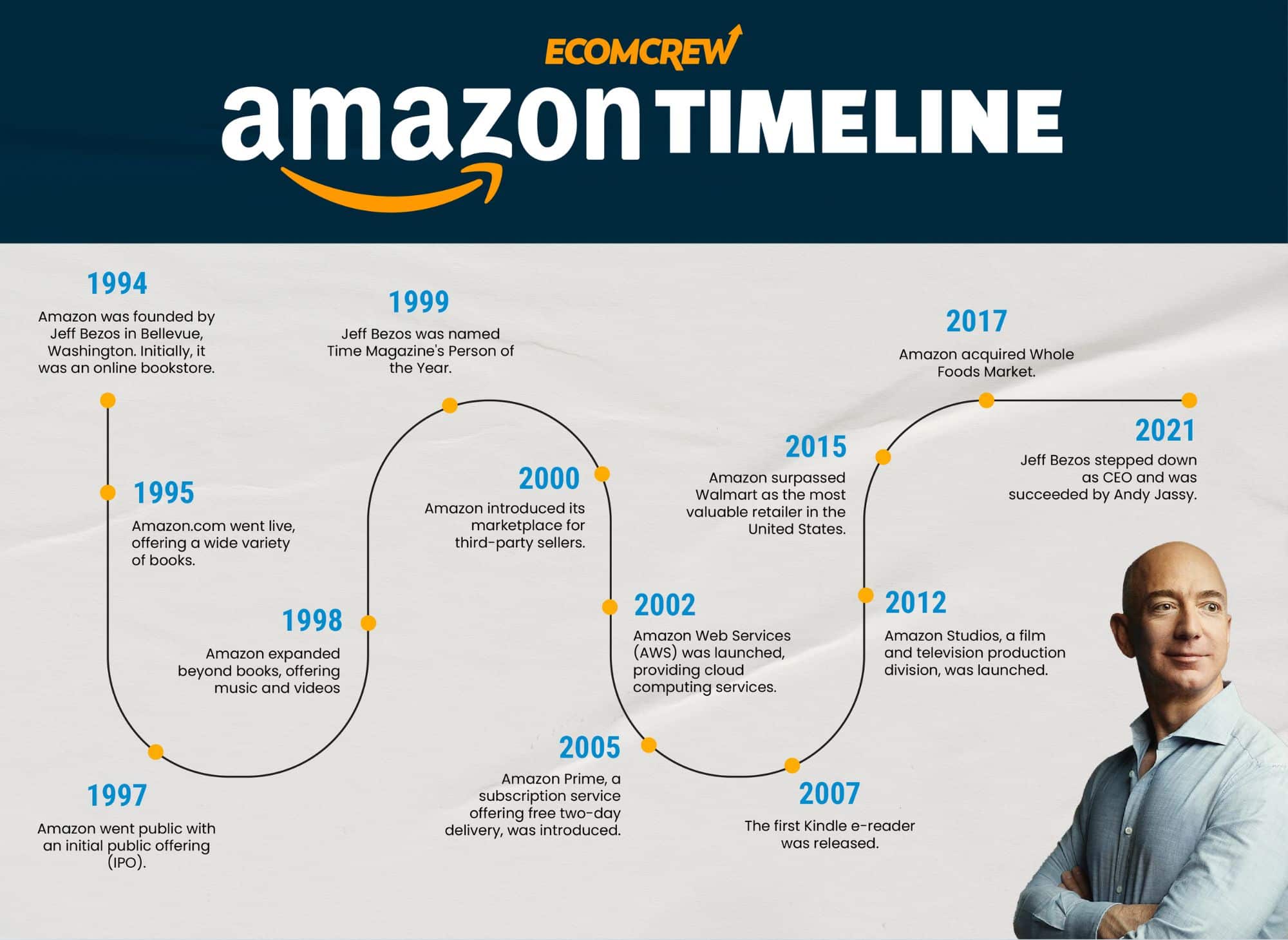
The introduction of Amazon Prime in 2005 marked a pivotal moment in Amazon’s brand journey, fundamentally transforming customer relationships and solidifying brand loyalty. For an annual fee, Prime offered unlimited free two-day shipping, a revolutionary concept at the time. This was more than a shipping perk; it was a masterful stroke of brand strategy that locked customers into the Amazon ecosystem. Prime members, having paid an upfront fee, were incentivized to shop more frequently on Amazon to maximize the value of their subscription. Over time, Amazon layered additional benefits onto Prime, including streaming video (Prime Video), music, e-books (Prime Reading), and exclusive deals, transforming Prime from a shipping service into a comprehensive lifestyle brand offering. Prime deepened customer engagement, fostered a stronger emotional connection with the brand, and dramatically increased customer lifetime value. It turned transactional buyers into loyal subscribers, cementing Amazon’s brand as an essential service rather than just another retailer.
Architectural Shift: Amazon as a Platform Brand
The evolution of Amazon’s brand extends far beyond its retail origins. A critical transformation occurred as the company began to externalize its internal capabilities, strategically positioning itself not just as a seller, but as a platform. This architectural shift diversified Amazon’s corporate identity into entirely new sectors, proving its brand’s remarkable elasticity and its capacity to create new market categories.
Amazon Web Services (AWS): Building a B2B Brand Empire
Perhaps the most significant and transformative brand development for Amazon was the launch of Amazon Web Services (AWS) in 2006. What started as an internal infrastructure to support Amazon’s e-commerce operations was productized and offered as a service to other businesses. This move was audacious; it transformed Amazon from a consumer-facing retail brand into a leading provider of cloud computing services for businesses, governments, and startups worldwide. AWS developed its own distinct brand identity—professional, reliable, innovative—yet remained intrinsically linked to the parent Amazon brand, benefiting from its reputation for scale and efficiency. This strategic diversification not only created an entirely new revenue stream but also showcased Amazon’s technological prowess, positioning it as an innovation leader far beyond retail. AWS became a standalone brand empire, demonstrating Amazon’s ability to build and nurture powerful B2B brands under its overarching corporate umbrella.
The Marketplace Model: Empowering Third-Party Sellers
Complementing its own retail operations, Amazon strategically embraced and scaled its Marketplace model, allowing third-party sellers to list and sell their products on the platform. This move significantly expanded Amazon’s product selection without requiring direct inventory management for every item. By leveraging its brand trust, customer base, and logistics (through Fulfillment by Amazon – FBA), Amazon positioned itself as a critical enabler for small and medium-sized businesses. This platform approach reinforced Amazon’s brand as the ultimate “everything store,” but also as a vital ecosystem for commerce. It transformed Amazon from a direct competitor to other retailers into a partner, providing tools and access to a vast customer network. This move not only enriched the customer experience with even greater selection but also solidified Amazon’s brand identity as the indispensable infrastructure of modern e-commerce.
Innovating Beyond Commerce: Alexa, Whole Foods, and Brand Extensions
Amazon’s brand continues to expand its reach through strategic acquisitions and innovative product development, further demonstrating its brand’s adaptability. The acquisition of Whole Foods Market in 2017 marked a significant foray into physical retail and the high-end grocery sector, blending Amazon’s digital convenience with brick-and-mortar presence. Similarly, the development of Alexa and Echo devices established Amazon as a leader in smart home technology and artificial intelligence, embedding its brand directly into consumers’ daily lives through voice interaction. These brand extensions, whether through M&A or organic innovation, consistently tie back to the core Amazon values of convenience, selection, and customer obsession. They illustrate Amazon’s strategy of creating an interconnected ecosystem where different services reinforce each other, making the Amazon brand an increasingly integral part of how people live, work, and consume.
Sustaining Brand Relevance: Adaptability and Future Trajectories
Amazon’s journey from a nascent online bookseller to a global conglomerate offers invaluable insights into the dynamics of brand building and maintenance in the 21st century. Its ability to not only adapt but to proactively reshape its brand identity has been central to its sustained dominance and relevance.
Navigating Brand Perception and Public Scrutiny
As Amazon’s brand grew in ubiquity and power, so too did public scrutiny. Issues surrounding labor practices, market dominance, environmental impact, and data privacy have increasingly shaped public perception of the brand. For a company that built its foundation on customer trust, managing these complex brand perception challenges has become a critical strategic imperative. Amazon continuously invests in public relations, sustainability initiatives, and corporate social responsibility efforts to mitigate negative perceptions and reinforce its commitment to stakeholders beyond just shareholders. The sheer scale and influence of the Amazon brand mean that its actions are under constant microscope, requiring a proactive and thoughtful approach to maintaining a positive, trustworthy corporate identity amidst a rapidly changing societal and regulatory landscape.
The Brand as an Ecosystem: Interconnected Services and Offerings
Today, the Amazon brand is best understood not as a collection of disparate services, but as an interconnected ecosystem. From shopping on Amazon.com to streaming Prime Video, asking Alexa a question, or a business relying on AWS, each touchpoint reinforces the overall brand. This integrated approach creates a powerful network effect, making it difficult for customers to leave the Amazon sphere once they are embedded within it. The convenience of one-click ordering seamlessly flows into the entertainment of Prime Video, and the reliability of AWS underpins countless digital experiences. This ecosystem strategy solidifies Amazon’s brand as a comprehensive provider that caters to a multitude of consumer and business needs, enhancing brand stickiness and customer loyalty across its diverse offerings.

Lessons in Brand Longevity: Agility, Innovation, and Customer Focus
Amazon’s origin as an online bookstore, and its subsequent transformation, provides profound lessons for any entity aspiring to build a lasting brand. Its journey underscores the importance of:
- Agility: The willingness to pivot, redefine, and expand beyond initial confines.
- Innovation: A relentless pursuit of new products, services, and technological advancements to meet evolving customer needs.
- Customer Obsession: Maintaining an unwavering focus on the customer experience as the ultimate driver of brand value and loyalty.
- Strategic Diversification: Expanding into new areas by leveraging core competencies and brand trust, rather than simply chasing trends.
- Platform Thinking: Evolving from a product seller to an enabler, creating ecosystems that empower others.
In essence, Amazon started as a disruptor in the book market, but its brand transcended that initial identity by consistently prioritizing the customer, embracing radical innovation, and strategically expanding its definition of what it could be. Its evolution is a testament to the power of a brand strategy that looks beyond the present, anticipating future opportunities and building the foundational trust to seize them.
aViewFromTheCave is a participant in the Amazon Services LLC Associates Program, an affiliate advertising program designed to provide a means for sites to earn advertising fees by advertising and linking to Amazon.com. Amazon, the Amazon logo, AmazonSupply, and the AmazonSupply logo are trademarks of Amazon.com, Inc. or its affiliates. As an Amazon Associate we earn affiliate commissions from qualifying purchases.