
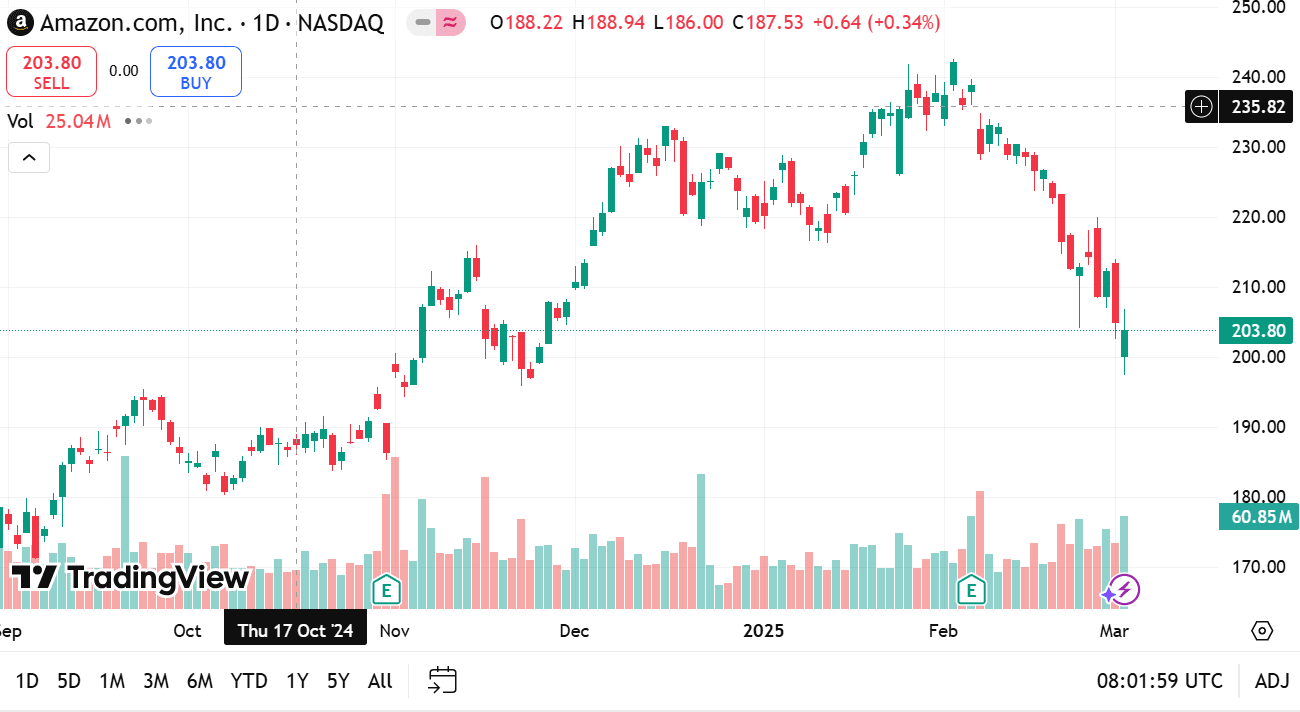
The allure of market giants like Amazon (AMZN) often draws investors and curious observers alike to inquire about their stock’s daily pulse. While providing an exact, real-time price in a static article is inherently impossible due to the ceaseless fluctuations of the stock market, understanding how to track Amazon’s stock and, more importantly, what factors influence its valuation is crucial for anyone engaging with the financial world. Amazon’s journey from an online bookseller to a global behemoth in e-commerce, cloud computing, digital advertising, and entertainment makes its stock a fascinating case study in modern investing. This article delves into the dynamics behind Amazon’s stock price, offering insights into its business model, market influences, and strategic considerations for investors, rather than a fleeting number.

Understanding Amazon’s Stock (AMZN) in the Market Landscape
Amazon.com, Inc. (AMZN) represents more than just a ticker symbol; it encapsulates a sprawling empire that has redefined multiple industries. For investors, understanding the underlying business is paramount to interpreting its stock price movements.
A Giant’s Footprint: Amazon’s Diverse Business Segments
Amazon’s strategic diversification is a cornerstone of its market strength and a key driver of its stock performance. What began with books rapidly expanded into general merchandise, digital content, and pioneering cloud services.
Its primary revenue generators include:
- Online Stores: This segment, the original foundation, involves direct retail sales to consumers through Amazon.com and its international sites, offering a vast array of products. The sheer scale and logistical efficiency here are unparalleled, though margins can be tighter due to fierce competition and high operational costs.
- Third-Party Seller Services: A significant and growing part of Amazon’s ecosystem, this includes commissions, shipping fees, and other related services for third-party sellers on its marketplace. This high-margin business leverages Amazon’s infrastructure without the inventory risk.
- Amazon Web Services (AWS): Often considered the crown jewel, AWS is the world’s leading cloud computing platform. It provides on-demand cloud computing platforms and APIs to individuals, companies, and governments, on a metered, pay-as-you-go basis. AWS consistently delivers robust revenue growth and, crucially, significantly higher operating margins than the retail segments, making it a powerful profit engine and a key valuation driver for the entire company.
- Advertising Services: Leveraging its vast user data and traffic, Amazon has built a formidable advertising business, allowing brands to promote products on its platform and other properties. This segment has seen explosive growth and boasts very high margins, increasingly challenging traditional digital advertising giants.
- Subscription Services: Primarily driven by Amazon Prime memberships, this includes benefits like free shipping, streaming video and music, and other exclusive services. Prime’s sticky nature creates customer loyalty and provides a steady stream of recurring revenue.
- Physical Stores: Amazon’s foray into brick-and-mortar retail with Amazon Fresh, Whole Foods Market, and Amazon Go offers a complementary channel to its online presence, aiming to integrate the online and offline shopping experience.
This diversified portfolio means that Amazon’s stock performance is not solely dependent on consumer spending in e-commerce. Its cloud and advertising segments often provide a buffer during retail slowdowns and can lead growth during periods of expansion.
Navigating Market Volatility and Real-time Pricing
Stock prices are a dynamic reflection of investor sentiment, company performance, and macroeconomic conditions. Amazon’s stock, despite its size, is no exception to daily and even hourly fluctuations. To ascertain the current price, one must consult real-time financial data sources. These include:
- Financial News Websites: Reputable sites like Bloomberg, Reuters, The Wall Street Journal, Yahoo Finance, and Google Finance offer delayed or real-time stock quotes.
- Brokerage Platforms: If you have an investment account, your broker’s platform will provide live quotes, charts, and in-depth analytical tools.
- Stock Market Apps: Many mobile applications are dedicated to tracking stock prices and market news.
It’s important to remember that the price you see at any given moment is merely a snapshot. Prices change constantly as buying and selling orders are executed throughout trading hours. Understanding the context surrounding these movements requires delving into the myriad factors that influence valuation.
Key Factors Driving Amazon’s Stock Performance
Amazon’s stock price is a complex interplay of internal business execution and external market forces. Investors scrutinize several core areas to gauge the company’s health and future prospects.
Financial Health and Earnings Reports
The bedrock of any stock’s valuation lies in the company’s financial performance. For Amazon, this translates into a meticulous examination of its quarterly and annual earnings reports.
Key metrics include:
- Revenue Growth: Amazon has historically been a high-growth company, and investors closely watch its ability to sustain top-line expansion across its diverse segments. Sustained deceleration in revenue growth, especially in AWS, can signal concerns.
- Profitability (Net Income & Earnings Per Share – EPS): While Amazon was known for prioritizing growth over immediate profit in its early days, consistent and growing profitability has become increasingly vital. AWS’s high margins are critical here, often offsetting the lower margins of the retail business. EPS provides a per-share measure of profitability, crucial for valuation ratios.
- Operating Cash Flow and Free Cash Flow: These metrics reveal how much cash the company generates from its operations after accounting for capital expenditures. Strong cash flow indicates the company’s ability to fund future investments, pay down debt, or potentially return capital to shareholders. Amazon’s massive investment in infrastructure (warehouses, data centers) requires significant capital expenditure, making free cash flow an important indicator of efficiency.
- Guidance: Management’s outlook for future quarters is often as important as past performance. Positive or negative guidance on revenue, profit, or key segment performance can significantly impact investor sentiment and, consequently, the stock price.
Analysts dissect these reports, comparing actual results to their estimates, and adjust their price targets and recommendations accordingly, influencing market perception.
Macroeconomic Trends and Consumer Behavior
Beyond company-specific financials, broader economic conditions exert significant influence on Amazon’s stock.
Key macroeconomic factors include:
- Interest Rates and Inflation: Higher interest rates can dampen consumer spending and increase borrowing costs for companies, potentially slowing Amazon’s growth. Inflation can impact Amazon’s cost of goods, labor, and transportation, potentially squeezing margins.
- GDP Growth and Consumer Spending: A strong economy generally correlates with increased consumer spending, benefiting Amazon’s e-commerce segments. Conversely, economic slowdowns or recessions can lead to reduced discretionary spending.
- Employment Levels: High employment typically means more disposable income for consumers, which can translate into higher retail sales for Amazon.
- Supply Chain Health: Amazon’s vast logistics network is susceptible to global supply chain disruptions. Geopolitical events, pandemics, or natural disasters can impact its ability to source products, fulfill orders, and manage costs, affecting profitability.
- Currency Fluctuations: As a global company, Amazon’s international revenues and expenses are subject to currency exchange rate movements, which can impact reported financial results.
Consumer behavior shifts, such as the accelerating adoption of e-commerce during the pandemic, or subsequent return to in-person shopping, also directly impact the demand for Amazon’s services and products.
Competitive Landscape and Innovation
Amazon operates in highly competitive markets. Its ability to maintain and grow its market share depends heavily on its innovation, strategic investments, and competitive positioning.
Key considerations include:
- E-commerce Competition: Rivals like Walmart, Target, eBay, and various direct-to-consumer (DTC) brands constantly challenge Amazon’s retail dominance.
- Cloud Computing Competition: AWS faces strong competition from Microsoft Azure and Google Cloud, necessitating continuous innovation and competitive pricing.
- Advertising Competition: Google and Meta are formidable competitors in the digital advertising space, requiring Amazon to constantly enhance its ad tech and reach.
- Regulatory Scrutiny: Amazon’s immense size and market power have drawn increasing attention from antitrust regulators globally. Potential fines, forced business separations, or restrictions on its operations could significantly impact its future growth and profitability, and thus its stock price.
- Investment in R&D: Amazon’s consistent investment in research and development, particularly in areas like artificial intelligence, logistics automation, satellite internet (Project Kuiper), and new retail technologies, is critical for future growth and staying ahead of the curve. Innovation underpins its long-term competitive advantage.
Investors continuously assess Amazon’s ability to innovate, adapt to changing market conditions, and effectively fend off competitive threats while navigating regulatory challenges.
Approaches to Investing in Amazon Stock
Investing in a company like Amazon requires a clear strategy, whether you’re a seasoned professional or a new entrant to the market. Given its growth trajectory and market leadership, AMZN typically attracts certain types of investors.
Growth Investing vs. Value Investing
Amazon has historically been a quintessential growth stock. Growth investors prioritize companies with above-average revenue and earnings growth, often reinvesting profits back into the business rather than paying dividends. They are willing to pay a premium for future growth potential. Amazon’s expansive market opportunities in cloud, advertising, and international retail make it appealing to this cohort. Valuation metrics often considered for growth stocks include Price-to-Sales (P/S) and Price-to-Earnings Growth (PEG) ratio, in addition to the traditional Price-to-Earnings (P/E) ratio.
While Amazon is not traditionally a value stock (companies trading below their intrinsic value, often with lower P/E ratios and dividends), periods of market correction or slower growth can lead value investors to reassess. However, Amazon’s high valuation multiples usually mean it doesn’t fit the strict criteria of deep value investing. Investors must weigh the potential for continued strong growth against its current valuation to determine if it represents a reasonable investment at a given price point.
Long-term Holding vs. Short-term Trading
Amazon’s history strongly supports a long-term holding strategy. Over decades, the company has demonstrated an unparalleled ability to innovate, expand, and generate substantial returns for patient shareholders. Investors who bought AMZN stock years ago and held through various market cycles have seen significant wealth creation. This approach emphasizes the belief in Amazon’s enduring business model, its ability to compound earnings over time, and its capacity to overcome temporary setbacks. Long-term investors focus less on daily price swings and more on the company’s fundamental business trajectory.
Short-term trading of Amazon stock is also possible, given its high liquidity and volatility. Traders might use technical analysis, news events, or daily market sentiment to make quick profits from price fluctuations. However, this strategy carries significantly higher risk and requires considerable expertise, capital, and time commitment. For most individual investors, the long-term, buy-and-hold strategy for Amazon has proven to be a more effective path to wealth accumulation.
Diversification and Portfolio Allocation
No matter how compelling an investment opportunity Amazon may seem, the principle of diversification remains paramount. Placing a disproportionately large percentage of one’s portfolio into a single stock, even a dominant one like Amazon, introduces concentration risk. If Amazon were to face significant headwinds (e.g., severe regulatory action, unexpected competitive threats, or a prolonged economic downturn impacting its core businesses), a concentrated portfolio would be heavily exposed.
A prudent investment strategy involves allocating capital across various asset classes (stocks, bonds, real estate), different industries, and multiple companies. For those investing in Amazon, it should typically represent one component of a broader, well-diversified portfolio. This approach helps mitigate risk while still allowing participation in Amazon’s potential upside. The allocation to Amazon should align with an investor’s overall risk tolerance, financial goals, and investment horizon.
The Future Outlook for Amazon Stock
Assessing the potential future trajectory of Amazon’s stock involves understanding both its continued growth vectors and the potential headwinds it might face in an ever-evolving global economy.
Continued Growth Vectors
Amazon’s future growth appears multi-faceted, stemming from both established segments and new frontiers:
- International Expansion: While dominant in North America and parts of Europe, Amazon still has significant runway for growth in emerging markets, where e-commerce adoption continues to accelerate. Tailoring its offerings and logistics to local preferences presents substantial opportunities.
- AWS Further Penetration: The cloud computing market is still expanding, with businesses globally continuing their digital transformations. AWS, as the market leader, is well-positioned to capture a substantial share of this growth, particularly in enterprise solutions, government contracts, and specialized cloud services.
- AI Integration and Innovation: Amazon is a leader in AI and machine learning, which underpins everything from its recommendation engines and Alexa smart assistant to its logistics operations and AWS services. Further advancements and integration of AI across its business segments will drive efficiency, create new products, and enhance customer experience, potentially unlocking new revenue streams.
- Advertising Market Share: Amazon’s advertising business has room to grow as more brands recognize the value of reaching consumers directly on its platform where purchasing intent is high. Continued innovation in ad formats and targeting capabilities will be key.
- New Revenue Streams: Amazon’s history is one of continuous experimentation. Investments in areas like healthcare (e.g., Amazon Pharmacy, One Medical), satellite internet (Project Kuiper), and advanced robotics suggest that the company is constantly exploring new avenues for growth and diversification, which could become significant revenue contributors in the long term.
These growth drivers highlight Amazon’s potential to continue expanding its global footprint and services, fueling its financial performance.
Potential Headwinds and Risks
Despite its formidable position, Amazon faces several significant challenges and risks that could impact its future stock performance:
- Regulatory Scrutiny and Antitrust Concerns: As mentioned earlier, Amazon’s market dominance makes it a prime target for antitrust investigations and regulatory actions across the globe. Potential outcomes, such as forced divestitures, restrictions on its business practices, or substantial fines, could significantly curtail its growth and profitability.
- Increased Competition: While a leader, Amazon faces robust competition across all its segments. New entrants, innovative startups, and existing giants continually challenge its market position, potentially eroding market share or pressuring margins.
- Economic Downturns: A severe or prolonged global economic recession could significantly impact consumer discretionary spending, directly affecting Amazon’s e-commerce and advertising revenues. Businesses might also scale back on cloud spending during tough economic times.
- Labor Costs and Supply Chain Disruptions: As a major employer and logistical giant, Amazon is highly sensitive to rising labor costs, unionization efforts, and persistent supply chain issues. These factors can increase operational expenses and compress profit margins.
- Geopolitical Risks: Global trade tensions, political instability, and international conflicts can disrupt supply chains, impact international sales, and create economic uncertainty, all of which could negatively affect Amazon’s global operations and financial results.
Investors must weigh these potential risks against the company’s growth prospects when making investment decisions. A balanced perspective that acknowledges both opportunities and challenges is essential for informed investing.

Conclusion: Informed Decision-Making in a Dynamic Market
The question “what is the current price of Amazon stock?” serves as a gateway to a much broader and more intricate discussion about market dynamics, corporate strategy, and individual investment philosophies. While the precise numerical value changes by the second, the underlying principles that drive its movement remain constant. For those looking to invest in or understand Amazon, focusing on its diversified business segments, robust financial health, ability to innovate, and resilience against macroeconomic and competitive pressures is far more valuable than a fleeting real-time quote.
Effective investing in a company of Amazon’s stature demands continuous research, a deep understanding of its business model, an awareness of the broader economic landscape, and a clear-eyed assessment of both its opportunities and risks. It underscores the importance of a long-term perspective and the strategic allocation of capital within a diversified portfolio. Ultimately, informed decision-making, rather than chasing momentary fluctuations, is the cornerstone of successful investing in the dynamic world of publicly traded companies like Amazon.
aViewFromTheCave is a participant in the Amazon Services LLC Associates Program, an affiliate advertising program designed to provide a means for sites to earn advertising fees by advertising and linking to Amazon.com. Amazon, the Amazon logo, AmazonSupply, and the AmazonSupply logo are trademarks of Amazon.com, Inc. or its affiliates. As an Amazon Associate we earn affiliate commissions from qualifying purchases.