
In the high-stakes world of technology, understanding the ownership structure of a global powerhouse like Broadcom Inc. (NASDAQ: AVGO) is not merely a matter of curiosity; it’s a critical lens through which investors, analysts, and market observers comprehend its strategic direction, financial performance, and long-term viability. Unlike a privately held entity with a clear, singular owner, Broadcom, as a publicly traded company, represents a mosaic of ownership interests, predominantly held by a vast array of institutional investors. Its journey from a smaller entity to a semiconductor and enterprise software behemoth is deeply intertwined with its evolving financial ownership landscape, marked by strategic acquisitions and a relentless focus on shareholder value.

At its core, “who owns Broadcom” isn’t about identifying a single person or entity holding a majority stake. Instead, it delves into the intricate web of public market ownership, where millions of individual shareholders collectively hold a stake, but the vast majority of influence and capital resides with large financial institutions. This distinction is crucial for grasping the company’s governance, dividend policies, and its aggressive M&A strategy, all of which are meticulously calibrated to serve its diverse ownership base.
The Publicly Traded Nature and Transformative History
Broadcom Inc. is a quintessential example of a modern, publicly traded corporation, meaning its shares are bought and sold on stock exchanges, making its ownership fragmented across numerous investors. This public status dictates a high degree of transparency regarding its financial performance, corporate governance, and, critically, its major shareholders. However, understanding the current ownership requires a brief look back at the company’s remarkable corporate evolution, a history deeply rooted in financial engineering and strategic consolidation.
From Private Equity Roots to Public Listing
The genesis of what we know today as Broadcom Inc. actually begins with Avago Technologies, a company with significant private equity backing. Initially spun out from Hewlett-Packard in 2005 and later acquired by private equity firms Kohlberg Kravis Roberts (KKR) and Silver Lake Partners, Avago successfully navigated an initial public offering (IPO) in 2009. This move transitioned ownership from a concentrated private equity model to a widely distributed public one, allowing individual and institutional investors to buy stakes in the company. The IPO marked a pivotal financial milestone, providing liquidity for its private equity owners while raising significant capital for future growth and expansion, laying the groundwork for its subsequent aggressive M&A strategy. This initial public ownership structure immediately placed it under the scrutiny and influence of public market forces, where shareholder returns became paramount.
The Transformative Merger: Avago Acquires Broadcom Corporation
The most significant event shaping Broadcom’s current identity and ownership occurred in 2016 when Avago Technologies acquired the original Broadcom Corporation for an astonishing $37 billion. This was not merely an acquisition; it was a transformative merger that redefined the landscape of the semiconductor industry. From a financial perspective, Avago leveraged a combination of cash and stock for the deal, resulting in the creation of a new, combined entity that adopted the Broadcom Inc. name but retained Avago’s financial structure and leadership, most notably CEO Hock Tan.
This strategic maneuver had profound implications for ownership. Shareholders of the original Broadcom Corporation received a mix of cash and shares in the new Broadcom Inc., effectively integrating their ownership into the acquiring company’s structure. The merger was financially driven, aimed at achieving massive scale, diversifying product offerings, and realizing significant cost synergies, all of which were projected to enhance shareholder value. For investors, this meant buying into a much larger, more diversified, and financially robust entity with expanded market reach across various semiconductor segments and, increasingly, enterprise software.
The Significance of Ticker Symbol AVGO
Despite the company rebranding as Broadcom Inc., the ticker symbol on the NASDAQ stock exchange remains AVGO. This seemingly minor detail carries significant financial and historical weight. It signifies the continuity of Avago Technologies as the legal and financial entity that ultimately acquired and integrated Broadcom Corporation. For investors, this means that historical stock performance data for AVGO accurately reflects the financial trajectory of the company that ultimately became Broadcom Inc., including all its subsequent acquisitions. This continuity is crucial for financial analysis, allowing investors to track long-term trends in share price, dividend payouts, and overall financial health under the same corporate umbrella. It underscores the foundational role of Avago’s original public market listing and its robust financial framework in building the contemporary Broadcom.
The Dominance of Institutional Investors
When examining “who owns Broadcom,” the answer overwhelmingly points to institutional investors. These are not individual investors but large organizations that invest on behalf of their clients or members. This category includes mutual funds, pension funds, hedge funds, asset management firms, and insurance companies. Their collective holdings represent the vast majority of Broadcom’s outstanding shares and, consequently, hold significant sway over the company’s direction.
Broadcom’s Largest Shareholders
Broadcom’s shareholder register is typically dominated by some of the world’s largest asset managers. While exact percentages fluctuate daily, firms like Vanguard Group, BlackRock Inc., State Street Corp., Capital Group Companies, and Fidelity Management & Research Co. consistently rank among its top owners. Each of these institutions holds billions of dollars worth of Broadcom stock, often through hundreds of different funds they manage (e.g., index funds, actively managed equity funds, ETFs). For instance, an investor owning a Vanguard S&P 500 Index Fund implicitly owns a fractional stake in Broadcom, as it’s a prominent component of that index. These institutional behemoths invest in Broadcom due to its market leadership, strong financial performance, consistent profitability, and attractive dividend yield, making it a staple in many diversified portfolios.
Understanding Institutional Influence
The sheer volume of shares held by institutional investors grants them immense influence over corporate governance and strategic decisions. They often have dedicated teams that engage with company management, vote on critical proxy proposals (such as board appointments, executive compensation, and significant M&A transactions), and can even exert pressure for changes in corporate strategy. For Broadcom, this means that its board of directors and executive team must continuously demonstrate commitment to creating shareholder value to appease these powerful stakeholders. Their collective voting power can approve or reject major deals, influence dividend policies, or push for share buybacks, directly impacting Broadcom’s financial structure and its approach to capital allocation. This dynamic ensures management remains acutely focused on metrics that drive investor returns, such as earnings per share (EPS) growth, free cash flow generation, and total shareholder return.
Passive vs. Active Management
The institutional ownership landscape can be further dissected into passive and active management styles, each with different implications for Broadcom. Passive funds, primarily index funds (like those offered by Vanguard and BlackRock), invest in Broadcom simply because it is a component of a specific market index (e.g., S&P 500, NASDAQ 100). Their investment strategy is to mirror the index’s performance, not to outperform it. While they hold significant voting power, their engagement with management is often more measured, focusing on good governance practices rather than specific strategic shifts.
Active funds, on the other hand, actively research and select stocks they believe will outperform the market. These funds, managed by firms like Fidelity or specific hedge funds, invest in Broadcom because their portfolio managers have identified it as a strong investment opportunity based on its fundamentals, growth prospects, or valuation. Active managers might be more vocal in their engagement, potentially advocating for strategic changes they believe will unlock greater value. Broadcom’s management must navigate the expectations of both types of institutional investors, balancing broad market appeal with the specific demands of performance-driven active managers.
The Role of Key Executives and Insiders
While institutions dominate the majority ownership, the role of key executives and insiders, particularly CEO Hock Tan, is pivotal in shaping Broadcom’s financial destiny and guiding its strategic direction. Their ownership stakes, though smaller in percentage terms compared to institutional holdings, are highly significant due to their direct influence and deep understanding of the company’s operations.
Hock Tan’s Strategic Vision and Compensation
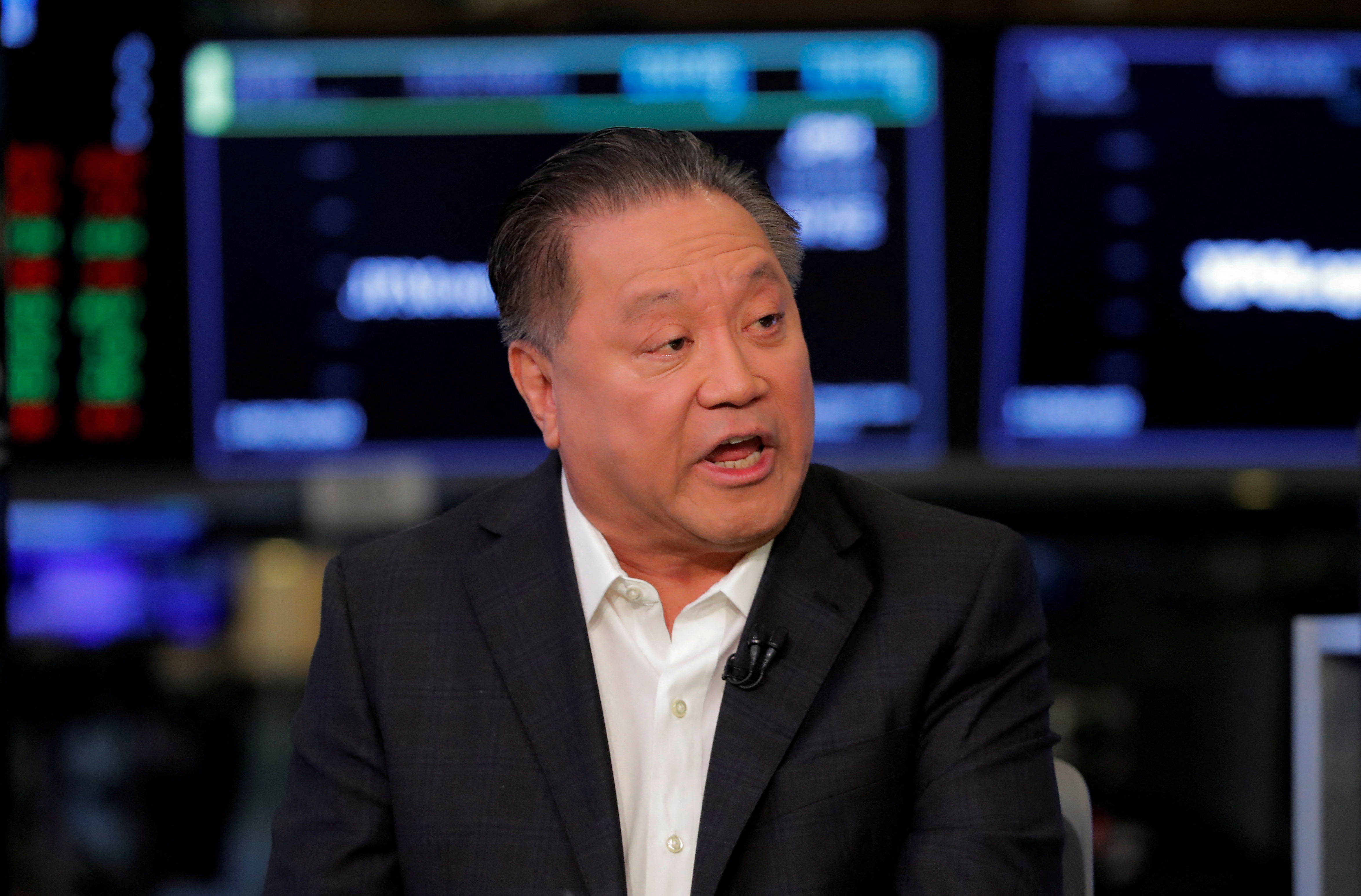
Hock Tan, Broadcom’s President and CEO, is widely recognized as the architect of the company’s aggressive and highly successful M&A strategy. His vision has transformed Broadcom from a component supplier into a diversified technology giant with significant presence in both semiconductors and enterprise software. Tan’s leadership is characterized by a disciplined financial approach, focusing on acquiring mature, cash-generative businesses, integrating them efficiently, and optimizing their profitability.
From an ownership perspective, Tan and other top executives typically hold substantial equity stakes in the company, often through a combination of stock options, restricted stock units, and direct share purchases. This insider ownership aligns their personal financial interests directly with those of external shareholders. Their compensation packages are heavily weighted towards performance-based equity awards, meaning their wealth grows significantly when Broadcom’s stock price appreciates and when shareholder value is created. This structure incentivizes management to make decisions that boost profitability, market share, and ultimately, the company’s market capitalization, benefiting all owners.
Insider Holdings and Their Implications
Insider holdings refer to the shares owned by a company’s officers, directors, and employees. While these percentages are usually much smaller than institutional ownership, they are a powerful indicator of management’s confidence in the company’s future. When insiders hold a significant number of shares, it suggests a strong alignment of interests between those running the company and its external shareholders. They have a vested interest in the long-term success and financial health of Broadcom, as their personal wealth is tied to its performance.
This alignment often translates into more prudent financial decisions, a focus on sustainable growth, and a commitment to maintaining a robust balance sheet. Insider buying, for instance, can be interpreted by the market as a strong signal of confidence, while significant insider selling might raise questions. For Broadcom, the substantial insider ownership among its leadership team provides reassurance to its vast network of institutional and individual investors that the company’s helmsmen are genuinely invested in its success.
Financial Strategy and Investor Value Creation
Broadcom’s ownership structure directly informs its aggressive and highly effective financial strategy, which is meticulously designed to create and return value to its diverse shareholder base. This strategy is characterized by a blend of strategic acquisitions, robust dividend payouts, and disciplined capital management.
Broadcom’s M&A-Driven Growth Model
A hallmark of Broadcom under Hock Tan’s leadership has been its consistent pursuit of large-scale, strategic acquisitions. Major deals, such as the purchases of Brocade Communications Systems, CA Technologies, Symantec’s enterprise security business, and most recently, VMware, are not merely about expanding product portfolios; they are deeply financial maneuvers. The core financial rationale behind these acquisitions is to acquire established businesses with strong intellectual property, significant market share, and, crucially, stable and recurring revenue streams that generate substantial free cash flow.
Broadcom’s strategy involves integrating these acquired entities, streamlining their operations, and leveraging its scale to improve their profitability and cash generation. This inorganic growth model rapidly expands Broadcom’s revenue base and earnings per share, which are key metrics for investor valuation. These acquisitions are often financed through a combination of cash, new debt, and sometimes stock, reshaping Broadcom’s balance sheet but always with a clear focus on the return on invested capital and the ultimate benefit to shareholders through enhanced financial performance and stock price appreciation. This approach is highly appealing to institutional investors seeking consistent growth and strong financial returns.
Shareholder Returns: Dividends and Buybacks
Broadcom is notable for its robust approach to returning capital to shareholders, primarily through a steadily increasing dividend. The company has established itself as a reliable dividend payer, often offering one of the highest yields among large-cap technology companies. This dividend policy is a direct appeal to income-focused investors, including many pension funds and individual investors who rely on consistent cash flow from their investments. The ability to sustain and grow such a significant dividend signals financial strength, consistent cash flow generation, and management’s confidence in future earnings.
In addition to dividends, Broadcom may also engage in share repurchase programs. Share buybacks reduce the number of outstanding shares, which can boost earnings per share (EPS) and often signal that management believes the stock is undervalued. Both dividends and buybacks are financial tools used to enhance shareholder value, making Broadcom an attractive investment for a wide range of owners. These decisions are carefully balanced against investment in R&D, strategic acquisitions, and debt reduction, reflecting a disciplined capital allocation strategy aimed at maximizing long-term shareholder wealth.
Debt Management and Financial Leverage
Broadcom’s aggressive M&A strategy naturally involves significant financial leverage, meaning it takes on substantial debt to finance its acquisitions. Understanding its debt management practices is crucial for assessing the risk profile from an owner’s perspective. The company’s financial leadership is known for its discipline in managing this debt, focusing on rapidly paying down acquisition-related debt through strong free cash flow generation.
While high debt levels can be a concern for investors, Broadcom’s approach has historically been to use leverage strategically to fund growth, rapidly de-lever post-acquisition, and maintain healthy credit ratings. This balance between growth-oriented debt and disciplined repayment is a delicate act, constantly scrutinized by bondholders and equity investors alike. A strong balance sheet with manageable debt levels is critical for ensuring the company’s financial flexibility, its ability to execute future strategic moves, and its overall appeal to a diverse ownership base seeking both growth and stability.
Broader Market Context and Investment Considerations
Broadcom’s ownership structure and financial strategies are not isolated but exist within a broader market context, influencing its valuation and appeal to potential investors. Its position in the semiconductor and enterprise software industries, combined with its unique financial model, makes it a distinct investment proposition.
Broadcom in the Semiconductor and Software Landscape
From an investment perspective, Broadcom occupies a leading position in both the semiconductor and enterprise software sectors. In semiconductors, it designs and develops a wide range of chips used in critical infrastructure, networking, broadband communication, and storage. Its pivot into enterprise software, through acquisitions like CA Technologies, Symantec, and VMware, has diversified its revenue streams, providing more stable, recurring income and reducing its cyclical exposure to the hardware market. This diversification is highly attractive to owners seeking long-term stability and growth. Its market capitalization reflects its significant industry leadership and strong competitive advantages, which translate directly into robust financial performance and attractive investment returns.
Investment Considerations for Potential Shareholders
For anyone considering owning a piece of Broadcom, several financial aspects are paramount. Investors should analyze its consistent track record of revenue growth (both organic and inorganic), strong profit margins, and exceptional free cash flow generation. The company’s dividend yield and its history of dividend increases are significant for income-focused portfolios. Furthermore, understanding its valuation metrics (e.g., Price-to-Earnings ratio, Enterprise Value-to-EBITDA) relative to its peers and its historical averages provides insight into whether the stock is currently over or undervalued. Assessing its debt levels and repayment schedule, particularly after major acquisitions, is also crucial for gauging financial risk. Ultimately, investing in Broadcom means betting on its management’s ability to continue identifying and integrating high-quality assets, optimizing operational efficiencies, and consistently returning capital to shareholders.

The Future of Broadcom’s Ownership and Strategy
The ownership of Broadcom will continue to evolve, influenced by its ongoing financial performance, future M&A activities, and broader market trends. As the company continues to grow and potentially make more large acquisitions, its shareholder base may shift, attracting new institutional investors or seeing existing ones adjust their positions. The balance between debt and equity financing for future deals will also play a role in shaping its financial structure and risk profile. Ultimately, “who owns Broadcom” will always reflect the collective confidence of a global investor community in the company’s ability to execute its unique financial strategy, navigate complex technology markets, and consistently deliver superior returns, securing its place as a cornerstone of many investment portfolios.
aViewFromTheCave is a participant in the Amazon Services LLC Associates Program, an affiliate advertising program designed to provide a means for sites to earn advertising fees by advertising and linking to Amazon.com. Amazon, the Amazon logo, AmazonSupply, and the AmazonSupply logo are trademarks of Amazon.com, Inc. or its affiliates. As an Amazon Associate we earn affiliate commissions from qualifying purchases.