
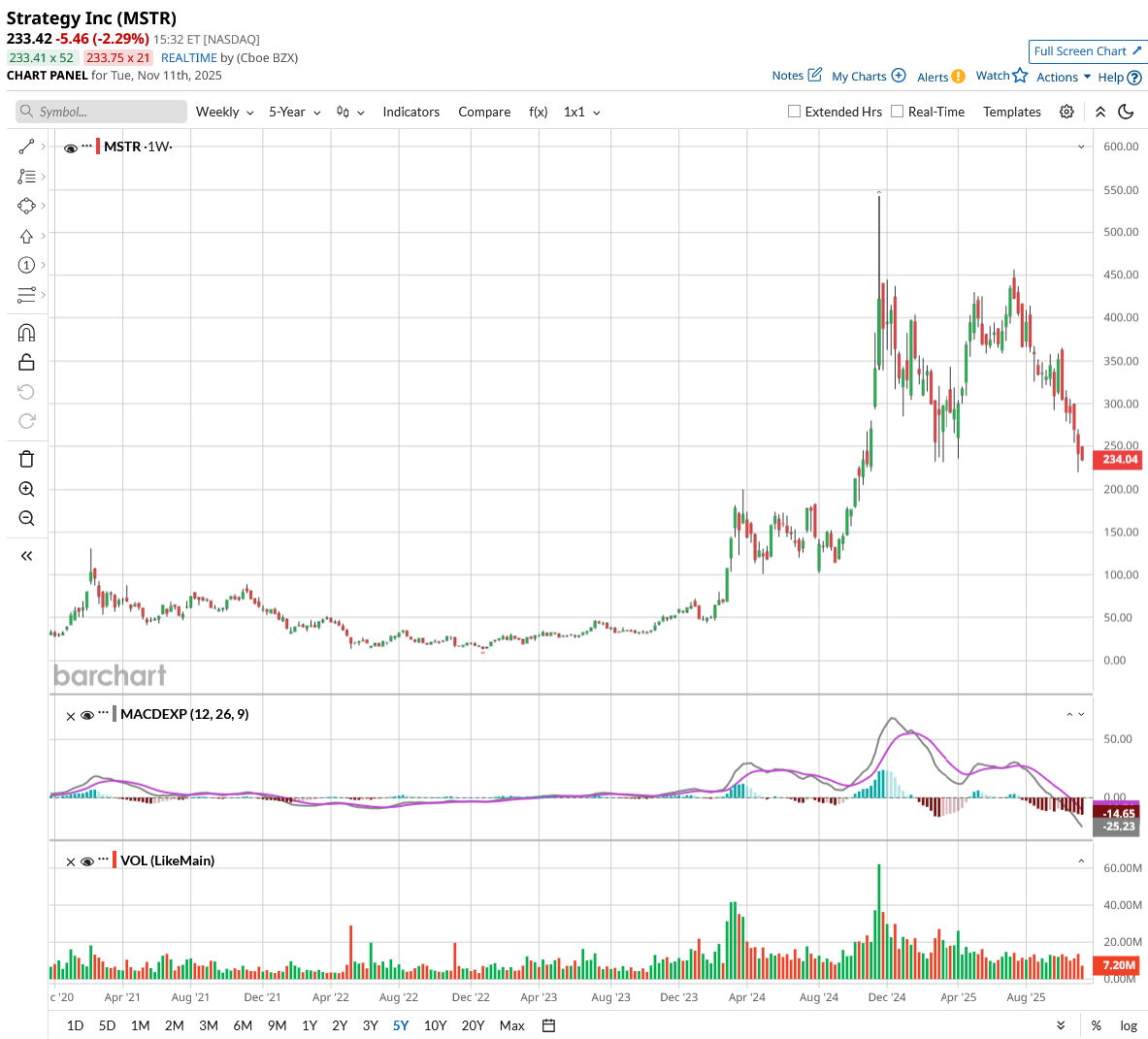
The daily ebb and flow of the stock market can often leave investors questioning the immediate causes behind a particular stock’s performance. When a company like MicroStrategy (MSTR) experiences a significant dip, the question “Why is MSTR down today?” resonates particularly strongly within the financial community. Unlike many traditional tech firms, MicroStrategy occupies a unique and often volatile position, making its stock performance a compelling case study in modern investment dynamics.
To understand why MSTR might be experiencing a downturn on any given day, one must first grasp its distinctive market identity. While MicroStrategy remains a global leader in business intelligence, mobile software, and cloud-based services, its stock price has become overwhelmingly correlated with the performance of Bitcoin. This strategic pivot, initiated in August 2020, transformed MSTR into what many investors perceive as a leveraged proxy for Bitcoin, fundamentally altering the drivers of its market valuation. Therefore, analyzing MSTR’s daily movements requires looking beyond traditional software company metrics and delving deep into the cryptocurrency market and broader macroeconomic trends affecting risk assets.

Understanding MicroStrategy’s Unique Market Position
MicroStrategy’s journey from a pure-play enterprise software company to a Bitcoin-centric entity is a fascinating narrative in corporate finance, fundamentally reshaping how its stock is perceived and valued by investors. This strategic shift is the bedrock upon which any analysis of MSTR’s daily performance must be built.
A Dual Identity: Software Innovator and Bitcoin Proxy
Historically, MicroStrategy built its reputation on robust business intelligence software, helping organizations analyze vast amounts of data to make informed decisions. Its core business continues to operate and generate revenue from these enterprise software solutions, serving a global client base. However, under the leadership of Michael Saylor, the company embarked on an audacious corporate strategy: to acquire and hold Bitcoin as its primary treasury reserve asset. This decision was rooted in a belief that Bitcoin offers a superior store of value compared to traditional fiat currencies, protecting the company’s capital from inflation and providing a long-term growth opportunity.
This pivot created a dual identity for MicroStrategy. On one hand, it remains a legitimate, revenue-generating software company with its own operational performance, product cycles, and competitive landscape. On the other hand, it has effectively become the world’s largest corporate holder of Bitcoin, with its balance sheet heavily weighted towards the digital asset. This duality means that traditional valuation methods for software companies (e.g., Price-to-Earnings, Price-to-Sales based on software revenue) are often overshadowed by the fluctuating value of its massive Bitcoin holdings. Investors now often view MSTR as a “pure play” on Bitcoin, offering a way to gain exposure to the cryptocurrency through a publicly traded equity, albeit with the added layers of corporate structure and leverage.
The “Bitcoin Strategy” Premium (and Discount)
The market has priced in MicroStrategy’s Bitcoin strategy with a significant premium—or sometimes a discount, depending on sentiment. When Bitcoin’s price is soaring, MSTR stock often outperforms the cryptocurrency itself, a phenomenon commonly attributed to its leveraged capital structure (e.g., issuing convertible notes or taking on debt to buy more Bitcoin) and the equity wrapper offering traditional stock market accessibility. This leverage can amplify gains when Bitcoin rises.
Conversely, when Bitcoin experiences a downturn, MSTR’s stock tends to fall even more sharply. This amplified downside is a direct consequence of the same leverage and the market’s perception of increased risk. Investors might factor in the cost of servicing debt taken out to acquire Bitcoin, the potential for impairment charges on its digital asset holdings (under current accounting rules), and the overall speculative nature of its strategy. Therefore, the “Bitcoin Strategy” can either act as a powerful accelerator for MSTR’s stock price or as a significant drag, largely dictating its daily movements far more than its core software business. This inherent linkage makes MSTR one of the most volatile stocks on major exchanges, a characteristic directly tied to its unique financial engineering and asset allocation choices.
Primary Drivers of MSTR’s Stock Volatility
Understanding MicroStrategy’s stock performance requires an acknowledgment of its extreme volatility, a characteristic primarily driven by its unique exposure to the cryptocurrency market and susceptibility to broader macroeconomic forces.
Bitcoin’s Price Action: The Dominant Factor
Unquestionably, the single most significant determinant of MSTR’s daily stock performance is the price movement of Bitcoin. Given that MicroStrategy holds tens of thousands of Bitcoins on its balance sheet, its market capitalization is inextricably linked to the value of this underlying asset. When Bitcoin experiences a significant dip, even by a few percentage points, it directly translates to a decrease in the aggregate value of MicroStrategy’s holdings. This, in turn, often triggers a disproportionate sell-off in MSTR shares.
The relationship isn’t just one-to-one; it’s often amplified. MicroStrategy has frequently utilized debt (such as convertible notes or secured term loans) to finance its Bitcoin purchases. While this leverage can supercharge returns when Bitcoin is rising, it also magnifies losses when Bitcoin’s price declines. Investors perceive higher financial risk due to this leverage, leading to sharper declines in MSTR’s stock price compared to Bitcoin itself during market downturns. Therefore, any major news or trend impacting Bitcoin’s valuation—be it regulatory concerns, macro investor sentiment, or technical price levels—will almost certainly manifest in MSTR’s stock price.
Broader Market Sentiment and Macroeconomic Headwinds
While Bitcoin is the primary driver, MSTR is not immune to broader market forces, especially those impacting growth and technology stocks. As a publicly traded company on the NASDAQ, it is subject to the same pressures that affect other companies in the broader equity market.
- Interest Rate Hikes and Inflation Concerns: Periods of high inflation and rising interest rates often lead investors to de-risk their portfolios, shifting away from speculative growth assets towards safer, value-oriented investments. Cryptocurrencies, and by extension, companies heavily invested in them like MSTR, are often categorized as higher-risk assets. A hawkish stance from central banks or persistent inflation data can therefore put downward pressure on MSTR.
- Recession Fears: Economic downturns or recessionary fears typically lead to a flight to safety, with investors pulling capital from riskier ventures. Given MSTR’s strong correlation with Bitcoin, which itself is a highly volatile asset, it tends to suffer significantly during periods of economic uncertainty.
- General Tech Sector Performance: While its Bitcoin holdings dominate, MicroStrategy is still fundamentally a technology company. If the broader tech sector experiences a sell-off due to factors like valuation concerns, regulatory scrutiny, or a rotation out of growth stocks, MSTR can also be caught in the dragnet, further compounding any downward pressure from Bitcoin’s performance.
Investor Perception and Risk Appetite
The perceived risk and overall appetite for speculative assets play a crucial role in MSTR’s valuation. MicroStrategy’s Bitcoin strategy is bold and unconventional, making it attractive to some investors seeking aggressive growth, but also a deterrent to others who prefer traditional, predictable business models.
- Risk-On vs. Risk-Off Environments: In “risk-on” environments, where investors are optimistic about economic growth and willing to take on more risk for higher returns, MSTR often thrives. Conversely, in “risk-off” periods, characterized by uncertainty and fear, investors become more cautious, leading to outflows from high-beta assets like MSTR.
- Regulatory Scrutiny: The cryptocurrency market is still relatively nascent and subject to evolving regulatory frameworks globally. News of potential crackdowns, new taxes, or stricter oversight in major jurisdictions can send jitters through the crypto market, directly impacting Bitcoin and, subsequently, MSTR.
- Michael Saylor’s Influence: MicroStrategy’s CEO, Michael Saylor, has been a highly vocal advocate for Bitcoin. His public statements, media appearances, and continued commitment to the Bitcoin strategy often influence investor sentiment. Any perceived shift in his stance or new strategic announcements can trigger market reactions, positively or negatively.
- Short Interest: Due to its volatility and unique strategy, MSTR can attract significant short interest from investors betting on a decline. High short interest can exacerbate downward movements if panic selling or forced liquidations occur, creating a cascade effect.
Analyzing Today’s Specific Market Movements
Pinpointing the exact reason why MSTR is down on any given day requires a real-time assessment of market conditions, Bitcoin performance, and any company-specific news. It’s often a confluence of factors rather than a single isolated event.
Pinpointing Immediate Catalysts

When MSTR shows a significant daily decline, the first place to look is Bitcoin.
- Bitcoin’s Intraday Performance: A sharp drop in Bitcoin’s price, even if temporary, is almost always the most direct and immediate catalyst for an MSTR decline. This could be triggered by large liquidations in the derivatives market, a major whale selling off holdings, or a sudden negative news event impacting crypto.
- Broader Crypto Market Weakness: Sometimes, it’s not just Bitcoin but the entire cryptocurrency market that’s experiencing a downturn. If altcoins are also falling sharply, indicating a broader flight from digital assets, MSTR will typically follow suit.
- Macroeconomic Data Releases: Key economic reports such as inflation data (CPI), employment figures (NFP), interest rate decisions from the Federal Reserve, or GDP growth numbers can send shockwaves through the broader market. If these reports suggest higher inflation or more aggressive rate hikes, risk assets like MSTR often suffer.
- Company-Specific News (Less Common for Daily Swings): While less frequent for daily significant dips, negative news specific to MicroStrategy’s core software business (e.g., disappointing earnings, loss of a major client, competitive pressure) or its Bitcoin strategy (e.g., new debt offering at unfavorable terms, an accounting restatement related to crypto holdings) could contribute. However, these usually have a longer-lasting impact than a single day’s movement.
The Interplay of News and Trading Volume
The magnitude and speed of MSTR’s daily decline are often influenced by how news interacts with trading volume and market liquidity.
- Negative News Amplification: A piece of negative news, whether it’s about crypto regulation, a macro economic shock, or even a rumor, can be quickly amplified in today’s fast-paced news cycles and social media. This can trigger automated selling algorithms and panic selling from retail investors.
- Low Liquidity Periods: During periods of lower trading volume (e.g., pre-market, after-hours, or during holiday seasons), a relatively smaller amount of selling pressure can have a disproportionately large impact on price. Large institutional trades during these times can also move the market significantly.
- Technical Breakdown: Traders often monitor technical analysis indicators. If MSTR breaks below a key support level, it can trigger further selling as algorithms and momentum traders enter short positions or exit long ones, exacerbating the downward trend.
- Options Market Activity: Significant activity in MSTR options, particularly a surge in put options or expiring calls turning worthless, can also contribute to downward pressure as market makers hedge their positions.
It’s critical for investors to sift through the noise and identify the root cause. Is it a temporary blip driven by a momentary Bitcoin dip, or is it indicative of a more fundamental shift in market sentiment or MicroStrategy’s strategic outlook? A thorough analysis requires checking the cryptocurrency markets, broader stock market indices, and relevant financial news outlets.
Implications for Investors and Future Outlook
MicroStrategy’s unique investment profile carries significant implications for those considering or holding its stock. It is not an investment for the faint of heart, demanding a deep understanding of both its core business and the volatile world of cryptocurrency.
MSTR as a High-Beta Investment in Crypto
For investors looking for exposure to Bitcoin within a traditional equity framework, MSTR has served as a primary vehicle. However, it’s essential to recognize that MSTR acts as a “high-beta” play on Bitcoin. Beta measures a stock’s volatility in relation to the overall market. MSTR’s beta relative to Bitcoin (and the broader market) is typically very high, meaning its price movements are often more pronounced than those of Bitcoin itself or the S&P 500.
This heightened sensitivity stems from several factors:
- Leverage: As mentioned, MicroStrategy has taken on debt to acquire Bitcoin. This financial leverage amplifies both potential gains and losses.
- Equity Multiplier: Trading through an equity vehicle can introduce additional layers of volatility, including general market sentiment towards tech stocks, institutional trading behaviors, and the supply/demand dynamics of MSTR shares themselves.
- Premium/Discount to NAV: MSTR often trades at either a premium or a discount to its Net Asset Value (NAV), which is primarily derived from its Bitcoin holdings minus its debt. This fluctuating premium/discount reflects investor sentiment, the perceived value of its software business, and the risk premium associated with its strategy.
For investors, this means that while MSTR offers potentially significant upside during Bitcoin bull runs, it also carries substantially higher risk during bear markets. It’s an investment for those with a high-risk tolerance and a strong conviction in Bitcoin’s long-term value proposition.
Assessing Risk and Reward in a Volatile Landscape
The decision to invest in or hold MSTR involves a careful assessment of its inherent risks and potential rewards.
Risks:
- Bitcoin Price Volatility: The most obvious risk. A prolonged bear market in Bitcoin would significantly impair MSTR’s balance sheet and stock price.
- Interest Rate Risk: MicroStrategy holds debt. Rising interest rates increase the cost of servicing this debt, potentially impacting its profitability and ability to acquire more Bitcoin.
- Regulatory Risk: Increased government regulation or outright bans on cryptocurrency could devastate Bitcoin’s value and, by extension, MSTR.
- Accounting Rules: Current accounting standards for digital assets require companies to recognize impairment losses when the fair value of crypto holdings drops below their cost basis, even if the price later recovers. This can lead to non-cash charges that negatively impact reported earnings, even if not cash flow.
- Dilution Risk: To finance further Bitcoin purchases or manage debt, MicroStrategy may issue new equity, diluting existing shareholders.
- Core Business Performance: While secondary to Bitcoin, a significant decline in its core software business revenue or profitability could add another layer of pressure.
Rewards:
- Leveraged Bitcoin Exposure: For those bullish on Bitcoin, MSTR provides an amplified exposure, potentially yielding greater returns than simply holding Bitcoin directly.
- Traditional Market Access: MSTR allows investors to gain Bitcoin exposure within a regulated stock market environment, using traditional brokerage accounts.
- Institutional Adoption: As more institutions embrace Bitcoin, MSTR could benefit from increased investor interest and capital inflows.
- Saylor’s Vision: Some investors are drawn to Michael Saylor’s long-term vision and conviction regarding Bitcoin, viewing MSTR as a vanguard of corporate Bitcoin adoption.
Beyond Bitcoin: The Core Software Business’s Role
While Bitcoin dominates the narrative, it’s crucial not to entirely overlook MicroStrategy’s core business. The business intelligence software segment continues to generate revenue, support operations, and, critically, provide a cash flow stream that helps sustain the company and potentially service its debt.
- Underlying Value: The software business itself has inherent value. Its intellectual property, customer base, and recurring revenue provide a fundamental floor, however distant it might seem during extreme Bitcoin volatility.
- Diversification (Minor): The software business offers a degree of diversification that pure Bitcoin holding companies lack. Should Bitcoin face an existential crisis, MicroStrategy would theoretically still have an operational business, although significantly impacted.
- Future Innovation: Continued innovation and growth in its software offerings could eventually contribute more meaningfully to its valuation, especially if the crypto market matures and stabilizes.
For the savvy investor, understanding the interplay between MicroStrategy’s Bitcoin strategy and its foundational software business is key to navigating its volatile landscape. The company’s future remains inextricably tied to the fate of Bitcoin, but its ability to sustain and grow its core operations will always be a factor in its long-term viability and investor appeal.
Navigating Volatility: A Long-Term Perspective
Investing in MicroStrategy requires a strategic mindset that looks beyond daily price fluctuations and embraces a long-term perspective. Its inherent volatility is a feature, not a bug, of its investment strategy.
Strategic Considerations for MSTR Holders
For those who have chosen to invest in MSTR, several strategic considerations are paramount:
- Conviction in Bitcoin: The primary prerequisite for holding MSTR is a strong, fundamental belief in Bitcoin’s long-term potential as a store of value and a global digital currency. Without this conviction, the daily and weekly swings will be emotionally draining and likely lead to poor investment decisions.
- Dollar-Cost Averaging: Given MSTR’s volatility, employing a dollar-cost averaging strategy (investing a fixed amount regularly, regardless of price) can help mitigate risk by averaging out the purchase price over time. This approach removes the need to time the market, which is notoriously difficult.
- Position Sizing: Due to its high-risk profile, MSTR should only constitute a relatively small portion of a diversified investment portfolio, proportionate to an individual’s risk tolerance. Over-exposure to such a volatile asset can lead to significant capital erosion during downturns.
- Stay Informed: Beyond general market news, MSTR investors must closely monitor developments in the cryptocurrency space, regulatory changes, and MicroStrategy’s corporate announcements regarding its Bitcoin acquisitions and financial health.
- Emotional Resilience: The constant swings in MSTR’s stock price can be challenging. A disciplined, long-term approach, coupled with a deep understanding of the underlying investment thesis, is crucial for weathering periods of significant drawdown. Panic selling often leads to locking in losses that might otherwise recover.
The Evolving Narrative of Corporate Bitcoin Adoption
MicroStrategy’s strategy has not only made it a unique investment but also a pioneer in corporate Bitcoin adoption. Its journey is watched closely by other corporations, illustrating both the opportunities and challenges of integrating a volatile digital asset into a corporate treasury.
- Paving the Way: Saylor and MicroStrategy have effectively created a blueprint (or at least a detailed case study) for how public companies can acquire and hold Bitcoin. Their legal and accounting approaches have provided a reference point for others contemplating similar moves.
- Challenges and Learning: The impairment charges required under current accounting rules for digital assets are a significant challenge. As Bitcoin’s price fluctuates, these non-cash charges can make a company’s financial statements look worse than its actual cash position. This issue may spur efforts to update accounting standards for digital assets.
- Future Trends: Should Bitcoin continue its upward trajectory over the long term, and regulatory clarity improves, more companies may follow MicroStrategy’s lead, further validating its strategy and potentially benefiting MSTR itself as a recognized leader in this space. However, if Bitcoin fails to live up to its promise, MicroStrategy’s aggressive stance will be seen as a cautionary tale.
In conclusion, “Why is MSTR down today?” is a question that invariably leads back to Bitcoin and the broader financial ecosystem. While its software business provides a foundation, MicroStrategy’s valuation is primarily a function of the volatile cryptocurrency market, amplified by its strategic leverage and unique position. For investors, it represents a high-conviction, high-risk, and potentially high-reward play on the future of digital assets, demanding a robust understanding of both traditional finance and the rapidly evolving world of cryptocurrencies.
aViewFromTheCave is a participant in the Amazon Services LLC Associates Program, an affiliate advertising program designed to provide a means for sites to earn advertising fees by advertising and linking to Amazon.com. Amazon, the Amazon logo, AmazonSupply, and the AmazonSupply logo are trademarks of Amazon.com, Inc. or its affiliates. As an Amazon Associate we earn affiliate commissions from qualifying purchases.