
Navigating the landscape of auto loans can feel like a complex journey, with various factors influencing the final cost of your vehicle. At the heart of this complexity lies the auto loan interest rate – a critical determinant of how much you’ll pay beyond the car’s sticker price. Understanding what constitutes a “good” auto loan interest rate isn’t just about finding the lowest number; it’s about recognizing the interplay of personal financial health, market conditions, and the specific terms of your loan. A truly good rate aligns with your financial capabilities, minimizes your overall expenditure, and positions you for responsible car ownership.
This comprehensive guide will demystify auto loan interest rates, helping you understand the factors that shape them, benchmark what’s considered favorable, and arm you with strategies to secure the most advantageous terms for your next vehicle purchase. By the end, you’ll be equipped to approach the car buying process with confidence, ensuring your auto loan is an asset, not a burden.
Understanding Auto Loan Interest Rates
An auto loan interest rate is essentially the cost of borrowing money from a lender to purchase a vehicle, expressed as a percentage of the principal loan amount. This percentage dictates how much extra you’ll pay over the life of the loan, beyond the price of the car itself. It’s a fundamental concept in personal finance, as even a seemingly small difference in interest rate can translate into thousands of dollars saved or spent over a typical loan term.
The Basics of Interest Rates
When you take out an auto loan, the lender provides you with a lump sum to buy the car. In return, you agree to repay that sum, plus interest, over a predetermined period, typically ranging from 36 to 84 months. The interest rate is the annual percentage charged on the outstanding loan balance. It’s a primary component of your monthly payment and determines the total cost of credit. Lenders charge interest to compensate for the risk they take in lending you money and for the time value of money, meaning the opportunity cost of not using that capital elsewhere. Understanding that interest accrues daily or monthly on the remaining balance is key to grasping how payments are structured and how you can save money by paying down your principal faster.
How Lenders Determine Your Rate
Lenders employ a sophisticated algorithm to assess your creditworthiness and assign an interest rate. This process is highly individualized and considers a multitude of data points to evaluate the likelihood of you defaulting on the loan. The goal for lenders is to price the risk appropriately – the higher the perceived risk, the higher the interest rate they will charge to mitigate potential losses. This is why borrowers with strong credit histories consistently receive lower rates, as they represent a lower risk of non-payment. Beyond individual risk, external economic factors also play a significant role. The prime rate, set by the Federal Reserve, influences all lending rates across the board, meaning general economic conditions and monetary policy directly impact what you might be offered.
Key Factors Influencing Your Rate
Several critical factors coalesce to determine the specific interest rate you’ll be offered. Your credit score is arguably the most dominant factor; it’s a three-digit number that summarizes your credit risk based on your payment history, amounts owed, length of credit history, new credit, and credit mix. A higher score signifies a lower risk and generally unlocks the most favorable rates. The loan term, or the length of time you have to repay the loan, also plays a crucial role. Shorter terms typically come with lower interest rates because the lender’s risk exposure is reduced, though monthly payments will be higher. Conversely, longer terms might offer lower monthly payments but often carry higher interest rates and lead to more interest paid overall. The down payment amount demonstrates your commitment and reduces the loan-to-value (LTV) ratio, often resulting in a better rate. Additionally, whether you’re purchasing a new versus a used vehicle matters, as used cars often come with slightly higher rates due to their depreciated value and perceived higher risk. Lastly, market conditions, including the federal funds rate and overall economic stability, can cause average auto loan rates to fluctuate, irrespective of individual credit profiles.
What Constitutes a “Good” Rate?
Defining a “good” auto loan interest rate isn’t static; it’s a dynamic benchmark that varies based on individual financial circumstances, the specifics of the loan, and prevailing economic conditions. However, understanding the general parameters and how they relate to your situation can empower you to recognize a favorable offer when you see one.
The Role of Credit Score
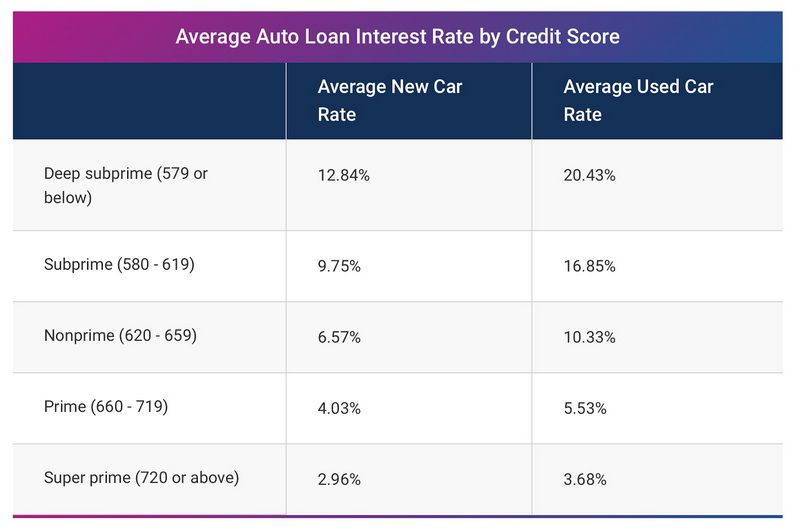
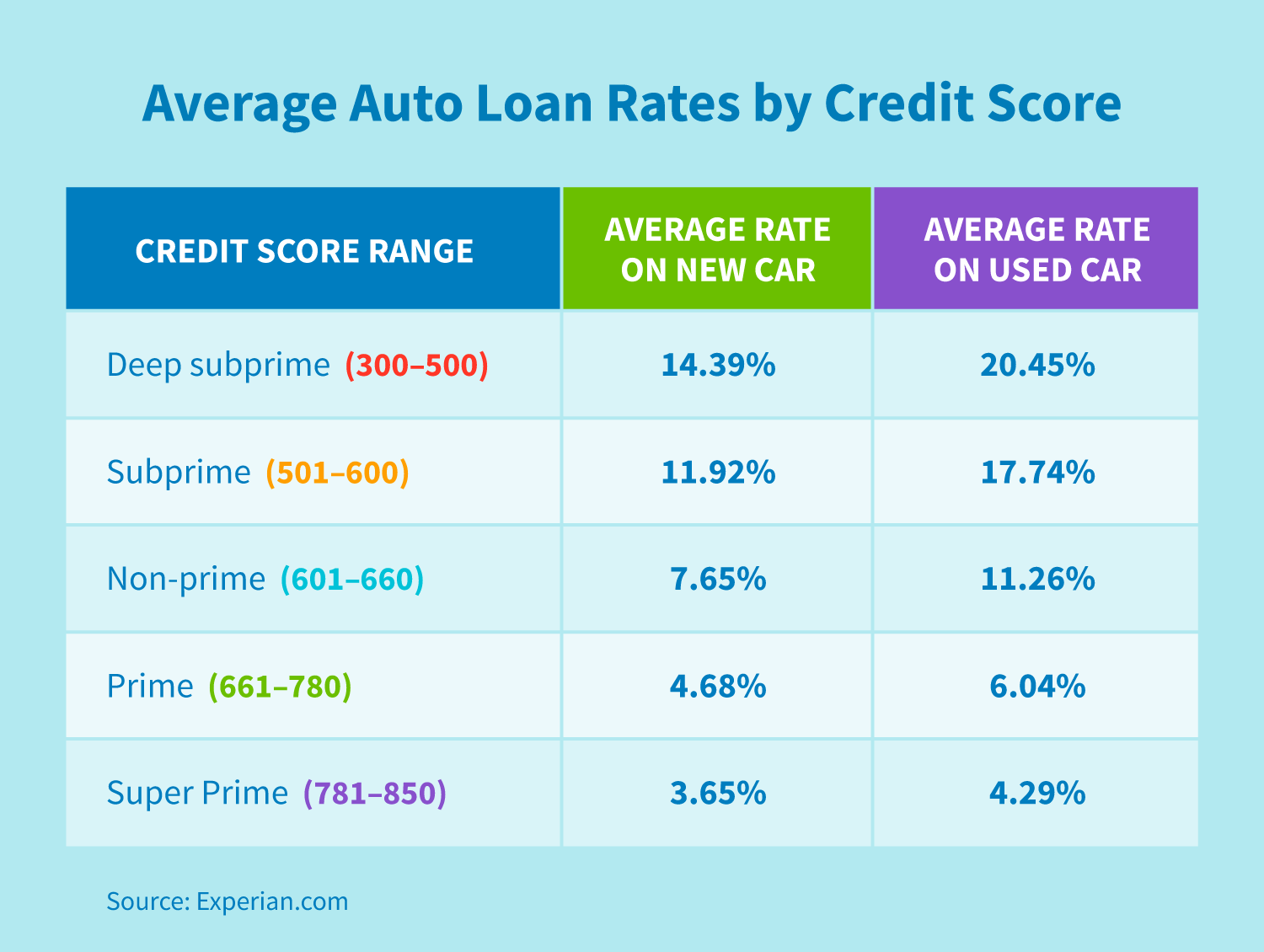
Your credit score is the single most influential factor in determining the interest rate you’ll receive. Lenders use it as a snapshot of your financial responsibility and ability to repay debt. Generally, a FICO score of 720 or higher is considered excellent and will qualify you for the lowest rates available, often termed “prime” or “super prime” rates. Borrowers with scores in the good range (670-719) can still expect competitive rates, though they might be slightly higher than those with excellent credit. As credit scores dip into the fair (580-669) or poor (under 580) categories, interest rates climb significantly to offset the increased risk perceived by lenders. For instance, a borrower with excellent credit might qualify for a 4-6% APR on a new car loan, while someone with fair credit could see rates upwards of 10-15% or even higher. Therefore, a “good” rate for you is one that is competitive within your specific credit tier.
New vs. Used Car Loans
There’s a noticeable distinction in interest rates between new and used car loans. Typically, new car loans come with lower interest rates than used car loans. This is primarily because new cars retain their value better in the initial years and are considered lower risk by lenders. They have a known history (none, to be exact), are covered by manufacturer warranties, and are less likely to require immediate costly repairs. Used cars, on the other hand, have depreciated value, might have unknown maintenance histories, and are generally seen as higher risk. Consequently, a “good” rate for a new car might be 4-7%, while a good rate for a used car, even for someone with excellent credit, could be 6-9%. It’s crucial to benchmark rates against the specific type of vehicle you intend to purchase.
Loan Term and Down Payment Impact
The length of your loan term significantly impacts both your monthly payment and the total interest paid. Shorter loan terms (e.g., 36 or 48 months) generally come with lower interest rates because the lender’s capital is at risk for a shorter period. While these loans result in higher monthly payments, they lead to substantial savings on interest over the life of the loan. Conversely, longer terms (e.g., 72 or 84 months) offer lower monthly payments but typically carry higher interest rates and result in paying much more in total interest. A substantial down payment also plays a pivotal role. By putting more money down upfront, you reduce the principal loan amount, which lowers the lender’s risk. This often translates into a lower interest rate, as well as reduced monthly payments and overall interest costs. A “good” strategy often involves balancing a comfortable monthly payment with the shortest possible loan term and a healthy down payment to secure the best possible rate.
Current Market Averages and Benchmarks
To determine if the rate you’re offered is truly good, it’s essential to benchmark it against current market averages. These averages fluctuate based on economic conditions, central bank policies, and competition among lenders. Financial publications, reputable online financial tools, and credit unions often publish average auto loan rates for various credit tiers. For excellent credit (720+), new car rates typically hover in the 4-7% range, while used car rates might be 6-9%. For good credit (670-719), new car rates might be 6-9%, and used car rates 8-12%. Fair credit (580-669) can expect significantly higher rates, potentially 10-15% or more for new cars and 12-20%+ for used cars. Anything significantly below these averages for your credit tier is likely an excellent rate, while anything substantially above should prompt further inquiry or shopping around. Always check the latest industry reports and averages just before you apply, as market conditions can shift rapidly.
Strategies to Secure a Better Rate
Securing a truly good auto loan interest rate isn’t a matter of luck; it’s the result of diligent preparation and strategic execution. By understanding and employing specific tactics, you can significantly improve your chances of obtaining the most favorable terms possible.
Improving Your Creditworthiness
The most impactful step you can take to secure a lower interest rate is to improve your credit score. Lenders view a high credit score as a strong indicator of financial responsibility and a reduced risk of default. Start by reviewing your credit reports from all three major bureaus (Equifax, Experian, TransUnion) for inaccuracies and disputing any errors. Focus on consistently paying all your bills on time, as payment history is the largest component of your score. Reduce your credit utilization by paying down existing debts, especially on credit cards, to keep your balances low relative to your credit limits. Avoid opening new credit accounts or making large purchases on credit in the months leading up to your loan application, as these actions can temporarily ding your score. Building a solid credit history over time through responsible financial habits is paramount.
Shopping Around for Lenders
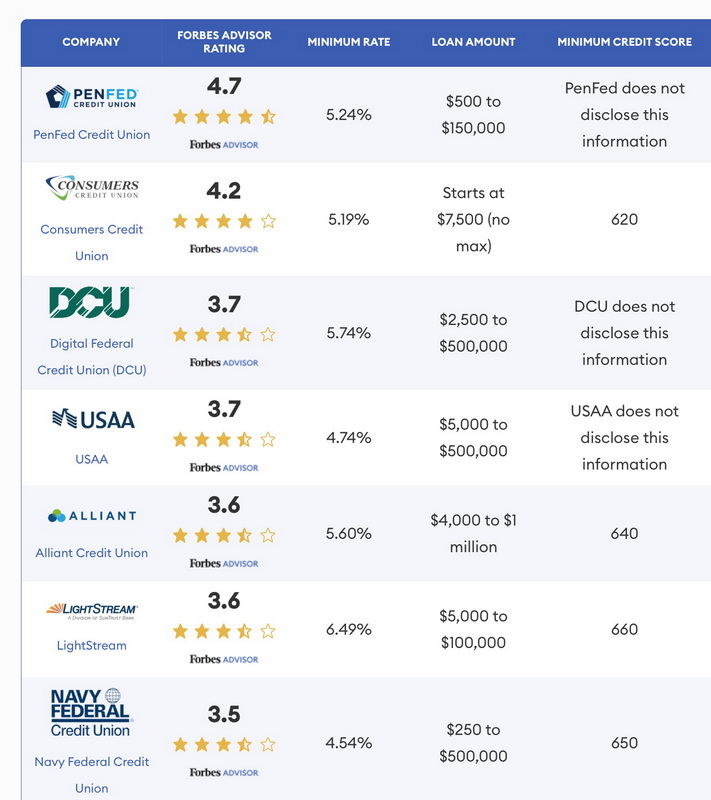
One of the biggest mistakes borrowers make is accepting the first loan offer they receive, often from the dealership. To truly find a good rate, you must shop around and compare offers from multiple lenders. This includes traditional banks, credit unions, and online lenders. Credit unions are often known for offering some of the most competitive rates due to their non-profit structure. Online lenders provide convenience and can sometimes offer highly aggressive rates to attract customers. Apply for pre-approval with several institutions before you even set foot in a dealership. This allows you to compare offers without pressure and gives you a concrete interest rate to leverage during negotiations. Multiple credit inquiries within a short period (typically 14-45 days) for the same type of loan are usually grouped together by credit scoring models and counted as a single inquiry, minimizing the impact on your score.
Negotiation Tactics
Armed with pre-approval offers, you’re in a strong negotiating position. When you discuss financing with a dealership, present them with your best pre-approved rate. Dealers often have relationships with multiple lenders and may be able to beat or match your outside offer to earn your business. Be prepared to walk away if the dealer cannot improve upon your pre-approved rate or if they try to bundle unwanted add-ons into the loan. Focus on negotiating the car’s price first, separate from the financing. A lower vehicle price means you need to borrow less, which in turn can lead to lower interest charges and monthly payments. Transparency and assertiveness are key; don’t be afraid to ask for a breakdown of all costs and understand every fee involved.
Considering a Co-signer
If your credit score is less than ideal, or if you’re a young borrower with a limited credit history, considering a co-signer can be a highly effective strategy to secure a better interest rate. A co-signer is someone with excellent credit who agrees to take on legal responsibility for the loan if you fail to make payments. Their strong credit history essentially “lends” credibility to your application, reducing the lender’s risk and making you eligible for lower rates. However, this decision should be approached with caution, as it places a significant financial responsibility on the co-signer. Both parties should fully understand the implications, as missed payments will negatively affect both your credit scores. It should ideally be a temporary solution while you build your own credit.
The Long-Term Impact of Your Interest Rate
While the monthly payment is often the immediate focus for car buyers, the true financial impact of your auto loan interest rate unfolds over the entire life of the loan. A seemingly small difference in interest percentage can translate into significant sums of money, profoundly affecting your overall financial health.
Calculating Total Cost of Ownership
The total cost of ownership extends far beyond the sticker price of the vehicle. It encompasses the principal loan amount, the total interest paid, taxes, registration fees, insurance, maintenance, and fuel. Your interest rate directly impacts the “cost of borrowing” component. For example, on a $30,000 loan over 60 months, a 5% interest rate results in approximately $3,969 in total interest paid, whereas an 8% rate on the same loan would cost about $6,500 in interest. That’s over $2,500 difference just from a 3% change in interest. Using an online auto loan calculator can help you visualize these differences and project the total cost of interest for various rate scenarios, allowing you to make a more informed decision. Understanding this full picture is crucial for long-term financial planning.
Monthly Payment vs. Overall Savings
It’s common for buyers to prioritize a low monthly payment, sometimes at the expense of a higher interest rate or a longer loan term. While a lower monthly payment might feel more manageable in the short term, it often leads to paying significantly more interest over the life of the loan. Lenders are adept at structuring loans to offer seemingly attractive low monthly payments, often by extending the loan term. This strategy might alleviate immediate budgetary pressure but ultimately increases the total cost of the vehicle. A “good” interest rate strategy balances an affordable monthly payment with minimizing the total interest paid. Often, this means opting for the shortest loan term you can comfortably afford, even if it means a slightly higher monthly outlay, to achieve substantial overall savings.
Refinancing Options
Even if you didn’t secure an optimal interest rate initially, you might not be stuck with it for the duration of your loan. Refinancing your auto loan can be a viable strategy to reduce your interest rate and lower your monthly payments, or decrease the total interest paid. This is particularly beneficial if your credit score has significantly improved since you first took out the loan, if market interest rates have dropped, or if you initially took out a loan with a high rate due to a limited credit history. Refinancing involves taking out a new loan, typically with a lower interest rate, to pay off your existing auto loan. Before pursuing refinancing, compare the new loan’s APR, term, and any associated fees to ensure it genuinely offers a financial advantage. It’s a powerful tool for proactively managing your auto loan costs.
Common Pitfalls to Avoid
Even with a solid understanding of auto loan mechanics, some common missteps can derail your efforts to secure a good interest rate. Being aware of these pitfalls can help you navigate the financing process more effectively and avoid costly mistakes.
Focusing Solely on Monthly Payments
Perhaps the most common pitfall for car buyers is to fixate exclusively on the monthly payment amount. While a manageable monthly payment is undeniably important for your budget, allowing it to be your sole focus can lead to overlooking the true cost of the loan. Dealers often use this psychology to their advantage, “stretching out” loan terms or increasing interest rates to hit a target monthly payment, even if it means you’ll pay substantially more in interest over time. Instead, always consider the total cost of the loan – the principal plus all interest and fees – and the overall interest rate. A low monthly payment on an 84-month loan with a high interest rate might seem appealing but could ultimately cost you thousands more than a slightly higher monthly payment on a 60-month loan with a lower rate. Always ask for the total interest paid over the life of the loan.
Skipping Pre-approval
Entering a dealership without a pre-approved auto loan is like walking into a negotiation unarmed. Without a firm offer in hand from an outside lender, you lack leverage. You’re left to rely solely on the dealership’s financing options, which may not always be the most competitive. Dealerships make money on financing, and while they can sometimes beat outside offers, having a pre-approval provides a benchmark and an alternative. Skipping this crucial step means you lose the opportunity to compare rates independently and put pressure on the dealer to secure better terms for you. Pre-approval not only gives you a clear understanding of your borrowing power but also streamlines the purchasing process, allowing you to focus on negotiating the vehicle price with confidence.
Dealer Financing Without Comparison
While dealer financing can be convenient, and sometimes even competitive, it’s a mistake to accept it without first comparing it to offers from other financial institutions. Dealers often work with a network of lenders and may present you with an offer, but without independent comparison, you have no way of knowing if it’s the best available rate for your credit profile. Sometimes, dealers mark up the interest rate provided by their lending partners to increase their profit margin. Always perform your due diligence by getting pre-approvals from at least 2-3 outside lenders (banks, credit unions, online lenders) before engaging with dealer financing. Only then can you genuinely assess whether the dealer’s offer is truly “good” or if you’re leaving money on the table.
In conclusion, a good auto loan interest rate is not a universal constant but a highly personalized outcome influenced by your credit health, the specifics of the car and loan, and market dynamics. By understanding these intricate relationships, diligently preparing your finances, shopping strategically, and avoiding common pitfalls, you can confidently navigate the auto loan process. Securing a truly favorable rate is a testament to savvy financial planning and significantly contributes to the overall affordability and enjoyment of your vehicle for years to come.
aViewFromTheCave is a participant in the Amazon Services LLC Associates Program, an affiliate advertising program designed to provide a means for sites to earn advertising fees by advertising and linking to Amazon.com. Amazon, the Amazon logo, AmazonSupply, and the AmazonSupply logo are trademarks of Amazon.com, Inc. or its affiliates. As an Amazon Associate we earn affiliate commissions from qualifying purchases.