
Purchasing a car is a significant financial decision, often representing one of the largest expenditures an individual or household will make after a home. While the allure of a new vehicle can be powerful, navigating the complexities of financing requires a clear understanding of how car payments are calculated. Too often, consumers focus solely on the advertised monthly payment without fully grasping the underlying components, the total cost of the loan, or the long-term implications for their personal finances. This article aims to demystify the process of calculating car payments, providing you with the knowledge and tools to make informed decisions and secure a deal that truly aligns with your financial well-being. By understanding the intricate interplay of principal, interest, loan terms, and additional costs, you can approach car dealerships and lenders with confidence, ensuring you secure a vehicle that is not only desirable but also genuinely affordable.

Understanding the Core Components of a Car Loan
Before diving into calculations, it’s crucial to grasp the fundamental elements that dictate the size of your monthly car payment. Each component plays a vital role, and a slight adjustment to any of them can have a substantial impact on both your immediate monthly outlay and the total cost of ownership over the life of the loan.
The Principal Loan Amount
At its simplest, the principal is the actual amount of money you borrow to purchase the car. This isn’t necessarily the car’s sticker price. Instead, it’s typically the agreed-upon sale price of the vehicle, minus any down payment you make and any trade-in value you apply. For example, if a car costs $30,000, and you provide a $5,000 down payment and have a $2,000 trade-in, your principal loan amount would be $23,000. A lower principal amount directly translates to lower monthly payments and less interest paid over the life of the loan, making a substantial down payment a smart financial strategy.
Interest Rate (Annual Percentage Rate – APR)
The interest rate, often expressed as an Annual Percentage Rate (APR), is arguably the most critical factor influencing your car payment. This is the cost of borrowing money, expressed as a percentage of the principal loan amount. A higher APR means you’ll pay more for the privilege of borrowing, significantly increasing both your monthly payment and the total interest accrued over the loan term. Your credit score is the primary determinant of the interest rate you qualify for. Individuals with excellent credit histories typically secure the lowest rates, while those with poor credit may face much higher rates, sometimes even double digits. Understanding the impact of even a percentage point difference in APR is vital; over several years, it can amount to hundreds or thousands of dollars.
Loan Term
The loan term refers to the duration over which you agree to repay the loan, typically expressed in months (e.g., 36, 48, 60, 72, or even 84 months). The loan term has a direct inverse relationship with your monthly payment: a shorter term results in higher monthly payments but lower total interest paid, as you’re borrowing the money for less time. Conversely, a longer term reduces your monthly payments, making the car seem more affordable in the short term, but it significantly increases the total interest you’ll pay over the life of the loan. While a longer term can make a more expensive car fit into a tighter budget, it also means you’ll be paying off the car for a longer period, potentially owning a depreciating asset for an extended time.
Down Payment and Trade-in Value
A down payment is an upfront cash payment made towards the purchase of the vehicle. Similarly, the value of a car you trade in can be applied towards the purchase of a new one, effectively acting like a down payment. Both serve to reduce the principal loan amount. The larger your down payment or trade-in value, the less money you need to borrow, which in turn leads to lower monthly payments and less interest accumulated over the loan’s term. Financial experts often recommend aiming for a down payment of at least 10-20% for a new car to mitigate depreciation and reduce your overall financial burden.
The Calculation Methods: From Simple to Sophisticated
While a precise calculation can seem daunting, there are several methods you can employ to work out car payments, ranging from basic estimations to sophisticated tools.
Manual Calculation (Understanding Simple Interest)
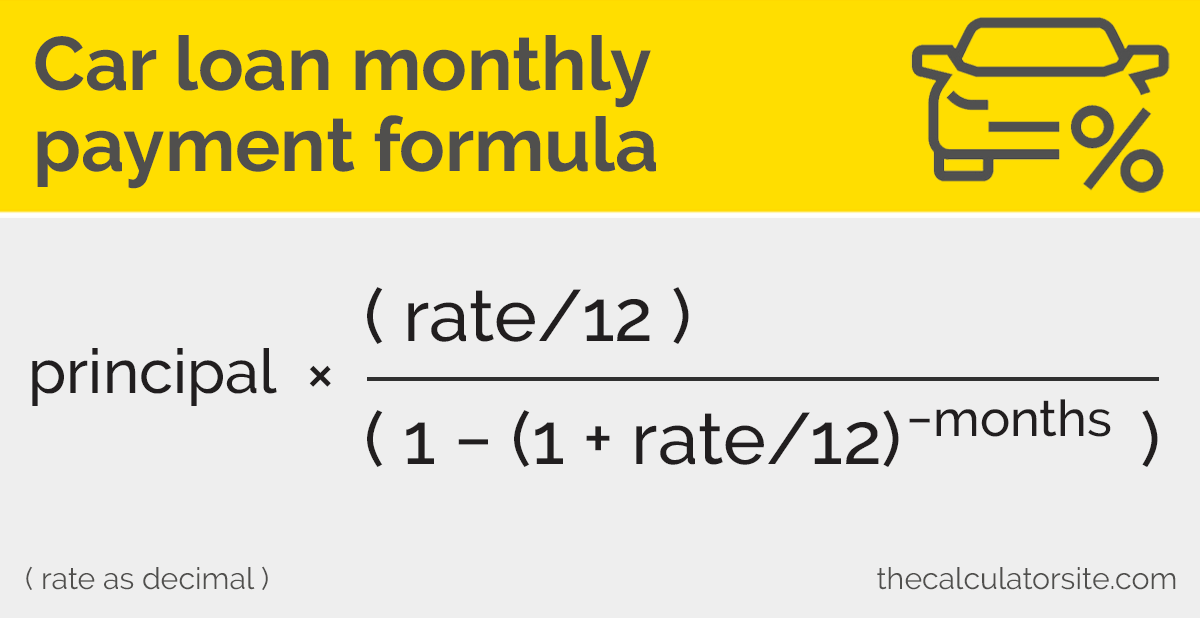
For a very basic understanding, you can start with a simple interest calculation, though this method is an oversimplification for most amortizing car loans. Simple interest is calculated as Principal × Rate × Time (P × r × t). For an amortized loan, where interest is calculated on the remaining principal balance and payments are applied to both principal and interest, the formula becomes more complex. However, understanding how simple interest works provides a foundational insight into the cost of borrowing. A common simplified formula for monthly payment (M) is often cited as:
$M = P [ i(1 + i)^n ] / [ (1 + i)^n – 1]$
Where:
- P = Principal loan amount
- i = Monthly interest rate (annual rate / 12)
- n = Total number of payments (loan term in months)
This formula, while accurate, can be cumbersome to calculate manually. It’s more illustrative of the mathematical underpinnings rather than a practical tool for everyday use.
Using Online Car Payment Calculators
For practical, real-world calculations, online car payment calculators are invaluable tools. These calculators, widely available on dealership websites, bank sites, and personal finance portals, simplify the process by requiring you to input key variables:
- Vehicle Price: The agreed-upon selling price of the car.
- Down Payment: The cash you’re putting down.
- Trade-in Value: If applicable, the value of your old car.
- Interest Rate (APR): The rate you anticipate qualifying for.
- Loan Term (Months): The duration you intend to finance.
- Sales Tax and Fees: These vary by state and can often be rolled into the loan or paid upfront.
Upon entering these details, the calculator instantly provides an estimated monthly payment. Many advanced calculators also show the total amount of interest you’ll pay over the loan’s life, helping you compare different scenarios quickly and efficiently. These tools are excellent for planning and comparing multiple financing options without complex manual computations.
Spreadsheet Software (Excel/Google Sheets)
For a more detailed and customizable approach, spreadsheet software like Microsoft Excel or Google Sheets offers powerful financial functions. The PMT function is specifically designed to calculate the payment for a loan based on constant payments and a constant interest rate.
The syntax for the PMT function is:
PMT(rate, nper, pv, [fv], [type])
Where:
rate: The interest rate per period (e.g., annual rate / 12).nper: The total number of payments for the loan (e.g., loan term in months).pv: The present value, or the total amount that a series of future payments is worth now (i.e., the principal loan amount).fv(optional): The future value, or a cash balance you want to attain after the last payment is made. For loans, this is usually 0.type(optional): Indicates when payments are due (0 for end of period, 1 for beginning of period).
Using the PMT function allows you to build a dynamic model where you can easily change variables like the interest rate, loan term, or principal to see the immediate impact on your monthly payment. Furthermore, you can create a detailed amortization schedule within a spreadsheet, showing how much of each payment goes towards principal and interest over time, and what your remaining balance is after each payment. This level of detail offers unparalleled insight into your loan’s progression.
Beyond the Monthly Payment: Uncovering the True Cost
Focusing solely on the monthly payment can be misleading. To truly understand the financial implications of a car loan, you must consider the often-overlooked costs that contribute to the total expense of owning and operating a vehicle.
Total Interest Paid Over Loan Term
While a lower monthly payment from a longer loan term might seem appealing, it almost invariably means you’ll pay significantly more in total interest over the life of the loan. It’s critical to compare the “total cost of the loan” – the principal plus all interest paid – across different scenarios. A car that seems affordable at $400 a month over 72 months might end up costing thousands more in interest than the same car at $500 a month over 48 months. Always ask for the total interest figure when negotiating financing.
Sales Tax and Registration Fees
These are often substantial upfront costs that vary significantly by state and local regulations. Sales tax is typically a percentage of the car’s purchase price, and registration fees are annual costs to keep your vehicle legally on the road. While some lenders allow these costs to be rolled into the loan (increasing your principal), paying them upfront can reduce your financed amount and subsequent interest. Always factor these into your overall budget for the car.
Insurance Costs
Car insurance is a mandatory and ongoing expense that can vary widely based on the vehicle type, your driving record, age, location, and the coverage levels you choose. Before committing to a car purchase, obtain insurance quotes for the specific make and model you are considering. A seemingly affordable monthly car payment could be overshadowed by unexpectedly high insurance premiums, especially for newer, more expensive, or sports cars.
Maintenance and Fuel Costs
Beyond the purchase and financing, a car incurs regular operational expenses. Fuel costs fluctuate with market prices and your driving habits. Maintenance, including oil changes, tire rotations, brake service, and unexpected repairs, is an inevitable part of car ownership. Researching typical maintenance costs for specific models (e.g., luxury brands often have higher maintenance costs) can help you budget accurately. These recurring costs can significantly impact your overall monthly budget and should not be ignored when assessing true affordability.
Depreciation
Depreciation is often referred to as the “hidden cost” of car ownership. It’s the decrease in your car’s value over time. New cars notoriously depreciate rapidly, losing a significant portion of their value in the first few years. While you don’t directly write a check for depreciation, it represents a loss of wealth. Understanding a vehicle’s depreciation rate is important, especially if you plan to trade it in or sell it in a few years, as it impacts the equity you’ll have in the car.
Strategies for Managing and Reducing Car Payments
Armed with a comprehensive understanding of car loan mechanics and associated costs, you can proactively implement strategies to manage and potentially reduce your car payments, leading to a healthier financial outcome.
Optimizing Your Down Payment
The most direct way to reduce your monthly payment and total interest is to make a larger down payment. By reducing the principal amount you borrow, you lessen the financial burden from the outset. Consider saving up for a larger down payment or leveraging a trade-in to achieve this. A substantial down payment also helps to mitigate the risk of being “upside down” on your loan, where you owe more than the car is worth, a common issue with rapidly depreciating vehicles.
Improving Your Credit Score
Your credit score is paramount in securing favorable interest rates. Lenders offer the lowest APRs to borrowers with excellent credit histories (typically FICO scores of 720 and above). Before applying for a car loan, review your credit report for errors and take steps to improve your score if needed. This could involve paying down existing debts, making all payments on time, and avoiding opening new lines of credit. Even a small improvement in your credit score can translate into significant savings over the life of a car loan.
Shopping Around for Loans
Never accept the first financing offer you receive, particularly from a dealership. Dealerships often add a mark-up to the interest rates offered by their partner lenders. It’s wise to shop around and get pre-approved for a loan from multiple financial institutions, such as banks, credit unions, and online lenders, before you visit a dealership. Having a pre-approved loan offer in hand gives you leverage during negotiations and a benchmark against which to compare any financing offered by the dealer.
Considering a Shorter Loan Term
While a shorter loan term means higher monthly payments, it dramatically reduces the total interest you’ll pay and gets you out of debt faster. If your budget allows, opting for a 48- or 60-month loan instead of a 72- or 84-month term can save you thousands of dollars. It’s a trade-off between monthly cash flow and long-term financial efficiency.
Refinancing Your Car Loan
If you’ve already financed a car and your credit score has improved since the initial loan, or if interest rates have dropped, you might consider refinancing your car loan. Refinancing replaces your existing loan with a new one, often with a lower interest rate or a more suitable term. This can lead to lower monthly payments or a reduction in total interest paid, providing financial relief or accelerating your debt repayment.
Understanding Total Affordability
Beyond just the car payment, consider the “20/4/10” rule as a general guideline for car affordability. This suggests:
- 20% Down Payment: To reduce your principal and mitigate depreciation.
- 4-Year Loan Term: To minimize interest and pay off the car before significant depreciation occurs.
- 10% of Gross Income: Your total monthly car expenses (payment, insurance, fuel, maintenance) should not exceed 10% of your gross monthly income.
While this rule is a guideline, it encourages a holistic view of car ownership costs, ensuring your vehicle choice aligns with your broader financial health.

Conclusion
Calculating car payments involves more than just plugging numbers into a formula; it requires a comprehensive understanding of the financial landscape surrounding vehicle ownership. By dissecting the principal, interest rates, loan terms, and external costs like insurance and maintenance, you empower yourself to make intelligent decisions. Utilizing online calculators and spreadsheet tools can simplify the process, but true financial acumen comes from grasping the impact of each variable on your budget and total expenditure. Adopting strategies like optimizing down payments, improving credit scores, and shopping for the best loan terms will not only help you manage your monthly payments but also significantly reduce the overall cost of your car. In a world where car purchases are a necessity for many, approaching this significant investment with financial literacy is not just prudent—it’s essential for securing your financial well-being.
aViewFromTheCave is a participant in the Amazon Services LLC Associates Program, an affiliate advertising program designed to provide a means for sites to earn advertising fees by advertising and linking to Amazon.com. Amazon, the Amazon logo, AmazonSupply, and the AmazonSupply logo are trademarks of Amazon.com, Inc. or its affiliates. As an Amazon Associate we earn affiliate commissions from qualifying purchases.