
Purchasing a car is a significant financial decision for many, often requiring a substantial investment that few can make outright. This is where car finance comes into play, making vehicle ownership accessible by spreading the cost over time. However, the convenience of financing comes with an additional cost: interest. Understanding how car finance interest is calculated is not merely an academic exercise; it is a critical skill for any consumer looking to make informed financial choices, save money, and avoid unnecessary debt. This comprehensive guide will demystify the intricacies of car finance interest, equipping you with the knowledge to navigate the market confidently and secure the best possible deal.
The Fundamentals of Car Finance Interest
Before diving into calculations, it’s essential to grasp the core concepts that underpin car finance interest. Interest is, simply put, the cost of borrowing money. Lenders charge interest as compensation for the risk they take in lending you capital and for the opportunity cost of not using that capital elsewhere. For consumers, this translates into an additional sum paid on top of the principal amount borrowed.
What is Car Finance Interest?
Car finance interest is the fee charged by a lender (a bank, finance company, or dealership) for the privilege of borrowing money to purchase a vehicle. This fee is typically expressed as an annual percentage rate (APR) and is added to your regular monthly payments over the term of the loan. Ignoring or misunderstanding this interest can lead to paying significantly more for your car than you initially anticipated, impacting your overall financial health.
Key Terminology You Need to Know
To effectively understand and calculate car finance interest, familiarity with specific financial terms is crucial.
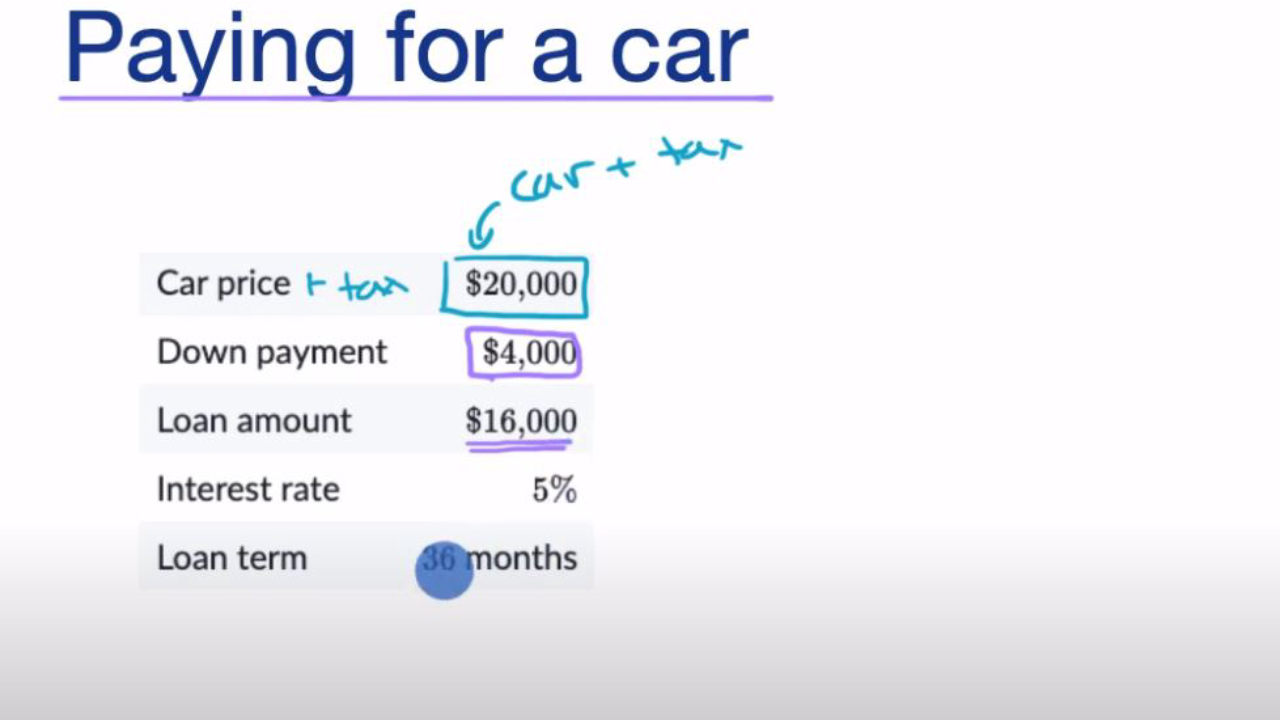
- Principal: This is the initial amount of money you borrow to purchase the car. It’s the selling price of the vehicle minus any down payment or trade-in value.
- Interest Rate (APR vs. Nominal Rate): The interest rate is the percentage charged on the principal amount. It’s vital to distinguish between the nominal interest rate and the Annual Percentage Rate (APR).
- Nominal Rate: This is the basic, stated interest rate on the loan. It doesn’t typically include other fees associated with the loan.
- Annual Percentage Rate (APR): The APR is a broader measure of the cost of borrowing money, encompassing not only the nominal interest rate but also any additional fees or charges imposed by the lender, such as arrangement fees, administration fees, or early repayment charges. The APR provides a more accurate and comprehensive picture of the total annual cost of your loan and is the figure you should always compare when evaluating different finance offers.
- Loan Term: The loan term refers to the duration over which you agree to repay the borrowed money, typically expressed in months (e.g., 36, 48, 60, 72 months). A longer loan term usually results in lower monthly payments but often leads to paying more in total interest over the life of the loan.
- Total Cost of Credit: This is the sum of the principal amount borrowed plus all the interest and any mandatory fees charged by the lender over the entire loan term. Understanding this figure is key to comparing finance options effectively.
Decoding Common Car Finance Options
The landscape of car finance offers various structures, each with its own implications for interest calculation and overall cost. While the core principle of interest remains, how it’s applied can differ significantly.
Hire Purchase (HP) Explained
Hire Purchase (HP) is a popular option where you effectively “hire” the car until all payments, including interest, are made, at which point you become the legal owner. In an HP agreement, the loan amount is typically the car’s price minus any deposit. Interest is calculated on the full amount borrowed and repaid in fixed monthly instalments over the agreed term. The total interest paid is directly related to the principal, the interest rate, and the loan term. This is often the most straightforward finance product when it comes to understanding interest accrual, as the entire loan amount is amortised over the term.
Personal Contract Purchase (PCP) Nuances
Personal Contract Purchase (PCP) is distinct from HP and often more complex regarding interest. With PCP, your monthly payments cover the depreciation of the car over the term, plus interest. A significant portion of the car’s value is deferred until the end of the agreement in the form of a ‘balloon payment’ or Guaranteed Minimum Future Value (GMFV). Crucially, interest is charged on the entire value of the car for the duration of the agreement, including the balloon payment amount, even though you are not making capital repayments on that portion until the very end. This means you pay interest on money you haven’t yet paid off. At the end of the term, you have three options: pay the balloon payment and own the car, return the car, or trade it in for a new one. Understanding that interest applies to the deferred sum is a key nuance for PCP.
Personal Loans for Vehicle Purchase
Another approach is to take out an unsecured personal loan from a bank or credit union and use the funds to buy the car outright. In this scenario, you own the car from day one, and the loan is a separate financial product. Interest on personal loans is typically calculated on the reducing balance (the outstanding principal), much like a standard amortising loan. While personal loans might offer flexibility, their interest rates can sometimes be higher or lower than dealer-arranged finance, depending on your creditworthiness and market conditions. The key advantage is that you’re borrowing a specific sum and paying it back with interest, without the complexities of GMFV or ownership deferral.
Practical Methods for Calculating Car Finance Interest
While lenders provide comprehensive breakdowns of payments, understanding how the numbers are derived empowers you to verify figures and compare offers more effectively.
The Simple Interest Method (For Conceptual Understanding)
Simple interest is often used for short-term loans or for illustrative purposes, though most car finance loans use compound interest. It’s a straightforward way to understand the basic concept.
Formula: Simple Interest = Principal x Interest Rate x Time
- Principal: The original amount borrowed.
- Interest Rate: The annual interest rate (as a decimal, e.g., 5% = 0.05).
- Time: The loan term in years.
Example: If you borrow £10,000 at 5% simple annual interest for 3 years:
Interest = £10,000 x 0.05 x 3 = £1,500
Total Repayment = Principal + Interest = £10,000 + £1,500 = £11,500
Monthly Payment = £11,500 / 36 months = £319.44
As noted, this is usually too simplistic for actual car finance, which typically uses compound interest.
Understanding Amortization and Compound Interest
Most car loans use amortising loans with compound interest, where interest is calculated on the outstanding principal balance and added to it. Each payment you make goes partially towards paying the interest accrued and partially towards reducing the principal. As the principal reduces, the amount of interest charged in subsequent periods also decreases, assuming a fixed interest rate. This is why early payments consist of more interest and less principal, while later payments are weighted more towards principal reduction.
An amortisation schedule breaks down each payment into its principal and interest components over the entire loan term, illustrating how the balance gradually decreases. This schedule is a transparent way to see exactly how much you’re paying in interest each month and how much of your payment is contributing to owning the car.
Leveraging Online Car Finance Calculators
For practical purposes, the easiest and most accurate way to calculate car finance interest is to use online car finance calculators. These tools are readily available on lender websites, financial planning sites, and automotive portals. You input the principal amount, interest rate (APR), and loan term, and the calculator instantly provides:
- Your estimated monthly payment.
- The total amount of interest you will pay over the loan term.
- The total cost of the car (principal + interest).
Some advanced calculators can also generate an amortisation schedule, showing the breakdown of principal and interest for each payment. Always use the APR for these calculations to get the most realistic estimate of total cost.
Manual Calculation: A Step-by-Step Guide
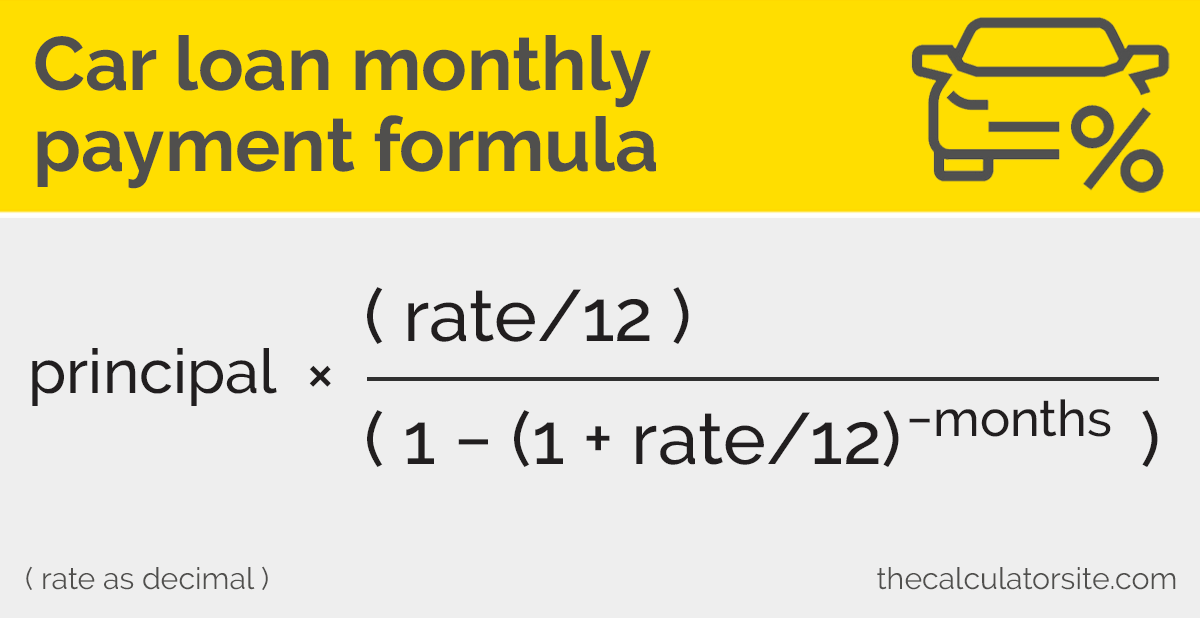
While online calculators are convenient, understanding the manual calculation process provides deeper insight. The formula for an amortising loan’s monthly payment is complex, but it’s based on the following:
M = P [ i(1 + i)^n ] / [ (1 + i)^n – 1]
Where:
- M = Monthly Payment
- P = Principal Loan Amount
- i = Monthly Interest Rate (Annual Rate / 12)
- n = Total Number of Payments (Loan Term in Months)
Example Walkthrough:
Let’s assume you borrow £20,000 for a car at an APR of 6% over 60 months (5 years).
-
Calculate the monthly interest rate (i):
Annual APR = 6% = 0.06
Monthly Rate (i) = 0.06 / 12 = 0.005 -
Calculate the total number of payments (n):
Loan Term = 60 months -
Plug values into the formula:
M = 20,000 [ 0.005(1 + 0.005)^60 ] / [ (1 + 0.005)^60 – 1]
M = 20,000 [ 0.005(1.005)^60 ] / [ (1.005)^60 – 1]First, calculate (1.005)^60: approx. 1.34885
M = 20,000 [ 0.005 * 1.34885 ] / [ 1.34885 – 1]
M = 20,000 [ 0.00674425 ] / [ 0.34885 ]
M = 134.885 / 0.34885
M ≈ £386.64 -
Calculate Total Repaid:
Total Repaid = Monthly Payment x Total Number of Payments
Total Repaid = £386.64 x 60 = £23,198.40 -
Calculate Total Interest Paid:
Total Interest = Total Repaid – Principal
Total Interest = £23,198.40 – £20,000 = £3,198.40
This manual calculation demonstrates the true cost of borrowing and highlights the power of compound interest over time.
Factors Influencing Your Interest Rate
Several variables play a significant role in determining the interest rate you’ll be offered for car finance. Understanding these factors can help you position yourself for a better deal.
The Role of Your Credit Score
Your credit score is arguably the most critical factor. Lenders use credit scores to assess your creditworthiness and the likelihood of you repaying the loan. A higher credit score (indicating a history of responsible borrowing and repayment) signals lower risk to lenders, often resulting in lower interest rates. Conversely, a poor credit score may lead to higher interest rates or even outright loan rejection.
Impact of Loan Term and Down Payment
- Loan Term: As mentioned, longer loan terms often come with lower monthly payments, but lenders may charge a slightly higher overall interest rate for the increased risk associated with a longer repayment period. Additionally, more interest accrues simply because the money is borrowed for a longer duration.
- Down Payment: A larger down payment reduces the principal amount you need to borrow. Not only does this directly lower your total interest paid (as interest is calculated on a smaller sum), but it also reduces the lender’s risk, potentially qualifying you for a more favourable interest rate.
Lender Policies and Market Conditions
Different lenders have varying lending criteria, risk assessments, and profit margins, leading to a range of interest rates for similar borrowers. It’s why shopping around is crucial. Furthermore, broader economic market conditions, such as the Bank of England’s base rate, can influence the overall cost of borrowing for lenders, which is then passed on to consumers. When interest rates are generally high, car finance rates tend to follow suit.
Strategies for Minimizing Car Finance Interest Costs
Armed with a comprehensive understanding of how car finance interest works, you can proactively implement strategies to reduce your borrowing costs.
Improving Your Creditworthiness
Prioritise improving your credit score before applying for car finance. This involves:
- Paying bills on time: Payment history is the biggest factor in your credit score.
- Reducing existing debt: A lower credit utilisation ratio looks better to lenders.
- Checking your credit report for errors: Disputing inaccuracies can quickly boost your score.
- Limiting new credit applications: Each hard inquiry can temporarily lower your score.
A stronger credit profile can unlock access to the most competitive interest rates.
The Power of a Substantial Down Payment
Making as large a down payment as you can comfortably afford is one of the most effective ways to reduce total interest paid. Not only does it decrease the principal amount on which interest is charged, but it can also make you a more attractive borrower, potentially qualifying you for a better APR.
Shortening Your Loan Term
While a longer loan term offers lower monthly payments, it invariably results in paying more interest over time. If your budget allows, opting for a shorter loan term (e.g., 48 months instead of 72 months) will significantly reduce the total interest you accrue. The higher monthly payments are offset by substantial long-term savings.
The Art of Shopping Around and Negotiation
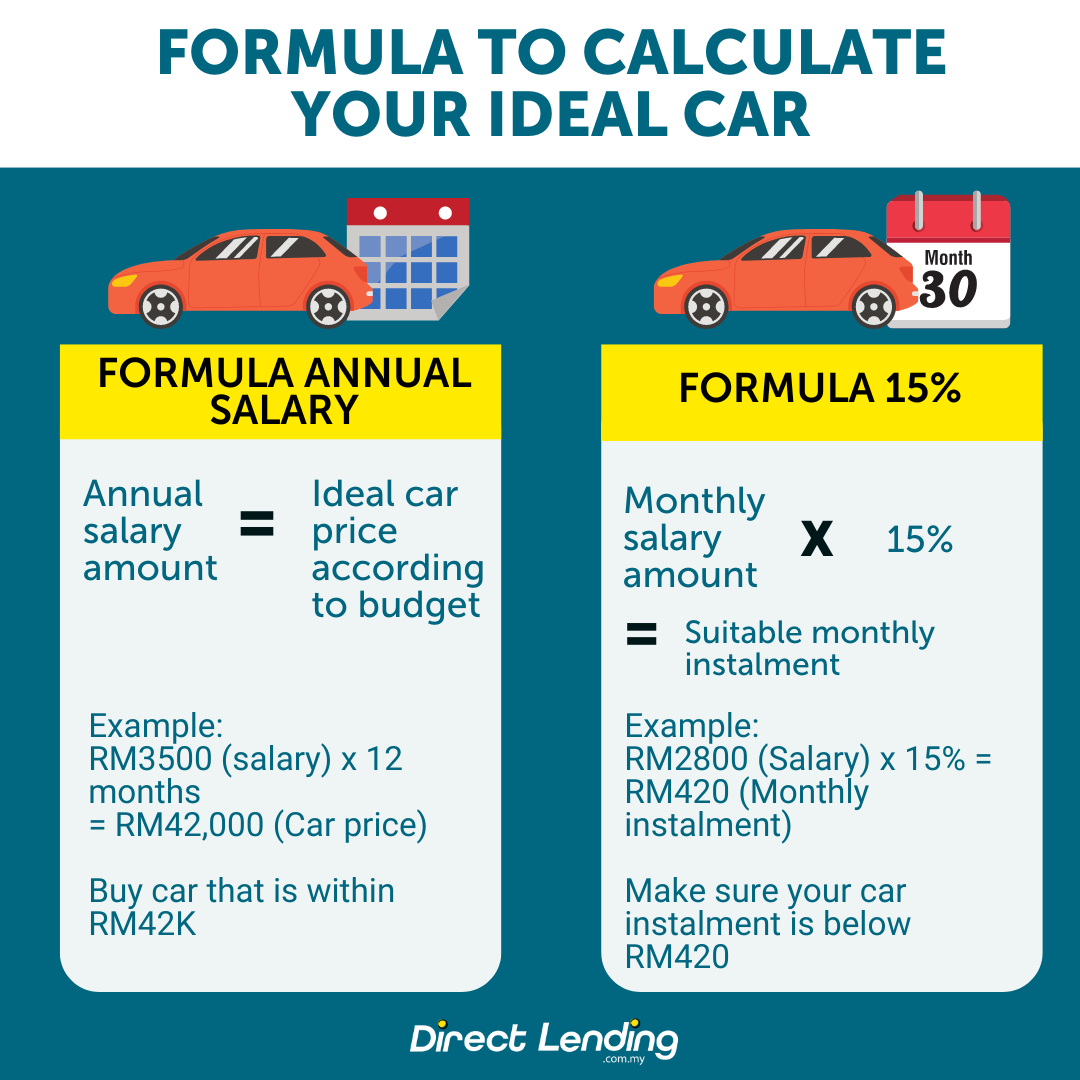
Never accept the first finance offer you receive, especially from a dealership. Comparison shopping is paramount. Obtain quotes from multiple sources: various dealerships, banks, credit unions, and online lenders. Compare not just the monthly payment but the total cost of credit, focusing on the APR. Leverage competing offers to negotiate for a lower interest rate or better terms. Remember, an educated consumer is a powerful negotiator.
Considering Refinancing
If you’ve already taken out car finance and your credit score has improved, or if market rates have dropped significantly since you secured your loan, refinancing could be an option. Refinancing involves taking out a new loan, often at a lower interest rate, to pay off your existing car finance. This can lead to lower monthly payments or a reduced total interest cost over the remaining term. However, always calculate the total savings versus any new fees associated with refinancing.
By thoroughly understanding how car finance interest is calculated and strategically applying these tips, you can transform a potentially costly borrowing experience into a financially savvy decision. Knowledge is your most valuable asset when navigating the complexities of vehicle financing, ensuring you drive away not just with your desired car, but also with peace of mind knowing you’ve secured the best possible deal.
aViewFromTheCave is a participant in the Amazon Services LLC Associates Program, an affiliate advertising program designed to provide a means for sites to earn advertising fees by advertising and linking to Amazon.com. Amazon, the Amazon logo, AmazonSupply, and the AmazonSupply logo are trademarks of Amazon.com, Inc. or its affiliates. As an Amazon Associate we earn affiliate commissions from qualifying purchases.