
In the annals of financial history, few assets have captured the imagination and delivered the extraordinary returns seen with Bitcoin. Yet, for all its current prominence as a store of value and a speculative investment, its origins were far humbler, shrouded in the technical obscurity of a nascent digital currency. The question “how much was a Bitcoin worth in 2009?” often evokes a sense of wonder, regret, or even disbelief among those who now understand its staggering appreciation. To answer it directly requires a nuanced look at a period before Bitcoin had a discernible market price, when its value was purely theoretical, an experiment in decentralized finance.

2009 was the year Bitcoin was born, but it was not a year in which it traded on exchanges or had a universally agreed-upon monetary value in fiat currency. There was no exchange rate, no market depth, and certainly no brokerage firms offering Bitcoin as an investment product. Its “worth” was measured more in its foundational potential and the innovative principles it embodied than in any convertible currency. Understanding this foundational year is crucial for appreciating the investment journey it would eventually undertake and the monumental financial shifts it would inspire.
The Dawn of a Digital Currency: Bitcoin’s Genesis in 2009
The year 2009 marked the genesis of what would become a revolutionary financial technology. Conceived by the pseudonymous Satoshi Nakamoto, Bitcoin was an audacious proposal to create a peer-to-peer electronic cash system that bypassed traditional financial intermediaries. The economic and financial implications of this concept were profound, even if unrecognized by the broader world at the time.
Satoshi Nakamoto’s Vision and the Whitepaper
On October 31, 2008, Satoshi Nakamoto published the Bitcoin whitepaper, titled “Bitcoin: A Peer-to-Peer Electronic Cash System.” This document laid out the technical and economic framework for a decentralized digital currency, addressing long-standing problems like double-spending without relying on a central authority. From a financial perspective, the whitepaper introduced concepts that would later become cornerstones of the crypto economy: fixed supply, predictable issuance schedule, and censorship resistance. These features, though initially theoretical, were designed to imbue Bitcoin with intrinsic scarcity and utility, qualities that investors would later covet. The vision was not just technological; it was an economic manifesto for a new financial paradigm.
The Birth of the Blockchain and Initial Mining
The actual Bitcoin network went live on January 3, 2009, with the mining of the genesis block. This event wasn’t just a technical milestone; it was the financial ‘big bang’ for the cryptocurrency universe. Satoshi Nakamoto himself mined the first block, receiving the initial reward of 50 bitcoins. In these early days, mining Bitcoin required only a standard computer CPU, a far cry from the industrial-scale operations and specialized hardware of today. Early participants could mine thousands of bitcoins with relative ease, accumulating what would later become fortunes. This accessibility meant that individuals could acquire Bitcoin without “buying” it in the traditional sense, fundamentally altering the early distribution and laying the groundwork for future wealth creation (or missed opportunities). The cost of acquiring these early coins was primarily the electricity consumed and the time invested, not a direct monetary exchange.
Absence of a Market: No Exchange, No Price
Crucially, throughout 2009, there were no dedicated cryptocurrency exchanges. Bitcoin existed purely within a small community of cypherpunks, cryptographers, and tech enthusiasts. Transactions were rare and primarily involved transferring coins between individuals for testing purposes or out of sheer curiosity. The concept of an “exchange rate” against the US dollar or any other fiat currency was non-existent. Without an active market where buyers and sellers could meet to determine a price, Bitcoin’s financial “worth” was effectively zero in terms of conventional valuation. Its value was purely speculative, based on the belief in its future utility and the philosophical ideals it represented. This makes answering the titular question straightforward: in 2009, a Bitcoin had no established monetary value in fiat currency. It was priceless in the sense that no price had yet been set by a market.
Establishing Value: From Theoretical Code to Tangible Transactions
While Bitcoin had no official price in 2009, the seeds of its future value were being sown. The transition from a theoretical concept to something with perceived economic worth began with the very first instances of people exchanging Bitcoin for goods, services, or other forms of value.
The First Bitcoin Transactions: Peer-to-Peer Bartering
Before exchanges emerged, any “transactions” involving Bitcoin were essentially peer-to-peer bartering. Individuals might trade a small amount of Bitcoin for a novelty item, digital service, or simply to test the network’s functionality. These were not commercial transactions driven by profit motives but rather experiments within a nascent ecosystem. For instance, in October 2009, Martti Malmi, a Finnish developer, sold 5,050 Bitcoins for $5.02 to NewLibertyStandard via PayPal, valuing each Bitcoin at roughly $0.00099. This was arguably the first recorded “sale” of Bitcoin for fiat currency, though it was a private transaction and not a market-driven price. Such instances, while rare, provided the first glimmers of Bitcoin possessing a tangible, albeit minuscule, economic value beyond its cryptographic elegance.
The Famous Pizza Purchase: A Milestone in Valuation
Although it occurred in May 2010, the story of the “Bitcoin Pizza” purchase is indispensable for understanding the very early conceptualization of Bitcoin’s worth, building directly on the context of 2009. Laszlo Hanyecz famously paid 10,000 Bitcoins for two Papa John’s pizzas. At the time, this transaction valued 10,000 Bitcoins at approximately $41, translating to a price of roughly $0.0041 per Bitcoin. This event is iconic not just because of the mind-boggling future value of those 10,000 Bitcoins, but because it was the first time Bitcoin was used as a medium of exchange for a real-world good. It demonstrated Bitcoin’s utility as a currency, even if its purchasing power was incredibly low. This single transaction, more than any other early event, established a baseline, however arbitrary, for what a Bitcoin could be worth.
Early Challenges in Price Discovery
The process of price discovery for Bitcoin was inherently challenging in its early years. Without centralized exchanges, liquidity was non-existent, and demand was limited to a niche group. The absence of a transparent order book meant that any agreed-upon “price” was largely anecdotal or based on informal agreements between individuals. This lack of market infrastructure meant that while some early adopters held vast quantities of Bitcoin, they had no easy or standardized way to convert it into fiat currency. This situation highlights a critical aspect of investing: an asset’s worth is ultimately determined by what someone else is willing to pay for it, and in 2009, that willingness was almost entirely absent from the mainstream financial world.
The Elusive “Worth” of Early Bitcoin Holdings
For those who acquired Bitcoin in 2009, either by mining or through the rare peer-to-peer exchange, the concept of its “worth” was largely an act of faith. It was a speculative gamble on a new technology, far removed from conventional investment portfolios.

Calculating Opportunity Cost: The Hypothetical Investor’s Dilemma
The primary lens through which many now view Bitcoin’s 2009 value is that of opportunity cost. If one had acquired even a modest number of Bitcoins in 2009 and held them, the hypothetical returns would be astronomical. For example, if we use the post-2009 unofficial valuation of $0.00099 per Bitcoin (from the Malmi transaction), an investment of just $100 would have yielded over 101,000 Bitcoins. At Bitcoin’s all-time high of approximately $69,000 per coin, that initial $100 investment would be worth over $7 billion. This extreme example underscores the profound financial lesson of early-stage, high-risk, high-reward investing. It’s a stark reminder that the “worth” of an asset is not static; it evolves dramatically with adoption, utility, and market sentiment.
The Exponential Growth Trajectory: A Look at Later Years
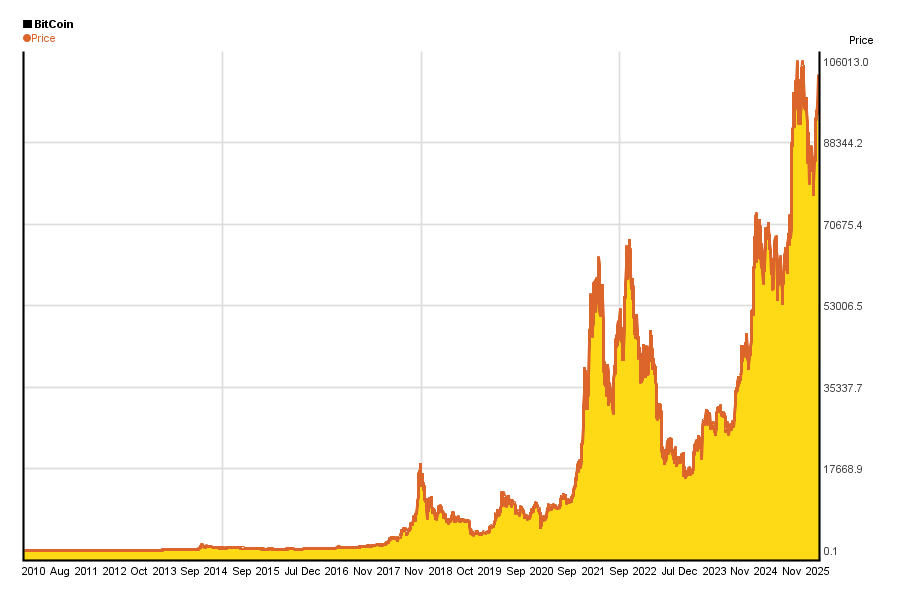
The financial journey of Bitcoin truly began post-2009. The first public exchange, BitcoinMarket.com, launched in March 2010, marking the beginning of organized price discovery. By July 2010, Bitcoin’s price had surged tenfold, from $0.008 to $0.08. Its first parity with the U.S. dollar occurred in February 2011, and by December of that year, it briefly touched $30. This meteoric rise continued, albeit with significant volatility, through various bull and bear cycles, reaching unprecedented heights in subsequent decades. Each new price milestone, from $100 to $1,000, then $10,000, and eventually tens of thousands of dollars, cemented its status as a revolutionary asset class. The “worth” of Bitcoin in 2009 was therefore entirely anticipatory, a latent potential that would only be realized through years of development, adoption, and market maturation.
Why Early Adopters Held On (or Didn’t)
The decision to hold onto or sell early Bitcoin holdings represents a fascinating study in behavioral finance. Many who acquired Bitcoin in 2009 did so out of ideological alignment with its decentralized principles or purely for experimentation. They were not investors in the traditional sense, seeking financial returns. Consequently, many sold their holdings for trivial amounts (like the pizza transaction) or lost access to them through forgotten wallets or hardware failures. Those who did hold on, often through sheer conviction or forgetfulness, became accidental millionaires or billionaires. This highlights the double-edged sword of early adoption: immense potential rewards for those with foresight and ironclad conviction, but also immense psychological pressure to sell as the asset gains value, or to simply disbelieve its future trajectory.
Investment Lessons from Bitcoin’s Early Days
Bitcoin’s journey from obscurity in 2009 to a global financial phenomenon offers invaluable lessons for investors across all asset classes, particularly in the realm of emerging technologies and alternative investments.
The Power of Early-Stage Speculation
Bitcoin’s initial non-existent price underscores the incredible power of early-stage speculation in nascent markets. Investing in assets with minimal current utility but significant future potential can lead to outsized returns. However, this power comes with equally immense risks. In 2009, Bitcoin was purely speculative; there was no guarantee it would ever gain traction, overcome technical hurdles, or achieve widespread adoption. The lesson is that true innovation, when coupled with a compelling value proposition and a dedicated community, can transform speculative bets into legitimate investment opportunities. Investors willing to accept extreme risk for extreme reward look for similar characteristics in today’s burgeoning tech and crypto startups.
Understanding Risk and Reward in Nascent Markets
The disparity between Bitcoin’s 2009 “worth” and its current valuation is a powerful testament to the risk-reward dynamics of nascent markets. Investing in such markets is akin to venturing into uncharted territory. There’s a high probability of total loss, as many early digital currencies or tech startups ultimately fail. Yet, for the few that succeed, the rewards can redefine wealth. Bitcoin’s story teaches us that robust due diligence, an understanding of underlying technology and economics, and a strong conviction are essential. Moreover, it emphasizes the importance of capital allocation: only invest what you can afford to lose when dealing with such speculative assets.
The Enduring Appeal of Decentralized Finance
The fact that Bitcoin, born out of a desire for a decentralized financial system, could evolve into a multi-trillion-dollar asset class speaks to the enduring appeal and disruptive potential of decentralized finance (DeFi). The principles articulated in 2009 – censorship resistance, immutability, transparency, and freedom from central control – have resonated deeply with a segment of the global population and financial industry. For investors, understanding these core tenets is crucial. They represent not just technological advancements but fundamental shifts in how value can be created, transferred, and stored, offering alternatives to traditional financial infrastructure.
Bitcoin’s Legacy: Reshaping the Financial Landscape
The answer to “how much was a Bitcoin worth in 2009?” is a foundational piece in understanding Bitcoin’s transformative impact. Its journey from a theoretical asset with no market value to a global financial force has reshaped investor perspectives and challenged established financial paradigms.
Paving the Way for the Cryptocurrency Ecosystem
Bitcoin’s success created the template and the impetus for the entire cryptocurrency ecosystem. Without Bitcoin proving the viability of a decentralized digital currency, it is highly unlikely that thousands of altcoins, stablecoins, DeFi protocols, and NFTs would exist today. It demonstrated that a digital asset could achieve scarcity, security, and market-driven value without sovereign backing. This initial proof of concept has led to an explosion of innovation, attracting billions in capital and creating entirely new investment opportunities and financial products. For investors, Bitcoin is not just an asset but the progenitor of a vast, evolving digital economy.
Challenging Traditional Financial Paradigms
Beyond its direct monetary value, Bitcoin has fundamentally challenged traditional financial paradigms. It forced institutions, central banks, and governments to acknowledge the existence and potential of assets outside their direct control. It sparked debates on monetary policy, inflation, financial privacy, and the role of intermediaries. For investors, this means navigating a financial world that is increasingly hybrid, blending traditional assets with digital ones. Understanding Bitcoin’s origins and its unique value proposition is key to comprehending these larger shifts in the global financial architecture.
The Future of Digital Assets and Investing
The story of Bitcoin in 2009 is a powerful prelude to the future of digital assets and investing. It highlights the potential for new technologies to create entirely new forms of wealth and investment classes. While the days of acquiring Bitcoin for effectively nothing are long gone, the principles of identifying groundbreaking innovation, understanding underlying value propositions, and being prepared for extreme volatility remain paramount. As the world continues its digital transformation, Bitcoin’s early history serves as a cautionary tale for those who dismiss emergent technologies and an inspiring one for those willing to embrace the future of finance. The “worth” of Bitcoin in 2009 was effectively immeasurable, a blank slate upon which a new chapter of financial history would be written, forever altering how we perceive and interact with money.
aViewFromTheCave is a participant in the Amazon Services LLC Associates Program, an affiliate advertising program designed to provide a means for sites to earn advertising fees by advertising and linking to Amazon.com. Amazon, the Amazon logo, AmazonSupply, and the AmazonSupply logo are trademarks of Amazon.com, Inc. or its affiliates. As an Amazon Associate we earn affiliate commissions from qualifying purchases.