
In the landscape of personal finance and investing, few names resonate with the same level of trust and innovation as Vanguard. For millions of investors worldwide, a “Vanguard account” isn’t just a brokerage or retirement vehicle; it represents a commitment to low-cost, long-term investing principles designed to maximize returns over time. Founded by investment legend John C. Bogle in 1975, Vanguard revolutionized the financial industry by championing index funds and an investor-owned structure, fundamentally shifting the paradigm from high-fee active management to efficient, market-tracking strategies.
At its core, a Vanguard account is an investment account held with The Vanguard Group, Inc., offering access to a vast array of investment products including mutual funds, exchange-traded funds (ETFs), stocks, and bonds. What truly distinguishes Vanguard, however, is its unique corporate structure: it is owned by its funds, which in turn are owned by their investors. This unusual setup ensures that profits are returned to investors in the form of lower costs and fees, aligning Vanguard’s interests directly with those of its clients more closely than virtually any other financial institution. This article delves into the specifics of what a Vanguard account entails, its myriad benefits, the types of accounts available, and why it remains a cornerstone for prudent investors aiming for financial growth.
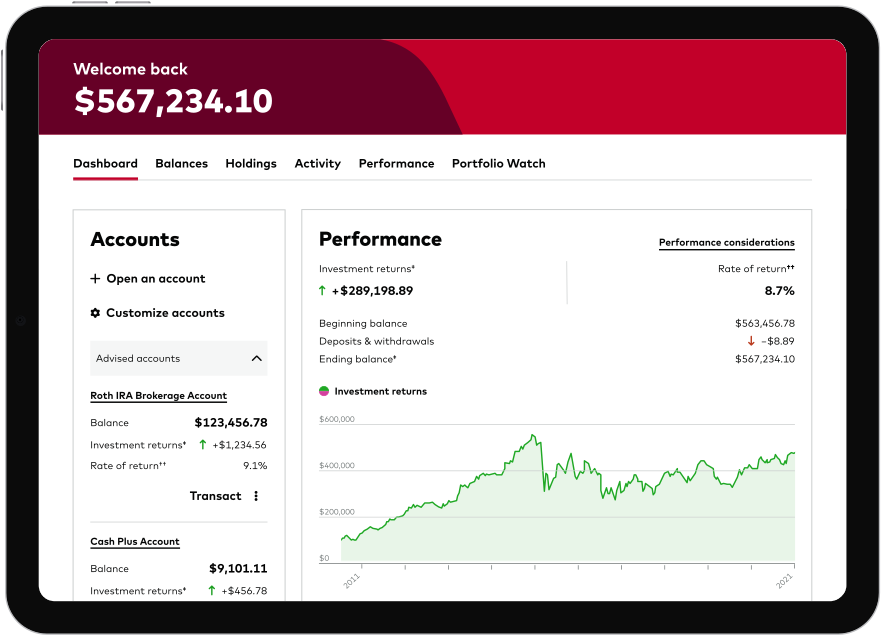
Understanding Vanguard: A Pioneer in Low-Cost Investing
Vanguard’s impact on the financial world is indelible, primarily due to its unwavering dedication to investor-centric principles and its pioneering role in popularizing index investing. To truly grasp what a Vanguard account offers, it’s essential to understand the philosophy that underpins the entire institution.
The Vanguard Philosophy: Investor-Owned and Cost-Conscious
John Bogle’s vision for Vanguard was radical: create a company that serves its investors first and foremost, free from the conflicts of interest inherent in traditional, publicly traded asset managers. This led to the establishment of a client-owned mutual fund company, where the company’s “shareholders” are literally the investors in Vanguard’s funds. This structure eliminates external shareholders to whom profits must be distributed, allowing Vanguard to relentlessly drive down expense ratios – the annual fees charged as a percentage of assets managed.
This cost-conscious approach is not merely a marketing gimmick; it’s an economic imperative for Vanguard. Every dollar saved in fees is a dollar kept by the investor, compounding over decades to significantly impact overall returns. This philosophy profoundly influenced the development of the modern index fund, which seeks to passively track the performance of a specific market benchmark (like the S&P 500) rather than attempting to outperform it through active stock picking. Bogle argued, convincingly, that over the long term, most actively managed funds fail to beat their benchmarks after fees, making low-cost index funds a superior choice for the vast majority of investors.
Key Investment Offerings: Index Funds and ETFs
While a Vanguard account can hold various securities, its true strength lies in its extensive selection of proprietary index funds and ETFs. These products are the embodiment of Vanguard’s low-cost, diversified investing strategy.
- Index Mutual Funds: These funds hold a basket of securities designed to mirror the composition and performance of a market index. For example, Vanguard’s Total Stock Market Index Fund aims to track the entire U.S. stock market. Investors can buy into these funds with minimum initial investments, often around $3,000 for their admiral shares (which offer even lower expense ratios than investor shares).
- Exchange-Traded Funds (ETFs): ETFs are similar to index mutual funds in that they track an index, but they trade on stock exchanges like individual stocks. This provides flexibility, as investors can buy and sell them throughout the day at market prices. Vanguard offers a massive suite of ETFs covering various market segments, asset classes, and geographies, often with expense ratios that are among the lowest in the industry. For instance, the Vanguard S&P 500 ETF (VOO) provides exposure to the 500 largest U.S. companies at an incredibly low cost.
- Target-Date Funds: These are “fund of funds” that automatically adjust their asset allocation over time, becoming more conservative as the investor approaches a specific retirement date. They offer a hands-off, diversified solution for retirement planning.
- Actively Managed Funds: Although Vanguard is renowned for index investing, it also offers a selection of actively managed funds, many of which still boast lower expense ratios than competitors. These are managed by teams of professionals who aim to outperform a specific benchmark.
- Individual Stocks and Bonds: Through a Vanguard brokerage account, investors also have the ability to buy and sell individual stocks, bonds, and other non-Vanguard ETFs or mutual funds, providing comprehensive flexibility.
Types of Vanguard Accounts: Tailoring to Your Financial Goals
Vanguard offers a comprehensive suite of account types designed to meet virtually every financial planning need, from short-term savings to long-term retirement and education funding. The flexibility in choosing the right account ensures that investors can align their investment strategy with their specific life stage and objectives.
Individual Brokerage Accounts: Flexibility for General Investing
An individual brokerage account at Vanguard is your most versatile option for general investing. This type of account allows you to invest in a wide range of securities, including Vanguard’s mutual funds and ETFs, as well as individual stocks, bonds, and options from other providers. It’s ideal for:
- Saving for short-to-medium term goals (e.g., a down payment on a house, a new car, or a large purchase).
- Investing beyond the limits of tax-advantaged retirement accounts.
- Building a diversified portfolio for any purpose where the funds may be needed before retirement.
These accounts offer liquidity, meaning you can typically access your funds relatively easily, though withdrawals of invested capital may be subject to capital gains taxes.
Retirement Accounts: Securing Your Future
Vanguard is a powerhouse for retirement planning, offering a full spectrum of tax-advantaged retirement accounts designed to help individuals save for their golden years. These accounts provide significant tax benefits, either by allowing pre-tax contributions to grow tax-deferred or by enabling tax-free withdrawals in retirement.
- Traditional IRAs (Individual Retirement Arrangements): Contributions may be tax-deductible, reducing your current taxable income. Investments grow tax-deferred, meaning you don’t pay taxes until you withdraw funds in retirement.
- Roth IRAs: Contributions are made with after-tax money, but qualified withdrawals in retirement are entirely tax-free. This is particularly appealing for younger investors who expect to be in a higher tax bracket during retirement.
- SEP IRAs (Simplified Employee Pension) and SIMPLE IRAs (Savings Incentive Match Plan for Employees): These are retirement plans designed for small business owners and self-employed individuals, offering higher contribution limits than traditional or Roth IRAs.
- 401(k) Rollovers: If you leave an employer, Vanguard makes it straightforward to roll over your existing 401(k) or other employer-sponsored retirement plan into a Vanguard IRA, allowing you to maintain control over your investments and often access lower-cost fund options.
Education Savings Accounts: Investing in the Next Generation
For parents and grandparents looking to save for future educational expenses, Vanguard offers robust 529 plans. These plans provide tax advantages specifically for college savings.
- 529 Plans: Contributions grow tax-free, and withdrawals are tax-free when used for qualified education expenses (tuition, fees, books, room and board, etc.). Many states also offer a tax deduction for contributions. Vanguard manages several state-sponsored 529 plans, known for their low costs and diversified investment options, typically utilizing Vanguard’s own index funds and target-enrollment portfolios.
Other Specialized Accounts: Trusts and Business Solutions
Beyond individual and retirement accounts, Vanguard also caters to more specialized needs:
- Trust Accounts: For estate planning purposes, Vanguard facilitates the establishment and management of various trust accounts, allowing for sophisticated asset distribution and management strategies.
- Custodial Accounts (UGMA/UTMA): These accounts allow adults to hold and manage assets for the benefit of a minor, providing a tax-efficient way to save for a child’s future, though with less flexibility than a 529 plan regarding the use of funds.
- Small Business and Institutional Accounts: Vanguard also offers solutions for businesses, non-profits, and other institutional investors, leveraging their low-cost fund lineup for larger-scale asset management.
The Advantages of Choosing Vanguard for Your Investments
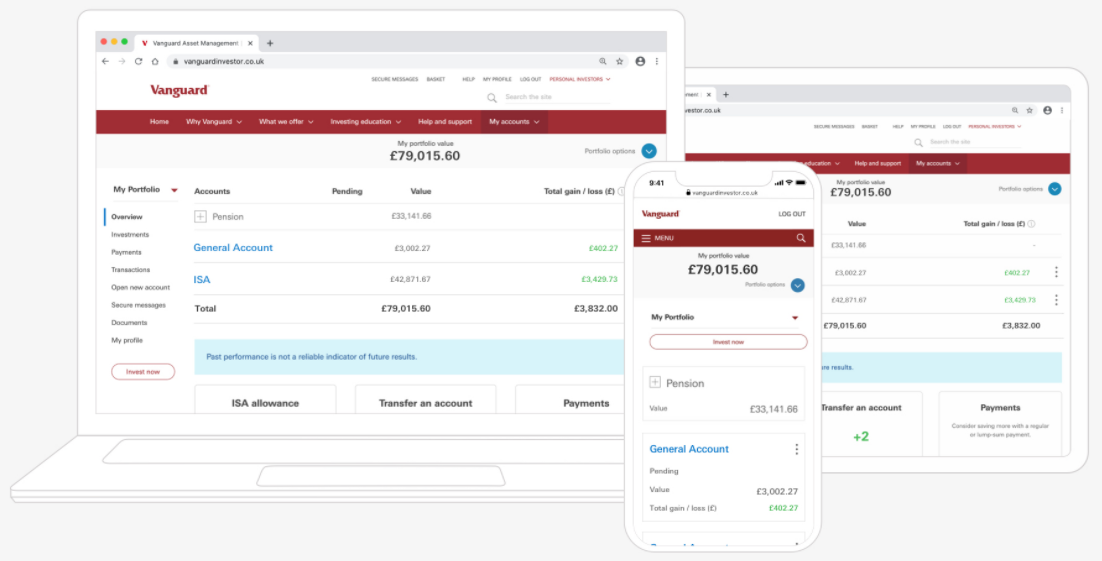
Vanguard’s distinctive approach to asset management has cemented its reputation as a preferred choice for a specific type of investor. Its advantages stem directly from its unique structure and unwavering philosophy.
Unmatched Low Costs: Maximizing Your Returns
The most significant and often cited advantage of a Vanguard account is its consistently low costs. As an investor-owned entity, Vanguard does not have external shareholders demanding profit, allowing it to return value to its clients through rock-bottom expense ratios.
- Lowest Expense Ratios: Vanguard’s index funds and ETFs frequently boast the lowest expense ratios in the industry. For example, some core ETFs have expense ratios as low as 0.03% or 0.04%, meaning you pay just $3 or $4 annually for every $10,000 invested. Over decades, these small differences in fees can translate into hundreds of thousands of dollars more in your pocket due to the power of compounding.
- No Trading Commissions on Vanguard ETFs: Investors can trade Vanguard ETFs commission-free within a Vanguard brokerage account, further reducing transactional costs.
- Transparent Fee Structure: Vanguard is known for its clear and straightforward fee disclosures, fostering trust and enabling investors to easily understand the costs associated with their investments.
Diversification and Simplicity: The Power of Index Investing
Vanguard champions diversification as a cornerstone of prudent investing. Its extensive range of index funds and ETFs makes achieving broad diversification straightforward and accessible.
- Instant Diversification: With a single Vanguard Total Stock Market Index Fund or ETF, an investor gains exposure to thousands of U.S. companies, from large caps to small caps. Similar funds exist for international markets, bonds, and specific sectors, making it simple to build a globally diversified portfolio with just a few core holdings.
- Simplicity and Automation: Vanguard’s target-date funds exemplify simplicity, automatically rebalancing and adjusting asset allocations as an investor approaches retirement. This “set it and forget it” approach is invaluable for those who prefer a hands-off strategy or are new to investing.
- Consistent Market Returns: By focusing on tracking market indexes rather than trying to beat them, Vanguard’s core offerings aim to deliver market returns consistently over the long term, avoiding the common pitfalls and underperformance often associated with high-fee actively managed funds.
Robust Research and Educational Resources
Vanguard is committed to empowering its investors with knowledge and tools.
- Extensive Research and Insights: The company provides a wealth of research reports, economic outlooks, and investment insights, often shared directly with its clients. These resources are designed to educate investors on market dynamics, long-term investing principles, and financial planning best practices.
- User-Friendly Platform and Tools: Vanguard’s website and mobile app offer intuitive interfaces for managing accounts, placing trades, and accessing performance data. They also provide various calculators and planning tools to help investors set goals, assess risk tolerance, and monitor progress.
- Personal Advisor Services: For investors who desire professional guidance without the high costs of traditional financial advisors, Vanguard offers its Personal Advisor Services. This hybrid model combines algorithmic advice with human oversight from a certified financial planner, typically at a significantly lower fee than conventional advisory services.
Reputable and Trustworthy Brand Legacy
Vanguard’s long-standing commitment to its investor-owned structure and low-cost philosophy has built an unparalleled legacy of trust and reliability in the financial industry.
- Fiduciary Duty: Because Vanguard is owned by its funds and, by extension, its investors, it operates under a fiduciary duty, meaning it is legally and ethically bound to act in the best interests of its clients. This is a crucial distinction that provides an extra layer of confidence.
- Stability and Longevity: As one of the largest investment management companies in the world, Vanguard offers tremendous stability and a proven track record spanning nearly five decades. Investors can be confident that their assets are held with a financially sound and enduring institution.
Potential Considerations and Who Benefits Most
While Vanguard offers compelling advantages, it’s important to consider its specific focus and determine if its approach aligns with your individual investing style and needs.
A Focus on Self-Directed Investing (Less Active Management)
Vanguard’s platform is primarily geared towards investors who prefer a self-directed, long-term, and passive investment approach.
- Less Emphasis on Active Trading: While you can trade individual stocks and other securities, Vanguard’s platform is not optimized for frequent or day trading. Its tools and resources are geared towards buy-and-hold strategies rather than active market timing.
- Limited “Bells and Whistles”: Compared to some other brokers, Vanguard’s trading platform might be perceived as less feature-rich for advanced traders. It focuses on functionality and simplicity rather than complex charting tools or proprietary trading indicators.
- Customer Service Style: Vanguard’s customer service, while professional, often emphasizes efficiency. Investors seeking highly personalized, frequent hand-holding may find other platforms or full-service advisory firms more suitable, though at a higher cost.
Limited Actively Managed Funds Compared to Peers
While Vanguard does offer some actively managed funds, its core strength and primary focus remain its index funds and ETFs.
- Preference for Passive: Investors who strongly believe in the ability of active managers to consistently outperform the market might find Vanguard’s selection of actively managed funds somewhat limited compared to other institutions that specialize in this area.
- Diversification Through Indexing: Vanguard’s philosophy suggests that broad market exposure through indexing is a more reliable path to long-term wealth creation than attempting to pick individual winners or superior active managers.
Ideal for Long-Term, Passive Investors
Ultimately, a Vanguard account is an exceptional choice for:
- Long-Term Savers: Individuals focused on saving for retirement, a child’s education, or other significant future goals.
- Cost-Conscious Investors: Those who understand the profound impact of fees on long-term returns and actively seek the lowest expense ratios.
- Passive Investors: Individuals who believe in the efficiency of the market and prefer to track broad market indexes rather than attempting to beat them.
- DIY Investors: Those comfortable with managing their own investments, even if utilizing Vanguard’s Personal Advisor Services for some guidance.
- New Investors: The simplicity and low cost of Vanguard’s target-date funds and core ETFs make it an excellent starting point for those new to investing.
Getting Started: How to Open a Vanguard Account
Opening a Vanguard account is a straightforward process, typically completed online within a matter of minutes.
Pre-Requisites and Required Information
Before you begin, ensure you have the following information readily available:
- Social Security Number (SSN) or Taxpayer Identification Number (TIN).
- Bank Account Information: You’ll need your bank’s routing number and your account number to link for funding your new Vanguard account.
- Personal Information: Your full legal name, address, date of birth, and employment information.
- Beneficiary Information: For retirement accounts, you’ll need the names, birth dates, and SSNs of your chosen beneficiaries.
The Online Application Process
- Select Account Type: Visit Vanguard’s website and choose the type of account you wish to open (e.g., Individual Brokerage, Roth IRA, 529 Plan).
- Provide Personal Details: Fill out the online application with your personal information.
- Investment Choices (Optional at First): For some accounts, you might be prompted to select initial investments. Don’t worry if you’re unsure; you can always fund the account first and then decide on your investments later.
- Review and Submit: Carefully review all the information provided before submitting your application electronically.
- Identity Verification: Vanguard may require additional steps to verify your identity, especially if some information doesn’t match government records perfectly.

Funding Your New Account
Once your account is open, you’ll need to fund it. Vanguard offers several convenient methods:
- Electronic Bank Transfer (ACH): The most common method, allowing you to transfer funds directly from your linked bank account.
- Wire Transfer: For larger amounts or quicker transfers.
- Mail a Check: You can mail a check to Vanguard with your account number.
- Rollover from Another Institution: If opening an IRA, you can initiate a rollover from an existing retirement account held elsewhere.
- Direct Deposit or Recurring Investments: Set up automatic contributions from your paycheck or bank account to facilitate consistent, disciplined investing.
In conclusion, a Vanguard account represents a powerful tool for building long-term wealth through disciplined, low-cost, and diversified investing. Its unique investor-owned structure and pioneering spirit have made it a trusted ally for millions seeking to achieve their financial aspirations. By understanding the various account types, the advantages of its core offerings, and its specific investment philosophy, investors can determine if Vanguard is the right home for their financial future.
aViewFromTheCave is a participant in the Amazon Services LLC Associates Program, an affiliate advertising program designed to provide a means for sites to earn advertising fees by advertising and linking to Amazon.com. Amazon, the Amazon logo, AmazonSupply, and the AmazonSupply logo are trademarks of Amazon.com, Inc. or its affiliates. As an Amazon Associate we earn affiliate commissions from qualifying purchases.