
As tax season approaches, a common question echoes among investors and account holders: “When does Fidelity send tax forms?” For millions managing their investments, retirement accounts, and other financial products through Fidelity, receiving the correct tax documentation in a timely manner is crucial for accurate and stress-free tax filing. Understanding Fidelity’s schedule for dispatching these vital documents, knowing what forms to expect, and how to access them can significantly streamline your tax preparation process.
This comprehensive guide will demystify Fidelity’s tax form distribution process, outlining key dates, types of forms, and best practices to ensure you have all the necessary information at your fingertips. From brokerage statements to retirement account distributions, we’ll cover what you need to know to confidently navigate your tax obligations with Fidelity.
Understanding Fidelity’s Tax Reporting Calendar
Fidelity, like all financial institutions, adheres to strict IRS guidelines for issuing tax documents. While the primary deadline for most common forms is typically January 31st, the actual mailing dates can vary based on the complexity of the investments, the type of account, and the specific reporting requirements. It’s not uncommon for investors to receive multiple forms, or even corrected versions, throughout the early months of the year.
General Deadlines for Common Tax Forms
The vast majority of tax forms issued by Fidelity, covering a wide array of investment activities, are dispatched by January 31st of the new year for the preceding tax year. This includes critical documents like Forms 1099-DIV (dividends and distributions), 1099-INT (interest income), and most 1099-B (proceeds from broker and barter exchange transactions). Meeting this deadline allows individuals ample time to prepare their returns before the April 15th federal tax filing deadline.
However, it’s important to remember that this is a general guideline. Certain investments or specific account types may have extended reporting periods. For instance, some complex investments, such as those involving real estate investment trusts (REITs) or certain partnerships, might generate Schedule K-1 forms, which can have much later distribution dates, sometimes extending into March or even April.
Specific Timelines for Various Form Types
While January 31st is the foundational date, Fidelity often categorizes its form distribution to manage the immense volume and ensure accuracy.
- 1099-DIV, 1099-INT, 1099-MISC, and most 1099-B forms: These are typically among the first to be sent out, aiming for delivery by the end of January. The 1099-B, in particular, can be quite complex due to various cost basis reporting requirements and may sometimes require additional time if there are numerous transactions or special circumstances.
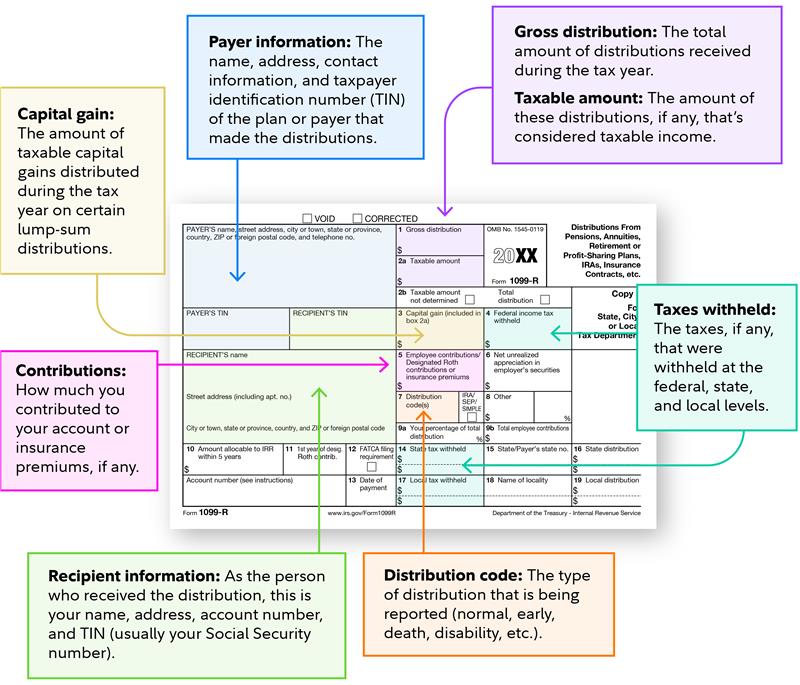
- 1099-R (Distributions from Pensions, Annuities, Retirement or Profit-Sharing Plans, IRAs, Insurance Contracts, etc.): If you took distributions from an IRA, 401(k), or other retirement accounts during the year, you can expect Form 1099-R by January 31st. This form details the gross distribution, taxable amount, and any federal income tax withheld.
- Form 5498 (IRA Contribution Information): Unlike other forms that report income or transactions from your account, Form 5498 reports contributions to your IRA (Traditional, Roth, SEP, SIMPLE) and the fair market value of the account at year-end. Because individuals have until the tax filing deadline (April 15th) to make contributions for the previous tax year, Form 5498 is typically sent out much later, usually by May 31st. This later date ensures all prior-year contributions are captured. While not needed for filing your tax return, it’s crucial for your records.
- Form 1042-S (Foreign Person’s U.S. Source Income Subject to Withholding): If you are a non-resident alien with U.S. source income, this form reports that income and any tax withheld. These are generally sent by March 15th.
- Schedule K-1 (Partner’s Share of Income, Deductions, Credits, etc.): For investments in Limited Partnerships (LPs), Master Limited Partnerships (MLPs), or certain other pass-through entities, Schedule K-1s are required. These are notorious for their late arrival, often not being finalized by the issuing entity until mid-March or even later, sometimes extending into April. Fidelity will make these available as soon as they receive them from the underlying investments.
The Nuances of Consolidated 1099 Statements
Fidelity often provides a “Consolidated 1099 Statement,” which bundles multiple types of 1099 forms (like 1099-B, 1099-DIV, 1099-INT) into one comprehensive document. This streamlined approach simplifies record-keeping for investors. However, the timing of these consolidated statements is dictated by the latest date required for any of the individual forms contained within it. If your statement includes complex 1099-B reporting, for example, the consolidated statement might be issued closer to the later end of the reporting window. Investors should always review these consolidated statements carefully to ensure all expected income and transactions are accurately reported.
Navigating Your Fidelity Tax Documents
Once you understand when to expect your forms, the next step is knowing how to access them. Fidelity offers convenient options for receiving and managing your tax documents, catering to both traditional mail preference and digital-first users.
Electronic vs. Mailed Delivery: Choosing Your Preference
Fidelity provides clients with the option to receive their tax forms electronically or via postal mail. Opting for electronic delivery is not only environmentally friendly but also offers quicker access to documents and reduces the risk of mail delays or lost paperwork. If you haven’t already, you can typically enroll in e-delivery through your Fidelity account settings online. This preference can usually be changed at any time, but make sure to update it before the end of the year if you wish for a change to apply to the upcoming tax season.
How to Access Your Tax Forms Online (Fidelity.com and Mobile App)
For those who choose electronic delivery or simply prefer digital access, Fidelity makes it straightforward to retrieve your tax documents.
- Fidelity.com: Log in to your account at Fidelity.com. Navigate to the “Accounts & Trade” menu, then select “Statements & Reports,” and finally “Tax Forms & Information.” Here, you’ll find a centralized hub for all your relevant tax documents for current and prior years. You can download PDF versions of your forms, which are identical to the mailed copies.
- Fidelity Mobile App: While the full suite of tax documents might be more easily viewed and downloaded on the desktop site, the Fidelity mobile app often provides quick links or access points under “Statements” or “Documents” sections. This is particularly useful for checking if forms have become available.
Remember that electronic forms are typically available online several days before their mailed counterparts would arrive, offering a head start on tax preparation.
Understanding Key Information on Your Fidelity Tax Forms
Each Fidelity tax form serves a specific purpose, reporting different types of income or financial activity. Understanding the key sections on these forms is essential for accurate tax filing.
- Form 1099-DIV: Reports dividends and distributions from stocks and mutual funds, categorized as ordinary dividends, qualified dividends (taxed at lower capital gains rates), and capital gain distributions.
- Form 1099-INT: Reports interest income earned from cash balances, money market funds, bonds, and other interest-bearing investments within your Fidelity accounts.
- Form 1099-B: This form is critical for reporting sales of stocks, bonds, mutual funds, and other securities. It details the proceeds from sales, the acquisition date, and the cost basis, which is crucial for calculating capital gains or losses. Fidelity reports cost basis information to the IRS for “covered securities” (generally those acquired after 2010), simplifying this aspect for many investors.
- Form 1099-R: Details distributions from retirement accounts, including Traditional IRAs, Roth IRAs, 401(k)s, and annuities. It specifies the gross distribution, the taxable amount, and any federal income tax withheld. It also indicates if the distribution was an early withdrawal (subject to potential penalties) or a rollover.
- Form 5498: As mentioned, this form reports contributions to IRAs and the fair market value of your IRA at year-end. While not directly used for tax filing, it’s vital for IRS records and for tracking your contribution limits and basis in non-deductible IRAs.
Familiarizing yourself with these forms beforehand can make the process of transferring information to your tax return or tax preparation software much smoother.
Common Fidelity Tax Forms Explained
Diving deeper into the specific types of tax forms you might receive from Fidelity helps to clarify their purpose and relevance to your tax situation.
Forms for Investment Income (1099-DIV, 1099-INT)
Form 1099-DIV: Dividends and Distributions
If you hold stocks, mutual funds, or ETFs in a taxable brokerage account that pay dividends, you’ll receive a 1099-DIV. This form breaks down the types of dividends you received:
- Ordinary Dividends: Taxed at your regular income tax rate.
- Qualified Dividends: Subject to the lower long-term capital gains tax rates, which can be a significant tax advantage.
- Capital Gain Distributions: These occur when a mutual fund or ETF sells securities at a profit and distributes those gains to shareholders. They are also generally taxed at long-term capital gains rates, regardless of how long you’ve held the fund.
Understanding these distinctions is crucial, as they are taxed differently.

Form 1099-INT: Interest Income
Any interest earned from cash balances, money market accounts, certificates of deposit (CDs), or bonds held in your Fidelity taxable accounts will be reported on Form 1099-INT. This includes interest from Fidelity’s core money market positions. Even small amounts of interest are generally taxable income and must be reported.
Reporting Capital Gains and Losses (1099-B)
Form 1099-B: Proceeds From Broker and Barter Exchange Transactions
This is arguably one of the most complex, yet vital, forms for investors. If you sold any stocks, bonds, mutual funds, ETFs, or other securities in a taxable account, Fidelity will issue a 1099-B. This form reports:
- Proceeds: The amount you received from selling your investments.
- Acquisition Date: The date you purchased the investment.
- Cost Basis: The original price you paid for the investment, adjusted for commissions, fees, and other factors.
- Wash Sales: If you sold a security at a loss and repurchased a substantially identical security within 30 days before or after the sale, the loss may be disallowed due to wash sale rules. Fidelity tracks and reports these.
The combination of proceeds and cost basis is used to calculate your capital gains or losses, which are then categorized as short-term (held one year or less) or long-term (held more than one year). Accurate reporting on Form 1099-B is essential to minimize your tax liability by taking advantage of capital losses or accurately reporting gains.
Retirement Account Distributions (1099-R)
Form 1099-R: Distributions From Pensions, Annuities, Retirement or Profit-Sharing Plans, IRAs, Insurance Contracts, etc.
This form is issued if you received any distributions from your retirement accounts, including:
- Traditional IRA, SEP IRA, SIMPLE IRA: Withdrawals from these are generally taxable in the year received, unless they represent a return of non-deductible contributions.
- Roth IRA: Qualified distributions from Roth IRAs are tax-free and penalty-free. Non-qualified distributions may have taxable components or be subject to penalties.
- 401(k), 403(b), 457(b): Distributions from these employer-sponsored plans are typically taxable.
The 1099-R specifies the gross distribution amount and, crucially, the taxable amount. It also uses distribution codes (Box 7) to indicate the type of distribution (e.g., normal, early, rollover, Roth conversion), which is vital for correct tax treatment.
IRA Contributions and Fair Market Value (Form 5498)
Form 5498: IRA Contribution Information
As previously noted, Form 5498 is unique because it reports contributions to your IRA, not distributions. It’s used by the IRS to ensure you haven’t exceeded contribution limits and to track the fair market value of your IRA at the end of the year. This form is particularly important if you make non-deductible Traditional IRA contributions, as it helps establish your basis for future tax-free withdrawals. Because prior-year contributions can be made up until the tax deadline, Form 5498 is issued later in the year, by May 31st.
Other Specialized Forms (e.g., 1042-S, K-1s)
- Form 1042-S: Used for reporting income paid to foreign persons (non-resident aliens) from U.S. sources, subject to withholding. This applies to non-U.S. citizens or residents who invest in U.S. markets through Fidelity.
- Schedule K-1: If you invest in partnerships (e.g., Master Limited Partnerships or certain private equity funds), you may receive a Schedule K-1. These forms report your share of the partnership’s income, losses, deductions, and credits. They are often issued directly by the partnership, though Fidelity may facilitate their availability. K-1s are notoriously late, sometimes arriving well after the standard April 15th tax deadline, which can necessitate filing an extension.
What to Do If Your Fidelity Tax Forms Are Delayed or Missing
Even with clear timelines, sometimes tax forms don’t arrive as expected, or you might find an error. Don’t panic; there are steps you can take.
When to Expect Corrected Forms
Mistakes happen, and Fidelity (or the underlying issuers for K-1s) may issue corrected tax forms. A “corrected” form usually indicates that information on a previously issued form was inaccurate and has been updated. If you receive a corrected form, it’s imperative to use the latest version for your tax filing. Often, corrected forms are issued if there are late-breaking adjustments to mutual fund distributions, updated cost basis information, or reclassifications of income. These can arrive anytime throughout February, March, or even later. Always check the “Corrected” box on the form.
Steps to Take If You Haven’t Received a Form
If you believe you should have received a specific tax form from Fidelity and it hasn’t arrived by its expected deadline (e.g., by early February for most 1099s):
- Check Online: First, log in to Fidelity.com and check your “Tax Forms & Information” section. Electronic copies are almost always available sooner and are less prone to postal delays.
- Verify Your Mailing Address: Ensure Fidelity has your current mailing address on file if you opted for paper delivery.
- Confirm Eligibility: Are you certain you should receive that specific form? For example, if you had no interest income, you won’t get a 1099-INT. If you didn’t take a retirement distribution, no 1099-R.
- Wait for Consolidated Statements: If you expect multiple 1099s, you might be waiting for a consolidated statement that bundles them all. The arrival of this consolidated document is timed by the latest individual form within it.
- Consider K-1 Delays: If you invest in partnerships, be prepared for K-1s to arrive much later. Do not file your taxes until you receive all necessary K-1s.
Contacting Fidelity for Assistance
If, after checking these points, you still believe a form is missing or incorrect, it’s time to contact Fidelity directly. You can typically reach their customer service via phone or secure message through their website. When contacting them, have your account information ready and be specific about the form you are inquiring about. Their representatives can confirm if a form was issued, if it’s been corrected, or if there’s an expected delay.
Best Practices for a Smooth Tax Season with Fidelity
Proactive steps can significantly ease the burden of tax season when dealing with your Fidelity accounts.
Don’t File Until All Forms Are Received
This is arguably the most critical piece of advice. Filing your tax return before receiving all necessary forms (including original and any corrected versions) can lead to errors, potential IRS notices, and the need to file an amended return (Form 1040-X), which is an additional hassle. Especially if you have complex investments, K-1s, or anticipate corrected statements, patience is key. If you are approaching the April 15th deadline and are still waiting on forms, consider filing an extension (Form 4868) to give yourself more time. An extension allows you more time to file, but not more time to pay any taxes owed.
Keeping Meticulous Records
While Fidelity provides comprehensive tax documentation, maintaining your own records throughout the year can be invaluable.
- Trade Confirmations: Keep records of all buy and sell orders.
- Contribution/Withdrawal Records: Document all contributions to and distributions from your IRAs and other retirement accounts.
- Dividend/Interest Statements: Cross-reference these with your 1099 forms.
- Original Cost Basis Documentation: Especially for non-covered securities (acquired before 2011), having documentation of your purchase price is essential.
These personal records can help you verify the accuracy of the forms Fidelity sends and provide backup documentation if ever needed.

The Benefits of Digital Record-Keeping
Embracing digital record-keeping can simplify tax season immensely.
- E-delivery: Opting for electronic delivery of all Fidelity documents means they are instantly accessible online and can be downloaded as PDFs.
- Dedicated Tax Folder: Create a digital folder on your computer or cloud storage (e.g., Google Drive, Dropbox) specifically for tax documents. As forms become available, download and save them there immediately.
- Backup: Regularly back up your digital tax folder to ensure you don’t lose vital information.
By taking these steps, you can transform tax season from a dreaded annual chore into a manageable process, ensuring you meet your obligations accurately and efficiently with the help of your Fidelity tax forms.
aViewFromTheCave is a participant in the Amazon Services LLC Associates Program, an affiliate advertising program designed to provide a means for sites to earn advertising fees by advertising and linking to Amazon.com. Amazon, the Amazon logo, AmazonSupply, and the AmazonSupply logo are trademarks of Amazon.com, Inc. or its affiliates. As an Amazon Associate we earn affiliate commissions from qualifying purchases.