
The annual ritual of tax filing can often feel daunting, a complex maze of deadlines, forms, and financial decisions. For many, the most pressing question as the new year begins is simple yet critical: “When can I file my 2024 tax return?” Understanding the precise timeline is not just about avoiding penalties; it’s about strategic financial planning, ensuring you have ample time to gather necessary documents, identify potential deductions, and, for many, anticipate a much-needed refund.
This comprehensive guide aims to demystify the 2024 tax filing season, providing clarity on key dates, essential preparatory steps, and expert insights to navigate the process with confidence. We’ll delve into the official opening of tax season, the critical deadlines, and explore strategies to make your filing experience as smooth and efficient as possible, all while staying firmly within the realm of personal finance and financial management.

Understanding Key Filing Dates for the 2024 Tax Season
Navigating the tax calendar is fundamental to a successful filing season. While specific dates can shift slightly each year due to weekends or holidays, the general structure remains consistent. Knowing these key dates is your first step towards a stress-free tax experience.
The Official IRS Opening Date: Kicking Off Tax Season
The Internal Revenue Service (IRS) typically announces the official start date for accepting tax returns for the prior tax year (in this case, 2024 taxes filed in 2025) in late December or early January. Historically, this date falls in late January. For example, the 2023 tax season opened on January 29, 2024. This opening date signifies when the IRS officially begins processing electronically filed returns.
While many tax software providers and tax professionals allow you to prepare and submit your return before this official opening date, these returns are generally held in a secure queue and then transmitted to the IRS once their systems are ready. Filing early, even before the official opening, can be advantageous for several reasons:
- Faster Refunds: If you are expecting a refund, filing early typically means receiving your money sooner. The IRS usually issues most refunds within 21 days for e-filed returns with direct deposit, assuming there are no issues.
- Reduced Fraud Risk: Filing early can help prevent tax identity theft. If a scammer tries to file a fraudulent return using your Social Security number, the IRS will flag it if your legitimate return has already been processed.
- Less Stress: Getting your taxes done early frees up mental space and reduces the last-minute rush often associated with tax season.
April 15th: The Standard Deadline
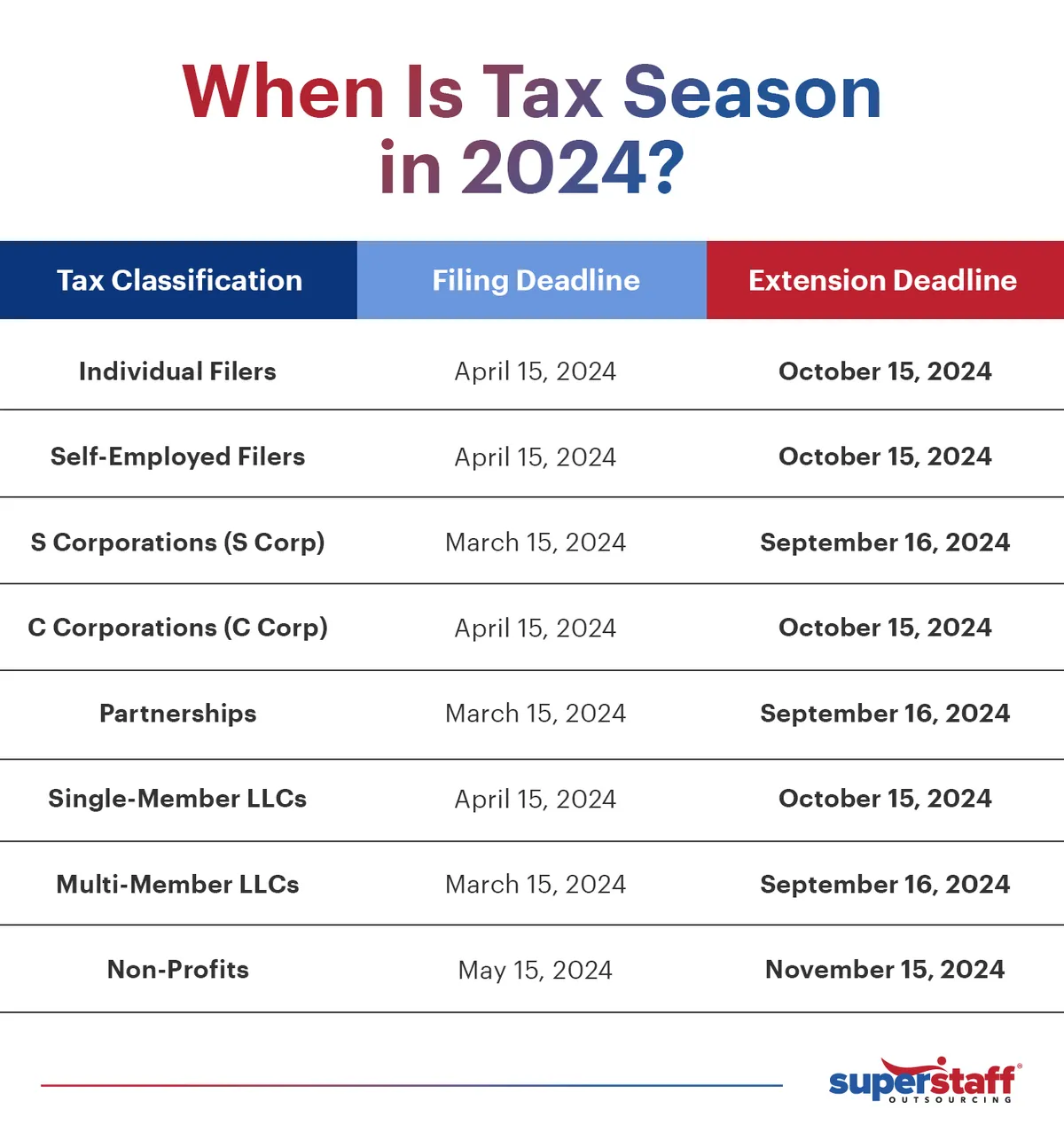
For most individual taxpayers, the unwavering beacon of the tax calendar is April 15th. This date typically marks the deadline for filing your federal income tax return for the previous calendar year and, if applicable, paying any taxes owed. If April 15th falls on a weekend or a holiday, the deadline is usually shifted to the next business day. For instance, if April 15th, 2025, were a Saturday, the deadline would move to Monday, April 17th, 2025. It is crucial to verify the exact deadline with official IRS publications as the date approaches.
It’s important to differentiate between filing your return and paying your taxes. Even if you file an extension, the deadline to pay any estimated taxes owed remains April 15th. Failure to pay on time can result in penalties and interest, even if you’ve filed an extension for the paperwork.
Special Circumstances and Extended Deadlines
While April 15th is the general rule, there are several exceptions and provisions for extensions:
- Taxpayers in Maine or Massachusetts: Due to the Patriots’ Day holiday, the filing and payment deadline for residents of these states is typically extended by a day or two.
- Victims of Natural Disasters: The IRS often grants extensions to taxpayers in areas declared federal disaster zones. These extensions can sometimes push deadlines out by several months.
- Military Personnel in Combat Zones: Members of the military serving in combat zones typically receive an automatic extension to file and pay taxes, often for 180 days after leaving the combat zone.
- Filing for an Extension (Form 4868): If you need more time to prepare your return, you can request an automatic six-month extension by filing Form 4868. This extends the filing deadline, usually until October 15th, but does not extend the deadline to pay any taxes owed. You must estimate your tax liability and pay any amount due by April 15th to avoid penalties and interest. This is a crucial distinction that often trips up taxpayers.
Essential Steps for a Smooth Filing Season
Successfully filing your tax return goes beyond just knowing the deadlines. It requires preparation, organization, and a clear understanding of the process. Adopting a structured approach can significantly reduce stress and enhance accuracy.
Gathering Your Documents: The Foundation of Your Return
The cornerstone of an accurate tax return is having all your necessary documents in order. Start compiling these as soon as they become available, typically in January and February. Key documents include:
- Income Statements: W-2s (from employers), 1099-NEC (non-employee compensation), 1099-MISC (miscellaneous income), 1099-K (third-party payment network transactions), 1099-INT (interest income), 1099-DIV (dividend income), and Schedule K-1 (from partnerships, S corporations, or trusts).
- Proof of Deductions and Credits: This can include Form 1098 (mortgage interest), student loan interest statements, records of medical expenses, charitable contribution receipts, property tax statements, and childcare expense records.
- Health Insurance Information: Form 1095-A, 1095-B, or 1095-C, depending on your health coverage.
- Prior Year Tax Return: This is an excellent reference point for carryovers and remembering income sources or deductions.
- Personal Information: Social Security numbers for yourself, your spouse, and all dependents.
- Bank Account Information: For direct deposit of your refund or direct debit of payments.
It’s advisable to create a dedicated folder, physical or digital, where you can systematically collect these documents as they arrive. This proactive approach prevents last-minute scrambling and reduces the chance of overlooking critical information.
Choosing Your Filing Method: Digital, Professional, or Traditional
Taxpayers have several avenues for filing their returns, each with its own advantages:
- Tax Software (DIY): Popular platforms like TurboTax, H&R Block Tax Software, and TaxAct guide you through the process, performing calculations and checking for common errors. Many offer free versions for simple returns. This method is ideal for those comfortable with technology and who have relatively straightforward tax situations.
- IRS Free File Program: This program, available to taxpayers meeting specific income thresholds (typically below $79,000 for 2023 taxes, which will likely be similar for 2024), offers free access to guided tax preparation software or free fillable forms directly from the IRS website.
- Tax Professionals: For complex returns, significant life changes (e.g., marriage, birth of a child, starting a business), or simply peace of mind, hiring a Certified Public Accountant (CPA) or an Enrolled Agent (EA) can be invaluable. They can offer personalized advice, identify often-missed deductions, and represent you if there are IRS inquiries.
- Paper Filing: While less common due to the efficiency of e-filing, you can still print out forms from the IRS website and mail them in. This method is generally slower for processing refunds and carries a slightly higher risk of errors.
When selecting a method, consider your comfort level with tax forms, the complexity of your financial situation, and your budget.
Reviewing for Accuracy and Completeness: The Final Check
Before clicking “submit” or dropping your envelope in the mail, dedicate ample time to review your entire return. This critical step can save you from potential headaches down the road.
- Double-Check All Personal Information: Ensure names, Social Security numbers, and addresses are correct for everyone on your return.
- Verify Income Figures: Match all W-2s, 1099s, and other income statements against the figures entered.
- Confirm Deductions and Credits: Make sure you’ve claimed all eligible deductions and credits, and that the amounts are accurate.
- Bank Account Details: If opting for direct deposit or debit, verify your routing and account numbers meticulously. A single digit error can delay your refund or send your payment to the wrong place.
- Sign and Date: Whether e-filing or paper filing, ensure your return is properly signed and dated. E-filers will typically use a self-selected PIN or prior-year AGI for electronic signature verification.
Many tax software programs have built-in error checkers, but a manual review by you or a second pair of eyes is always a wise final step.
Maximizing Your Return and Minimizing Stress
Beyond the mechanics of filing, smart strategies can help you maximize your potential refund or minimize your tax liability, all while reducing the inherent stress of tax season.
Identifying Deductions and Credits: Unlocking Savings
A thorough understanding and application of eligible deductions and credits are paramount to optimizing your tax outcome. These provisions are designed to reduce your taxable income or your tax bill directly.
- Common Deductions: These include contributions to traditional IRAs and 401(k)s, student loan interest, health savings account (HSA) contributions, self-employment tax, certain itemized deductions (like state and local taxes, mortgage interest, and charitable contributions if you don’t take the standard deduction), and potentially educator expenses.
- Key Credits: Credits are particularly valuable because they directly reduce the amount of tax you owe, dollar for dollar. Prominent credits include the Child Tax Credit, Earned Income Tax Credit (EITC), American Opportunity Tax Credit (AOTC) and Lifetime Learning Credit (for education), and the Child and Dependent Care Credit.
- Staying Informed: Tax laws can change, and new credits or deductions may be introduced or modified. It’s vital to stay informed by checking official IRS resources or consulting with a tax professional, especially for the 2024 tax year, as new legislation can impact your filing.
Don’t leave money on the table. Taking the time to explore every potential deduction and credit relevant to your situation can significantly impact your financial standing.
Strategies for Early Filing: The Proactive Approach
Beyond the benefits of faster refunds and fraud protection, filing early offers strategic advantages:
- Time for Correction: If you discover errors or missing documents after submitting your return, filing early gives you more time to prepare an amended return (Form 1040-X) without the pressure of an impending deadline.
- Planning for Payments: If you owe taxes, filing early provides a clearer picture of your liability, allowing you to plan how you will make your payment by April 15th, rather than facing a last-minute scramble.
- Peace of Mind: The psychological benefit of having your taxes done and out of the way cannot be overstated. It frees you up to focus on other financial goals or personal endeavors.
What to Do If You Can’t File on Time: Requesting an Extension
Life happens, and sometimes, despite best intentions, you might not be able to complete your tax return by April 15th. In such cases, filing Form 4868 for an automatic six-month extension is your best course of action.
- File Form 4868: This can be done electronically through tax software, a tax professional, or directly on the IRS website. It’s a simple form that requires basic identifying information.
- Estimate and Pay Taxes Due: Remember, an extension to file is NOT an extension to pay. You must still estimate your tax liability and pay any amount you owe by April 15th to avoid penalties and interest. If you underpay significantly, you might still face penalties, but filing the extension and paying what you estimate will generally protect you from the “failure-to-file” penalty, which is often much higher than the “failure-to-pay” penalty.
- Consequences of Not Filing an Extension: Failure to file your return or an extension by the deadline can result in a significant penalty, typically 5% of the unpaid taxes for each month or part of a month that a tax return is late, capped at 25% of your unpaid taxes.
Looking Ahead: Post-Filing and Future Planning
Once your 2024 tax return is filed, the process isn’t entirely over. Understanding what comes next and how to plan for the future is vital for ongoing financial health.
Understanding Your Refund or Payment: What to Expect
- Refunds: If you are due a refund, the IRS generally issues it within 21 calendar days for e-filed returns where direct deposit is selected. You can track the status of your refund using the “Where’s My Refund?” tool on the IRS website. Factors like claiming the Earned Income Tax Credit or Additional Child Tax Credit can delay refunds slightly due to IRS security measures.
- Payments: If you owe taxes, you have several payment options: direct debit from your bank account (when e-filing), IRS Direct Pay, credit/debit card payments through third-party processors, or mailing a check or money order. Ensure your payment is sent or initiated by the April 15th deadline to avoid penalties.
Safeguarding Your Tax Records: A Long-Term Necessity
After filing, it’s crucial to properly store your tax records.
- Retention Period: The IRS recommends keeping records for at least three years from the date you filed your original return or two years from the date you paid the tax, whichever is later. For more complex situations (e.g., unreported income, bad debt deductions), longer retention periods are advised.
- Secure Storage: Keep both paper and digital copies of your return and all supporting documents. Use secure cloud storage, an external hard drive, or a fireproof safe for physical documents. This protects against loss due to natural disaster, theft, or data corruption.

Proactive Tax Planning for 2025: Beyond the Current Year
The best way to prepare for next year’s tax season is to start now.
- Adjust Withholding: Review your W-4 form with your employer to ensure your withholding accurately reflects your tax liability. This can prevent a large tax bill or an excessively large refund (which essentially means you’ve given the government an interest-free loan).
- Monitor Life Changes: Major life events—marriage, divorce, birth of a child, new job, home purchase, retirement—all have significant tax implications. Adjust your financial and tax planning accordingly.
- Consult a Professional: Regular check-ins with a tax advisor can help you optimize your tax strategy, identify new opportunities, and ensure you remain compliant with evolving tax laws.
- Automate Savings: Consider automating contributions to tax-advantaged accounts like 401(k)s, IRAs, or HSAs throughout the year.
The 2024 tax season, while a recurring obligation, is also an opportunity for financial introspection and strategic planning. By understanding the key dates, preparing diligently, and leveraging available resources, you can navigate the process efficiently, maximize your financial position, and achieve greater peace of mind. Remember to always consult official IRS sources or a qualified tax professional for personalized advice and the most up-to-date information specific to your situation.
aViewFromTheCave is a participant in the Amazon Services LLC Associates Program, an affiliate advertising program designed to provide a means for sites to earn advertising fees by advertising and linking to Amazon.com. Amazon, the Amazon logo, AmazonSupply, and the AmazonSupply logo are trademarks of Amazon.com, Inc. or its affiliates. As an Amazon Associate we earn affiliate commissions from qualifying purchases.