
Navigating the labyrinthine corridors of the Internal Revenue Service can often feel like a daunting task. While the IRS has made significant strides in providing online resources and automated systems, there are still countless situations where a direct conversation with a live person is not just preferable, but absolutely essential. Whether you’re dealing with a complex tax issue, a notice you don’t understand, or simply seeking clarity on a personal financial matter, reaching a human voice can alleviate stress and provide the specific guidance you need. This guide is dedicated to demystifying the process, offering practical strategies to connect with an IRS representative, and ensuring your interaction is as productive as possible. In the realm of personal and business finance, understanding how to effectively communicate with such a critical agency is a valuable skill that can save time, money, and considerable frustration.
The Challenge of Reaching a Live Person at the IRS
For many taxpayers, the prospect of calling the IRS conjures images of endless hold times, convoluted automated menus, and the elusive hope of speaking with a real individual. This perception, while sometimes exaggerated, is rooted in a reality shaped by immense call volumes and fluctuating operational capacities. Understanding these underlying dynamics is the first step toward devising an effective strategy.
Understanding IRS Call Volume and Resources
The IRS handles hundreds of millions of tax returns annually, and a significant portion of those returns can generate questions or require follow-up. This sheer volume, coupled with budget constraints and staffing limitations, means that the IRS’s phone lines are almost constantly under immense pressure. Peak tax season (January through April) sees an exponential surge in calls, making direct contact particularly challenging. However, even outside of this period, specific events like the issuance of new tax credits, stimulus payments, or changes in tax law can lead to spikes in inquiries. The agency strives to provide self-service options, but the complexity of tax law often necessitates human interpretation.
When a Live Conversation is Indispensable
While the IRS offers a plethora of online tools, FAQs, and self-help guides, certain scenarios unequivocally demand direct human interaction. These often involve sensitive, unique, or complex financial situations that cannot be adequately resolved by automated systems or generic information. Such instances include:
- Responding to a Specific IRS Notice: Many IRS notices require clarification or a direct response to avoid further penalties or issues. An automated system cannot interpret your specific notice or provide tailored advice.
- Discussing Payment Plans or Financial Hardship: If you owe the IRS money and cannot pay, discussing an Offer in Compromise (OIC) or an installment agreement often requires a detailed conversation about your financial situation.
- Resolving Identity Theft Issues: Tax-related identity theft is a serious concern that necessitates direct communication with a specialized IRS agent to protect your financial information and resolve fraudulent activity.
- Complex Refund Inquiries: While you can check refund status online, if there’s an unusual delay, an adjustment, or a hold on your refund, a live person can often provide more specific details.
- Correcting Errors on Filed Returns (beyond simple amendments): If an amendment creates further questions or triggers other issues, speaking to an agent can clarify the next steps.
- Seeking Specific Tax Law Interpretations: General guidance may not apply to your unique business structure or personal financial circumstances, requiring a nuanced discussion.
In these situations, attempting to navigate the issue solely through online portals or automated prompts can lead to frustration and potentially exacerbate the underlying problem.
Essential Preparation Before Making the Call
Successful interactions with the IRS, especially when trying to reach a live person, hinge significantly on meticulous preparation. Approaching the call haphazardly can prolong the process, lead to misunderstandings, and require multiple attempts to resolve your issue. Treat your call to the IRS as a mini-audit of your own records and objectives.
Gathering Critical Information and Documents
Before you even dial, assemble every piece of relevant documentation related to your inquiry. Having these at your fingertips will demonstrate your preparedness, enable the representative to assist you more efficiently, and prevent the need for callbacks. Essential items typically include:
- Your Social Security Number (SSN) or Individual Taxpayer Identification Number (ITIN).
- Your Date of Birth.
- Your Filing Status (Single, Married Filing Jointly, etc.).
- The IRS Notice or Letter: If you received one, have it readily available as it contains crucial reference numbers and dates.
- Copies of Relevant Tax Returns: Have the specific tax year’s return and any related schedules on hand.
- Any Supporting Documentation: This could include W-2s, 1099s, receipts, bank statements, or other financial records pertinent to your issue.
- Prior Correspondence: Any previous letters you sent to the IRS or responses you received.
The IRS representative will likely ask security questions to verify your identity before discussing sensitive information. Be prepared to answer questions about figures from a previous tax return, such as your Adjusted Gross Income (AGI).
Defining Your Objective and Questions
Before calling, clearly define the primary objective of your call. Are you trying to understand a notice? Set up a payment plan? Inquire about a delayed refund? Once you have your main goal, break it down into specific questions. Write these down in a concise, bullet-point format. This practice ensures you cover all your concerns and don’t forget crucial details during the conversation, especially if it’s stressful. For example, instead of “Why is my refund late?”, frame it as “I filed my 2023 tax return on [Date] and the ‘Where’s My Refund?’ tool shows [Status]. Can you provide more detail on the delay or an estimated resolution timeframe?”
Setting Realistic Expectations
Understand that even with perfect preparation, you might face a wait time. The representative may not have an immediate answer to every question, or your issue might require transfer to a specialist. Be patient, polite, and persistent. Recognize that the person on the other end of the line is a public servant doing their best within the system’s constraints. Your professionalism can significantly influence the tone and outcome of the interaction.
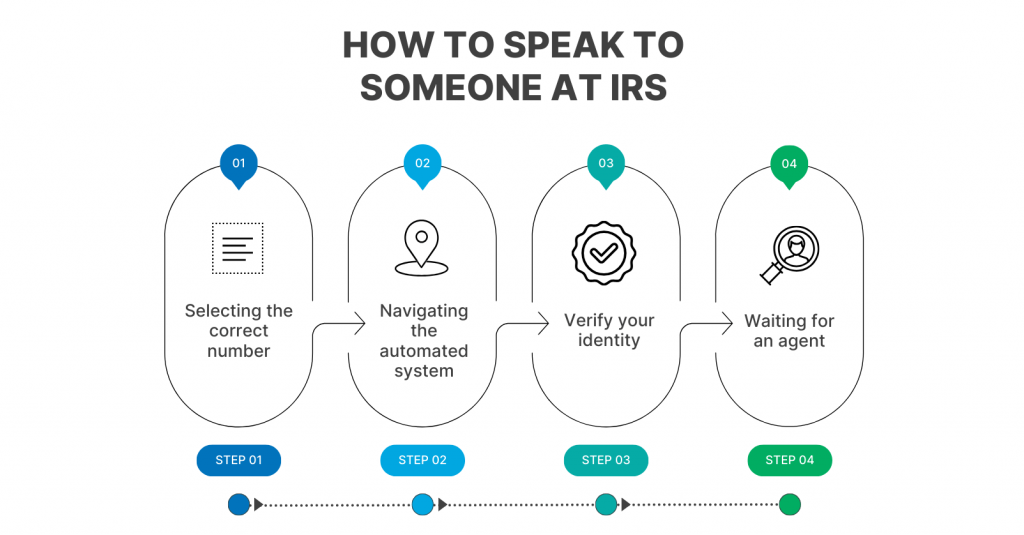
Navigating the IRS Phone System: Strategies for Success
The IRS employs sophisticated automated phone systems designed to filter calls and direct taxpayers to the most appropriate resources. While these systems can be frustrating, understanding how to effectively navigate them is key to reaching a live person.
Identifying the Correct IRS Phone Number
The IRS has several phone numbers, each dedicated to specific types of inquiries. Using the correct number from the outset can save considerable time.
- General Tax Questions: For individuals, the primary number is usually 1-800-829-1040. For businesses, it’s 1-800-829-4933.
- Payment Plans/Notices: These might often be routed through the general number, but sometimes the notice itself provides a direct number.
- Identity Theft: The IRS Identity Protection Specialized Unit can be reached at 1-800-908-4490.
- International Taxpayers: Specific numbers exist for those calling from outside the U.S.
Always check the official IRS website (IRS.gov) or your specific notice for the most current and relevant phone numbers.
Optimal Calling Times and Days
Timing is everything. IRS call volume fluctuates significantly throughout the day, week, and year.
- Early Morning: Calling shortly after lines open (typically 7:00 AM local time) is often the best strategy. Many people call later in the day, causing lines to back up.
- Mid-Week: Tuesdays, Wednesdays, and Thursdays generally have shorter wait times than Mondays (heavy post-weekend calls) or Fridays (people trying to wrap things up before the weekend).
- Off-Season: The period immediately after the April 15th tax deadline until the end of the year (excluding holidays) often sees reduced call volumes, making it easier to connect. Avoid calling on federal holidays.

Mastering the Automated Prompts
This is arguably the most crucial step in reaching a live person. The goal is to bypass as many automated options as possible that don’t directly lead to your specific need. While exact prompts can change, a common path for general inquiries on the 1-800-829-1040 line often involves:
- After the initial greeting, select your preferred language (e.g., press 1 for English).
- Listen carefully, but often the path to a human involves options related to “account information” or “questions about your tax return.”
- A frequently successful sequence for many users is to press “1” for “individual income tax,” then “1” for “questions about a tax return already filed or refund,” then “3” for “all other questions.”
- You may then be asked to enter your SSN or other identifying information. Follow these prompts.
- If you hear options like “check your refund status” or “make a payment,” resist the urge to select them if your goal is to speak to a person about a broader issue. Look for phrases like “all other questions,” “speak to a representative,” or even a specific prompt related to notices or collection issues.
- Sometimes, remaining silent or pressing “0” repeatedly will eventually route you to an operator, though this is less reliable with modern systems.
Be prepared for the system to try and route you to online resources. Politely decline these if your objective is direct human contact. Persistence and a willingness to try different paths within the menu are vital.
Patience and Persistence: Your Greatest Allies
Once you’ve navigated the automated system and are placed in a queue for a live representative, patience is paramount. Wait times can still be substantial. Use this time productively: review your notes, ensure your documents are organized, and mentally rehearse your questions. If you get disconnected, don’t despair; restart the process, applying what you learned from the previous attempt. It might take several attempts over different days or times to successfully connect.
Maximizing Your Interaction with an IRS Representative
Once you finally connect with a live IRS representative, how you conduct yourself and manage the conversation can significantly impact the outcome. This is your opportunity to resolve your financial issue, so make every moment count.
Maintaining Professionalism and Clarity
Begin by politely stating your name and briefly explaining the reason for your call. Be articulate, concise, and respectful. Avoid emotional language, even if you’re feeling frustrated. The representative is more likely to be helpful if you approach the conversation calmly and rationally. Clearly state your specific questions or the issue you need resolved. If the representative asks you to clarify, do so patiently. Remember that they are often dealing with complex issues and may need time to access your records.
Documenting Your Conversation Thoroughly
This is a critical step for your financial records. As soon as you begin speaking with an agent:
- Ask for their name and badge number. This is standard practice and provides a reference point for future follow-up if needed.
- Note the date and time of the call.
- Summarize the conversation: Jot down key points discussed, advice given, actions you need to take, and actions the IRS representative promises to take.
- Record any reference numbers: If they provide a case number or confirmation number for your inquiry, write it down immediately.
This meticulous record-keeping creates a paper trail (or rather, a digital record of a phone call) that can be invaluable if there are any discrepancies or if you need to follow up on the issue later. It serves as proof of your efforts and the information you received.
Understanding Follow-Up Procedures
Before ending the call, clarify the next steps. Ask:
- “What is the expected timeframe for resolution?”
- “Will I receive anything in writing?”
- “Do I need to do anything else on my end?”
- “If I don’t hear back, who should I contact or what is the next step?”
If the representative advises you to send documents, ensure you understand exactly what to send, where to send it, and any reference numbers to include. Always send documents via certified mail with a return receipt requested to have proof of delivery.
Beyond the Phone Call: Alternative Approaches and Professional Help
While this guide focuses on reaching an IRS live person by phone, it’s important to recognize that it’s not the only avenue. Sometimes, a different approach might be more effective or necessary, especially for highly complex financial situations.
Exploring In-Person Assistance at Taxpayer Assistance Centers (TACs)
For issues that simply cannot be resolved over the phone or online, visiting a local Taxpayer Assistance Center (TAC) can be an excellent option. TACs offer face-to-face assistance with various tax issues. However, it’s crucial to remember that appointments are often required. You cannot simply walk into a TAC and expect immediate service. To find your nearest TAC and schedule an appointment, use the IRS website’s “Contact Your Local IRS Office” tool. Prepare for an in-person visit with the same diligence as a phone call, bringing all relevant documents and a clear list of questions. This method can be particularly effective for identity verification, payment issues, or complex notice resolutions.
The Role of Tax Professionals (CPAs, EAs)
For intricate financial situations, business tax matters, or when you feel overwhelmed, engaging a qualified tax professional is often the wisest investment. Enrolled Agents (EAs), Certified Public Accountants (CPAs), and tax attorneys are authorized to represent you before the IRS. They possess in-depth knowledge of tax law, understand IRS procedures, and can navigate complex issues on your behalf, often with greater efficiency. A good tax professional can:
- Interpret complicated IRS notices.
- Negotiate payment plans or Offers in Compromise.
- Represent you during an audit.
- File amended returns or respond to IRS inquiries.
- Provide strategic financial planning advice to prevent future issues.
While there is a cost associated with their services, the peace of mind and potential financial savings can far outweigh the expense, especially when dealing with significant tax liabilities or disputes.

Leveraging IRS Online Resources
Although the primary goal is to speak with a live person, the IRS website (IRS.gov) is an invaluable initial resource. Before making that call, check if your question can be answered there. Tools like “Where’s My Refund?”, “Get Your Tax Record,” and “Online Payment Agreement” can resolve many common issues without a phone call. The site also hosts extensive FAQs, tax forms, publications, and information about various tax topics. Using these resources wisely can sometimes negate the need for a call, or at least help you formulate more precise questions for a live agent.
In conclusion, while contacting an IRS live person can be a challenging endeavor, it’s a navigable process with the right preparation, patience, and strategy. By understanding the system, preparing meticulously, and leveraging all available resources, you can significantly increase your chances of a successful and productive interaction, ensuring your financial matters are handled with the attention they deserve.
aViewFromTheCave is a participant in the Amazon Services LLC Associates Program, an affiliate advertising program designed to provide a means for sites to earn advertising fees by advertising and linking to Amazon.com. Amazon, the Amazon logo, AmazonSupply, and the AmazonSupply logo are trademarks of Amazon.com, Inc. or its affiliates. As an Amazon Associate we earn affiliate commissions from qualifying purchases.