
The annual ritual of tax filing often evokes a mix of dread and confusion for many individuals. While hiring a professional accountant or tax preparer offers convenience, it comes at a cost. For a growing number of taxpayers, the appeal of “doing it myself”—filing their own taxes—is strong, driven by a desire for greater control, cost savings, and a deeper understanding of their personal finances. This comprehensive guide is designed to empower you with the knowledge and steps needed to confidently navigate the world of DIY tax preparation, transforming a potentially daunting task into an manageable and even enlightening experience. By taking charge of your tax filing, you gain invaluable insights into your financial landscape, optimize your deductions, and ensure accuracy, all while saving money.

Understanding the Fundamentals of DIY Tax Filing
Embarking on the journey of self-prepared taxes requires a foundational understanding of why and how it works. This initial phase sets the stage for a smooth and successful filing process.
Why File Your Own Taxes?
The primary motivations for individuals to file their own taxes are multifaceted. Foremost among them is significant cost savings. Professional tax preparation services can range from a few hundred to over a thousand dollars, depending on the complexity of your return. By choosing the DIY route, you eliminate these fees entirely, putting more money back into your pocket. Beyond the financial incentive, filing your own taxes offers an unparalleled learning experience. It forces you to engage directly with your financial documents, understand the sources of your income, and scrutinize your expenditures. This intimate knowledge not only demystifies the tax code but also fosters greater financial literacy, empowering you to make smarter financial decisions year-round. Moreover, it grants you complete control over your financial data and the submission process, ensuring transparency and peace of mind regarding the accuracy of your return. For those with relatively straightforward tax situations, the process can be surprisingly simple and efficient.
Key Information and Documents Needed
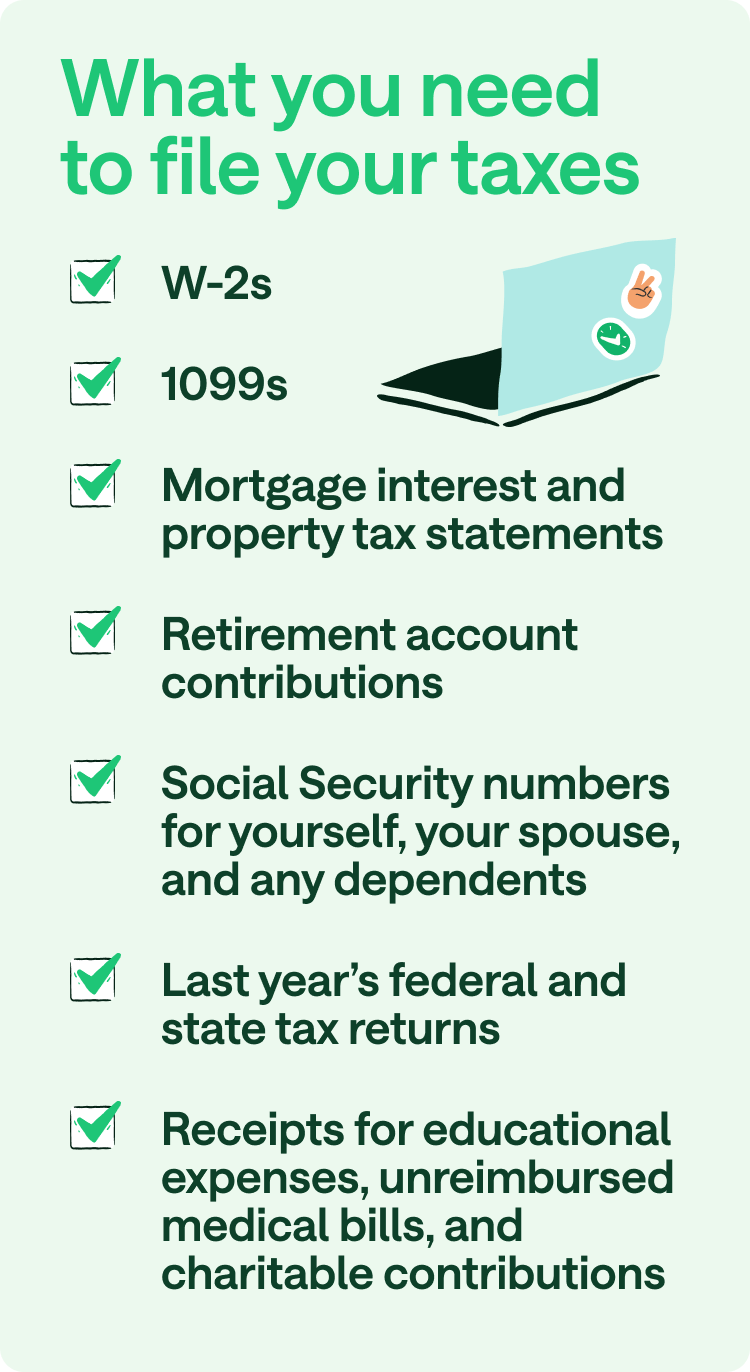
Before you even think about opening tax software or picking up a pen, a crucial step is to gather all necessary financial documents. The completeness and organization of these papers are paramount to an accurate return. The most common documents include:
- W-2 Forms: Received from employers, reporting your annual wages and taxes withheld.
- 1099 Forms: These come in various types (1099-INT for interest, 1099-DIV for dividends, 1099-B for stock sales, 1099-MISC/NEC for freelance or independent contractor income, 1099-R for retirement distributions, 1099-G for unemployment income).
- 1098 Forms: Such as 1098-E for student loan interest or 1098 for mortgage interest.
- Proof of Deductions and Credits: This might include receipts for medical expenses, charitable contributions, records of educator expenses, childcare costs, or energy-efficient home improvements.
- Last Year’s Tax Return: This provides a useful reference point for your filing status, dependents, carryover amounts, and general structure.
- Personal Identification Information: Your Social Security number (SSN) or Individual Taxpayer Identification Number (ITIN), and those of any dependents.
Having these documents neatly organized from the outset will save you considerable time and reduce stress during the actual filing process.
Determining Your Filing Status
Your filing status is a critical piece of information that determines your standard deduction amount, eligibility for certain credits, and the tax rates applied to your income. The five primary filing statuses are:
- Single: For unmarried individuals who don’t qualify for another status.
- Married Filing Jointly: For married couples who choose to file one combined return.
- Married Filing Separately: For married couples who file individual returns. This can sometimes be beneficial in specific circumstances, such as when one spouse has significant medical expenses.
- Head of Household: For unmarried individuals who pay more than half the cost of keeping up a home for themselves and a qualifying person (e.g., a child or dependent). This status offers a higher standard deduction and more favorable tax rates than “Single.”
- Qualifying Widow(er) with Dependent Child: For individuals whose spouse died within the last two years and who have a dependent child, offering the same tax benefits as “Married Filing Jointly” for a limited period.
Choosing the correct filing status is fundamental to ensuring your tax liability is calculated accurately and you receive all eligible benefits.
Choosing the Right Tools and Resources
Once you have your documents in order, the next step is to select the most appropriate tools and resources to facilitate your DIY tax filing. The digital age has revolutionized tax preparation, offering a plethora of options to suit various needs and budgets.
Free vs. Paid Tax Software
The landscape of tax software is diverse, offering solutions for nearly every tax situation.
- IRS Free File: For taxpayers whose Adjusted Gross Income (AGI) is below a certain threshold (which changes annually), the IRS partners with several tax software companies to offer free online tax preparation and e-filing. This is an excellent option for eligible individuals with straightforward returns, providing access to commercial software at no cost. You must access these services directly through the IRS Free File website to qualify.
- Commercial Software (e.g., TurboTax, H&R Block, TaxAct, TaxSlayer): These popular platforms offer guided tax preparation with user-friendly interfaces, often asking simple questions to populate your return. They typically offer different tiers of service, from free versions for basic returns to paid versions that handle more complex scenarios like self-employment income, investments, or itemized deductions. Paid versions also frequently include state tax filing and audit support. Evaluate your tax situation to determine if a free version suffices or if a paid upgrade is necessary for your specific needs. The convenience and comprehensive support offered by these tools often justify their cost for those outside the IRS Free File eligibility.
Utilizing IRS Resources
The Internal Revenue Service (IRS) is an invaluable, though often underutilized, resource for DIY tax filers. Their official website (IRS.gov) is a treasure trove of information, including:
- Publications and Forms: Access to all official tax forms and detailed publications explaining various aspects of tax law (e.g., Publication 17, Your Federal Income Tax).
- Interactive Tax Assistant (ITA): An online tool that answers many tax law questions.
- Tax Topics: Comprehensive explanations of common tax issues.
- Estimated Tax Information: Guidance for those needing to pay estimated taxes throughout the year.
The IRS also provides a helpline for tax questions, though wait times can be significant, especially during peak season. Leveraging these official resources can help clarify complex issues and ensure compliance.
When to Consider Professional Help
While DIY tax filing is achievable for many, there are situations where seeking professional assistance is advisable. If your tax situation involves:
- Complex Investments: Extensive stock options, multiple rental properties, or intricate foreign investments.
- Business Ownership: Operating a complex business with employees, inventory, or significant deductions.
- Major Life Changes: Such as marriage, divorce, birth of a child, or death of a spouse, especially if they occurred late in the tax year and have significant financial implications.
- International Income or Assets: Dealing with foreign income, foreign tax credits, or reporting foreign financial accounts.
- High-Income Earners: Who often benefit from advanced tax planning strategies.
- Audit Concerns: If you’ve received an audit notice or have concerns about a previous return.
- Unfamiliarity or Lack of Confidence: If you simply feel overwhelmed or unsure about accurately preparing your return, the peace of mind offered by a professional is invaluable.
Recognizing when your situation exceeds your comfort or expertise level is a sign of good financial stewardship, not a failure of the DIY approach.
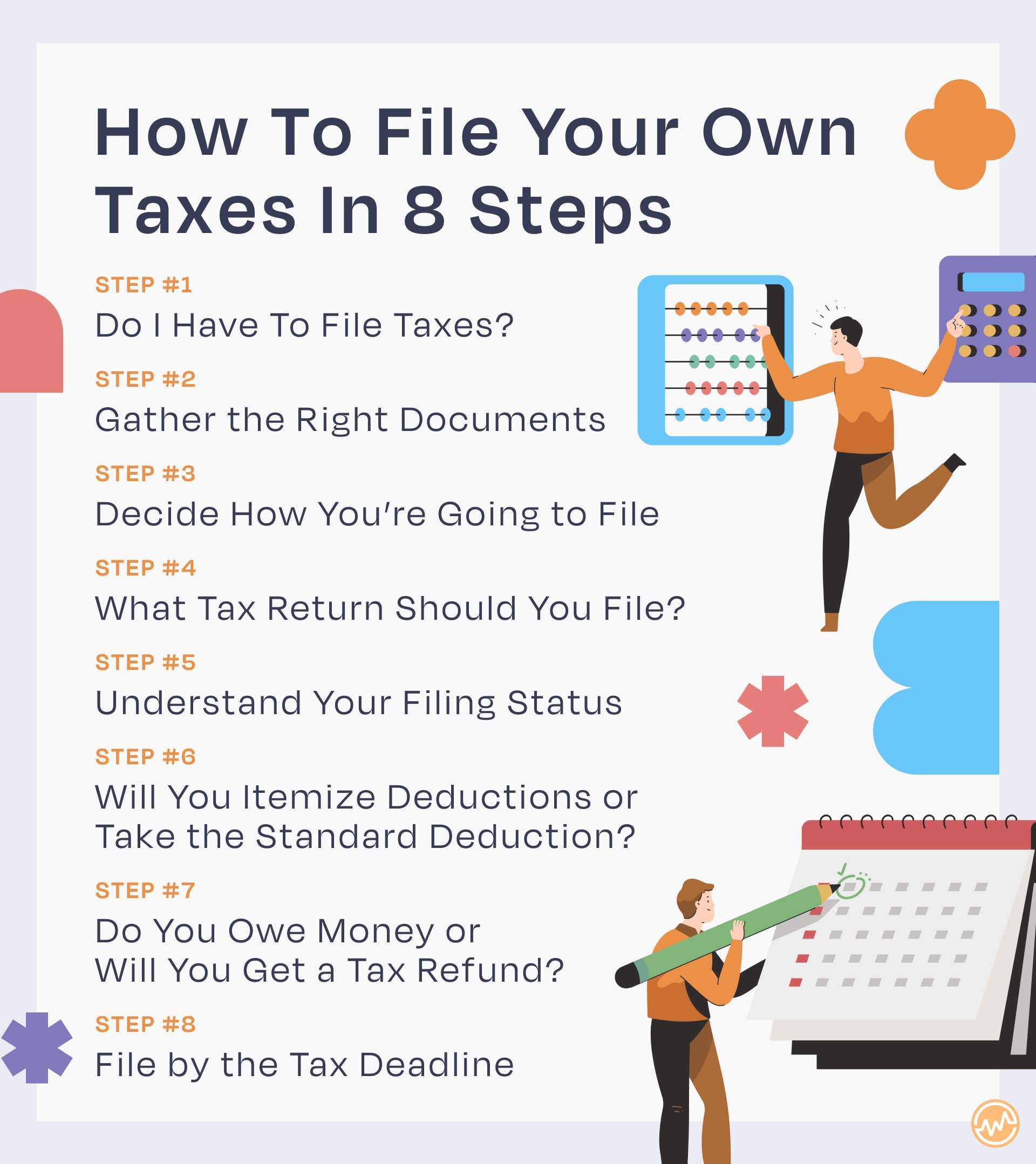
A Step-by-Step Approach to Filing Your Own Taxes
With your documents compiled and your software chosen, you’re ready to dive into the actual process of preparing and submitting your return. This systematic approach ensures thoroughness and accuracy.
Gathering and Organizing Your Financial Records
This step, though previously mentioned, cannot be overstressed. A dedicated folder or digital directory for tax-related documents should be established at the beginning of the tax year. As you receive W-2s, 1099s, and keep track of deductible expenses, file them immediately. This proactive approach prevents a last-minute scramble and ensures no critical document is overlooked. Categorize documents by type (income, deductions, credits) to streamline data entry.
Inputting Your Information into Tax Software
Most modern tax software guides you through the process step-by-step, much like an interview.
- Personal Information: Start by entering your name, SSN, filing status, and dependent information.
- Income: Input all income sources from your W-2s, 1099s (interest, dividends, self-employment, etc.), and any other earnings. The software will often prompt you for each type.
- Deductions: Decide whether to take the standard deduction or itemize. The software will typically make this recommendation based on your entered data. If itemizing, input details for mortgage interest, state and local taxes, medical expenses, charitable contributions, etc.
- Credits: Enter information for any applicable tax credits, such as the Child Tax Credit, Earned Income Tax Credit, education credits, or dependent care credits. The software usually helps identify eligible credits.
- Review and Double-Check: This is a crucial phase. The software will generally provide a summary of your return. Take the time to meticulously review every entry. Compare the numbers in the software against your physical documents. Look for common errors like transposed numbers, forgotten income sources, or missed deductions.
Reviewing for Accuracy and Completeness
Before moving to the final submission, perform a thorough self-audit. Many software programs offer an “error check” feature, which is helpful but not foolproof. Manually cross-reference the generated forms (like the 1040) with your original documents. A common mistake is to overlook small forms or fail to report all income, even minor amounts. Ensure all personal details are correct, especially SSNs. Accuracy here prevents delays in refunds or potential correspondence from the IRS.
Understanding Your Tax Liability or Refund
After inputting all information and reviewing, the software will calculate your tax liability or refund. Take a moment to understand this outcome. If you owe taxes, prepare to make payment by the deadline. If you are due a refund, you can usually opt for direct deposit into your bank account, which is the fastest way to receive it. Understanding the “why” behind your refund or liability can also inform your tax planning for the next year.
Submitting Your Return Electronically or by Mail
Electronic filing (e-file) is the most popular and recommended method for submitting your tax return.
- E-filing: It’s faster, more accurate (due to built-in error checks), and provides immediate confirmation that the IRS has received your return. Most tax software facilitates e-filing directly.
- Mailing: If you prefer to mail your return, ensure you use the correct IRS mailing address for your specific form and state. Always make a copy of your signed return and all supporting documents for your records before sending it via certified mail with a return receipt, providing proof of mailing.
Regardless of the method, remember to meet the tax deadline (typically April 15th, unless it falls on a weekend or holiday, or is extended).
Navigating Common Tax Scenarios and Deductions
Part of becoming adept at DIY tax filing involves understanding how various financial situations impact your tax return and how to leverage available deductions and credits.
Exploring Standard vs. Itemized Deductions
One of the most significant choices for many taxpayers is whether to take the standard deduction or itemize their deductions.
- Standard Deduction: This is a fixed dollar amount that reduces your taxable income, determined by your filing status. The amount is adjusted annually for inflation. For many taxpayers, especially those with relatively straightforward finances, the standard deduction provides a greater tax benefit than itemizing.
- Itemized Deductions: If your total eligible deductions exceed your standard deduction, you can itemize. Common itemized deductions include:
- State and Local Taxes (SALT): Limited to $10,000 per household.
- Mortgage Interest: Paid on your primary residence.
- Medical and Dental Expenses: Exceeding 7.5% of your Adjusted Gross Income (AGI).
- Charitable Contributions: Donations to qualified organizations.
- Casualty and Theft Losses: In a federally declared disaster area.
Carefully tracking these expenses throughout the year is essential if you anticipate itemizing.
Common Tax Credits
Tax credits are often more valuable than deductions because they directly reduce the amount of tax you owe, dollar for dollar, rather than just reducing your taxable income.
- Child Tax Credit: For qualifying children under 17.
- Earned Income Tax Credit (EITC): For low-to-moderate-income working individuals and families. This credit can be significant and is refundable, meaning you could get a refund even if you don’t owe any tax.
- Education Credits: Such as the American Opportunity Tax Credit or the Lifetime Learning Credit, for students pursuing higher education.
- Dependent Care Credit: For expenses paid for the care of a qualifying child or dependent so you can work or look for work.
- Clean Energy Credits: For installing energy-efficient home improvements.
Tax software is particularly good at identifying and calculating eligibility for these credits based on your input.
Reporting Self-Employment Income
If you work as a freelancer, independent contractor, or own a small business, you’re considered self-employed. This comes with unique tax obligations:
- Schedule C (Form 1040): Used to report your income and expenses from a business or profession. This is where you calculate your net profit or loss.
- Self-Employment Tax: You’ll be responsible for both the employer and employee portions of Social Security and Medicare taxes, calculated on your net self-employment earnings.
- Estimated Taxes: If you expect to owe at least $1,000 in tax from self-employment income, you generally need to pay estimated taxes quarterly throughout the year to avoid penalties. The IRS provides Form 1040-ES for this purpose. Meticulous record-keeping of all business income and expenses is crucial for self-employed individuals.
Dealing with Investment Income
Income from investments, such as stocks, bonds, or mutual funds, is also taxable.
- Dividends and Interest: Reported on Schedule B, often from Forms 1099-DIV and 1099-INT.
- Capital Gains and Losses: Resulting from the sale of assets like stocks or real estate, reported on Schedule D. These are categorized as short-term (assets held for one year or less) or long-term (assets held for more than one year), with different tax rates applying. You can typically use capital losses to offset capital gains and even a limited amount of ordinary income. Understanding cost basis is essential here.
Post-Filing Best Practices and Future Planning
Filing your taxes is not the absolute end of your annual tax responsibilities. There are important post-filing steps and strategies for optimizing your financial future.
What to Do After You File
- Keep Excellent Records: Store copies of your filed return and all supporting documents for at least three years, as this is the IRS’s typical statute of limitations for audits. For complex situations or certain types of income/deductions, keeping records for even longer is advisable.
- Track Your Refund: If you’re expecting a refund, you can track its status using the IRS “Where’s My Refund?” tool, usually within 24 hours after e-filing or 4 weeks after mailing.
- Understand Your Tax Summary: Review your completed return to understand your tax liability, the impact of various deductions, and how much was withheld. This information is critical for planning the next year.
Amending Your Tax Return (Form 1040-X)
If you discover an error on a previously filed tax return, you can amend it using Form 1040-X, Amended U.S. Individual Income Tax Return. Common reasons for amending include forgetting to report income, missing a deduction or credit, or incorrect filing status. You typically have three years from the date you filed your original return or two years from the date you paid the tax, whichever is later, to file an amended return.
Planning for Next Year
The best tax preparation begins long before January 1st.
- Adjust Withholding: If you received a large refund, it means you overpaid taxes throughout the year. Consider adjusting your W-4 form with your employer to have less tax withheld, increasing your take-home pay. Conversely, if you owed a significant amount, you might need to increase your withholding or make estimated tax payments. The IRS Tax Withholding Estimator is a helpful tool.
- Estimated Taxes: For self-employed individuals or those with significant income not subject to withholding, plan your quarterly estimated tax payments carefully to avoid penalties.
- Tax-Advantaged Accounts: Explore contributions to retirement accounts like 401(k)s and IRAs, or health savings accounts (HSAs), which offer tax deductions or tax-free growth, reducing your taxable income.
- Record-Keeping: Maintain an organized system for all financial records year-round. This proactive approach makes next year’s tax filing significantly smoother and less stressful.
By embracing the DIY approach to tax filing, you not only save money but also cultivate a deeper understanding of your financial health. While it requires diligence and attention to detail, the empowerment that comes from confidently managing your own taxes is an invaluable asset in your personal finance journey.
aViewFromTheCave is a participant in the Amazon Services LLC Associates Program, an affiliate advertising program designed to provide a means for sites to earn advertising fees by advertising and linking to Amazon.com. Amazon, the Amazon logo, AmazonSupply, and the AmazonSupply logo are trademarks of Amazon.com, Inc. or its affiliates. As an Amazon Associate we earn affiliate commissions from qualifying purchases.