
The question “what does a Tesla car look like?” might seem straightforward, but it unravels a fascinating narrative of technological innovation, minimalist design philosophy, and a deliberate departure from conventional automotive aesthetics. More than just a collection of metal and glass, a Tesla car represents a profound rethinking of vehicle design, driven by electric powertrain technology and a software-first approach. From its sleek, aerodynamic exterior to its screen-dominated interior, every visual element of a Tesla is intrinsically linked to its advanced technological underpinnings, making it a quintessential gadget on wheels. This article delves into the distinctive visual characteristics of Tesla vehicles, exploring how their appearance is a direct reflection of their cutting-edge engineering and user experience design within the realm of technology.

The Distinctive Exterior: Minimalism Meets Aerodynamics
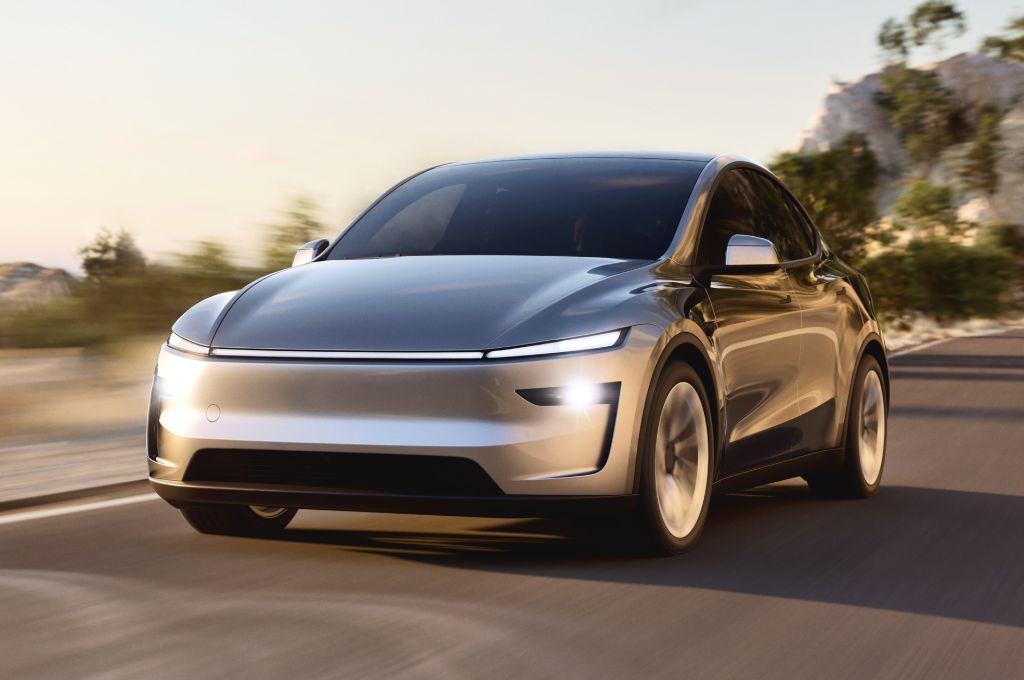
At first glance, a Tesla car immediately distinguishes itself from traditional gasoline-powered vehicles through a striking blend of minimalism and purposeful aerodynamics. This isn’t merely an aesthetic choice; it’s a functional imperative born from the demands of electric vehicle (EV) efficiency and performance. Tesla’s design language prioritizes smooth, uninterrupted surfaces, flush components, and a silhouette optimized to cut through the air with minimal resistance. This focus on aerodynamic efficiency is a core technological objective, directly impacting range and performance, and thus shapes the very look of the car.
Sleek Lines and Flush Design Elements
Tesla vehicles are renowned for their remarkably clean lines and uncluttered profiles. Unlike many traditional cars adorned with intricate grilles, vents, and chrome accents, Teslas often present a monolithic, almost sculptural appearance. This is evident in several key areas. The most iconic example is the absence of a traditional front grille. Since electric motors don’t require the same level of air intake for cooling as internal combustion engines, Tesla designers were free to eliminate this prominent feature, opting instead for a smooth, aerodynamic nose cone that often houses the forward-facing cameras and sensors for its advanced driver-assistance systems.
Another hallmark of Tesla’s exterior design is the prevalence of flush-mounted components. Door handles, for instance, are designed to retract seamlessly into the car’s body when not in use, creating an unbroken surface that reduces drag. Even the panel gaps are notoriously tight, a testament to precision manufacturing and an aesthetic choice that contributes to the car’s high-tech, monolithic feel. These seemingly small details are critical; they aren’t just for looks but contribute to a lower coefficient of drag, directly improving the car’s energy efficiency—a vital technological metric for EVs. The smooth undertray and carefully sculpted body panels further enhance this aerodynamic performance, making the entire exterior a testament to engineering efficiency.
Signature Lighting and Panoramic Roof
Lighting plays a crucial role in establishing a Tesla’s identity, especially its distinct “face” at night. All Tesla models feature advanced LED lighting technology, which allows for more intricate and energy-efficient designs compared to traditional incandescent bulbs. The headlights are often slender and swept back, integrating seamlessly into the car’s lines and contributing to its futuristic gaze. Daytime running lights (DRLs) often form a unique signature, ensuring instant recognition on the road. The taillights too follow this sleek, minimalist approach, typically forming a horizontal band that emphasizes the car’s width and low stance.
Perhaps one of the most visually striking and technologically significant exterior features across many Tesla models is the panoramic glass roof. Often extending from the top of the windshield almost to the rear decklid, this expansive glass panel replaces a traditional metal roof, offering occupants an unparalleled sense of openness and light. From a technological standpoint, these roofs are engineered with advanced UV and infrared protection, ensuring cabin comfort without sacrificing efficiency. The structural integrity is maintained through sophisticated design, demonstrating a mastery of materials science and structural engineering. This design choice not only enhances the interior experience but also contributes to the car’s sleek, low-profile look, giving it a unique visual signature that stands out in the automotive landscape.
Aerodynamic Efficiency and Performance
Every curve, every surface, and every contour on a Tesla’s exterior is meticulously engineered to achieve maximum aerodynamic efficiency. This isn’t just about making the car look fast; it’s about making it perform efficiently, which is a critical technological challenge for electric vehicles where range anxiety is a significant factor. The smooth front fascia, the absence of a large grille, the flush door handles, the raked windshield, and the tapering rear all combine to minimize air resistance.
Consider the Model 3’s drag coefficient, which is among the lowest in production cars. This impressive figure is a direct result of its carefully sculpted body. The design actively manages airflow around and under the vehicle, reducing turbulence and improving stability at higher speeds. Even the wheels are often designed with aerodynamic covers or a shape that minimizes drag, showcasing how form and function are deeply intertwined in Tesla’s engineering philosophy. This comprehensive approach to aerodynamics is a powerful visual indicator of Tesla’s commitment to pushing the boundaries of automotive technology, where every external design choice serves a purpose beyond mere aesthetics.
The Futuristic Interior: A Cabin Driven by Digital Innovation
Stepping inside a Tesla is arguably where its technological ethos becomes most apparent. The interior diverges sharply from conventional automotive cabins, embracing a minimalist, digital-first philosophy that places a large touchscreen at the heart of the user experience. The look of the interior is clean, uncluttered, and often evokes a sense of modern lounge rather than a traditional cockpit, a direct outcome of software integration and innovative component placement.
The Central Touchscreen: Command Center of the Vehicle
The undisputed focal point of any modern Tesla interior is its massive central touchscreen display. In models like the Model 3 and Model Y, this single screen serves as the primary interface for almost all vehicle functions, replacing a multitude of physical buttons, knobs, and even the traditional instrument cluster. This screen is typically horizontally oriented (Model 3/Y) or vertically oriented (Model S/X pre-refresh, and Cybertruck), and its sheer size dominates the dashboard.
From a technological perspective, this screen is much more than a display; it’s a sophisticated computing device running Tesla’s custom operating system. It controls navigation, media, climate control, vehicle settings, charging information, and even entertainment features like streaming video games. The interface is designed to be intuitive and visually clean, mirroring the exterior’s minimalism. The integration of nearly all controls into this digital hub is a bold statement about Tesla’s software-driven approach to automotive technology, fundamentally altering the look and feel of the driver’s environment by making it largely digital and customizable.
Minimalist Aesthetic and Premium Materials
The overall aesthetic of a Tesla interior is one of extreme minimalism. The dashboard is typically low and expansive, devoid of the complex button arrays found in most cars. Air vents are often cleverly integrated into the design, sometimes as a continuous strip across the dash, making them almost invisible. This clean look is made possible by the digital consolidation of controls and a deliberate choice to remove physical clutter.
Materials used in Tesla interiors generally project a premium, modern feel. Depending on the model and trim, one might find high-quality synthetic leather (vegan leather), wood or carbon fiber accents, and soft-touch surfaces. The seats are designed for comfort and support, often with a sleek, modern profile. The choice of materials and the sparse design contribute to an open, airy feeling within the cabin, reinforcing the high-tech, forward-thinking image of the brand. This minimalism isn’t just about looks; it’s about reducing distractions and focusing the user’s attention on the digital interface, which itself is a complex piece of technology.
Spaciousness and Ergonomics
The look of spaciousness in a Tesla interior is not an illusion; it’s a direct benefit of its electric vehicle architecture. Without the need for a large engine block, transmission tunnel, or exhaust system, designers have far more flexibility in configuring the cabin. This often translates into flatter floors, more generous legroom, and increased storage options compared to similarly sized gasoline cars. For example, the “frunk” (front trunk) in place of an engine bay is a unique visual and functional aspect.

Ergonomically, the minimalist design aims to keep essential controls within easy reach via the touchscreen, while steering wheel buttons provide access to frequently used functions. The seating position is typically commanding, and visibility is often excellent, especially with the panoramic glass roof. The driver’s eye line is intentionally directed towards the road and the large central screen, prioritizing a streamlined interaction with the vehicle’s advanced technological features. This design ensures that the car’s advanced tech is accessible and enjoyable to use, shaping the entire visual and functional experience within the cabin.
Autonomy and Advanced Sensors: The Hidden Visuals of Intelligence
While Tesla cars possess a strikingly clean exterior, a closer inspection reveals the subtle yet ubiquitous integration of advanced sensor technology that underpins their ambitious autonomous driving capabilities. These sensors, cameras, and radars are not merely add-ons; their placement and design are meticulously woven into the vehicle’s overall look, hinting at the complex intelligence operating beneath the surface.
Camera and Sensor Placement
Tesla’s “Autopilot” and “Full Self-Driving” (FSD) systems rely heavily on an array of eight external cameras, ultrasonic sensors, and in some models, radar. The discreet placement of these technological components is a testament to Tesla’s design prowess. Cameras are typically integrated into the B-pillars (side view), the front fender (side view), the rearview mirror housing (forward-facing), and the rear bumper (rear view). These cameras are often visible as small, unobtrusive lenses, sometimes with a subtle housing that blends with the car’s paintwork or trim.
The ultrasonic sensors, used for short-range detection, parking assistance, and obstacle awareness, are small, circular discs embedded into the front and rear bumpers, almost imperceptibly integrated into the car’s contours. While not overtly flashy, the presence of these numerous sensory inputs contributes to the Tesla’s visual identity as a highly intelligent, technologically advanced machine. They are visual cues to the vehicle’s capability to perceive its environment in 360 degrees, a hallmark of its sophisticated tech package.
The Visual Cues of Self-Driving Capabilities
Beyond the direct visibility of sensors, the overall look of a Tesla communicates its self-driving potential in more abstract ways. The forward-looking array of cameras positioned behind the windshield, often visible from outside, is a subtle yet powerful reminder of the vehicle’s advanced perception system. This integration avoids the bulky, often obtrusive sensor arrays seen on some experimental autonomous vehicles, instead opting for a streamlined, almost invisible approach.
Even the minimalistic interior, with its singular screen, serves as a visual cue to the car’s intelligence. The driver is expected to monitor the system, but the car takes on many of the active driving roles, reflected in the uncluttered dashboard that prioritizes digital feedback over physical controls. This visual paradigm suggests a shift in the human-machine interface, where the car’s technology is an active participant in the driving experience, quietly monitored through sophisticated algorithms and presented via an elegant, software-driven interface.
Model-Specific Variations: A Family of Innovators
While sharing a common design language rooted in minimalism and technology, each Tesla model possesses unique visual characteristics that cater to different segments and embody distinct aspects of innovation. From the luxurious Model S to the revolutionary Cybertruck, the family showcases how core technological principles can be expressed in diverse forms.
Model S/X: The Luxury Flagships
The Model S, Tesla’s original mass-produced premium sedan, sets the template for the brand’s sleek aesthetic. It features a fastback silhouette, a low stance, and smooth curves that exude luxury and performance. Its long hood and elegant proportions give it a grander, more traditional luxury car presence while still maintaining the distinctive Tesla grille-less front fascia. The Model X, a luxury SUV built on the same platform, visually distinguishes itself with its larger proportions and the striking “Falcon Wing” doors. These upward-opening rear doors are a prime example of form meeting advanced technology; while visually dramatic, they incorporate complex sensors to prevent collisions and offer ease of access in tight spaces, making them a functional marvel of engineering.
Model 3/Y: The Mass-Market Revolution
The Model 3, designed to be more accessible, shares the essential visual DNA of the Model S but with a slightly more compact and rounded form. Its design emphasizes simplicity and efficiency, often described as a more “friendly” or “approachable” aesthetic. The Model Y, the crossover SUV variant of the Model 3, carries over much of its sibling’s design language but with a raised ride height and a more spacious, practical body style. Both models prominently feature the large central touchscreen that defines their interior look, reinforcing their identity as technologically advanced vehicles built for the modern consumer, focusing on software-driven features and intuitive digital interfaces.
Cybertruck: Redefining Automotive Aesthetics
The Cybertruck represents a radical departure from conventional automotive design, embodying Tesla’s willingness to challenge established norms. Its visually polarizing, angular, and futuristic look is a direct consequence of its material and construction technology. The exterior is composed of ultra-hard 30X cold-rolled stainless steel, which due to its strength, cannot be traditionally stamped, necessitating the flat, geometric panels. This “exoskeleton” design is not merely stylistic; it’s a structural innovation, where the body itself is the frame, contributing to extreme durability and rigidity. Its sharp lines, unpainted metallic finish, and sheer scale make it instantly recognizable and unlike any other vehicle on the road, visually screaming “future” and “unconventional engineering.”
The Holistic Tesla Aesthetic: A Synergy of Form and Function
Ultimately, what a Tesla car looks like is a holistic expression of its technological core. It’s an aesthetic that prioritizes functionality, efficiency, and a future-forward vision, driven by a deep integration of software and hardware. Every design element, from the seamless exterior panels to the minimalist interior, serves a purpose beyond mere visual appeal, deeply intertwining with the vehicle’s performance as an advanced piece of technology.
Beyond Appearance: The Experience of Driving a Tesla
The visual design of a Tesla strongly informs the driving experience, which is itself a technological marvel. The quiet cabin, enabled by the electric powertrain and aerodynamic design, feels serene and modern. The instantaneous torque from the electric motors translates into exhilarating acceleration, a performance aspect that is subtly hinted at by the car’s sleek, powerful stance. The large central screen, while visually dominant, provides a wealth of information and control, making the car feel less like a mechanical device and more like a sophisticated digital companion. The look of a Tesla is, therefore, a preview of the technological journey one embarks on when getting behind the wheel.
The Future of Automotive Design: Tesla’s Influence
Tesla’s distinctive visual language has undeniably left an indelible mark on the automotive industry. Its embrace of minimalism, digital integration, and aerodynamic efficiency has prompted many traditional manufacturers to rethink their own design philosophies, particularly for their burgeoning EV lineups. The look of a Tesla is a statement about innovation, sustainability, and the power of technology to reshape our interaction with personal transportation. It’s a visual manifesto for a new era of cars, where aesthetics are not just about style, but about intelligent engineering and a seamless user experience, making every Tesla a compelling testament to the future of automotive technology.
aViewFromTheCave is a participant in the Amazon Services LLC Associates Program, an affiliate advertising program designed to provide a means for sites to earn advertising fees by advertising and linking to Amazon.com. Amazon, the Amazon logo, AmazonSupply, and the AmazonSupply logo are trademarks of Amazon.com, Inc. or its affiliates. As an Amazon Associate we earn affiliate commissions from qualifying purchases.