
When investors and casual observers alike turn on the evening news or browse financial headlines, they are frequently met with a specific number often preceded by the phrase “the Dow is up” or “the Dow is down.” For many, this single number represents the health of the entire global economy. However, despite its ubiquity in public discourse, the actual mechanics, history, and meaning of the Dow Jones Industrial Average (DJIA) remain a mystery to many. To truly understand what the Dow stands for, one must look beyond the daily points to the foundational principles of American capitalism and the evolution of the stock market itself.
At its core, the Dow stands for the Dow Jones Industrial Average—a price-weighted measurement of 30 prominent, “blue-chip” companies listed on stock exchanges in the United States. While it is just one of many market indices, its longevity and cultural resonance have made it the most recognizable symbol of the American financial system.
The Origins of the Dow Jones Industrial Average
To understand what the Dow stands for today, we must first look at its inception in the late 19th century. The index was the brainchild of Charles Dow and Edward Jones, two financial journalists who co-founded Dow Jones & Company and established The Wall Street Journal. At the time, the stock market was a chaotic and opaque environment, making it difficult for the average person to discern whether the market was generally moving up or down.
The Vision of Charles Dow and Edward Jones
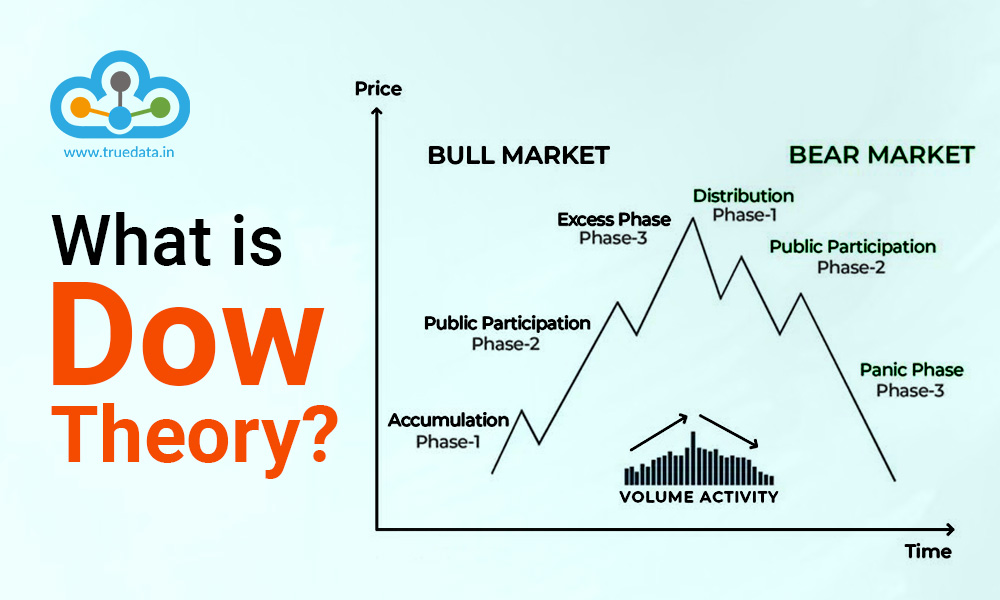
Charles Dow believed that the stock market moved in trends. He sought a way to distill the complex movements of individual stocks into a single, digestible figure that would represent the broader economic climate. In 1896, he launched the Dow Jones Industrial Average as a way to provide a snapshot of the industrial sector, which was the primary driver of the American economy during the Gilded Age.
Initially, the index consisted of only 12 stocks. These original components reflected the heavy industry of the era: companies involved in cotton, sugar, tobacco, gas, and oil. Interestingly, General Electric was one of the original 12 and remained a part of the index for over a century, serving as a symbolic link between the industrial past and the technological present.
From 12 to 30: The Evolution of the Index
As the American economy expanded and diversified, the Dow needed to grow to maintain its relevance. In 1916, the index expanded to 20 stocks, and by 1928, it reached its current size of 30 components. This expansion allowed the index to capture a wider array of sectors beyond pure manufacturing and raw materials.
Over the decades, the “Industrial” in the Dow Jones Industrial Average has become more of a historical artifact than a literal description. Today, the index includes giants in technology, healthcare, finance, and consumer services. While the name remains unchanged, the constituents have shifted to reflect the modern digital and service-based economy, ensuring that the Dow continues to represent the “heavyweights” of American business.
How the Dow Works: The Mechanics of a Price-Weighted Index
Unlike most modern stock indices, such as the S&P 500 or the Nasdaq Composite, the Dow is a price-weighted index. This structural choice has significant implications for how the index moves and what it actually measures.
The Price-Weighting Methodology
In a market-capitalization-weighted index, companies are weighted based on their total market value (share price multiplied by the number of shares outstanding). This means that a massive company like Apple or Microsoft has a larger impact on the index than a smaller company.
The Dow, however, operates differently. In a price-weighted system, the component stocks are weighted based solely on their price per share. A stock trading at $200 has twice the influence on the index as a stock trading at $100, regardless of the actual size of the underlying company. This methodology is a legacy of the 19th century when calculating a price-weighted average was much simpler to do by hand than a market-cap-weighted one.
Understanding the Dow Divisor
Because the Dow is based on share prices, it faces a mathematical challenge: how does the index account for stock splits, spin-offs, or changes in the companies included? If a company in the Dow undergoes a 2-for-1 stock split, its share price drops by half. Without an adjustment, the Dow would appear to crash simply because of a corporate accounting change.
To solve this, the index uses the “Dow Divisor.” Rather than dividing the sum of the 30 stock prices by 30, the sum is divided by a constantly shifting number (the divisor) that maintains the index’s continuity. Whenever a stock split or a change in the index components occurs, the divisor is adjusted so that the value of the Dow remains the same before and after the event. This ensures that the Dow’s movements reflect market performance rather than structural changes in its constituent companies.
What the Dow Represents Today: The 30 Blue-Chip Titans
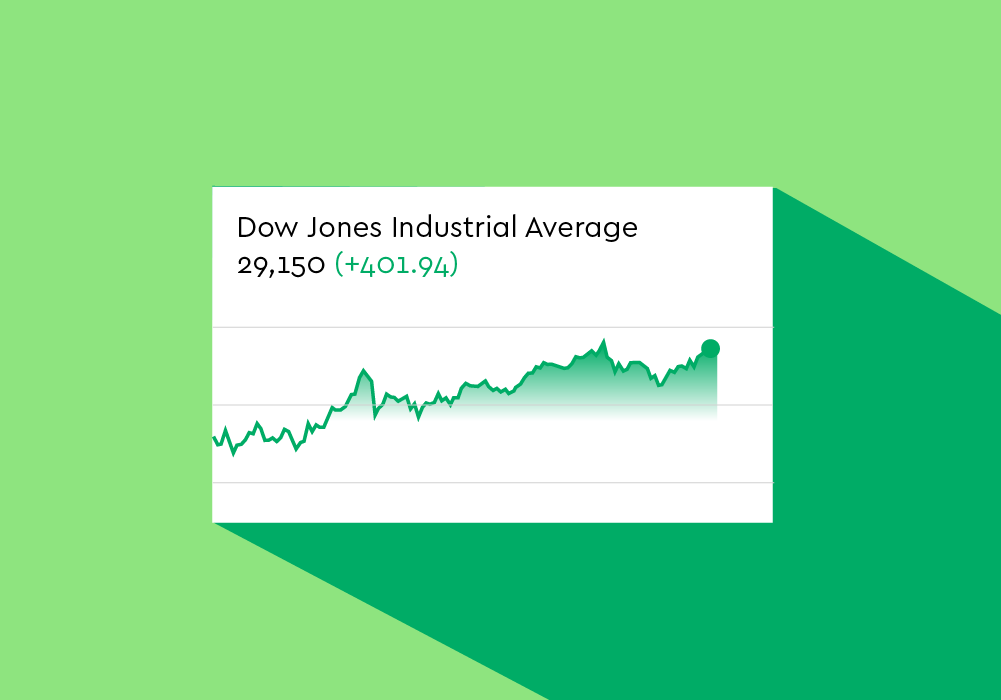
The Dow is often referred to as an index of “blue-chip” stocks. This term, borrowed from the game of poker where blue chips have the highest value, refers to well-established, financially sound, and historically stable companies.
Selection Criteria and the Averages Committee
There is no strict, quantitative formula for inclusion in the Dow. Unlike indices that automatically include the largest companies by market cap, the Dow’s components are selected by a committee. This committee, comprised of representatives from S&P Dow Jones Indices and The Wall Street Journal, looks for companies that have an excellent reputation, demonstrate sustained growth, and are of interest to a large number of investors.
The committee also aims to maintain sector balance, though they often exclude utilities and transportation companies, as these are covered by separate Dow Jones averages (the Utility Average and the Transportation Average). The lack of a rigid formula allows the Dow to be curated as a representative sample of the American corporate landscape.
Sector Representation and Modernization
The Dow’s ability to stay relevant lies in its willingness to swap out “old economy” companies for “new economy” leaders. In recent years, we have seen the removal of traditional energy and manufacturing firms to make room for tech powerhouses. For instance, the inclusion of companies like Salesforce, Apple, and Amazon signifies a shift toward a software-and-service-driven economy.
When the Dow adds a new company, it is a major branding event for that corporation. Being “added to the Dow” is a seal of approval, signaling that a company has reached the pinnacle of corporate stability and influence. Conversely, being removed from the Dow can be seen as a sign that a company’s dominance is waning or that its industry is no longer central to the U.S. economic narrative.
Why the Dow Still Matters in Modern Finance
Financial professionals often prefer the S&P 500 as a benchmark because it tracks 500 companies and uses market-cap weighting, which many believe is a more accurate reflection of the total market. However, the Dow remains the most cited index in the world. Why does it still matter?
A Psychological Indicator for Main Street
The Dow holds a unique place in the public consciousness. For the average person, the Dow is “the market.” Because it consists of only 30 household names—companies whose products we use every day—it feels more relatable than broader indices. When people talk about “the market hitting 40,000,” they are almost always referring to the Dow.
Its high price point (tens of thousands of points) also makes for dramatic headlines. A 500-point drop in the Dow sounds much more significant to a general audience than a 50-point drop in the S&P 500, even if the percentage change is the same. This psychological weight makes the Dow a vital tool for measuring consumer sentiment and general economic confidence.
Historical Continuity and Long-Term Trends
Because the Dow has been around since 1896, it provides an unparalleled historical record. It has survived the Great Depression, two World Wars, the Cold War, the Dot-com bubble, and the 2008 financial crisis. This long-term data allows economists and historians to track the trajectory of American capitalism over more than a century. It stands as a testament to the long-term resilience and growth of the U.S. economy, illustrating how, despite periodic downturns, the general trend of American business has been upward.
Evaluating the Criticisms: Is the Dow Still Relevant?
Despite its fame, the Dow is not without its detractors. Critics argue that its methodology is outdated and that it provides a distorted view of the market’s true health.
Price-Weighting vs. Market Cap-Weighting
The primary criticism of the Dow is its price-weighting system. Critics argue that it is illogical for a company’s influence to be determined by its share price rather than its total value. For example, if a company with a high share price but a smaller market cap has a bad day, it can drag the entire Dow down, even if the largest companies in the world are performing well. This can lead to situations where the Dow and the S&P 500 move in opposite directions, creating confusion about the market’s actual direction.

The Sample Size Debate
Another common critique is that 30 stocks are simply not enough to represent a multi-trillion-dollar economy with thousands of public companies. Small-cap and mid-cap companies are completely ignored by the Dow, meaning the index fails to capture the innovation and volatility occurring in the smaller rungs of the corporate ladder.
However, defenders of the Dow point out that the 30 companies included are so massive and influential that their health is intrinsically tied to the health of the broader economy. If the “Thirty Titans” are struggling, it is a safe bet that the rest of the economy is feeling the pressure as well.
In conclusion, what the Dow stands for is more than just a list of stocks or a mathematical average. It stands for the history of American industry, the evolution of financial reporting, and the collective sentiment of millions of investors. While it may have its technical flaws, its role as a cultural and psychological barometer of the U.S. economy is irreplaceable. As long as there is a Wall Street, the Dow will remain the world’s most watched and discussed measure of financial success.
aViewFromTheCave is a participant in the Amazon Services LLC Associates Program, an affiliate advertising program designed to provide a means for sites to earn advertising fees by advertising and linking to Amazon.com. Amazon, the Amazon logo, AmazonSupply, and the AmazonSupply logo are trademarks of Amazon.com, Inc. or its affiliates. As an Amazon Associate we earn affiliate commissions from qualifying purchases.