
The Dow Jones Industrial Average (DJIA), often simply referred to as “the Dow,” stands as one of the most recognized and frequently cited stock market indices in the world. Far from being a mere collection of random companies, the Dow represents a curated selection of 30 prominent American blue-chip stocks. For over a century, it has served as a widely watched barometer for the health of the U.S. stock market and, by extension, the broader economy. Understanding what stocks are in the Dow Jones, how they are selected, and what implications their inclusion carries is crucial for anyone seeking to grasp the nuances of financial markets and make informed investment decisions.

The Dow’s historical significance is immense. Conceived by Charles Dow in 1896, it was initially a simple average of 12 industrial stocks. Over time, it evolved to encompass a broader range of sectors, reflecting the shifting landscape of American industry. Despite its “Industrial” moniker, the index today includes companies from technology, healthcare, finance, and consumer goods, making it a cross-section of the modern economy rather than strictly heavy industry. Its enduring appeal lies in its simplicity and its long track record, offering a quick snapshot of market sentiment and corporate performance.
Unpacking the Dow Jones Industrial Average
The Dow Jones Industrial Average is more than just a number; it’s a living index that reflects the dynamism of the American corporate world. To truly appreciate its significance, one must delve into its historical context and the unique methodology behind its calculation.
A Historical Bellwether
The genesis of the Dow dates back to the late 19th century, a period of rapid industrial expansion in the United States. Charles Dow, co-founder of Dow Jones & Company and The Wall Street Journal, created the index to provide a clear, concise measure of market trends. His initial index comprised only 12 companies, primarily railroads and some early industrial firms. Over the decades, as the U.S. economy diversified and evolved, so did the Dow. It expanded to 20 stocks in 1916 and finally to its current 30 components in 1928.
This evolution is critical because it highlights the Dow’s adaptability. It moved beyond its original “industrial” focus to incorporate companies that drive innovation, provide essential services, and shape consumer behavior in the modern era. From the early titans of steel and railroads to today’s tech giants and pharmaceutical powerhouses, the Dow has consistently aimed to represent the leading edge of American enterprise. Its long history, spanning world wars, economic booms, and recessions, has solidified its reputation as a reliable, albeit limited, gauge of economic prosperity and corporate strength. It’s often the first number quoted when discussing market performance, underscoring its role as a key bellwether.
The Price-Weighted Conundrum
One of the most distinctive, and sometimes criticized, features of the DJIA is its calculation method: it is a price-weighted index. This means that companies with higher share prices have a greater impact on the index’s value than companies with lower share prices, regardless of their actual market capitalization. For instance, if a stock priced at $300 moves up by 1%, it will affect the Dow more significantly than a stock priced at $100 moving up by the same 1%. This contrasts sharply with market-capitalization-weighted indices, such as the S&P 500, where a company’s influence is proportional to its total market value (share price multiplied by the number of outstanding shares).
To adjust for stock splits, dividends, and other structural changes that would otherwise distort the index’s continuity, the Dow uses a “Dow Divisor.” This divisor is adjusted periodically to ensure that the index’s value accurately reflects only the changes in the underlying stock prices, rather than corporate actions. While the price-weighted methodology provides a straightforward calculation, it also means that a company like UnitedHealth Group (which historically has a high share price) might exert more influence on the Dow’s movement than Apple or Microsoft (which have much larger market capitalizations but lower individual share prices due to numerous stock splits). Understanding this distinction is vital for investors, as it reveals that the Dow may not always perfectly mirror the performance of the broader market or the true economic weight of its constituent companies.
The Illustrious Companies of the Dow
The companies that constitute the Dow Jones Industrial Average are not merely large corporations; they are often regarded as titans of industry, symbols of American business prowess, and global leaders in their respective fields. Their inclusion signifies a certain prestige and stability, making the Dow a unique composite of enduring corporate strength.
A Constantly Evolving Roster
While the Dow’s components are known for their stability, the index is not static. The list of 30 companies undergoes periodic changes to ensure it remains relevant and reflective of the current U.S. economic landscape. The criteria for selection are stringent and primarily qualitative, though market capitalization and broad investor interest are also considered. Companies are chosen based on factors such as:
- Blue-Chip Status: They must be large, well-established, and financially sound companies with a long history of profitability and sustained growth.
- Reputation: They typically hold a prominent leadership position within their industry.
- Investor Interest: They are widely held by institutional and individual investors and attract significant trading volume.
- Sector Representation: They should contribute to a diverse representation of the economy, ensuring the index isn’t overly concentrated in one sector.
These criteria mean that being added to the Dow is a significant corporate achievement, often leading to increased visibility and investor confidence. Conversely, removal can signal a decline in a company’s influence or relevance within the broader economy. This dynamic nature ensures the Dow remains a pertinent, albeit limited, snapshot of economic powerhouses.
Examples of Current Components
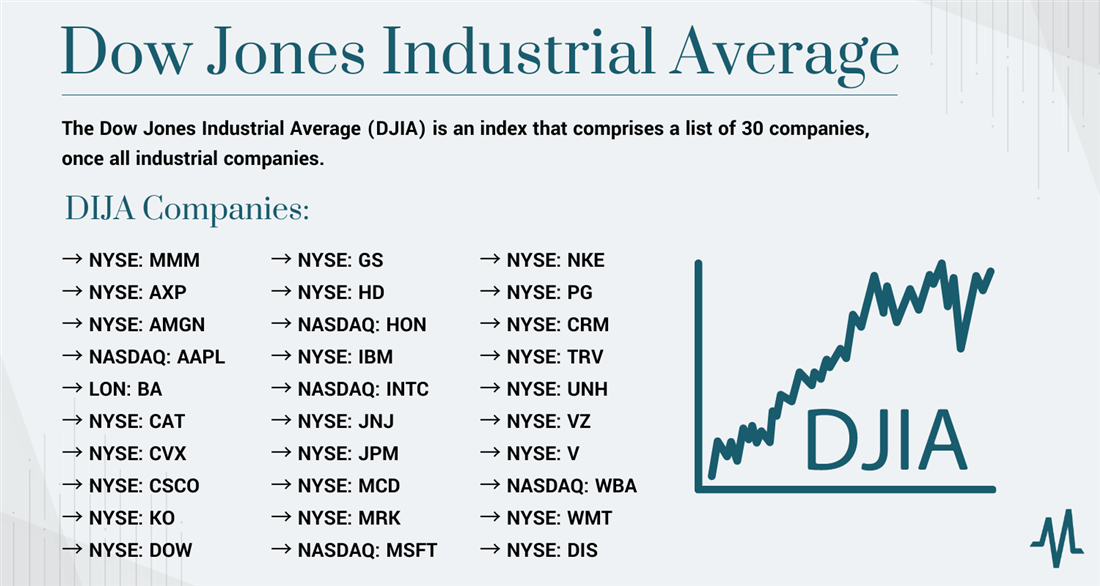
As of recent compositions, the Dow features a diverse array of companies that span various critical sectors. These are not just any companies; they are often household names whose products and services touch millions globally. Examples include:
- Apple Inc. (AAPL): A technology giant known for its consumer electronics, software, and online services. Its global reach and innovation make it a key representative of the tech sector.
- Microsoft Corp. (MSFT): Another tech titan, dominant in software, cloud computing (Azure), and gaming (Xbox). It signifies the enduring power of enterprise technology.
- Johnson & Johnson (JNJ): A healthcare conglomerate with pharmaceuticals, medical devices, and consumer health products. It represents the vital and growing healthcare industry.
- The Boeing Company (BA): A leading global aerospace company, showcasing American industrial might in aircraft manufacturing and defense.
- Goldman Sachs Group Inc. (GS): A premier global investment bank, representing the financial services sector.
- The Coca-Cola Company (KO): A quintessential consumer staple company with a vast global beverage portfolio, highlighting the strength of consumer brands.
- UnitedHealth Group Inc. (UNH): A diversified healthcare company, one of the largest in the world, further emphasizing the healthcare sector’s importance.
- Walt Disney Co. (DIS): A media and entertainment powerhouse, reflecting the consumer discretionary sector and the evolving landscape of digital content.
These companies, alongside others like Visa, Home Depot, McDonald’s, and Salesforce, form the backbone of the Dow. Their collective performance provides insight into the health and direction of key segments of the U.S. and global economies.
Sectoral Representation
Despite its name, the “Industrial” in Dow Jones Industrial Average is largely a historical relic. Today, the index is designed to provide broad sectoral representation across the American economy. While it still includes some traditional industrial companies, its composition heavily leans towards:
- Technology: With giants like Apple and Microsoft, technology’s dominance in the modern economy is well-reflected.
- Healthcare: Companies like Johnson & Johnson and UnitedHealth Group underscore the critical role and growth of the healthcare industry.
- Financials: Firms such as Goldman Sachs and JPMorgan Chase represent the financial services sector, which is integral to economic activity.
- Consumer Discretionary/Staples: Companies like McDonald’s, Coca-Cola, and Home Depot illustrate the strength of consumer spending and brand loyalty.
- Industrials: Boeing and Caterpillar still hold spots, representing heavy industry, but their weighting relative to other sectors has shifted significantly over time.
This diverse mix aims to give investors a general sense of how various key economic engines are performing, rather than just a narrow view of manufacturing. The selection committee continually monitors the economic landscape to ensure the Dow’s components remain relevant to the current structure of the U.S. economy.
How Dow Components Are Selected and Maintained
The decision-making process for including or excluding companies from the Dow is a deliberate and considered one, designed to maintain the index’s integrity and relevance as a market indicator. It’s not a mechanical process based purely on quantitative metrics but involves qualitative judgments by an expert committee.

The S&P Dow Jones Indices Committee
The responsibility for curating the Dow Jones Industrial Average lies with the S&P Dow Jones Indices Committee. This committee is composed of representatives from S&P Dow Jones Indices and The Wall Street Journal, bringing together expertise in index methodology, market analysis, and economic journalism. Their role is pivotal, as their decisions directly impact the composition and, by extension, the perceived direction of one of the world’s most watched indices.
Unlike some other indices with predefined rules for rebalancing and component selection (e.g., specific market capitalization cutoffs for the Russell indexes), the Dow committee operates with a degree of discretion. This flexibility allows them to make qualitative judgments about a company’s reputation, its representation of the broader economy, and its sustained growth potential, rather than being bound by rigid formulas. This unique approach contributes to the Dow’s character as a “blue-chip” index, focusing on established leaders rather than purely on market size or liquidity.
Criteria for Inclusion and Exclusion
The committee does not adhere to a published set of strict rules for inclusion or exclusion, but generally, their decisions are guided by several overarching principles:
- Excellent Reputation and Sustained Growth: Companies must have an unimpeachable reputation, demonstrate consistent profitability, and possess a history of sustained growth that makes them leaders in their industry.
- Broad Investor Interest: Components should be widely held by a diverse range of investors (institutional and retail) and actively traded. This ensures the index accurately reflects broad market sentiment for leading companies.
- Large Market Capitalization: While the Dow is price-weighted, companies considered for inclusion are typically among the largest and most influential in terms of market capitalization in the U.S. stock market. This ensures they have significant economic impact.
- Sector Representation: The committee strives to maintain a balanced representation across major economic sectors. When a sector becomes more prominent, or an existing sector faces significant shifts, the committee may consider changes to reflect these dynamics. For example, if a specific sector like technology gains significant economic importance, new tech firms might be considered.
- Avoiding Overlap: The committee seeks to minimize duplication within the index to provide a diverse snapshot. For instance, adding another company from an already well-represented sector might be less likely.
Companies may be removed from the Dow if they no longer meet these criteria, if they undergo significant corporate restructuring (like bankruptcy or acquisition), or if their industry relevance wanes. The goal is to keep the index a relevant and accurate barometer of the leading segments of the U.S. equity market.
Notable Additions and Removals
The history of the Dow is punctuated by significant additions and removals that highlight the shifting tides of American industry. These changes are not arbitrary; they reflect deeper economic and corporate trends.
One of the most historic removals occurred in 2018 when General Electric (GE) was removed from the Dow after more than a century of continuous membership. Once a symbol of American industrial might, GE’s removal reflected its shrinking market capitalization, struggling business units, and diminishing industrial influence. Its replacement by Walgreens Boots Alliance signaled a shift towards consumer health and retail.
More recently, in 2020, Salesforce.com (CRM), Amgen (AMGN), and Honeywell International (HON) were added to the Dow, replacing ExxonMobil, Pfizer, and Raytheon Technologies. This move dramatically illustrated the committee’s commitment to modernization:
- Salesforce represented the growing dominance of cloud-based software and enterprise solutions, a far cry from traditional “industrial” firms.
- Amgen strengthened the biotechnology representation, reflecting the innovation and economic weight of the life sciences sector.
- Honeywell maintained a presence for diversified technology and manufacturing, but its inclusion came at the expense of energy and older pharmaceutical giants.
These changes underscore that the Dow is a dynamic entity, continuously adapting to mirror the leading enterprises and economic forces that shape the United States. They remind investors that no company’s place in the index is guaranteed, and sustained relevance is key.
The Dow’s Relevance for Investors
For investors, the Dow Jones Industrial Average serves a dual role: it’s both a familiar headline number and a potential investment vehicle. However, understanding its specific utility and limitations is crucial for effective portfolio management.
A Barometer, Not a Benchmark
The Dow’s primary function is to act as a barometer for market sentiment and the general health of the U.S. economy. When news reports mention “the market is up today,” they often refer to the Dow’s performance. Its ease of understanding and long history make it an accessible indicator for quick market temperature checks.
However, the Dow is generally not considered the ideal benchmark for diversified investment portfolios. Its limitations stem from its design:
- Limited Components: With only 30 stocks, it doesn’t offer the broad market exposure provided by indices like the S&P 500 (which tracks 500 large-cap U.S. companies) or a total market index.
- Price-Weighted: As discussed, its price-weighted methodology means that companies with higher stock prices have an outsized impact, regardless of their market capitalization. This can lead to a distorted view compared to the true economic weight of companies.
- Historical Bias: While evolving, its “industrial” roots and focus on established blue-chips might mean it’s slower to reflect disruptive innovation from smaller, high-growth companies.
Therefore, while the Dow offers a quick glance, investors seeking a comprehensive understanding of market performance or looking to benchmark a diversified portfolio should typically look to broader, market-capitalization-weighted indices.
Investing in the Dow
Despite its limitations as a pure benchmark, investors can gain exposure to the Dow Jones Industrial Average in several ways, primarily through index funds or by investing in its constituent stocks.
- Exchange-Traded Funds (ETFs): The most common way to invest in the Dow is through an ETF that tracks the index. The most prominent example is the SPDR Dow Jones Industrial Average ETF Trust (NYSEARCA: DIA), often referred to as “Diamonds.” These ETFs hold shares of all 30 Dow components in roughly the same proportion as their weighting in the index, offering instant diversification across the Dow’s constituents. This approach is cost-effective, liquid, and allows investors to participate in the collective performance of the Dow’s blue-chip companies without buying each stock individually.
- Individual Component Stocks: Savvy investors can also choose to invest in individual stocks that are part of the Dow. This requires more research and conviction, as investors would be selectively picking companies they believe will outperform. This strategy offers higher potential for concentrated gains (or losses) but sacrifices the inherent diversification of an ETF. It also means actively monitoring the Dow’s component changes.
When considering investing in the Dow or its components, it’s crucial to align it with personal financial goals, risk tolerance, and overall portfolio strategy. For many, a Dow-tracking ETF can be a convenient way to gain exposure to a basket of established, high-quality American companies.
Beyond the Headline Number
For serious investors, looking “beyond the headline number” of the Dow’s daily performance is paramount. While a significant gain or loss in the DJIA makes for dramatic news, understanding the underlying factors is far more insightful.
This involves:
- Analyzing Individual Company Performance: What specific companies within the Dow are driving its movement? Are technology stocks surging, or is it a broad-based rally across various sectors?
- Economic Context: How does the Dow’s performance relate to broader economic indicators like GDP growth, inflation, interest rates, and employment figures?
- Corporate Earnings: Ultimately, stock prices are driven by corporate profitability and future expectations. Understanding the earnings reports and outlooks of Dow components provides deeper insights.
- Global Events: Geopolitical events, international trade policies, and global economic trends can significantly impact multinational Dow companies.
By looking beyond the simple point change, investors can develop a more nuanced understanding of market dynamics, identify trends, and make more informed decisions rather than reacting solely to daily fluctuations. The Dow remains a powerful symbol of market activity, but its true value to an investor comes from a deeper, analytical perspective.
In conclusion, the Dow Jones Industrial Average is a storied and significant index, offering a unique window into the performance of 30 leading American corporations. While its price-weighted methodology and limited components mean it’s not the most comprehensive market benchmark, its historical legacy, focus on blue-chip companies, and constant evolution make it an invaluable barometer for understanding the pulse of the U.S. economy. For investors, it offers a tangible connection to some of the world’s most influential businesses, whether through direct stock ownership or index-tracking funds, demanding a professional and insightful approach to its interpretation.
aViewFromTheCave is a participant in the Amazon Services LLC Associates Program, an affiliate advertising program designed to provide a means for sites to earn advertising fees by advertising and linking to Amazon.com. Amazon, the Amazon logo, AmazonSupply, and the AmazonSupply logo are trademarks of Amazon.com, Inc. or its affiliates. As an Amazon Associate we earn affiliate commissions from qualifying purchases.