
Embarking on the journey to higher education is a significant milestone, representing a pivotal investment in one’s future. Yet, for many families, the prospect of funding a college education can seem daunting, often shrouded in a fog of rising tuition costs, complex financial aid applications, and an array of savings options. Financial planning for college is not merely about accumulating funds; it’s a strategic process that demands foresight, diligence, and a comprehensive understanding of the financial landscape. It’s about making informed decisions today to ensure that the dream of a college degree remains an attainable and financially sound reality, rather than a burdensome debt. This article will meticulously guide you through the essential steps and considerations for effectively planning college finances, transforming what might seem like an overwhelming challenge into a manageable and empowering endeavor.

Deconstructing the True Cost of Higher Education
Before any savings plan can be formulated or financial aid sought, it’s crucial to grasp the full financial scope of a college education. The “sticker price” often advertised by institutions is rarely the complete picture, and understanding all components of the cost is the first step toward effective planning.
Beyond Tuition: The Hidden Expenses
While tuition and fees typically represent the largest portion of college expenses, they are by no means the only ones. A realistic financial plan must account for a spectrum of additional costs that contribute significantly to the overall burden:
- Room and Board: For students living on campus, this covers housing and meal plans. These costs can vary wildly depending on the institution, the type of dorm, and the meal plan chosen. Even for students living off-campus, rent, utilities, and groceries will be significant expenditures.
- Books and Supplies: Textbooks, lab fees, art supplies, and specialized software can add hundreds, if not thousands, of dollars to the annual bill. Exploring options like used books, rentals, or digital versions can help mitigate these costs.
- Personal Expenses: This catch-all category includes everything from toiletries, laundry, and entertainment to cell phone bills and personal care items. While seemingly minor individually, these expenses accumulate quickly over a semester or year.
- Transportation: Whether it’s daily commuting costs, flights home during breaks, or simply gas money for local errands, transportation can be a substantial expense, especially for students attending schools far from home.
- Health Insurance: If the student is not covered under a family plan or if the college requires specific coverage, health insurance premiums can be an unexpected addition to the budget.
Understanding Different Institution Types and Their Price Tags
The type of institution chosen significantly impacts the overall cost. A strategic selection can lead to substantial savings without compromising educational quality.
- Public vs. Private Universities: Public universities, especially for in-state residents, generally have lower tuition rates as they receive state funding. Private universities, relying more on endowments and tuition, typically have higher sticker prices. However, private institutions often offer more generous institutional aid, which can sometimes make them competitive with public options.
- In-State vs. Out-of-State Tuition: For public universities, attending a school in your state of residency can result in dramatically lower tuition rates compared to out-of-state tuition. This distinction is often one of the largest cost differentiators.
- Community College Pathway: Starting at a community college for the first two years and then transferring to a four-year institution can be an incredibly cost-effective strategy. Community colleges offer lower tuition rates, allowing students to complete general education requirements at a fraction of the cost before transferring credits to a more expensive university.
Proactive Savings Strategies for College Funding
Once you have a clear picture of the potential costs, the next critical step is to develop a robust savings strategy. Starting early and being consistent are paramount, as even small, regular contributions can grow substantially over time thanks to the power of compounding.
Leveraging Tax-Advantaged Investment Vehicles
The government offers several specialized savings plans designed to help families save for education, providing significant tax benefits.
- 529 Plans: These are state-sponsored investment plans that allow earnings to grow tax-deferred and qualified withdrawals for education expenses to be tax-free at the federal level, and often at the state level too. There are two main types:
- College Savings Plans: Invest contributions in mutual funds or other investment vehicles, with earnings fluctuating based on market performance.
- Prepaid Tuition Plans: Allow you to purchase future tuition credits at today’s prices, primarily offered by state public universities.
- 529 plans offer high contribution limits, flexibility in choosing beneficiaries, and minimal impact on financial aid eligibility compared to other assets.
- Coverdell Education Savings Accounts (ESAs): These are trust or custodial accounts where contributions up to $2,000 per year per beneficiary grow tax-free and qualified withdrawals are also tax-free. Coverdell ESAs offer more investment flexibility than some 529 plans but have lower contribution limits and income restrictions for contributors. They can be used for K-12 and higher education expenses.
Exploring Other Savings Avenues
While tax-advantaged accounts are often the first choice, other options can complement your college savings plan or serve as alternatives.
- UGMA/UTMA Accounts (Uniform Gifts/Transfers to Minors Act): These custodial accounts allow adults to transfer assets to a minor without establishing a trust. The assets belong to the child, and they gain control at the age of majority (typically 18 or 21). While earnings are taxable, a portion may be taxed at the child’s lower tax rate (Kiddie Tax rules apply). However, these accounts can negatively impact financial aid eligibility more than 529 plans.
- Traditional Savings Accounts and Certificates of Deposit (CDs): While offering less growth potential and no tax advantages compared to investment vehicles, these provide safety and liquidity. They can be suitable for funds needed in the very short term (e.g., within a year or two of college enrollment) to avoid market fluctuations.
- Roth IRAs: While primarily retirement accounts, Roth IRAs can serve a dual purpose. Contributions can be withdrawn tax-free and penalty-free at any time, and earnings can be withdrawn tax-free and penalty-free after age 59½ or for qualified higher education expenses, provided the account has been open for at least five years. This offers flexibility if college plans change.
The Power of Early and Consistent Contributions
The most impactful element of any savings strategy is time. Starting to save as early as possible, even with modest amounts, allows compound interest to work its magic. Regularly scheduled contributions, whether monthly or bi-weekly, help build momentum and ensure steady progress towards your financial goals. Automating these contributions from your checking account can further simplify the process and ensure consistency.
Navigating the Complex World of Financial Aid
Even with robust savings, most families will rely on some form of financial aid to cover college costs. Understanding how to apply for and maximize various aid opportunities is a cornerstone of effective financial planning.
Mastering the FAFSA and CSS Profile
These are the two primary applications for federal and institutional financial aid:
- FAFSA (Free Application for Federal Student Aid): This is the gateway to federal grants, scholarships, work-study programs, and federal student loans. It assesses a family’s financial need to determine their Expected Family Contribution (EFC). Completing the FAFSA is mandatory for federal aid and is also required by most states and many colleges for their aid programs. It opens annually on October 1st.
- CSS Profile (College Scholarship Service Profile): Used by a select group of primarily private colleges and universities, the CSS Profile delves deeper into a family’s financial situation than the FAFSA, often considering assets like home equity and business values. It helps institutions award their own non-federal aid. Check each prospective college’s requirements to see if the CSS Profile is needed.
Understanding deadlines, accurately reporting financial information, and proactively submitting these forms are crucial for maximizing aid eligibility.
Unlocking Scholarships and Grants: Free Money for Education
Scholarships and grants are highly sought after because they do not need to be repaid. They represent “free money” for college.
- Merit-Based Scholarships: Awarded based on academic achievement, artistic talent, athletic prowess, leadership skills, or other special qualifications. Students should research opportunities directly through colleges, community organizations, and national scholarship databases.
- Need-Based Grants: Primarily awarded based on a family’s financial need, as determined by the FAFSA or CSS Profile. The Pell Grant is the most common federal need-based grant.
- Niche Scholarships: Many scholarships exist for specific demographics, fields of study, affiliations, or unique circumstances (e.g., scholarships for left-handed students, students pursuing a particular major, or children of veterans). Diligent research is key to finding these often less competitive opportunities.
Understanding Federal Student Loans vs. Private Loans
While grants and scholarships are preferable, loans are often a necessary component of college funding. It’s crucial to distinguish between federal and private options.
- Federal Student Loans: Issued by the U.S. Department of Education, these loans offer more favorable terms, including fixed interest rates, income-driven repayment plans, potential for deferment or forbearance, and in some cases, loan forgiveness options.
- Subsidized Loans: Government pays interest while the student is in school and during deferment periods; available to undergraduates with demonstrated financial need.
- Unsubsidized Loans: Borrower is responsible for all interest; available to both undergraduate and graduate students regardless of financial need.
- PLUS Loans: Available to graduate students and parents of dependent undergraduate students; credit check required, but terms are still generally better than private loans.
- Private Student Loans: Offered by banks, credit unions, and other private lenders. These typically have variable interest rates, fewer borrower protections, and often require a co-signer. They should generally be considered only after all federal aid options have been exhausted due to their less favorable terms.
Prioritizing grants and scholarships, then federal loans, and only then resorting to private loans, is a sound strategy to minimize future debt burden.
Smart Strategies to Reduce College Debt and Expenses
Beyond saving and applying for aid, families can actively implement strategies to lower the overall cost of a degree and minimize the reliance on loans.
The Community College Advantage and Transfer Programs
As mentioned, starting at a community college can dramatically reduce costs for the first two years of a bachelor’s degree. Many community colleges have articulation agreements with four-year universities, ensuring a smooth transfer of credits and a clear path to a bachelor’s degree. This strategy allows students to save on tuition, potentially live at home, and still earn a respected degree from their desired four-year institution.
Working While Studying: Balancing Income and Academics
For many students, a part-time job during college can provide crucial income for personal expenses, books, or even a portion of tuition. On-campus jobs (like those offered through federal work-study programs) often offer flexibility with academic schedules. Off-campus jobs, carefully chosen, can also provide valuable work experience and income. The key is to find a balance that supports financial needs without jeopardizing academic success.
Strategic School Selection and Negotiation
- Choose Affordable Schools: Factoring in the total cost of attendance (not just tuition) when applying can lead to significant long-term savings. Some colleges are known for their generous financial aid packages, making a higher sticker price more affordable than a lower one with less aid.
- Negotiate Financial Aid: While not always possible, some institutions, especially private ones, may be open to reconsidering aid packages if a student has received a more favorable offer from a comparable school. A well-reasoned appeal based on a change in financial circumstances or a better offer elsewhere can sometimes result in additional aid.
Budgeting and Expense Management During College
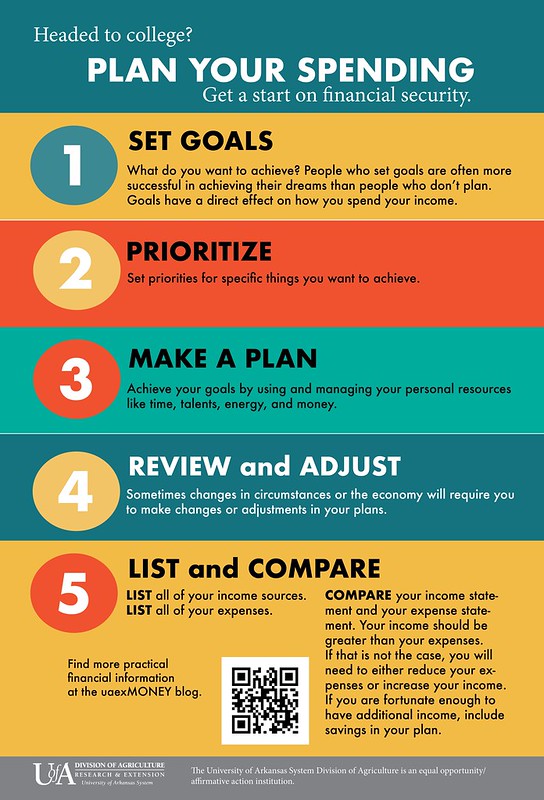
Once enrolled, effective budgeting becomes paramount. Students should create a monthly budget that tracks income from jobs or allowances and allocates funds for fixed expenses (rent, utilities) and variable expenses (food, entertainment, transportation). Using budgeting apps, sticking to a meal plan, limiting discretionary spending, and avoiding unnecessary purchases can all contribute to managing expenses and reducing the need for additional loans.
The Lifelong Impact of Financial Foresight
The financial decisions made during college planning extend far beyond graduation day. A well-executed financial plan can lead to a more secure future, free from the crushing weight of excessive student loan debt.
Preparing for Repayment and Beyond
Understanding loan terms, interest rates, and repayment options before graduation is vital. Federal loans offer various repayment plans, including income-driven options, which can adjust monthly payments based on a borrower’s income and family size. Graduates should consolidate loans if beneficial, explore refinancing options if appropriate (especially for private loans), and prioritize paying down high-interest debt.
Cultivating Financial Literacy in Young Adults
College financial planning is also an opportunity to instill critical financial literacy skills in young adults. Teaching them about budgeting, saving, investing, debt management, and the power of compound interest prepares them not only for college but for a lifetime of responsible financial decision-making. Empowering students to take ownership of their financial education during this formative period can have lasting positive effects.

Conclusion
Planning for college financially is a marathon, not a sprint. It requires a detailed understanding of costs, a disciplined approach to savings, a strategic navigation of the financial aid landscape, and a proactive stance on expense reduction. By starting early, exploring all available resources, and making informed decisions at each stage, families can transform the daunting challenge of college funding into an empowering process. The goal is not just to secure a college education, but to do so in a manner that lays a solid foundation for a financially stable and prosperous future, allowing graduates to begin their careers with opportunity rather than significant debt burden.
aViewFromTheCave is a participant in the Amazon Services LLC Associates Program, an affiliate advertising program designed to provide a means for sites to earn advertising fees by advertising and linking to Amazon.com. Amazon, the Amazon logo, AmazonSupply, and the AmazonSupply logo are trademarks of Amazon.com, Inc. or its affiliates. As an Amazon Associate we earn affiliate commissions from qualifying purchases.