
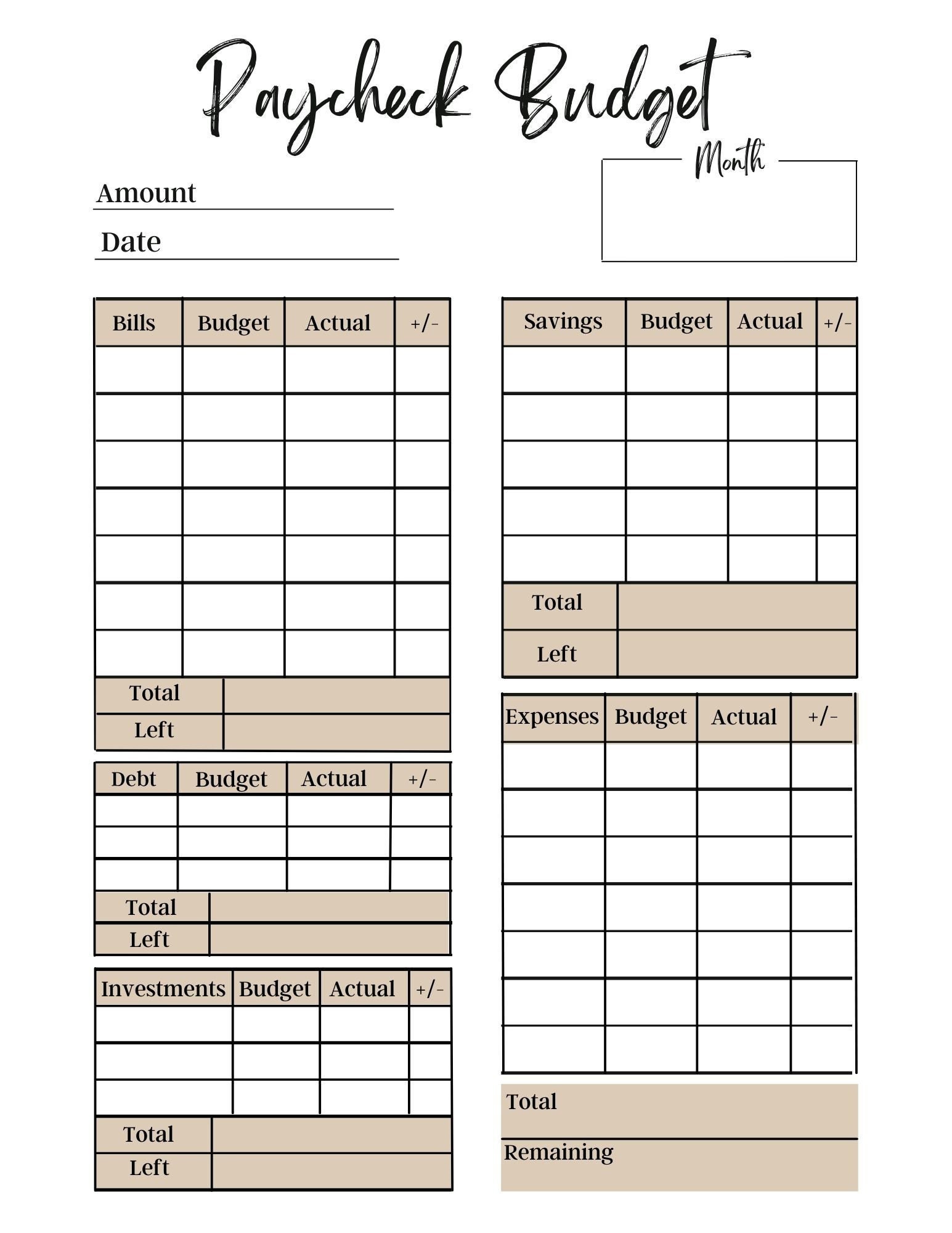
In the journey towards financial freedom and stability, understanding how to effectively manage your income is not just beneficial, it’s absolutely essential. For many, the paycheck is the primary source of funds, and how those funds are allocated determines everything from daily living standards to long-term financial security. Budgeting a paycheck is more than just tracking expenses; it’s a strategic roadmap that empowers you to take control of your money, achieve your financial aspirations, and alleviate the stress often associated with personal finance. This comprehensive guide will walk you through the process of creating a robust budget that works for you, transforming your financial habits and paving the way for a more prosperous future.
Understanding Your Financial Landscape
Before you can effectively budget, you must first have a clear, honest picture of your current financial situation. This foundational step involves accurately identifying all sources of income and meticulously cataloging all expenditures. Without this baseline understanding, any budgeting attempt will be akin to navigating unfamiliar territory without a map.
Calculating Your Net Income
Your budget should always be based on your net income, not your gross income. Net income is the amount of money you actually receive after all deductions have been taken out of your gross pay. These deductions typically include federal and state taxes, Social Security, Medicare, health insurance premiums, retirement contributions, and any other pre-tax deductions your employer might offer.
To calculate your net income, gather your pay stubs for the past few months. If your income varies (e.g., due to commissions, bonuses, or irregular hours), it’s wise to calculate an average net income over a slightly longer period, perhaps three to six months. When in doubt, it’s always safer to budget based on a conservative estimate of your income to avoid overspending. Remember to also account for any other consistent sources of income you might have, such as income from a side hustle, rental properties, or alimony.
Identifying Fixed vs. Variable Expenses
Once you know your net income, the next crucial step is to list all your expenses. These can be broadly categorized into fixed and variable expenses.
- Fixed Expenses are costs that remain relatively constant month after month and are often contractual obligations. These include rent or mortgage payments, loan repayments (car, student, personal), insurance premiums, subscription services (internet, streaming, gym memberships), and regular childcare costs. These are typically easier to account for in your budget.
- Variable Expenses fluctuate from month to month and are often discretionary or semi-discretionary. Examples include groceries, utilities (which can vary with usage and season), transportation costs (gas, public transport), dining out, entertainment, clothing, and personal care. These are the areas where you often have the most flexibility to make adjustments and find savings.
A clear distinction between these two types of expenses will help you identify areas where you have more control and can make targeted reductions if necessary.
Tracking Your Spending Habits
Many people underestimate how much they spend on variable expenses simply because they don’t track them. This “mystery spending” can significantly derail a budget. For at least one month, commit to meticulously tracking every single dollar you spend. There are various ways to do this:
- Manual Tracking: Keep a small notebook and pen, or use a spreadsheet to log every transaction.
- Digital Tools: Utilize budgeting apps (e.g., Mint, YNAB, Personal Capital), banking apps, or dedicated expense tracking software. Many financial institutions offer tools that categorize your spending automatically.
- Bank and Credit Card Statements: Review these statements at the end of the month to see where your money went. While useful for an overview, real-time tracking gives you better insight and control.
The goal here is not to judge your spending, but to gain an accurate understanding of where your money is actually going versus where you think it’s going. This insight is invaluable for creating a realistic and sustainable budget.
Setting Clear Financial Goals
Budgeting without a purpose is like embarking on a journey without a destination. Financial goals provide the motivation and direction for your budgeting efforts. They transform the abstract concept of saving into concrete objectives that inspire discipline and smart financial choices.
Short-Term Goals (1-3 years)
Short-term goals are immediate and often provide quick wins that build momentum for your budgeting journey. These might include:
- Building an Emergency Fund: Aim for at least 3-6 months’ worth of living expenses. This acts as a crucial safety net for unexpected events like job loss, medical emergencies, or car repairs.
- Paying Off High-Interest Debt: Focusing on credit card debt or personal loans with high interest rates can free up significant cash flow in the long run.
- Saving for a Specific Purchase: This could be a down payment for a car, a much-needed home appliance, or a memorable vacation.
- Starting an Investment Fund: Even small, consistent contributions to an investment account can kickstart your long-term wealth building.
Long-Term Goals (5+ years)
Long-term goals require sustained effort and patience, but their impact on your future financial well-being is immense. These typically include:
- Retirement Planning: Consistently contributing to a 401(k), IRA, or other retirement vehicles is paramount for a comfortable post-working life.
- Saving for a Down Payment on a Home: This often represents one of the largest financial commitments an individual or family makes.
- Funding Children’s Education: Saving for college or other educational pursuits can significantly reduce future financial burdens.
- Achieving Financial Independence: The ultimate goal for many, where passive income covers living expenses, allowing for greater freedom and choice.
Prioritizing Your Objectives
It’s common to have multiple financial goals simultaneously. The challenge is often prioritizing them effectively. While an emergency fund should almost always be a top priority, the order of other goals might depend on your individual circumstances, risk tolerance, and time horizon.
Consider using a framework like the SMART goals (Specific, Measurable, Achievable, Relevant, Time-bound) principle to define each objective clearly. For example, instead of “save money,” make it “save $5,000 for a down payment on a car in 12 months.” Regularly review your goals to ensure they remain relevant and motivating.
Choosing the Right Budgeting Method
There isn’t a one-size-fits-all approach to budgeting. What works for one person might not work for another. The key is to find a method that aligns with your personality, lifestyle, and financial complexity, and that you can consistently stick to.
The 50/30/20 Rule
This popular and straightforward method allocates your after-tax income into three broad categories:
- 50% for Needs: This covers essential expenses like housing, utilities, groceries, transportation, and minimum loan payments.
- 30% for Wants: This includes discretionary spending like dining out, entertainment, hobbies, travel, and non-essential shopping.
- 20% for Savings & Debt Repayment: This portion goes towards your emergency fund, retirement contributions, investments, and any debt payments above the minimums.
The 50/30/20 rule is excellent for beginners and those who prefer a less granular approach, providing a good balance between necessities, lifestyle, and financial growth.
Zero-Based Budgeting
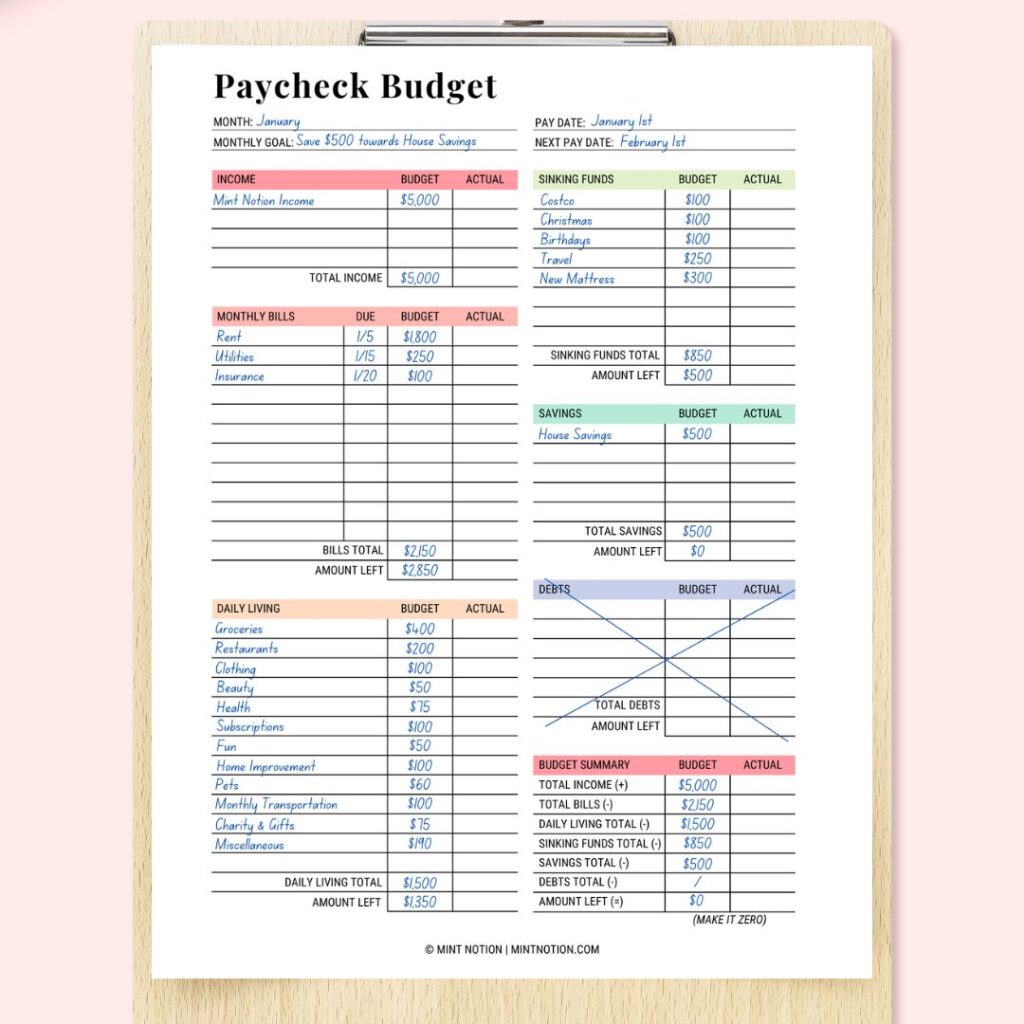
With zero-based budgeting, every dollar of your income is assigned a specific job – whether it’s for an expense, savings, or debt repayment – until your income minus your expenses equals zero. This doesn’t mean you spend all your money; it means you account for every dollar.
This method requires more detailed tracking and planning but provides maximum control over your money. It’s particularly effective for those who want to be very intentional with their spending and ensure no money is “lost” to unaccounted expenses. You literally “zero out” your budget each month.

Envelope System (Cash Budgeting)
Historically, this method involves allocating physical cash into separate envelopes labeled for different spending categories (e.g., “Groceries,” “Dining Out,” “Entertainment”). Once an envelope is empty, you stop spending in that category until your next paycheck.
While traditionally physical, a modern digital equivalent exists through budgeting apps that allow you to set digital “envelopes” or categories. This method is highly effective for curbing overspending on variable expenses and making you highly conscious of your financial limits. It’s particularly useful for those who struggle with impulse purchases.
Pay Yourself First
This method emphasizes prioritizing savings and investments by automatically transferring a set amount from your paycheck into your savings or investment accounts before you pay any bills or indulge in discretionary spending.
The philosophy behind “Pay Yourself First” is that by treating savings as a non-negotiable expense, you ensure your long-term financial goals are always being addressed. Once those automatic transfers are made, you then budget the remaining funds for your needs and wants. This method is incredibly powerful for consistent wealth accumulation and is often used in conjunction with other budgeting systems.
Implementing and Maintaining Your Budget
Creating a budget is only the first step; the real work lies in its consistent implementation and ongoing maintenance. A budget is a living document that needs regular attention to remain effective and relevant.
Creating a Budget Spreadsheet or Using Apps
Whether you opt for a simple pen-and-paper ledger, a customized spreadsheet (like Google Sheets or Microsoft Excel), or a dedicated budgeting app, choose a tool that you find intuitive and easy to use.
- Spreadsheets offer maximum customization. You can design them to fit your specific categories, track multiple accounts, and even incorporate financial goal tracking. Many free templates are available online.
- Budgeting Apps (e.g., Mint, YNAB, Simplifi, Personal Capital) often link directly to your bank and credit card accounts, automating transaction tracking and categorization. They can provide real-time updates, send alerts, and offer visual reports, making budgeting more interactive and less cumbersome for many.
The best tool is the one you will actually use consistently. Experiment with different options until you find your perfect fit.
Allocating Funds to Categories
Once you have your method and tool, it’s time to assign specific dollar amounts to each of your expense categories based on your income and financial goals.
For fixed expenses, this is straightforward. For variable expenses, use your spending tracking data from the previous month(s) to set realistic limits. If you’re using the envelope system, physically or digitally divide your funds. For the 50/30/20 rule, ensure your allocations fit the percentages.
Be realistic, especially when starting. Trying to cut too much too fast can lead to frustration and abandonment of the budget. It’s better to start with manageable cuts and gradually reduce spending as you become more comfortable.
Regular Review and Adjustment
A budget is not static. Life happens: income changes, expenses fluctuate, and goals evolve. Therefore, it’s crucial to review your budget regularly, ideally once a week or at least once a month.
During your review, ask yourself:
- Did I stay within my limits for each category?
- Where did I overspend or underspend?
- Are my goals still aligned with my current financial situation?
- Are there any upcoming expenses (e.g., annual insurance premiums, holiday gifts) I need to plan for?
- Can I optimize any category further, perhaps by negotiating bills or finding cheaper alternatives?
Make adjustments as needed. If you consistently overspend in one category, either reallocate funds from another or consider if your initial allocation was unrealistic. Don’t view deviations as failures, but as opportunities to learn and refine your approach.
Strategies for Budgeting Success
Sustaining a budget requires more than just knowing the mechanics; it demands discipline, foresight, and a proactive approach to your finances. Here are some strategies to ensure your budgeting efforts lead to lasting success.
Building an Emergency Fund
As mentioned in financial goals, an emergency fund is your first line of defense against unexpected financial shocks. Without it, a sudden job loss, medical emergency, or major home repair can quickly derail your budget and force you into debt. Prioritize building this fund until you have at least 3 to 6 months’ worth of essential living expenses saved in an easily accessible, high-yield savings account. Treat contributions to this fund as a non-negotiable expense in your budget.
Tackling Debt Strategically
Debt can be a major impediment to financial progress. Incorporate a debt repayment strategy into your budget. Two popular methods are:
- Debt Snowball Method: Pay the minimums on all debts except the smallest one, which you aggressively pay down. Once that’s paid, take the money you were paying on it and apply it to the next smallest debt. This method provides psychological wins.
- Debt Avalanche Method: Pay the minimums on all debts except the one with the highest interest rate, which you aggressively pay down. Once that’s paid, move to the next highest interest rate. This method saves you the most money on interest over time.
Whichever method you choose, make sure your budget allocates sufficient funds towards accelerating debt repayment.
Automating Savings and Investments
One of the most powerful tools for financial success is automation. Set up automatic transfers from your checking account to your savings, investment accounts, and debt repayment accounts immediately after you get paid.
- Savings: Schedule regular transfers to your emergency fund, short-term savings goals, and long-term savings.
- Investments: Automate contributions to your 401(k), IRA, or other brokerage accounts. Even small, consistent contributions compound significantly over time.
- Debt Repayment: Consider setting up automatic payments that are higher than the minimums for your debts.
Automation removes the temptation to spend the money and ensures your financial goals are consistently being met without conscious effort each month.
Finding Ways to Increase Income or Reduce Expenses
If your budget consistently shows that your expenses are too high relative to your income, or if you’re struggling to meet your financial goals, you have two primary levers to pull: increase your income or reduce your expenses.
- Increase Income: Explore side hustles, freelance work, negotiating a raise, or investing in skills that lead to higher-paying opportunities.
- Reduce Expenses: Beyond the obvious cuts to discretionary spending, look for deeper savings. Can you refinance a loan for a lower interest rate? Shop for cheaper insurance? Downsize your living situation? Review all your subscriptions and cancel those you rarely use. Get creative and challenge every expense.
Budgeting your paycheck is an ongoing process of learning, adapting, and making intentional financial choices. It’s not about deprivation, but about prioritization and alignment of your spending with your values and long-term aspirations. By diligently applying these principles, you can transform your financial life, gain peace of mind, and confidently work towards achieving your most ambitious financial goals.
aViewFromTheCave is a participant in the Amazon Services LLC Associates Program, an affiliate advertising program designed to provide a means for sites to earn advertising fees by advertising and linking to Amazon.com. Amazon, the Amazon logo, AmazonSupply, and the AmazonSupply logo are trademarks of Amazon.com, Inc. or its affiliates. As an Amazon Associate we earn affiliate commissions from qualifying purchases.