
The home improvement retail giant, Home Depot (HD), has long been a bellwether for the housing market and consumer spending on home-related projects. Its stock has historically been a robust performer, reflecting the company’s strong brand, expansive store network, and consistent profitability. However, recent periods have seen HD’s stock experience significant dips, prompting investors and market observers to question the underlying causes. Understanding these pressures requires a deep dive into macroeconomic shifts, sector-specific challenges, and the company’s own operational dynamics, all viewed through a financial and investment lens.
Navigating Macroeconomic Headwinds
The performance of any large retailer like Home Depot is inextricably linked to the broader economic environment. Several significant macroeconomic forces have converged to create a challenging landscape, directly impacting the company’s financial outlook and, consequently, its stock valuation.

The Impact of High Interest Rates
One of the most potent factors influencing Home Depot’s stock is the trajectory of interest rates. Central banks, particularly the Federal Reserve, have aggressively hiked rates to combat inflation. Higher interest rates translate directly into more expensive borrowing costs for both consumers and businesses. For homeowners, this means higher mortgage rates, deterring new home purchases and making refinancing less attractive. This cooling effect on the housing market reduces the impetus for new home renovations or the need to furnish a newly acquired property, both core drivers of Home Depot’s sales. Furthermore, higher rates increase the cost of capital for Home Depot itself, potentially impacting its expansion plans, share buybacks, or dividend growth, which are crucial for investor sentiment. Businesses, especially contractors who are significant Home Depot customers, also face higher costs for financing projects or carrying inventory, which can lead to a slowdown in their activity.
Inflation’s Persistent Grip on Consumer Spending
While interest rates aim to tame inflation, the persistent elevated prices for everyday goods and services continue to squeeze consumer wallets. This phenomenon, often referred to as “sticky inflation,” forces households to prioritize essential spending on groceries, fuel, and utilities, leaving less discretionary income for home improvement projects. Home Depot’s product categories, while sometimes essential, often fall into the discretionary bucket for many consumers, particularly for large-scale renovations. When consumers feel the pinch of inflation, they tend to defer or scale down non-essential purchases, opting for repairs over replacements or small projects over major overhauls. This reduction in transaction size and frequency directly impacts Home Depot’s top-line revenue and profitability, as the company may struggle to pass on its own rising input costs without alienating price-sensitive customers. The delicate balance between maintaining margins and retaining customer volume becomes a significant financial challenge.
Broader Economic Slowdown Concerns
Beyond interest rates and inflation, the overarching concern about a potential economic slowdown or recession weighs heavily on investor sentiment for cyclical stocks like Home Depot. Economic slowdowns typically lead to job losses, reduced consumer confidence, and a general tightening of belts across the economy. In such an environment, spending on big-ticket items, even those related to the home, tends to decline sharply. Investors, anticipating weaker future earnings and reduced growth prospects, often divest from companies perceived as vulnerable to economic downturns. This forward-looking behavior can cause stock prices to drop even before a full-blown recession materializes, as the market attempts to price in future negative economic realities. Home Depot’s strong historical performance during economic booms makes it particularly susceptible to corrections during perceived downturns.
Challenges in the Housing Market Sector
Home Depot’s fortunes are deeply intertwined with the health of the housing market. Recent shifts in housing supply, demand, and transactional activity have presented significant headwinds for the retailer, directly translating into financial pressures.
Deceleration in DIY and Home Improvement Projects
The pandemic-fueled boom in Do-It-Yourself (DIY) and home improvement projects has significantly receded. During lockdowns, with people spending more time at home and having fewer leisure options, there was a surge in renovation activities. Many households invested in making their living spaces more functional and enjoyable. This unprecedented demand fueled Home Depot’s sales to record highs. However, as economies have reopened, travel and entertainment options have returned, and hybrid work models have become standard, consumer priorities have shifted. The “nesting” trend has softened, leading to a deceleration in demand for new DIY projects. Furthermore, many homeowners completed major projects during the boom, reducing the immediate need for further large-scale renovations. This normalization of demand, coupled with inflationary pressures, means fewer big-ticket purchases from the average homeowner, directly impacting Home Depot’s revenue per customer.
Softening Existing Home Sales and New Construction
A robust housing market, characterized by strong existing home sales and new construction, is a powerful catalyst for Home Depot. When homes are bought and sold, both buyers and sellers often undertake renovation or repair projects. New homeowners frequently customize their new property, while sellers often make improvements to enhance curb appeal and value. Similarly, a healthy new construction market drives demand for building materials, appliances, and fixtures. However, the surge in mortgage rates has significantly cooled both segments. Affordability issues, driven by high home prices and elevated interest rates, have led to a marked slowdown in existing home sales. Many potential sellers are reluctant to give up lower mortgage rates they secured years ago, leading to low inventory. For new construction, while still facing a supply deficit, higher borrowing costs for developers and increased material costs have also tempered activity. The reduced velocity of homes changing hands and slower new builds directly translates to diminished demand at Home Depot for everything from lumber to landscaping supplies.
Professional Contractor Demand Fluctuations
While Home Depot is famous for its DIY customers, its “Pro” segment (professional contractors, remodelers, and tradespeople) accounts for a significant and growing portion of its sales. This segment is highly sensitive to the overall economic climate and the housing market’s health. When new construction slows, or homeowners defer large renovation projects due to economic uncertainty, professional contractors experience a direct reduction in their pipeline of work. This translates into fewer bulk purchases of materials, tools, and equipment from Home Depot. Furthermore, contractors often operate on tighter margins and are highly dependent on project volume. Any slowdown in their business directly impacts Home Depot’s B2B sales. The company has invested heavily in catering to the Pro segment with dedicated services, delivery options, and specialized products, making any significant slowdown in this area a material concern for its overall financial performance and growth trajectory.
Shifting Consumer Behavior and Market Dynamics
Beyond broad economic and housing market trends, changes in consumer preferences and the competitive landscape also play a crucial role in Home Depot’s stock performance. Adapting to these dynamics is vital for maintaining market share and profitability.
Discretionary Spending Priorities

The ongoing economic uncertainty has prompted a shift in how consumers allocate their discretionary spending. Faced with higher costs for necessities, many households are re-evaluating their priorities. Rather than investing in a major home renovation, they might choose to spend on experiences (travel, dining out) that were curtailed during the pandemic, or simply save more. This psychological shift can impact Home Depot’s sales of higher-margin, discretionary items like patio furniture, elaborate decor, or advanced smart home devices. Investors analyze consumer confidence metrics and retail sales data closely for signs of this shift. A prolonged period where consumers prioritize other spending categories over home improvement will directly affect Home Depot’s revenue growth and, by extension, its stock valuation. The company must continually find ways to demonstrate value and necessity to compete for this shrinking pool of discretionary funds.
Competitive Pressures and E-commerce Evolution
The retail landscape is intensely competitive, and Home Depot faces challenges from various fronts. Traditional rivals like Lowe’s are direct competitors, but the rise of e-commerce giants like Amazon and specialty online retailers also poses a significant threat. These online players offer convenience, often competitive pricing, and a vast selection, compelling Home Depot to continuously invest in its own digital capabilities, supply chain, and omnichannel strategy. While Home Depot has made substantial strides in e-commerce and buy-online-pickup-in-store (BOPIS) options, maintaining technological parity and customer experience requires ongoing capital expenditure. Furthermore, smaller, specialized local hardware stores and building material suppliers also vie for market share, especially in niche segments or with professional contractors seeking personalized service. Intense competition can lead to price wars, impacting margins, or necessitate increased marketing spend, which can weigh on profitability and investor returns.
Inventory Management and Supply Chain Resilience
Effective inventory management and a resilient supply chain are critical for a retailer of Home Depot’s scale. The past few years have highlighted vulnerabilities in global supply chains, leading to stockouts and increased logistics costs. While some of these issues have eased, maintaining optimal inventory levels remains a complex challenge. Overstocking can tie up capital and lead to markdowns, hurting profitability. Understocking can result in lost sales and customer dissatisfaction. Home Depot’s ability to accurately forecast demand amidst economic volatility, manage its vast network of suppliers, and efficiently move products from warehouses to stores or directly to customers’ job sites is paramount. Any perceived weakness or inefficiency in these areas can signal future operational challenges to investors, potentially impacting the stock. Investments in supply chain technology and infrastructure, while necessary, also represent significant capital outlays that can temporarily depress earnings.
Home Depot’s Operational and Strategic Responses
In response to these pervasive challenges, Home Depot has not been static. The company has initiated several strategic endeavors aimed at bolstering its market position, enhancing customer value, and mitigating the impact of macroeconomic headwinds. Understanding these operational responses is key to assessing its long-term investment viability.
Investment in Pro-Customer Initiatives
Recognizing the significant and high-value contribution of its Pro customers, Home Depot has continued to pour resources into enhancing its offerings for this segment. This includes initiatives like expanded delivery services directly to job sites, dedicated Pro customer service desks, a wider assortment of professional-grade products, and specialized Pro loyalty programs. The goal is to make Home Depot the indispensable partner for contractors, leveraging its scale and supply chain efficiency. By deepening relationships with professional customers, the company aims to create a more resilient revenue stream that may be less susceptible to the discretionary spending whims of the average homeowner. Investors view the success of these Pro initiatives as a critical driver for future growth, especially as the DIY segment normalizes. The long-term strategy involves capturing a greater share of the professional market, which inherently offers higher average ticket sizes and repeat business.
Supply Chain Optimization and Store Modernization
To counter the challenges of inventory management, rising costs, and competitive pressures, Home Depot has been consistently investing in optimizing its supply chain. This involves leveraging technology for better demand forecasting, improving warehouse automation, and expanding its distribution network to ensure faster and more efficient product delivery. A more agile and resilient supply chain helps reduce costs, improve product availability, and enhance the customer experience—all vital for maintaining profitability and market share. Concurrently, the company is undertaking store modernization efforts, upgrading existing locations to improve the shopping experience for both DIY and Pro customers. This might include reconfiguring layouts, enhancing digital integration within stores, and improving energy efficiency. These capital expenditures are strategic investments designed to future-proof the business, but they do come with upfront costs that can impact short-term earnings.
Navigating Labor Costs and Wage Pressures
Like many retailers, Home Depot operates in a tight labor market, facing significant wage pressures and rising labor costs. To attract and retain talent, especially skilled workers who can assist customers with complex projects, the company must offer competitive wages and benefits. While this is crucial for maintaining service quality and operational efficiency, it directly impacts Home Depot’s operating expenses and, consequently, its profitability margins. Investors closely monitor the company’s ability to manage these rising labor costs without significantly eroding earnings. Strategies include optimizing staffing levels, investing in training for productivity enhancements, and leveraging technology to automate certain tasks. The balance between providing excellent customer service and managing labor expenses is a continuous challenge for a company with such a large workforce, and how Home Depot navigates this will significantly influence its financial performance.
The Long-Term Investment Outlook
Despite the immediate headwinds causing Home Depot’s stock to drop, it’s crucial for investors to consider the company’s fundamental strengths and long-term prospects. Stock market fluctuations are often driven by short-term sentiment, but a robust investment thesis looks beyond current challenges.
Fundamental Strengths and Market Position
Home Depot boasts significant fundamental strengths that underpin its long-term value. It holds a dominant market position in the home improvement sector, benefitting from immense scale, a well-recognized brand, and a vast physical footprint. Its efficient supply chain, particularly for bulky and specialized items, creates a competitive moat against many pure-play online retailers. The company has a proven track record of operational excellence, strong cash flow generation, and a commitment to returning capital to shareholders through dividends and share buybacks. The home improvement market itself is inherently resilient over the long term, as homes require continuous maintenance, repairs, and periodic upgrades, irrespective of short-term economic cycles. Demographics also play a role, with an aging housing stock in many regions requiring more attention. These enduring attributes provide a stable foundation for Home Depot’s future.
Future Growth Drivers and Strategic Adaptations
Looking ahead, Home Depot has several potential growth drivers. Its continued focus on the Pro customer segment, with its higher spending and repeat business, offers a significant runway for expansion. The company’s ongoing investments in its digital capabilities and omnichannel strategy position it well to capture online market share while leveraging its physical stores for convenience and specialized services. Innovation in products, such as smart home technology and sustainable building materials, presents opportunities to cater to evolving consumer preferences. Furthermore, while the current housing market is soft, the long-term fundamentals of housing demand, driven by population growth and household formation, remain positive. Home Depot’s ability to adapt its product mix, services, and delivery models to meet these future demands will be crucial for sustained growth. The strategic adaptations currently underway are designed to capitalize on these long-term trends.
Valuing Home Depot Amidst Volatility
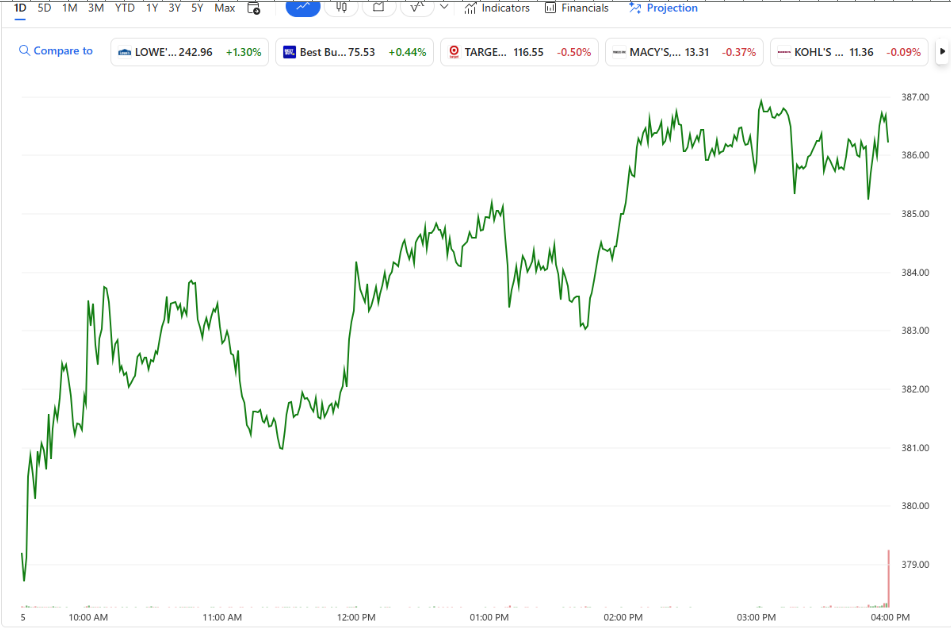
For investors, the recent stock drop presents a complex valuation challenge. While current macroeconomic conditions and sector-specific pressures weigh on near-term earnings, these periods of volatility can sometimes offer opportunities for long-term investors. A deep dive into Home Depot’s financial statements, including its price-to-earnings (P/E) ratio, dividend yield, free cash flow generation, and debt levels, becomes critical. Analysts will scrutinize whether the stock has been oversold, reflecting too much pessimism, or if the current valuation accurately prices in the expected slowdown. Investors often use discounted cash flow models or comparable company analysis to assess fair value. The key question for a prudent investor is whether the current price discounts the temporary nature of the headwinds and adequately reflects Home Depot’s enduring competitive advantages and long-term earnings power. Periods of stock price decline, while unsettling, demand a calm, data-driven approach to determine if the market is offering a compelling entry point for a fundamentally strong company.
aViewFromTheCave is a participant in the Amazon Services LLC Associates Program, an affiliate advertising program designed to provide a means for sites to earn advertising fees by advertising and linking to Amazon.com. Amazon, the Amazon logo, AmazonSupply, and the AmazonSupply logo are trademarks of Amazon.com, Inc. or its affiliates. As an Amazon Associate we earn affiliate commissions from qualifying purchases.