
In an era defined by rapid digital transformation, financial institutions are continually enhancing their mobile platforms to provide users with unparalleled control and access to their accounts. The Chase Mobile App stands as a prime example, evolving beyond simple balance checks to offer sophisticated financial management tools, including the ability to retrieve sensitive card details directly from your smartphone. This functionality, while immensely convenient, underscores critical considerations regarding digital security and the technological architecture underpinning modern banking applications. This guide will delve into the technical mechanisms and best practices for securely accessing your debit card number within the Chase app, highlighting the intersection of convenience, security, and cutting-edge mobile banking technology.

1. The Evolving Landscape of Digital Banking and Card Access
The journey from physical branch visits to ubiquitous mobile banking represents a seismic shift in how individuals interact with their finances. This transformation is driven by technological advancements that prioritize user experience, accessibility, and robust security protocols.
The Shift to Mobile-First Financial Management
Today’s banking is inherently mobile. Smartphones have become the primary interface for managing money, from paying bills and transferring funds to monitoring transactions and interacting with customer service. This mobile-first paradigm demands applications that are not only intuitive but also powerful enough to replicate and often surpass the functionalities traditionally offered in physical branches or desktop web portals. The Chase app, like many of its contemporaries, is designed from the ground up to be a comprehensive financial hub, enabling users to perform a vast array of banking operations on the go. This includes advanced features such as card controls, budgeting tools, and, crucially for many users, instant access to card details.
Why Digital Access to Card Details is Crucial
The need to view one’s debit card number digitally arises from various modern use cases. Imagine a scenario where you’re making an online purchase, but your physical card isn’t immediately at hand, or you’ve stored your card in a digital wallet but need the full 16-digit number, expiration date, and CVV for a specific transaction that doesn’t support tokenized payments. Furthermore, in emergencies, such as a lost or stolen physical card, immediate access to these details can be vital for reporting and temporary digital use while awaiting a replacement. This digital accessibility is a testament to the sophisticated backend systems and user-facing interfaces developed to bridge the gap between physical and virtual financial instruments, empowering users with continuous control over their assets.
Understanding the Chase Mobile App Ecosystem
The Chase Mobile App is more than just an interface; it’s a secure ecosystem built on layers of technology. It leverages robust encryption for data transmission, multi-factor authentication (MFA) for user verification, and sophisticated fraud detection algorithms to protect user information. The ability to view your debit card number within this app is not a simple data display; it’s a carefully managed feature that relies on secure API calls to retrieve data from Chase’s protected servers, render it securely within the app’s environment, and then, in many cases, mask it after a brief display to prevent unauthorized viewing. Understanding this underlying technological framework reinforces the trust users place in such applications for handling their most sensitive financial information.
2. Step-by-Step Tutorial: Retrieving Your Debit Card Number Securely
Accessing your debit card number through the Chase app is a straightforward process, designed with both user convenience and security in mind. This section outlines the typical steps involved.
Initiating Your Chase Mobile App Session
The first step is always to open the official Chase Mobile App on your smartphone or tablet. Ensure you are using the legitimate app downloaded from a trusted source like the Apple App Store or Google Play Store. Upon launch, you will be prompted to log in. This typically involves entering your username and password, followed by any multi-factor authentication steps you have enabled, such as a one-time passcode sent to your phone or a biometric verification (fingerprint or facial recognition). These security layers are paramount, ensuring that only the authorized account holder can proceed.
Navigating to Your Account and Card Details
Once successfully logged in, the app usually defaults to an overview of your accounts. You will need to select the specific checking account associated with the debit card whose number you wish to view. Often, this means tapping on the relevant checking account tile or entry from your list of accounts. Within the account details screen, look for options related to “Card Services,” “Manage Card,” “Account Details,” or a similar link. Some apps might present a visual representation of your card, which you can tap to reveal further options.
Unveiling Your Debit Card Number: The Digital View Feature
Upon navigating to the card management section, you should find an option explicitly labeled something like “View Card Details,” “Show Card Number,” or “Digital Card.” Tapping this option will typically trigger another security prompt. This might require re-entering your password, confirming your biometrics, or entering a unique PIN. This secondary authentication step is a crucial security measure, preventing someone who might have temporary access to your unlocked phone from easily viewing your sensitive card information. After successful authentication, the app will display your full 16-digit debit card number, the expiration date, and the CVV (Card Verification Value) code. It’s common for apps to display this information for a limited time or to mask it partially after a few seconds, requiring you to tap again to reveal it fully, adding another layer of security.
What to Do If You Can’t Find It
While the steps above are standard, app interfaces can evolve. If you’re struggling to locate the feature, consider the following troubleshooting steps:
- Update Your App: Ensure your Chase Mobile App is updated to the latest version. New features and UI changes are often introduced with updates.
- Clear App Cache/Reinstall: Sometimes, clearing the app’s cache or even reinstalling the app can resolve minor display glitches.
- Check Help Section/FAQs: The Chase app itself often has a comprehensive help section or FAQs that can guide you.
- Contact Chase Support: If all else fails, reach out to Chase customer service. They can guide you through the process or inform you if there are any specific account restrictions.
- Feature Availability: In rare cases, this feature might not be available for certain types of accounts or specific debit card products.
3. Prioritizing Digital Security When Accessing Sensitive Information
The convenience of digital card access must always be balanced with robust security practices. While Chase employs cutting-edge security, the end-user plays a critical role in maintaining the integrity of their financial data.
Chase’s Built-in Security Measures: Encryption and Authentication
Chase’s mobile app is engineered with multiple layers of security to protect your financial information. Data transmitted between your device and Chase’s servers is secured using industry-standard encryption protocols (e.g., TLS/SSL), making it incredibly difficult for unauthorized parties to intercept and decipher. Furthermore, the app employs strong authentication mechanisms, including multi-factor authentication (MFA), which adds an extra layer of protection beyond just a username and password. Features like biometric login (fingerprint, facial recognition) enhance convenience without compromising security, as these credentials are often securely stored and processed within your device’s hardware enclave. The app also operates within a sandboxed environment on your device, limiting its interaction with other potentially malicious applications.

Best Practices for Protecting Your Account and Card Information
Even with sophisticated app security, user habits are paramount. To maximize your digital security:
- Strong, Unique Passwords: Use a complex password for your Chase account that is unique and not reused on other platforms.
- Enable Biometrics: Utilize fingerprint or facial recognition if your device supports it, as it adds a convenient and strong authentication layer.
- Keep Your Device Secure: Ensure your smartphone or tablet is password-protected and locked when not in use. Regularly update your device’s operating system to benefit from the latest security patches.
- Public Wi-Fi Caution: Avoid accessing sensitive financial information over unsecured public Wi-Fi networks, as these can be vulnerable to eavesdropping. Use a VPN if you must.
- Be Mindful of Your Surroundings: When viewing your card number in public, be aware of “shoulder surfers” who might attempt to glimpse your screen.
- Log Out After Use: Always log out of your banking app, especially if you share your device or if there’s any chance of it falling into the wrong hands.
- Regularly Monitor Accounts: Frequently review your transaction history for any unauthorized activity.
Recognizing and Avoiding Phishing and Fraudulent Attempts
Cybercriminals constantly devise new methods to trick users into divulging their information. Phishing attempts, often through fake emails or SMS messages disguised as Chase communications, aim to direct you to fraudulent websites or apps that mimic the real thing. Always verify the sender of emails and the URL of websites. Never click suspicious links or download attachments from unknown sources. The official Chase app will never ask for your full card number or PIN via email or unsolicited text messages. If in doubt, directly open the legitimate Chase app or type www.chase.com into your browser. Report any suspicious communications to Chase immediately.
4. Practical Applications and Benefits of Digital Card Access
The ability to access your debit card number via the Chase app is more than just a convenience; it’s a powerful feature that enhances usability across various scenarios.
Seamless Online Transactions Without the Physical Card
One of the most common and immediate benefits is the ability to complete online purchases even when your physical debit card is not available. Whether you forgot your wallet at home, your card is misplaced, or you simply prefer not to pull out your physical card in public, the app provides instant access to the necessary details—card number, expiration date, and CVV—to finalize transactions on e-commerce sites or digital service subscriptions. This streamlines the digital shopping experience and reduces friction, directly leveraging the ubiquity of smartphones.
Emergency Situations and Lost/Stolen Card Management
In stressful situations such as a lost or stolen physical debit card, the Chase app becomes an invaluable tool. While the primary action would be to report the card as lost/stolen and lock it immediately through the app (a feature we’ll discuss next), having digital access to the card number can be critical for certain financial obligations that require a debit card number for immediate payments before a replacement arrives. This temporary access, combined with the ability to lock the physical card, offers a controlled bridge during what would otherwise be a period of complete financial disruption.
Enhanced Financial Control and Monitoring
Beyond transactional benefits, digital card access contributes to a broader sense of financial control. Users can quickly verify details for setting up recurring payments, updating subscription information, or confirming card information for financial aggregators. This immediate access reduces reliance on physical documents and provides a dynamic tool for managing various aspects of one’s personal finance ecosystem, all within a secure mobile environment. It empowers users to be proactive and reactive in managing their card usage and associated services.
5. Beyond Viewing: Maximizing Your Chase App’s Card Management Features
The ability to view your card number is just one facet of the robust card management features offered by the Chase app. These functionalities are integral to a modern, secure, and convenient banking experience.
Instant Card Lock/Unlock Functionality
One of the most critical digital security features is the ability to instantly lock and unlock your debit card. If you misplace your card or suspect unauthorized use, a few taps in the app can disable the card, preventing any new transactions. Once you find it, or if you confirm its security, you can just as easily unlock it. This feature provides immediate control, acting as a powerful deterrent against fraud and offering peace of mind, significantly reducing the downtime associated with waiting for a replacement card or reporting an issue through traditional channels.
Setting Up Transaction Alerts and Notifications
The Chase app allows users to customize alerts and notifications for various card activities. You can receive real-time notifications for purchases above a certain amount, international transactions, ATM withdrawals, or even declined transactions. These alerts are crucial for fraud detection, allowing you to quickly identify and report any suspicious activity on your card, reinforcing the app’s role as a proactive security guardian. This instant feedback loop is a hallmark of intelligent, responsive digital financial tools.
Digital Wallet Integration and Contactless Payments
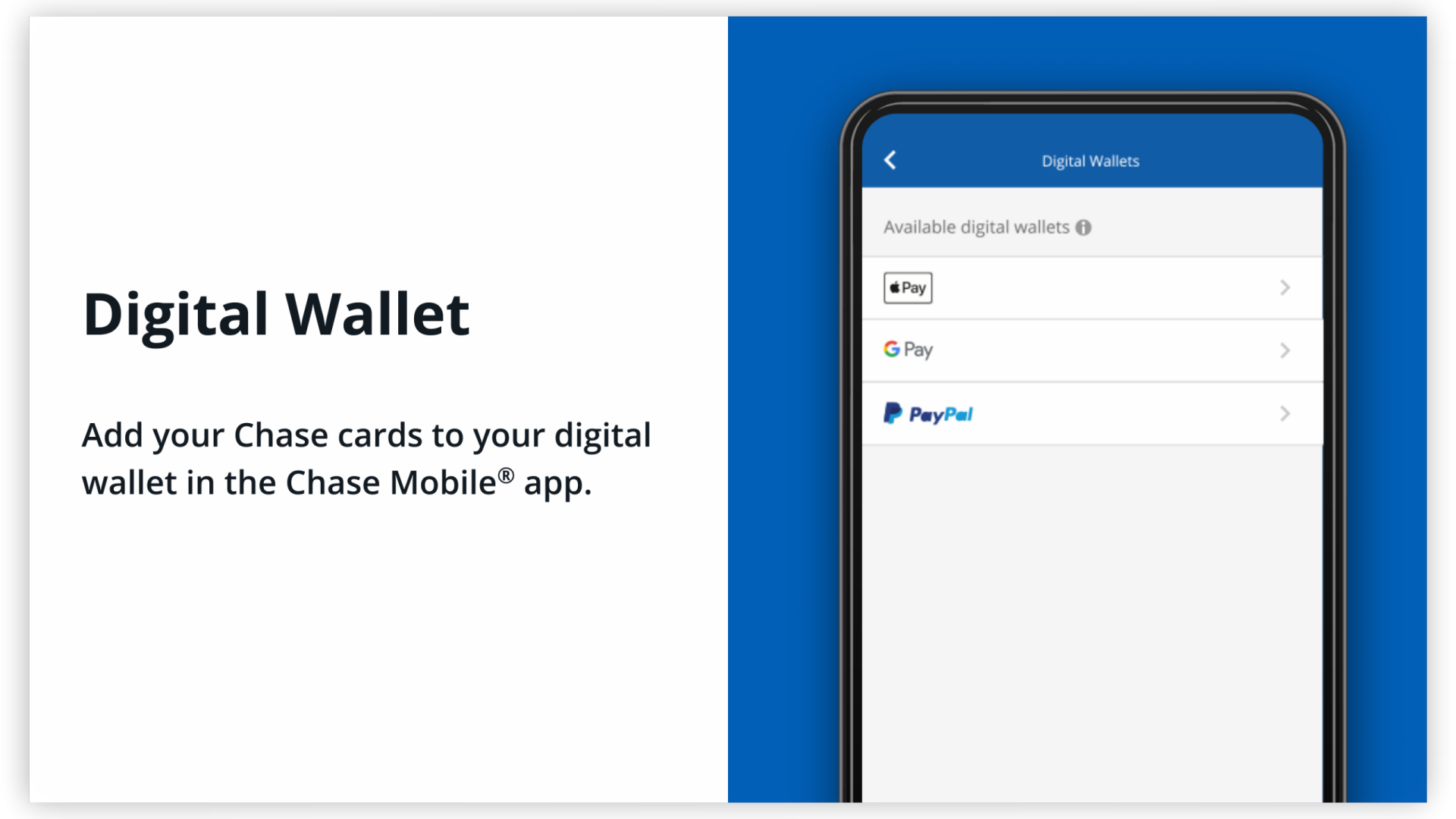
For daily transactions, the Chase app seamlessly integrates with popular digital wallets such as Apple Pay, Google Pay, and Samsung Pay. This integration allows for tokenized payments, where your actual card number is never transmitted to the merchant during a transaction, enhancing security. The app often facilitates adding your Chase debit card to these wallets with minimal steps, promoting the adoption of secure, contactless payment methods. This technological evolution moves beyond physically swiping or inserting cards, opting for more secure and efficient near-field communication (NFC) technologies.
Requesting a Replacement Card and Tracking Delivery
Should your physical card be lost, stolen, or damaged beyond use, the Chase app provides a streamlined process for requesting a replacement. Users can initiate a replacement order directly from the app, often without needing to call customer service. Furthermore, some app iterations offer the ability to track the delivery of your new card, providing an estimated arrival date, which adds transparency and reduces anxiety during the waiting period. This comprehensive lifecycle management of the physical card, all orchestrated through the app, exemplifies the sophisticated capabilities of modern mobile banking platforms.
Conclusion: Balancing Convenience with Robust Digital Security
The Chase Mobile App’s ability to display your debit card number is a testament to the ongoing evolution of digital banking. It merges convenience with sophisticated technological security, empowering users with instant access to crucial financial information while offering a suite of tools for proactive card management. However, the effectiveness of these technological safeguards ultimately hinges on informed user practices. By understanding the underlying security mechanisms, adhering to best practices for digital hygiene, and actively utilizing the app’s comprehensive features, users can confidently navigate the digital financial landscape, balancing the unparalleled convenience of mobile access with an unwavering commitment to personal and financial security. As technology continues to advance, the symbiotic relationship between secure app design and vigilant user behavior will remain the cornerstone of a safe and efficient digital banking experience.
aViewFromTheCave is a participant in the Amazon Services LLC Associates Program, an affiliate advertising program designed to provide a means for sites to earn advertising fees by advertising and linking to Amazon.com. Amazon, the Amazon logo, AmazonSupply, and the AmazonSupply logo are trademarks of Amazon.com, Inc. or its affiliates. As an Amazon Associate we earn affiliate commissions from qualifying purchases.