
The question “who owns Chase Manhattan Bank?” resonates with a deep historical curiosity, touching upon the evolution of American finance and the enduring legacy of one of its most iconic institutions. However, to answer it accurately, we must first understand a critical point: “Chase Manhattan Bank” as a distinct, standalone entity no longer exists. Its esteemed name and formidable legacy are now integral components of JPMorgan Chase & Co., a global financial services behemoth that stands as one of the largest and most influential banks in the world.
This transformation from a venerable New York bank to a cornerstone of a multinational financial conglomerate is a story of strategic mergers, market consolidation, and the dynamic forces that have shaped modern capitalism. Understanding who “owns” it today requires looking beyond a single individual or family and instead examining the intricate web of public ownership that characterizes most major corporations in the 21st century. Essentially, JPMorgan Chase & Co., and by extension the “Chase” brand and its consumer banking operations, is owned by its shareholders – a diverse group comprising millions of individual investors, institutional funds, and pension plans worldwide.
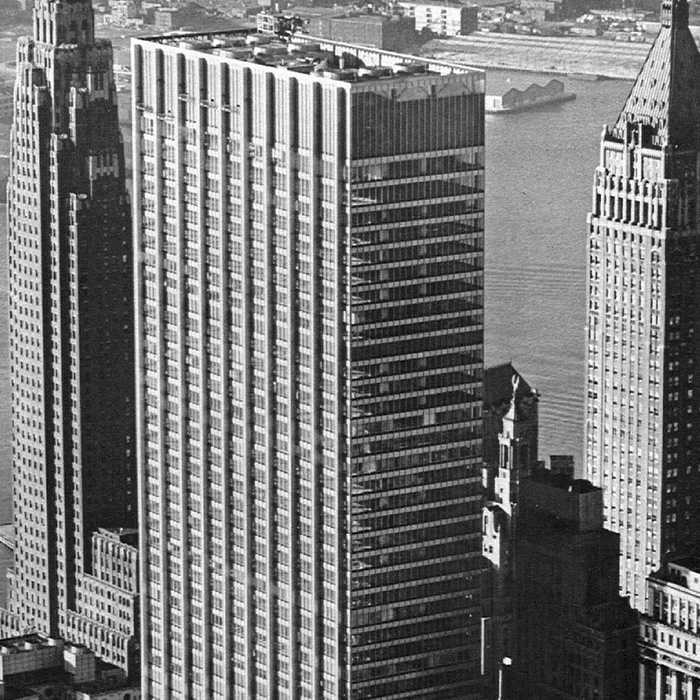
The Formative Years: From Separate Entities to a Financial Powerhouse
The story of Chase Manhattan Bank is a rich tapestry woven from the histories of several pioneering financial institutions. Its journey reflects the growth of American commerce and finance, from early colonial enterprises to a global economic superpower.
The Genesis of Chase and Manhattan
The roots of what would become Chase Manhattan Bank trace back to two distinct and significant institutions: the Bank of the Manhattan Company and Chase National Bank. The Bank of the Manhattan Company was founded in 1799 by Aaron Burr, initially as a water supply company for New York City, ingeniously leveraging a clause in its charter to also engage in banking. This early dual purpose underscores the entrepreneurial spirit of the era and laid the groundwork for a financial institution that would adapt and thrive for centuries. It quickly became a prominent player in New York’s nascent financial scene, serving a growing metropolitan area with an increasing demand for banking services.
Chase National Bank, on the other hand, was established in 1877 by John Thompson, named in honor of Salmon P. Chase, a former U.S. Treasury Secretary and Chief Justice of the United States. From its inception, Chase National aimed to cater to the financial needs of businesses and individuals, steadily growing its influence and asset base. By the early 20th century, both banks had cemented their reputations as formidable financial institutions, each with a distinct client base and strategic focus. The Bank of the Manhattan Company was particularly known for its strong ties to New York’s municipal and commercial life, while Chase National grew through strategic acquisitions and a focus on corporate banking.
Strategic Mergers and Expansion: Forging a Unified Force
The mid-20th century saw a wave of consolidation in the banking sector, driven by desires for increased scale, diversified services, and expanded geographic reach. The merger that ultimately created “Chase Manhattan Bank” occurred in 1955, bringing together the Bank of the Manhattan Company and Chase National Bank. This was a landmark event, combining two titans into a single, even more powerful entity. The newly formed Chase Manhattan Bank quickly established itself as one of the largest and most influential banks globally.
Under the leadership of figures like David Rockefeller, Chase Manhattan Bank became a symbol of American financial power and global reach. It played a crucial role in international finance, financing major infrastructure projects, facilitating international trade, and establishing a presence in numerous countries around the world. Its blue-chip corporate client list was extensive, and its innovative approaches to banking helped shape the industry. Throughout the latter half of the 20th century, Chase Manhattan Bank continued to expand, both domestically and internationally, through organic growth and further strategic acquisitions. It diversified its services to include retail banking, credit cards, investment banking, and asset management, adapting to the evolving needs of its customers and the global financial markets. This period of expansion cemented its status as a universal bank, capable of serving a vast spectrum of financial needs, from individual consumers to multinational corporations.
The Birth of JPMorgan Chase & Co.: A New Era of Financial Consolidation
The turn of the millennium marked another pivotal moment in the history of this financial powerhouse, as Chase Manhattan Bank engaged in a transformative merger that would redefine its identity and market position.
The Landmark Merger of 2000
The year 2000 witnessed a monumental event in the financial world: the merger of Chase Manhattan Corporation and J.P. Morgan & Co. This was not just another acquisition; it was a fusion of two legendary names, each carrying immense prestige and historical significance. Chase Manhattan Corporation, by this time, was a diversified financial services provider with a strong presence in consumer banking, credit cards, and investment banking, built upon the foundation of its 1955 merger. J.P. Morgan & Co., on the other hand, was the quintessential investment bank, a firm synonymous with sophisticated institutional finance, high-net-worth clients, and a legacy stretching back to the iconic John Pierpont Morgan himself.
The combined entity was christened JPMorgan Chase & Co., signaling the creation of a new, even more formidable financial institution. The merger was valued at approximately $36 billion, creating at the time the third-largest banking company in the United States by market capitalization. This was a strategic move designed to create a financial institution with unparalleled breadth and depth across all facets of the financial industry. It aimed to harness Chase’s extensive retail network and consumer banking prowess with J.P. Morgan’s elite investment banking, asset management, and private banking capabilities.
Strategic Rationale: Why the Titans United
The rationale behind the merger was multifaceted and deeply rooted in the changing dynamics of the global financial landscape at the turn of the 21st century.
Firstly, there was a drive for scale and diversification. The financial industry was experiencing increasing competition, regulatory shifts, and the need for global reach. By combining forces, JPMorgan Chase & Co. could offer an almost complete suite of financial products and services, from checking accounts and mortgages to complex derivatives trading and M&A advisory. This diversification helped to mitigate risks and capitalize on opportunities across different market segments.
Secondly, the merger aimed to create a “universal bank” model capable of competing with global peers like Citigroup and Bank of America. The idea was to integrate consumer and corporate banking, allowing for cross-selling opportunities and a more comprehensive client relationship strategy. Chase’s robust consumer banking franchise provided a stable funding base through deposits, which could then be leveraged by J.P. Morgan’s capital-intensive investment banking operations.
Thirdly, the deal was about combining complementary strengths. Chase brought its vast branch network, leading credit card business, and strong middle-market corporate banking relationships. J.P. Morgan contributed its unparalleled reputation in investment banking, its expertise in capital markets, and its prestigious private wealth management division. The synergy was expected to create an institution that was more than the sum of its parts, capable of commanding a larger market share and offering more value to its clients. The merger represented a bold statement about the future of finance, emphasizing integration and global leadership in a rapidly evolving world.
Understanding JPMorgan Chase & Co.’s Ownership Structure
With Chase Manhattan Bank now fully integrated into JPMorgan Chase & Co., the question of ownership shifts to this larger entity. Like most major corporations in today’s global economy, JPMorgan Chase & Co. is not owned by a single individual or family; it is a publicly traded company with a widely dispersed ownership structure.

A Publicly Traded Entity: NYSE and Beyond
JPMorgan Chase & Co. is a publicly traded company, which means its shares are bought and sold on stock exchanges. Its primary listing is on the New York Stock Exchange (NYSE) under the ticker symbol JPM. This public status implies that ownership is distributed among anyone who purchases shares in the company. When you buy a share of JPM stock, you become a part-owner of the company, with proportional rights to its earnings and assets, and a say in its governance through voting rights.
The valuation of JPMorgan Chase & Co. on the stock market fluctuates daily based on investor sentiment, financial performance, economic outlooks, and various other market factors. Its market capitalization—the total value of all its outstanding shares—often places it among the largest companies globally, reflecting its immense financial power and influence. Being publicly traded also means the company is subject to stringent regulatory oversight from bodies like the Securities and Exchange Commission (SEC), ensuring transparency and accountability to its shareholders and the broader market.
Who Are the Shareholders? The Collective Ownership Model
The ownership of JPMorgan Chase & Co. is incredibly diverse and represents a classic example of dispersed ownership common in large multinational corporations. No single entity or individual holds a majority stake that would grant them absolute control over the company. Instead, ownership is distributed among:
- Institutional Investors: These are large organizations that invest on behalf of their clients or members. They represent the largest block of shareholders for JPM. Prominent examples include:
- Mutual Funds and Exchange-Traded Funds (ETFs): Investment vehicles managed by firms like Vanguard, BlackRock, State Street, and Fidelity, which pool money from millions of individual investors to buy diversified portfolios, including JPM stock.
- Pension Funds: Funds managed for the retirement savings of public and private sector employees.
- Sovereign Wealth Funds: State-owned investment funds from various countries.
- Hedge Funds: Investment funds that employ diverse strategies to generate high returns.
- Individual Investors: Millions of ordinary people around the world who buy JPM shares directly, often through brokerage accounts, as part of their personal investment portfolios for retirement, wealth accumulation, or income.
- Company Insiders: Executives, directors, and employees of JPMorgan Chase & Co. who own shares in the company, often as part of their compensation packages or through employee stock purchase programs. While their combined holdings can be significant, they rarely constitute a controlling interest.
This collective ownership model means that the company’s strategic direction and major decisions are influenced by the collective voting power of these shareholders, exercised through annual general meetings and proxy voting. The goal of the company’s management is to generate value for this diverse group of owners.
The Role of the Board of Directors and Management
While shareholders are the ultimate owners, the day-to-day operations and strategic oversight of JPMorgan Chase & Co. are managed by its Board of Directors and its senior executive team.
The Board of Directors is elected by the shareholders and is responsible for representing their interests. The board provides oversight of management, approves major strategic initiatives, ensures corporate governance, and makes decisions on critical matters such as executive compensation and dividend policies. Its members are typically a mix of independent directors (outside experts) and executive directors (senior management, like the CEO).
The senior executive team, led by the CEO (currently Jamie Dimon), is responsible for the operational management of the bank, executing the strategies approved by the board, and driving financial performance. They are accountable to the board and, by extension, to the shareholders. This separation of ownership (shareholders) and control (board and management) is a hallmark of modern corporate governance and aims to ensure professional management while maintaining accountability to the true owners.
The Enduring Impact of the “Chase” Brand
Despite the structural shift following the merger with J.P. Morgan & Co., the “Chase” brand continues to be a vibrant and dominant force within the larger JPMorgan Chase & Co. ecosystem, particularly in the realm of consumer finance.
Consumer Banking Dominance and Market Presence
The “Chase” brand is primarily associated with JPMorgan Chase & Co.’s consumer and community banking operations. This division encompasses a vast network of retail branches, ATM services, and a comprehensive suite of consumer financial products, including checking and savings accounts, credit cards, mortgages, auto loans, and small business banking. It is through these services that millions of Americans interact daily with the legacy of Chase Manhattan Bank.
The ubiquity of Chase branches across major U.S. cities, its extensive credit card programs (like Chase Sapphire and Freedom), and its robust digital banking platforms have cemented its position as one of the largest and most recognized consumer banks in the United States. The brand’s enduring strength is a testament to its long history of serving individual customers and small businesses, a legacy that JPMorgan Chase & Co. has strategically preserved and amplified. The focus on the Chase brand for consumer services allows JPMorgan Chase & Co. to leverage a name that is widely recognized and trusted by the general public, while the “J.P. Morgan” brand is typically reserved for its more institutional and high-net-worth client services.
Beyond Retail: The Broader Scope of JPMorgan Chase
While “Chase” dominates the consumer front, JPMorgan Chase & Co. is a truly diversified financial services firm, operating across several key segments, each a financial powerhouse in its own right:
- Corporate & Investment Bank (CIB): This segment provides a full range of investment banking, market-making, prime brokerage, and treasury and securities services to corporations, investors, financial institutions, and government entities worldwide. This is where the legacy of J.P. Morgan & Co. is most evident, dealing with large-scale financial transactions, mergers and acquisitions, and capital raising.
- Asset & Wealth Management: This division offers investment management services across various asset classes, including equities, fixed income, real estate, and hedge funds, to institutional clients and high-net-worth individuals. It also provides private banking and wealth advisory services.
- Commercial Banking: This segment serves mid-sized corporations, large private companies, and public sector entities with financial solutions, including lending, treasury services, and investment banking products.
- Consumer & Community Banking (CCB): As mentioned, this is the “Chase” brand’s domain, focusing on personal banking, small business banking, credit cards, and home lending.
This expansive structure means that while the name “Chase Manhattan Bank” may evoke a nostalgic image of a bygone era, its spirit and operational ethos continue to thrive within a much larger, more integrated, and globally influential financial institution that is owned, collectively, by millions of investors worldwide.
Conclusion
The question “who owns Chase Manhattan Bank?” leads us on a journey through the annals of American finance, revealing a tale of evolution, consolidation, and strategic foresight. The singular entity known as Chase Manhattan Bank ceased to exist in 2000, merging with the venerable J.P. Morgan & Co. to form JPMorgan Chase & Co. This monumental union created a global financial services leader, one that skillfully combines the consumer banking strength of Chase with the institutional prowess of J.P. Morgan.
Today, JPMorgan Chase & Co. is a publicly traded corporation, meaning its ownership is distributed among a vast and diverse group of shareholders. These include millions of individual investors, as well as large institutional investors such as mutual funds, pension funds, and sovereign wealth funds. No single individual or entity holds a controlling stake; rather, ownership is dispersed, reflecting a modern corporate governance model where the company’s direction is overseen by a Board of Directors accountable to this collective shareholder base.
While the specific name “Chase Manhattan Bank” is now a historical reference, its powerful brand lives on through JPMorgan Chase & Co.’s prominent “Chase” consumer and community banking operations. This legacy ensures that the innovative spirit and commitment to financial service, born from two centuries of banking excellence, continue to influence the global financial landscape. In essence, Chase Manhattan Bank’s ownership has evolved from a concentrated stake in a singular entity to a shared investment in one of the world’s most significant and influential financial institutions, truly owned by the global market.
aViewFromTheCave is a participant in the Amazon Services LLC Associates Program, an affiliate advertising program designed to provide a means for sites to earn advertising fees by advertising and linking to Amazon.com. Amazon, the Amazon logo, AmazonSupply, and the AmazonSupply logo are trademarks of Amazon.com, Inc. or its affiliates. As an Amazon Associate we earn affiliate commissions from qualifying purchases.