
Navigating the complexities of Social Security benefits can feel like deciphering a complex financial puzzle. For millions of Americans, these benefits represent a cornerstone of their retirement income, providing a vital safety net that often complements personal savings and pensions. Yet, despite its widespread importance, many individuals lack a clear understanding of how their benefits are calculated, the factors that influence the final amount, or the strategic decisions that can significantly impact their future payouts. This article aims to demystify the process, offering a comprehensive guide to understanding, estimating, and ultimately maximizing your Social Security benefits. By delving into the intricate formulas, the critical role of your earnings history, and the timing of your claim, we’ll equip you with the knowledge needed to make informed decisions about this crucial aspect of your financial future.

Understanding the Foundation: How Social Security Benefits Are Calculated
The calculation of your Social Security benefits is a precise, multi-step process designed to reflect your lifetime earnings. It’s not a simple average, nor is it a flat rate; rather, it’s a progressive formula that generally provides a higher percentage of replacement income to lower-income workers. At its core, the system aims to provide a basic level of financial security in retirement, disability, or for survivors.
Average Indexed Monthly Earnings (AIME)
The first crucial step in determining your benefit amount is calculating your Average Indexed Monthly Earnings (AIME). The Social Security Administration (SSA) looks at your entire earnings history subject to Social Security taxes. From all your years of earnings, they identify your 35 highest-earning years. If you have fewer than 35 years of earnings, the remaining years will be recorded as zeros, which can significantly lower your AIME.
Before calculating the average, your past earnings are “indexed” to account for changes in the national average wage over time. This indexing ensures that earlier earnings are brought up to a more current value, reflecting their purchasing power relative to today’s economy. For instance, an income earned in the 1980s will be adjusted upwards to reflect what that income would be worth in a more recent year (typically two years before you turn 62, the earliest age you can claim retirement benefits). This process helps to ensure that your benefit calculation accurately reflects your lifetime economic contribution, rather than penalizing those who had significant earnings earlier in their careers.
Primary Insurance Amount (PIA)
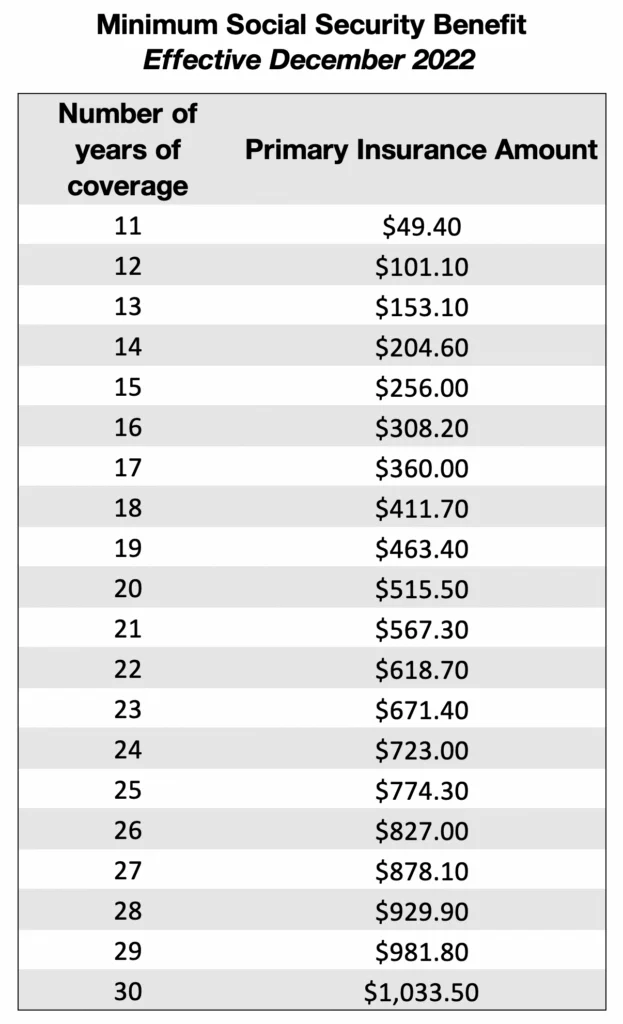
Once your AIME is determined, the SSA uses a progressive formula to calculate your Primary Insurance Amount (PIA). The PIA is the benefit you are entitled to receive if you claim benefits at your Full Retirement Age (FRA). The formula is progressive because it applies different percentages to different segments of your AIME. These segments are defined by “bend points” – specific dollar amounts that change annually.
For example, for someone turning 62 in 2024, the PIA is calculated as:
- 90% of the first $1,174 of AIME, plus
- 32% of AIME between $1,174 and $7,078, plus
- 15% of AIME over $7,078.
These percentages and bend points ensure that individuals with lower lifetime earnings receive a higher percentage of their earnings back in benefits compared to those with higher lifetime earnings. It’s a mechanism designed to provide a more substantial safety net for those who earned less throughout their working lives. The PIA is the foundational figure; all other adjustments, such as claiming early or late, or spousal benefits, are typically based on this amount.
The Bend Points: A Progressive Formula
The bend points are critical to understanding the progressive nature of Social Security benefits. As noted, they are specific dollar thresholds in the AIME formula. Each year, the SSA adjusts these bend points to reflect changes in the national average wage index. This adjustment ensures that the benefit formula remains relevant and fair across different generations of retirees.
For instance, the first bend point ensures that the initial segment of your earnings receives a 90% replacement rate. This is a significant factor for individuals with low to moderate incomes. As your AIME increases beyond the first bend point, the replacement rate drops to 32% for the next segment, and then to 15% for any AIME above the second bend point. This tiered approach is a cornerstone of Social Security’s design, aiming to provide a meaningful level of income protection for all participants while recognizing differing levels of career earnings. Understanding the PIA and the bend points is essential because it is the baseline from which all other calculations, such as early or delayed retirement benefits, are derived.
Key Factors Influencing Your Benefit Amount
While the PIA provides the baseline, several critical factors can significantly alter the actual monthly benefit you receive. These factors are within your control to varying degrees and understanding them is paramount for strategic planning.
Your Earnings Record: The 35 Most High-Earning Years
As discussed, your AIME is based on your 35 highest-earning years. This means that a robust and consistent work history, particularly during your peak earning years, is crucial. If you work for less than 35 years, each year short of that mark will be counted as a zero in the calculation, substantially reducing your AIME and, consequently, your PIA.
Conversely, continuing to work past 35 years, especially if your current earnings are higher than some of your earlier indexed years, can replace a lower-earning year with a higher one. This “dropping out” of lower-earning years effectively increases your AIME and, therefore, your monthly benefit. This highlights the importance of maintaining a strong earning record throughout your career and considering the impact of extended employment on your Social Security benefits.
Your Claiming Age: Early vs. Full Retirement Age (FRA) vs. Delayed Retirement Credits
The age at which you choose to start receiving benefits is perhaps the single most impactful decision you’ll make regarding your Social Security.
- Early Retirement (Age 62): You can start receiving benefits as early as age 62. However, claiming before your Full Retirement Age (FRA) will result in a permanent reduction of your monthly benefit. The reduction can be as much as 30% if your FRA is 67 and you claim at 62. This reduction is applied pro-rata for each month you claim early.
- Full Retirement Age (FRA): Your FRA depends on your birth year. For those born between 1943 and 1954, FRA is 66. For those born in 1960 or later, FRA is 67. If you claim at your FRA, you receive 100% of your Primary Insurance Amount (PIA).
- Delayed Retirement Credits (Up to Age 70): For every month you delay claiming benefits past your FRA, up to age 70, you earn Delayed Retirement Credits (DRCs). These credits permanently increase your monthly benefit. The annual increase is typically 8% per year (or 2/3 of 1% per month), resulting in a potential 24-32% increase above your PIA if you wait until age 70, depending on your FRA.
The decision of when to claim involves a careful balance of financial need, health status, and other retirement income sources. While claiming early provides immediate income, waiting can significantly boost your lifetime benefits, especially if you have a long life expectancy.
Cost-of-Living Adjustments (COLAs)
Once you begin receiving Social Security benefits, they are subject to annual Cost-of-Living Adjustments (COLAs). COLAs are designed to help your benefits keep pace with inflation, maintaining your purchasing power over time. Each October, the SSA announces whether a COLA will be applied for the following year, based on the Consumer Price Index for Urban Wage Earners and Clerical Workers (CPI-W). While COLAs are not guaranteed every year, they have been a regular feature of Social Security, providing an essential hedge against inflation for retirees.

Spousal and Survivor Benefits
Social Security also provides benefits for spouses and survivors, which can be a critical component of a family’s financial security.
- Spousal Benefits: A spouse can claim benefits based on their spouse’s work record if it results in a higher benefit than their own. The maximum spousal benefit is typically 50% of the higher earner’s PIA if claimed at the spouse’s FRA. If claimed early, it will be reduced. Certain rules apply, such as the spouse needing to be at least 62, or caring for a child under 16 or disabled.
- Survivor Benefits: When a worker dies, certain family members may be eligible for survivor benefits. This can include a surviving spouse, children, or dependent parents. A widow or widower can receive up to 100% of the deceased worker’s benefit if claimed at their FRA. If claimed earlier, it will be reduced. There are specific rules regarding age, marital status, and other factors that determine eligibility and benefit amounts. These benefits are a vital form of life insurance provided by the Social Security system.
Discovering Your Estimated Benefits: Tools and Resources
While understanding the calculation methods is important, knowing your specific estimated benefit amounts is even more practical. Fortunately, the Social Security Administration provides excellent tools and resources to help you do just that.
The Social Security Statement
The Social Security Statement is a personalized report that provides a snapshot of your earnings history and estimated benefits. Historically, the SSA mailed these statements annually to workers over age 25. While paper statements are now sent primarily to those over 60 who haven’t set up an online account, you can (and should) easily access yours electronically.
Your statement details your yearly earnings record as reported to the SSA, estimated retirement benefits at various ages (62, FRA, and 70), and estimated disability and survivor benefits. It also includes information about Medicare. Reviewing this statement regularly is crucial to ensure your earnings record is accurate, as errors could negatively impact your future benefits. If you find any discrepancies, it’s essential to contact the SSA to correct them.
Your My Social Security Account Online
The most convenient and comprehensive way to access your Social Security information is through your “My Social Security” online account. This secure online portal allows you to:
- View your complete earnings record.
- Get personalized estimates of your future benefits based on different retirement ages.
- Request a replacement Social Security card.
- Check the status of an application.
- Manage your benefits if you are already receiving them.
Creating an account is straightforward and provides immediate access to your personalized data, making it an invaluable tool for retirement planning. It’s recommended that all workers establish and regularly check their My Social Security account.
Online Calculators and Professional Advice
Beyond the SSA’s official resources, various reputable financial planning websites offer Social Security benefit calculators. These tools can help you model different claiming strategies, factor in spousal benefits, and even account for future earnings projections to provide more detailed estimates. However, it’s crucial to use calculators from trusted sources to ensure accuracy.
For complex situations, or if you want personalized guidance tailored to your specific financial circumstances, consulting a qualified financial advisor is highly recommended. A financial planner specializing in retirement can help you integrate your Social Security strategy into your broader financial plan, considering tax implications, other income sources, and your overall retirement goals. They can also assist with sophisticated claiming strategies, particularly for married couples, to maximize joint lifetime benefits.
Strategies to Maximize Your Social Security Benefits
Maximizing your Social Security benefits isn’t about finding loopholes; it’s about making informed decisions based on the system’s rules and your personal circumstances. Strategic planning can significantly increase the total lifetime benefits you and your family receive.
Working Longer and Earning More
One of the most direct ways to increase your Social Security benefits is to enhance your earnings record. As we’ve learned, your benefit is based on your 35 highest-earning indexed years.
- Continue Working Past 35 Years: If you’ve already worked for 35 years but your current earnings are higher than some of your earlier, lower-earning years (even after indexing), continuing to work will replace those lower years with higher ones, boosting your AIME.
- Increase Your Income: Any increase in your annual earnings, up to the Social Security taxable earnings limit, will contribute positively to your AIME, assuming you haven’t already hit 35 years of maximum earnings.
- Avoid Gaps in Employment: While unavoidable at times, long periods out of the workforce (e.g., for childcare, caregiving, or unemployment) can result in more zero-earning years being factored into your 35-year average, which will reduce your benefits. If possible, minimizing such gaps or working part-time during these periods can help.
Strategic Claiming Decisions
The decision of when to claim benefits is arguably the most impactful choice.
- Delaying for Delayed Retirement Credits: If you are healthy and don’t immediately need the income, delaying benefits past your FRA, up to age 70, can result in a substantial and permanent increase in your monthly payment. This “guaranteed return” is often compared favorably to other conservative investments.
- Considering Life Expectancy: While no one has a crystal ball, a realistic assessment of your health and family longevity trends can help inform your decision. If you expect to live a long life, delaying benefits is often the financially optimal choice.
- Financial Need vs. Maximization: For some, the immediate need for income at 62 outweighs the benefits of delaying. It’s crucial to balance potential maximization with current financial realities. There’s no single “best” age for everyone; it’s a personal decision.
Coordinating with Spousal Benefits
For married couples, the claiming decision becomes more complex but also offers greater opportunities for optimization.
- Spousal Benefit Rules: A spouse can claim up to 50% of the higher earner’s PIA. If both spouses have their own work records, they can claim their own benefit or a spousal benefit, whichever is higher.
- “File and Suspend” (Limited Use for Certain Individuals): While largely phased out, some individuals born before January 2, 1954, might still be able to use “file and suspend” strategies to allow their spouse to claim spousal benefits while their own benefit continues to grow with DRCs. This is a niche area and often requires professional advice.
- Maximize the Higher Earner’s Benefit: In many cases, the strategy for couples involves the higher-earning spouse delaying benefits until age 70 to maximize their payout, which then also maximizes potential survivor benefits for the surviving spouse. The lower-earning spouse might claim earlier if their own benefit is low, to provide some income. These coordinated strategies require careful planning.
Considering Other Income and Taxes
Your Social Security benefits are not entirely immune to taxation.
- Provisional Income: Up to 85% of your Social Security benefits can be subject to federal income tax, depending on your “provisional income.” Provisional income includes your adjusted gross income (AGI), tax-exempt interest (like municipal bond interest), and half of your Social Security benefits. If your provisional income exceeds certain thresholds ($25,000 for single filers, $32,000 for married filing jointly), a portion of your benefits becomes taxable.
- State Taxes: Some states also tax Social Security benefits, while many do not. It’s important to understand the tax implications in your state of residence.
- Integrating with Other Retirement Income: Consider how Social Security fits into your overall retirement income strategy. Will delaying Social Security mean you need to draw more heavily from 401(k)s, IRAs, or pensions in early retirement? This can have implications for your taxable income and the longevity of your other assets. A holistic approach to retirement planning, integrating all income sources and potential tax liabilities, is essential for truly maximizing your financial well-being.
In conclusion, understanding “what will my Social Security benefits be” requires more than just a quick glance at an online statement. It involves grasping the underlying calculations, recognizing the profound impact of your earnings history and claiming age, and strategically utilizing the resources available. By taking a proactive approach to learning about and planning for your Social Security, you empower yourself to make decisions that can significantly enhance your financial security and peace of mind throughout your retirement years.
aViewFromTheCave is a participant in the Amazon Services LLC Associates Program, an affiliate advertising program designed to provide a means for sites to earn advertising fees by advertising and linking to Amazon.com. Amazon, the Amazon logo, AmazonSupply, and the AmazonSupply logo are trademarks of Amazon.com, Inc. or its affiliates. As an Amazon Associate we earn affiliate commissions from qualifying purchases.