
Defining a “good” annual salary for a single person is far from a one-size-fits-all answer. It’s a deeply personal metric, influenced by a myriad of factors ranging from geographical location and lifestyle choices to individual financial goals and aspirations. While statistical averages can offer a general snapshot, a truly “good” salary empowers an individual to meet their needs comfortably, pursue their desired lifestyle, save for the future, and enjoy a degree of financial freedom without undue stress. This article delves into the various dimensions that shape this crucial financial question, offering insights and practical frameworks to help single individuals determine what “good” means for them.

Defining “Good”: More Than Just a Number
The pursuit of a “good” salary often starts with a simple numerical target, but its true essence lies in the quality of life and financial security it affords. For a single person, without the shared income or expenses of a partner or family unit, the responsibility and the potential for financial independence are uniquely amplified.
The Subjectivity of “Good”
What one person considers a “good” salary, another might find insufficient, and vice versa. This subjectivity stems from varying priorities. For some, a good salary means being able to afford a comfortable apartment in a vibrant city, dining out regularly, and taking annual international trips. For others, it might mean covering essential bills, diligently saving for a down payment on a house in a quieter suburb, and having peace of mind that an emergency fund is robust. The definition evolves with age, career stage, personal values, and even global economic shifts. It’s not just about earning a high figure, but about how effectively that figure translates into achieving personal contentment and long-term security.
Distinguishing Between Needs, Wants, and Savings
A fundamental step in assessing a “good” salary is to clearly delineate between financial needs, wants, and savings goals.
- Needs encompass essential living expenses: housing (rent/mortgage), utilities, groceries, transportation, health insurance, and basic communication. These are non-negotiable costs required for survival and daily functioning.
- Wants are discretionary expenses that enhance quality of life but are not strictly necessary: entertainment, dining out, subscriptions, vacations, designer clothing, or hobbies. These contribute significantly to personal enjoyment and lifestyle.
- Savings are funds set aside for future security and goals: an emergency fund, retirement contributions, down payments for major purchases (house, car), investments, or funding for education.
A “good” salary ensures that needs are met comfortably, a reasonable portion of wants can be indulged without guilt, and consistent contributions can be made towards savings, providing a buffer against unforeseen circumstances and building wealth for the future. For a single person, balancing these three categories effectively is paramount for sustained financial well-being.
The Psychological Aspect of Financial Comfort
Beyond the raw numbers, a “good” salary profoundly impacts one’s psychological state. Financial stress is a leading cause of anxiety and poor mental health. Conversely, financial comfort brings a sense of security, reduces daily worry, and opens up opportunities. It means not living paycheck to paycheck, having the capacity to absorb unexpected expenses without falling into debt, and feeling empowered to make choices rather than being constrained by financial limitations. For a single individual, this psychological comfort is crucial as there isn’t another income stream to fall back on, making financial resilience a core component of overall well-being.
Key Factors Influencing Your “Good” Salary Threshold
The number representing a “good” salary is highly dynamic, shaped by several external and internal factors that dictate an individual’s financial reality. Understanding these influences is essential for setting realistic and meaningful income targets.
Geographical Cost of Living Variations
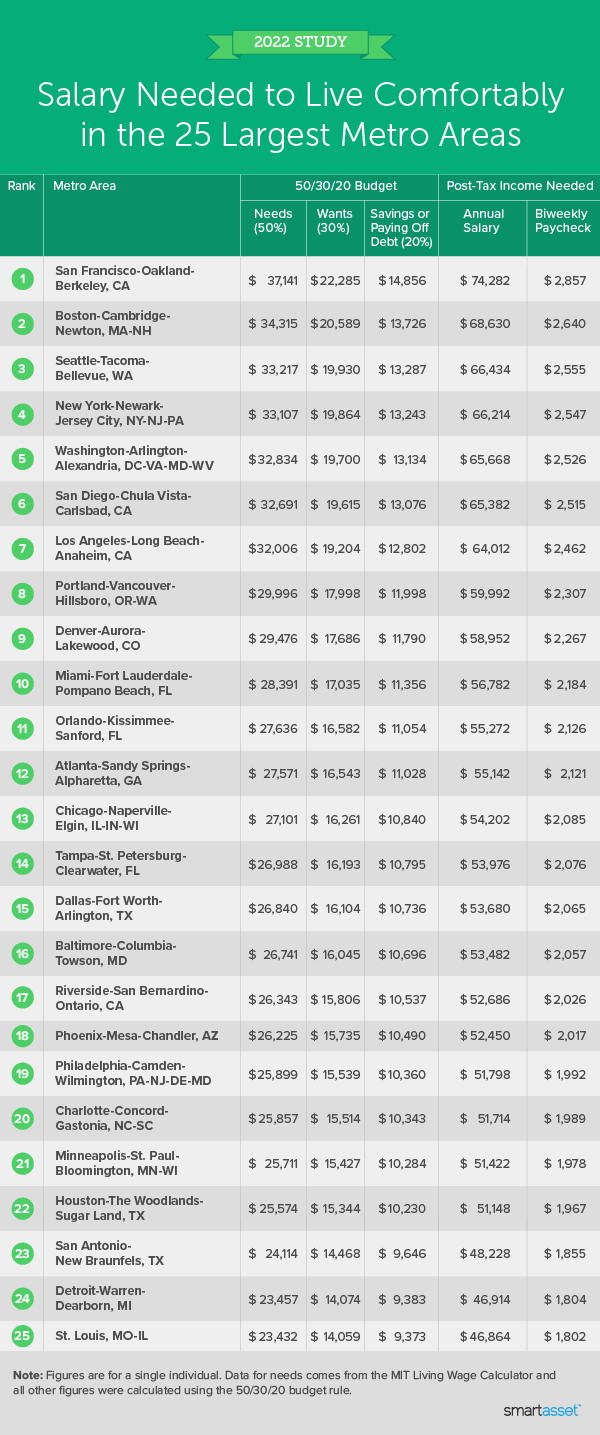
Perhaps the most significant determinant of what constitutes a “good” salary is the cost of living in a particular geographical area. A salary that allows for a luxurious lifestyle in a rural town might barely cover rent and basic necessities in a major metropolitan area like New York City, San Francisco, or London. Housing, transportation, food, and even taxes vary drastically by city, state, or country. For a single person, who bears the entirety of these costs, choosing to live in a high-cost-of-living area necessitates a substantially higher income compared to a more affordable region to achieve the same standard of living and savings potential. Resources like cost-of-living calculators can be invaluable tools for comparing different locations.
Personal Financial Obligations and Goals
Individual financial obligations and aspirations play a crucial role. A single person carrying significant student loan debt, for example, will need a higher income to comfortably manage repayments while also covering living expenses and saving, compared to someone debt-free. Similarly, specific financial goals like early retirement, frequent travel, purchasing property, or investing heavily require a greater disposable income. A “good” salary, in this context, is one that not only covers current obligations but also provides the surplus needed to actively pursue and achieve these long-term financial milestones.
Lifestyle Expectations and Discretionary Spending
Your desired lifestyle directly impacts your income requirements. A minimalist who enjoys cooking at home, cycling to work, and infrequent, budget-friendly entertainment will have different salary needs than someone who prefers eating out frequently, owning a luxury car, subscribing to multiple services, and taking several lavish vacations a year. Discretionary spending, while not essential, significantly contributes to personal happiness and quality of life. For a single person, balancing these lifestyle desires with income is about conscious choices – a “good” salary is one that allows for a comfortable lifestyle that aligns with personal values without compromising financial stability.
Age, Career Stage, and Future Planning
The definition of a good salary often evolves with age and career progression. A recent graduate entering the workforce might consider an entry-level salary “good” as it represents independence and a start. However, as they gain experience, develop skills, and move up the career ladder, their expectations and needs grow. Mid-career professionals typically command higher salaries, reflecting their expertise and increased responsibilities, and often have greater financial obligations like mortgages or family planning, even if single. Later in one’s career, the focus might shift more heavily towards maximizing retirement savings. A “good” salary should therefore be viewed as a dynamic target that adjusts to current life stages and future financial planning imperatives, ensuring long-term financial health.
Benchmarks and Frameworks for Financial Assessment
While personal circumstances dictate the ultimate definition of a “good” salary, established financial benchmarks and rules of thumb can offer valuable guidance and a starting point for assessing financial health. These frameworks help single individuals structure their budgets, prioritize spending, and gauge their financial standing relative to broader recommendations.
The 50/30/20 Rule: A Practical Budgeting Guideline
A widely recommended budgeting framework, the 50/30/20 rule, offers a straightforward way to allocate your after-tax income:
- 50% for Needs: This portion should cover all essential expenses such as housing, utilities, groceries, transportation, insurance, and minimum loan payments.
- 30% for Wants: This is for discretionary spending that enhances your lifestyle, including dining out, entertainment, hobbies, travel, and personal shopping.
- 20% for Savings and Debt Repayment: This crucial segment is dedicated to building an emergency fund, contributing to retirement accounts (401k, IRA), investing, and paying down additional debt beyond minimum payments.
For a single person, if your current salary allows you to comfortably adhere to this rule, it’s a strong indicator that you are earning a “good” income, as it demonstrates a healthy balance between current living, enjoying life, and preparing for the future. If you struggle to allocate 20% to savings, it suggests your salary might be stretched too thin for your current lifestyle or location.
Understanding Median Income Data (with Caveats for Singles)

National and regional median income data can provide context, showing what the “typical” person earns. For example, the U.S. Census Bureau often reports median household income. However, for a single person, simply looking at household income can be misleading, as it often includes multi-earner households. It’s more relevant to seek data on median individual income or, even better, median income for single-person households in your specific area. Even then, these figures are averages and don’t account for variations in cost of living or personal financial goals. They serve as a general benchmark to see where you stand relative to the broader population, but should not be the sole determinant of what is “good” for you.
The Concept of a “Living Wage” vs. a Thriving Wage
A “living wage” is generally defined as the minimum income necessary for a worker to meet their basic needs without recourse to public subsidies. This usually covers housing, food, childcare, healthcare, transportation, and taxes. While a living wage allows one to survive, a “good” salary for a single person typically aims for a thriving wage. A thriving wage not only covers basic needs but also allows for discretionary spending, meaningful savings, debt reduction, and investment, providing financial resilience and the ability to pursue life goals beyond mere subsistence. For a single individual, particularly, aiming for a thriving wage is crucial to build a secure future without the potential support network of shared income.
Debt-to-Income Ratios and Financial Health
Another important benchmark is your debt-to-income (DTI) ratio, which measures how much of your monthly gross income goes towards paying debts. Lenders often use this to assess your ability to manage monthly payments and repay future loans.
- Front-end DTI: Mortgage payments (including property taxes and insurance) as a percentage of gross monthly income.
- Back-end DTI: All monthly debt payments (mortgage, car loans, student loans, credit card minimums) as a percentage of gross monthly income.
While specific ideal ratios vary, generally, a back-end DTI of 36% or less is considered healthy, and 43% is often the maximum for conventional loans. For a single person, maintaining a low DTI is particularly important as it indicates financial flexibility and less reliance on credit, contributing to a sense of financial freedom and less strain on a single income stream. If your debt repayments consume a significant portion of your income, even a high salary might not feel “good.”
Crafting Your Personal Financial Blueprint
Understanding what constitutes a “good” salary for you requires a proactive approach to your personal finances. This involves creating a detailed financial blueprint that aligns your income with your expenses, savings, and long-term goals.
Detailed Budgeting: Tracking Income and Expenses
The cornerstone of any sound financial plan is a meticulously crafted budget. For a single person, tracking every dollar of income and expenditure is non-negotiable. Begin by calculating your net (after-tax) monthly income. Then, itemize all your fixed expenses (rent, loan payments, insurance premiums, subscriptions) and variable expenses (groceries, dining out, entertainment, utilities, transportation). Tools like spreadsheets, budgeting apps, or even a simple notebook can help. The goal is to gain a clear picture of where your money is going and identify areas where you can optimize spending. A “good” salary is one that, after budgeting, leaves a positive surplus, allowing for both discretionary spending and robust savings. If your budget consistently shows a deficit or barely breaks even, your current income may not be sufficient for your desired lifestyle or financial goals.
Prioritizing Savings: Emergency Funds, Retirement, and Big Buys
For a single person, savings are an even more critical buffer against life’s uncertainties. Without a second income to fall back on, building robust savings is paramount.
- Emergency Fund: This should be your first priority. Aim for 3-6 months’ worth of essential living expenses, kept in an easily accessible, high-yield savings account. This fund protects you from job loss, medical emergencies, or unexpected car repairs without resorting to debt.
- Retirement: Start saving for retirement as early as possible. Maximize contributions to tax-advantaged accounts like a 401(k) (especially if your employer offers a match – free money!) and an IRA. The power of compound interest is immense, and early contributions significantly impact your future wealth.
- Big Buys & Short-Term Goals: Set aside funds for specific goals like a down payment on a home, a new car, a vacation, or further education. Separate sinking funds for these goals prevent dipping into your emergency savings or incurring debt. A “good” salary facilitates consistent contributions to all these categories.
Strategic Debt Management
Debt, particularly high-interest consumer debt like credit card balances, can quickly erode even a seemingly “good” salary. For a single person, managing debt strategically is vital. Prioritize paying off high-interest debt first. Consider methods like the debt snowball (paying off smallest balances first for psychological wins) or debt avalanche (paying off highest interest rates first to save money). Refinancing student loans or personal loans to lower interest rates can also free up cash flow. A good salary allows you to not only meet minimum debt payments but also aggressively tackle principal amounts, leading to debt freedom sooner and redirecting those funds towards wealth-building.
Beyond the Salary: Total Compensation and Benefits
When evaluating a “good” income, look beyond the gross annual salary alone. Consider the total compensation package. This includes:
- Health Insurance: Employer-provided health, dental, and vision insurance can be a significant cost saving, especially for a single person who would otherwise pay full premiums.
- Retirement Contributions: Employer match programs for 401(k)s are essentially free money and greatly boost your retirement savings.
- Paid Time Off (PTO): Generous vacation, sick leave, and holidays have monetary value, offering rest and rejuvenation without loss of income.
- Other Benefits: Life insurance, disability insurance, wellness programs, tuition reimbursement, commuter benefits, and professional development opportunities all add to the overall value of your compensation.
A lower base salary coupled with excellent benefits might, in fact, be more financially beneficial than a higher salary with minimal benefits, particularly for a single individual who relies solely on their employer for these provisions. Always evaluate the full package when determining if your compensation is truly “good.”
Strategies for Achieving and Sustaining Financial Well-being
Once you have a clear understanding of what a “good” salary means for you, the next step is to strategizing how to achieve and sustain that level of financial well-being. This involves continuous self-improvement, astute financial decisions, and a proactive approach to career growth.
Career Advancement and Skill Enhancement
One of the most direct paths to increasing your annual salary is through career advancement. This often involves:
- Developing In-Demand Skills: Continuously learning new technologies, software, or industry-specific methodologies makes you a more valuable asset. Online courses, certifications, and workshops can be excellent avenues for this.
- Seeking Promotions: Actively pursue opportunities for promotion within your current organization. Understand the requirements for higher-level positions and work towards meeting them.
- Networking: Building professional relationships can open doors to new opportunities, mentorship, and insights into industry compensation trends.
- Performance Excellence: Consistently exceeding expectations in your role demonstrates your value and strengthens your case for raises and promotions. For a single person, investing in your human capital through skill enhancement is a powerful strategy to control your income trajectory.
Mastering Salary Negotiation
Many people leave money on the table by not negotiating their salary for new jobs or raises. Effective negotiation can significantly impact your annual income.
- Research Market Value: Before any negotiation, thoroughly research the average salary for your role, experience level, and location. Websites like Glassdoor, LinkedIn, and the Bureau of Labor Statistics can provide this data.
- Highlight Your Value: Be prepared to articulate your accomplishments, skills, and the unique value you bring to the organization. Quantify your achievements whenever possible.
- Practice and Confidence: Rehearse your negotiation points. Approach the discussion with confidence and a professional demeanor.
- Consider the Full Package: Negotiate not just the base salary, but also benefits, bonuses, stock options, and other perks that contribute to your total compensation. For a single person, successfully negotiating an extra few thousand dollars can make a substantial difference in meeting financial goals and achieving a “good” salary.
Diversifying Income Streams: Side Hustles and Investments
While a primary job is the foundation, diversifying your income streams can provide a significant boost to your annual earnings and offer greater financial resilience, particularly for a single individual.
- Side Hustles: Explore opportunities to leverage your skills or hobbies outside of your main job. This could include freelancing, consulting, teaching, gig work (e.g., driving, delivery), or creating and selling products. A successful side hustle can turn discretionary income into consistent savings or investment capital.
- Investments: Once your emergency fund is solid and high-interest debt is managed, investing is crucial for long-term wealth growth. Learn about different investment vehicles like stocks, bonds, mutual funds, ETFs, and real estate. Start with diversified, low-cost index funds or target-date funds, especially if you are new to investing. Consistent contributions, even small ones, compound over time, making your money work for you and supplementing your primary income.
Continuous Financial Education and Planning
Financial well-being is not a destination but a continuous journey. Staying informed and regularly reviewing your financial plan is essential.
- Stay Updated: Follow personal finance news, read books, listen to podcasts, and engage with reputable financial education resources. Understand changes in tax laws, investment strategies, and economic trends.
- Regular Review: Annually (or more frequently) review your budget, savings goals, investment portfolio, and debt repayment progress. Adjust your plan as life circumstances change, such as a promotion, a move, or new financial goals.
- Seek Professional Advice: For complex financial situations or significant life events, consider consulting a certified financial planner. They can provide personalized advice, help optimize your investments, and ensure you’re on track to meet your long-term objectives.
Ultimately, a “good” annual salary for a single person is not a fixed number but a dynamic, personal benchmark that allows for comfortable living, robust saving, smart investing, and the pursuit of a fulfilling life with minimal financial stress. By understanding the influencing factors, utilizing financial frameworks, and proactively managing and growing your income, you can craft a financial future that truly aligns with your definition of “good.”
aViewFromTheCave is a participant in the Amazon Services LLC Associates Program, an affiliate advertising program designed to provide a means for sites to earn advertising fees by advertising and linking to Amazon.com. Amazon, the Amazon logo, AmazonSupply, and the AmazonSupply logo are trademarks of Amazon.com, Inc. or its affiliates. As an Amazon Associate we earn affiliate commissions from qualifying purchases.