
Navigating the complexities of government benefit programs can be a daunting task, especially when you or a loved one are facing financial insecurity due due to age, blindness, or disability. Supplemental Security Income (SSI) is one such vital program, designed to provide a financial safety net for those in need. Understanding how much SSI will pay is not merely a matter of looking up a single figure; it involves a nuanced calculation based on a variety of personal circumstances, income, and living arrangements. This comprehensive guide aims to demystify SSI payment structures, helping you understand the potential benefits available and the factors that influence them.

SSI is a federal program administered by the Social Security Administration (SSA), but unlike Social Security Disability Insurance (SSDI), it is needs-based. This means eligibility and payment amounts are heavily dependent on an individual’s financial resources and income, not on their prior work history contributions to Social Security taxes. It serves as a crucial lifeline, ensuring a minimum level of income for eligible individuals who meet strict criteria for age, blindness, or disability and fall below certain income and resource thresholds. By delving into the specifics, we can uncover the intricate details that dictate how much an individual can expect to receive.
Understanding Supplemental Security Income (SSI)
Before calculating potential payments, it’s essential to grasp the fundamental nature of SSI. As a needs-based program, SSI is distinct from other Social Security benefits. It provides monthly payments to adults and children with a disability or blindness who have income and resources below specific financial limits, and to people 65 and older without disabilities who also meet the financial criteria. The core philosophy behind SSI is to provide basic financial assistance for food, shelter, and other necessities.
The program’s reach is significant, impacting millions of Americans who might otherwise fall through the cracks of the social safety net. Eligibility is not just about having a disability or being over 65; it’s equally about demonstrating financial need. This distinction is critical because it means that even if you meet the medical criteria for disability, your income and assets will play a substantial role in determining whether you qualify for SSI and, crucially, how much you will receive.
Who is Eligible for SSI?
Eligibility for SSI hinges on a combination of factors: age, disability/blindness, and financial need.
- Age: You must be 65 years or older.
- Blindness: You must meet the SSA’s definition of blindness.
- Disability: You must meet the SSA’s strict definition of disability. This generally means you have a severe physical or mental impairment that prevents you from doing any substantial gainful activity and is expected to last for at least 12 months or result in death.
- Financial Need: This is where income and resources come into play. Your countable income (earnings, other benefits, etc.) and countable resources (assets like bank accounts, property, etc.) must be below certain limits set by the SSA. Importantly, not all income or resources are counted; the SSA has specific rules for exclusions and deductions.
The Purpose of SSI Payments
The primary purpose of SSI payments is to provide a baseline income to meet basic needs. For many recipients, SSI is their sole source of income or a significant supplement to other minimal earnings. It is designed to alleviate poverty and ensure that vulnerable populations have access to essential goods and services. Without SSI, many individuals with severe disabilities or elderly individuals with no other income would face extreme hardship, highlighting the program’s critical role in public welfare.
Calculating Your SSI Payment: Key Factors
The amount of SSI you receive is not fixed for everyone. It’s a dynamic calculation influenced by several key factors, chief among them the Federal Benefit Rate (FBR), state supplements, and your individual countable income and resources. Understanding these components is crucial to estimating your potential payment.
The Federal Benefit Rate (FBR)
The FBR is the maximum federal SSI payment an eligible individual can receive. It is a national standard, adjusted annually for cost-of-living increases (COLA). For instance, in 2024, the FBR for an eligible individual is $943 per month, and for an eligible couple, it is $1,415 per month. This rate serves as the starting point for calculating your actual payment.
It’s important to remember that the FBR represents the maximum federal amount. Very few people actually receive the full FBR because most have some form of countable income that reduces their payment. However, it’s the benchmark against which all other factors are measured.
State Supplements: A Crucial Addition
Many states recognize that the FBR alone may not be sufficient to cover living expenses, especially in areas with a high cost of living. Consequently, more than two-thirds of states provide their own supplementary payments to SSI recipients. These state supplements vary significantly from state to state and can range from a few dollars to several hundred dollars per month.
The administration of these supplements also varies. Some states administer their own programs, while others allow the SSA to administer the supplement on their behalf. To find out if your state offers a supplement and how much it might be, you would need to contact your state’s social services agency or the SSA directly. These supplements can significantly increase the total amount an SSI recipient receives, making them a critical component of the overall payment calculation.
Income and Resource Limits: The Deduction Mechanism
The most complex aspect of SSI payment calculation involves your income and resources. SSI is needs-based, meaning your payment will be reduced by your countable income. Not all income is counted, however, and the SSA has specific rules for what is considered “countable income.”
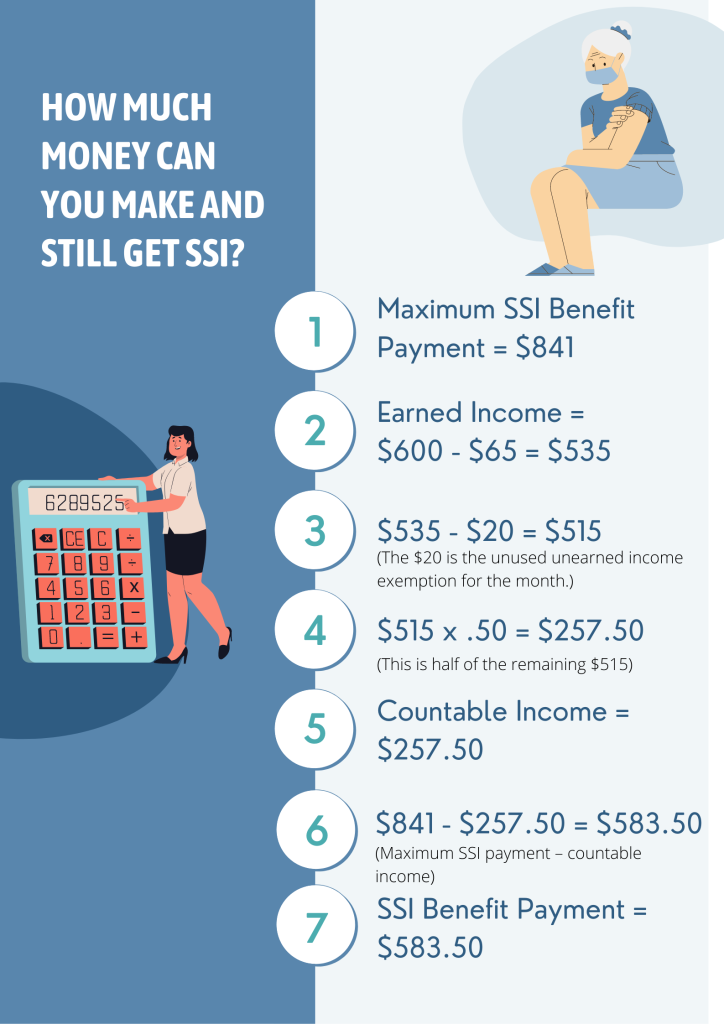
- Earned Income: A portion of your wages or self-employment earnings is disregarded. The SSA disregards the first $65 of earned income plus half of the remainder. This is a significant incentive for SSI recipients to work, as they can keep a substantial portion of their earnings without losing all their benefits.
- Unearned Income: This includes things like Social Security benefits, pensions, interest, and cash from friends or relatives. Generally, the first $20 of unearned income per month is disregarded. After that, nearly all unearned income reduces your SSI dollar-for-dollar.
- In-Kind Support and Maintenance (ISM): If someone else pays for your food or shelter, or provides them to you, the SSA considers this ISM. ISM can reduce your SSI payment by up to one-third of the FBR. This rule is particularly impactful and often misunderstood, as it affects individuals living with family or in other shared living arrangements.
Resource Limits: In addition to income, your countable resources (assets) must not exceed a certain limit. For an individual, the resource limit is $2,000; for a couple, it’s $3,000. Not all assets count towards this limit. Exempt resources include:
- The home you live in and the land it’s on.
- One vehicle, regardless of value, if it’s used for transportation.
- Household goods and personal effects.
- Life insurance policies with a face value of $1,500 or less.
- Burial funds up to $1,500 for an individual.
Any resources above these limits will generally disqualify you from SSI eligibility.
Living Arrangements and Their Impact
Your living arrangement can significantly impact your SSI payment. As mentioned, if you live in someone else’s household and do not pay your share of food and shelter expenses, the SSA may apply the “one-third reduction rule” (also known as the “value of the one-third reduction” or VTR rule). This rule states that your federal SSI benefit will be reduced by one-third of the FBR.
However, if you contribute your fair share towards household expenses, this rule may not apply. The SSA also considers other specific living arrangements, such as living in a nursing home or other institution, which can also affect your payment amount. Understanding how your living situation is assessed is crucial for an accurate payment estimate.
Maximizing Your SSI Benefits and Avoiding Pitfalls
Receiving SSI is about more than just getting a check; it’s about navigating the rules to ensure you receive the maximum benefits you are entitled to while avoiding common mistakes that can lead to overpayments or loss of eligibility.
Reporting Changes Accurately and Timely
One of the most critical responsibilities of an SSI recipient is to report changes in income, resources, living arrangements, or marital status to the SSA immediately. Failure to report changes can lead to:
- Overpayments: If you receive more SSI than you’re entitled to because the SSA wasn’t aware of a change, you’ll likely have to pay it back.
- Underpayments: Conversely, if a change would increase your benefit and you don’t report it, you might miss out on funds.
- Suspension or Termination of Benefits: Consistent failure to report can lead to more severe consequences.
The SSA uses specific reporting methods (online, phone, mail, in-person) and deadlines. It’s imperative to understand these requirements to maintain eligibility and payment accuracy.
Understanding Work Incentives
The SSA offers several “work incentives” designed to encourage SSI recipients to work and become more self-sufficient without immediately losing their benefits. These include:
- Earned Income Exclusion: As noted, the SSA disregards a significant portion of earned income.
- Impairment-Related Work Expenses (IRWE): These are expenses for items and services that you need to work because of your disability (e.g., special transportation, attendant care, medical devices). IRWE can be deducted from your earnings when calculating countable income, effectively increasing your SSI payment.
- Blind Work Expenses (BWE): Similar to IRWE but for blind individuals, allowing deductions for expenses necessary to work due to blindness.
- Student Earned Income Exclusion (SEIE): If you are under age 22, regularly attending school, and working, the SSA can exclude a certain amount of your earned income per month, up to an annual maximum.
These incentives are powerful tools that can allow you to earn income while still receiving vital SSI support, helping to improve your financial independence.
Special Needs Trusts and ABLE Accounts
For individuals with disabilities, managing assets can be challenging due to the strict SSI resource limits. Special Needs Trusts (SNTs) and Achieving a Better Life Experience (ABLE) accounts are two crucial financial tools that allow individuals with disabilities to hold assets above the $2,000/$3,000 limit without jeopardizing their SSI eligibility.
- Special Needs Trusts: Assets placed in a properly structured SNT are not counted towards the SSI resource limit. These trusts can be used to pay for supplemental needs (beyond food and shelter) that SSI does not cover, such as education, recreation, medical care not covered by insurance, and assistive technology.
- ABLE Accounts: Established under the ABLE Act, these tax-advantaged savings accounts allow individuals who became blind or disabled before age 26 to save up to $100,000 without affecting their SSI eligibility. Funds in ABLE accounts can be used for qualified disability expenses, offering greater flexibility and control over personal finances.
These tools are indispensable for long-term financial planning for individuals with disabilities, ensuring they can save and receive support without losing essential benefits.
The Application Process and What to Expect
Applying for SSI can be a lengthy and detailed process. Understanding each step can help manage expectations and improve your chances of a successful application.
Required Documentation
When applying for SSI, you’ll need to provide extensive documentation to prove your age, U.S. citizenship or eligible immigration status, financial situation, and medical condition (for disability/blindness claims). This typically includes:
- Proof of Identity: Birth certificate, driver’s license, passport.
- Proof of Citizenship/Immigration Status: Birth certificate, U.S. passport, Green Card, etc.
- Financial Information: Bank statements, pay stubs, tax returns, property deeds, insurance policies, etc.
- Medical Evidence: Doctors’ reports, test results, hospital records, medication lists, and contact information for healthcare providers.
Gathering these documents beforehand can significantly streamline the application process.
The Interview and Disability Determination
After submitting your application, the SSA will conduct an interview, either in person or over the phone, to gather more details about your financial situation and living arrangements. For disability claims, your case will then be sent to a state agency called Disability Determination Services (DDS). DDS staff, composed of medical and vocational experts, will review your medical evidence and may contact your doctors or send you for a consultative examination to determine if you meet the SSA’s definition of disability. This is often the longest part of the application process.
Appealing a Decision
It’s common for initial SSI applications, particularly those based on disability, to be denied. If your application is denied, you have the right to appeal the decision. The appeals process typically involves several levels:
- Reconsideration: A new review of your case by someone who was not involved in the initial decision.
- Hearing by an Administrative Law Judge (ALJ): If reconsideration is denied, you can request a hearing before an ALJ. This is an important stage where you can present your case in person, often with legal representation.
- Appeals Council Review: If the ALJ denies your claim, you can ask the Appeals Council to review the decision.
- Federal Court Review: As a final step, you can file a lawsuit in federal district court.
Many successful SSI applicants are approved at the reconsideration or ALJ hearing level. It’s often advisable to seek legal counsel specializing in Social Security benefits during the appeals process.
Beyond SSI: Other Financial Support
While SSI is a critical program, it is often not the only source of support available. Many SSI recipients also qualify for other federal and state programs that can provide additional financial assistance and vital services.
Medicaid and Other Healthcare Benefits
Almost all SSI recipients are automatically eligible for Medicaid, the federal and state health care program for low-income individuals. Medicaid provides comprehensive health coverage, including doctor visits, hospital stays, prescription drugs, and long-term care, which is invaluable for individuals with disabilities or chronic health conditions. In some states, SSI eligibility automatically confers Medicaid eligibility; in others, a separate application might be necessary.
Food Assistance (SNAP) and Housing Aid
Many SSI recipients also qualify for the Supplemental Nutrition Assistance Program (SNAP), commonly known as food stamps. SNAP provides benefits to low-income individuals and families to supplement their food budget, helping them afford nutritious meals. Similarly, various state and local housing assistance programs, such as Section 8 housing vouchers or public housing, are available to low-income individuals, including many SSI recipients. These programs aim to make housing affordable and prevent homelessness.

State and Local Programs
Beyond federal benefits, states and local communities often have their own programs designed to assist low-income residents and individuals with disabilities. These can include utility assistance, transportation aid, personal care services, and vocational rehabilitation programs. It’s beneficial for SSI recipients to research what additional resources might be available in their specific area by contacting local social service agencies or disability advocacy organizations.
In conclusion, understanding “how much will SSI pay” requires a deep dive into individual circumstances, federal guidelines, and state-specific provisions. The Federal Benefit Rate serves as a baseline, but countable income, resources, and living arrangements play a significant role in determining the final amount. By being proactive in reporting changes, leveraging work incentives, and exploring complementary support programs, recipients can maximize their benefits and ensure a more stable financial future. SSI remains a cornerstone of support for vulnerable populations, offering a necessary safety net that, when properly understood and utilized, can make a profound difference in countless lives.
aViewFromTheCave is a participant in the Amazon Services LLC Associates Program, an affiliate advertising program designed to provide a means for sites to earn advertising fees by advertising and linking to Amazon.com. Amazon, the Amazon logo, AmazonSupply, and the AmazonSupply logo are trademarks of Amazon.com, Inc. or its affiliates. As an Amazon Associate we earn affiliate commissions from qualifying purchases.