
Social Security is often misunderstood, with many viewing it as a straightforward savings account or even a direct investment that one “makes money” from. In reality, it’s a complex, comprehensive social insurance program designed to provide a baseline of financial protection to retirees, disabled workers, and survivors of deceased workers. The question isn’t truly about “making money” in the traditional investment sense, but rather understanding how much financial support you can expect to receive from a system you’ve contributed to throughout your working life. For many, Social Security represents a crucial, inflation-adjusted income stream that forms a significant pillar of their retirement security. This article will demystify Social Security benefits, explain how they are calculated, and explore strategies to maximize the income you receive.
Understanding the Foundation of Social Security Benefits
To comprehend how much you can expect from Social Security, it’s essential to grasp its fundamental principles and the mechanisms that determine eligibility and benefit amounts. This isn’t a profit-generating scheme, but rather a contributory system where your taxes today fund current beneficiaries, with a promise of future benefits for you.
What Social Security Is and Isn’t
At its core, Social Security is a safety net. It provides retirement income, disability insurance, and survivor benefits. It’s funded primarily through payroll taxes (FICA taxes) paid by workers and their employers. When you see contributions deducted from your paycheck, those funds are allocated to the Social Security trust funds. What it isn’t, however, is a personal savings account where your exact contributions are held until you claim them. Instead, it operates on a “pay-as-you-go” system, where current workers’ contributions pay for current retirees’ benefits. The “money you make” is actually the benefit amount you are entitled to receive based on your lifetime earnings and other factors.
Eligibility: Earning Your Work Credits
Before you can receive any Social Security benefits, you must be “insured” by the program. This means you need to have worked and paid Social Security taxes for a sufficient period. Eligibility is determined by “work credits,” which are earned based on your annual earnings. In 2024, you earn one credit for every $1,730 of earnings, up to a maximum of four credits per year. Most people need 40 credits, or 10 years of work, to qualify for retirement benefits. Once you’ve earned 40 credits, you are generally eligible for benefits, although the amount you receive will vary significantly based on your earnings history.
The Benefit Calculation Formula: A Lifetime of Work
Calculating your Social Security benefit is not as simple as multiplying your contributions by a fixed rate. The Social Security Administration (SSA) uses a complex formula to determine your Primary Insurance Amount (PIA), which is the benefit you would receive if you start collecting at your Full Retirement Age (FRA).
The calculation primarily involves these steps:
- Indexed Earnings: Your earnings from each year are adjusted for inflation (indexed) to reflect their value in today’s dollars. This ensures that earlier earnings hold their purchasing power.
- Highest 35 Years: The SSA takes your 35 highest-earning indexed years and averages them to determine your Average Indexed Monthly Earnings (AIME). If you have fewer than 35 years of earnings, the missing years are counted as zero, which can significantly reduce your AIME.
- Bend Points: The AIME is then run through a formula with “bend points” – specific dollar amounts that determine what percentage of your AIME is included in your PIA. This progressive formula means that lower-income workers receive a higher percentage of their average earnings back as benefits compared to high-income earners. For example, in 2024, the formula might pay 90% of the first chunk of AIME, 32% of the next chunk, and 15% of the remainder.
This PIA is the cornerstone of your benefit. Any decisions you make about when to claim benefits will then adjust this PIA upwards or downwards.
Key Factors Influencing Your Social Security Income
While the PIA provides a baseline, several critical factors will significantly impact the actual monthly income you “make” from Social Security. Understanding these variables is crucial for effective financial planning.
Your Earnings History: The 35-Year Rule
As mentioned, your Social Security benefit is primarily based on your average indexed monthly earnings over your 35 highest-earning years. This is a critical point:
- High Earnings Matter: The more you earn (up to the annual Social Security maximum taxable earnings limit), the higher your potential benefit.
- Consistent Work Matters: Working for at least 35 years is vital. If you work fewer than 35 years, “zero” earning years will be included in the average, drastically lowering your AIME and thus your PIA.
- Late-Career Raises: If your earnings increase significantly later in your career, those higher-earning years can replace earlier, lower-earning years in your top 35, boosting your overall average.
Age You Claim Benefits: The Most Impactful Decision
The age at which you decide to start receiving your Social Security benefits is perhaps the single most impactful decision you’ll make regarding your retirement income.
- Full Retirement Age (FRA): This is the age at which you are entitled to receive 100% of your PIA. FRA varies based on your birth year. For those born between 1943 and 1954, it’s 66. For those born in 1960 or later, it’s 67.
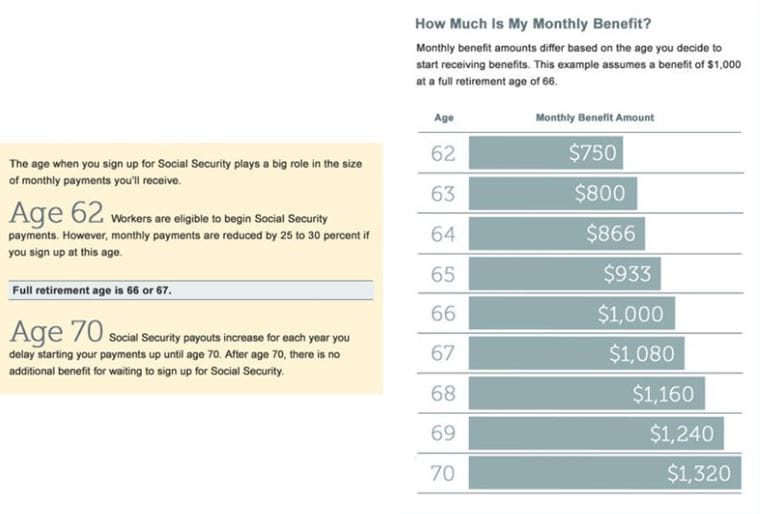
- Claiming Early (as early as age 62): You can start receiving benefits as early as age 62, but your monthly benefit will be permanently reduced. The reduction can be substantial, up to 30% if your FRA is 67. While you receive more payments over a longer period, each payment is smaller.
- Delaying Claiming (up to age 70): For each year you delay claiming past your FRA, your benefit increases by a certain percentage, known as Delayed Retirement Credits (DRCs). These credits amount to 8% per year (for those born 1943 or later), compounded monthly, up to age 70. This can result in a significant boost – a person with an FRA of 67 who delays until age 70 could see their monthly benefit increase by 24% (3 years x 8%). This is often cited as one of the best “returns” on investment available for retirees, as it’s a guaranteed, inflation-adjusted increase.
Cost-of-Living Adjustments (COLAs)
One of the most valuable features of Social Security benefits is the annual Cost-of-Living Adjustment (COLA). COLAs are designed to help your benefits keep pace with inflation. Each year, if the Consumer Price Index for Urban Wage Earners and Clerical Workers (CPI-W) increases, your monthly benefit will also increase by the same percentage, helping to preserve your purchasing power throughout retirement. This makes Social Security a unique and reliable income stream compared to many other fixed pensions or investments that don’t offer such protection.
Maximizing Your Social Security Income
While you can’t “invest” in Social Security like stocks, there are strategic decisions you can make to significantly increase the total amount of income you receive over your lifetime.

Working Longer and Strategically
Beyond simply meeting the 40-credit requirement, continuing to work longer can be a powerful way to boost your benefits.
- Replacing Low-Earning Years: If your current earnings are higher than some of your past earnings (especially those from early in your career), working more years can replace those lower-earning years in your 35-year average, thereby increasing your AIME and PIA.
- Adding More High-Earning Years: If you’re nearing 35 years of work and are in your peak earning years, every additional year you work at a high salary will contribute positively to your average.
- Beyond Age 70: While delaying claiming benefits past age 70 won’t increase your monthly payment further, continuing to work and pay Social Security taxes can still help if those earnings replace lower-earning years in your 35-year average.
The Power of Delayed Claiming
As highlighted earlier, delaying benefits until age 70 is often the single most effective strategy for maximizing your individual monthly benefit. For a healthy individual with other sources of income to bridge the gap, waiting can provide substantially higher guaranteed income for life, protecting against longevity risk. It’s a particularly attractive option for the higher-earning spouse in a couple, as it also maximizes potential survivor benefits.
Spousal and Survivor Benefits Coordination
Social Security isn’t just about individual benefits; it also offers significant protections for families.
- Spousal Benefits: If your spouse has a higher PIA than you, you might be eligible to claim a spousal benefit, which can be up to 50% of your spouse’s FRA benefit. This is particularly beneficial if one spouse has little or no work history. You can only claim a spousal benefit if your own benefit based on your work record is lower than the spousal benefit.
- Survivor Benefits: If your spouse passes away, you may be eligible to receive survivor benefits, which can be up to 100% of your deceased spouse’s PIA (if you claim at your own FRA or later). This is why the higher-earning spouse maximizing their benefit is so important – it also increases the potential survivor benefit for the surviving spouse. Strategic claiming between spouses can optimize combined household benefits. For instance, the lower-earning spouse might claim early while the higher-earning spouse delays until age 70.
- Divorced Spouses: You may be eligible for benefits on an ex-spouse’s record if the marriage lasted at least 10 years, you are currently unmarried, and are at least age 62.
Navigating Earnings Limits While Claiming Early
If you claim Social Security benefits before your Full Retirement Age and continue to work, your benefits may be temporarily reduced if your earnings exceed certain limits.
- Annual Earnings Limit: In 2024, if you are under your FRA, $1 will be deducted from your benefits for every $2 you earn above $22,320.
- Year of FRA: In the year you reach FRA, a higher limit applies ($59,520 in 2024), and $1 will be deducted for every $3 you earn above the limit until the month you reach FRA.
- No Limit at FRA or Beyond: Once you reach your FRA, there are no earnings limits, and you can earn as much as you want without affecting your Social Security benefits.
Understanding these limits is crucial if you plan to retire gradually or continue working part-time after claiming early. Any benefits withheld due to these limits are not lost; they contribute to a higher benefit amount once you reach your FRA.
Average vs. Maximum Social Security Benefits
It’s helpful to contextualize your potential benefits by looking at current average and maximum figures, understanding that these are illustrative and subject to change.
Current Average Benefits
As of early 2024, the average monthly Social Security benefit for all retired workers was around $1,907. For a retired couple both receiving benefits, the average was approximately $3,050. These averages encompass a wide range of earners and claiming ages, so they serve as a general benchmark rather than a personal projection. Many individuals will receive more or less than these figures based on their specific work histories and claiming decisions.
Reaching the Maximum Benefit
The maximum possible Social Security benefit is reserved for individuals who have consistently earned at or above the Social Security maximum taxable earnings limit for at least 35 years and who choose to delay claiming their benefits until age 70. For someone claiming at age 70 in 2024, the maximum monthly benefit was $4,873. This figure underscores the impact of high lifetime earnings and delayed claiming. To reach this maximum, an individual would have needed to earn at or above the taxable maximum ($168,600 in 2024) for 35 working years and waited until age 70 to collect.
It’s important to recognize that Social Security, even at its maximum, is typically not designed to fully replace a high earner’s pre-retirement income. For most retirees, it serves as a foundational layer of income, necessitating other savings and investments to maintain their desired lifestyle.
Integrating Social Security into Your Broader Financial Plan
Viewing Social Security as a standalone income source is a common mistake. Instead, it should be an integral component of your holistic retirement strategy.
Social Security as a Pillar, Not the Entire House
For many, Social Security will replace approximately 40% of their pre-retirement earnings. This percentage is higher for low-income earners and lower for high-income earners. This means that for the vast majority, Social Security alone will not be enough to sustain their desired lifestyle in retirement. It’s a crucial pillar, providing a reliable, inflation-adjusted base income, but it rarely supports the entire financial structure of retirement.
Complementary Retirement Savings
To bridge the gap between Social Security benefits and desired retirement expenses, individuals must actively save and invest in other vehicles. This includes:
- Employer-Sponsored Plans: 401(k)s, 403(b)s, and other defined contribution plans.
- Individual Retirement Accounts (IRAs): Traditional and Roth IRAs offer tax advantages for long-term savings.
- Pensions: If you are fortunate enough to have one, a defined benefit pension can significantly supplement Social Security.
- Personal Investments: Brokerage accounts, real estate, and other assets can provide additional income or capital.
Seeking Professional Financial Advice
Given the complexities of Social Security claiming strategies, especially for couples, and its integration into a broader retirement plan, seeking advice from a qualified financial advisor is highly recommended. A financial professional can help you:
- Analyze your specific earnings history and project your benefits.
- Model different claiming ages and scenarios to determine the optimal strategy for your individual and family situation.
- Develop a comprehensive retirement plan that integrates Social Security with your other savings, investments, and expenses.
- Understand the tax implications of Social Security benefits in retirement.
In conclusion, “making money” with Social Security is about maximizing the benefits you are entitled to receive from a system designed to provide a baseline of financial security. By understanding how the program works, strategically managing your claiming age, and integrating your benefits into a well-rounded financial plan, you can significantly enhance your financial well-being throughout retirement.
aViewFromTheCave is a participant in the Amazon Services LLC Associates Program, an affiliate advertising program designed to provide a means for sites to earn advertising fees by advertising and linking to Amazon.com. Amazon, the Amazon logo, AmazonSupply, and the AmazonSupply logo are trademarks of Amazon.com, Inc. or its affiliates. As an Amazon Associate we earn affiliate commissions from qualifying purchases.