
The question, “How much does Google cost?” is deceptively simple, yet it unravels a complex tapestry of financial models, economic trade-offs, and investment opportunities. From the free services that underpin our daily digital lives to the sophisticated enterprise solutions driving global businesses, Google’s cost structure is multifaceted, touching upon personal finance, business expenditures, and even the broader investment landscape. In a world increasingly shaped by Google’s ubiquitous presence, understanding its financial footprint – both for those who use it and those who invest in it – is essential for navigating the modern economy. This article delves into the various interpretations of Google’s “cost,” exploring the explicit payments, implicit exchanges, and market valuations that define its economic reality.
The “Free” Paradox: What Users Don’t Pay For Directly
For billions worldwide, Google’s core offerings represent the epitome of convenience without a direct price tag. Services like Google Search, Gmail, Google Maps, YouTube, and the Android operating system are freely accessible, forming the backbone of our digital interactions. This apparent gratuity, however, is a cornerstone of Google’s ingenious business model, rooted deeply in the economics of attention and data.
The True Currency: Your Data and Attention
While users might not open their wallets for Google Search, they contribute to an economy where their attention and data are the actual currency. Every search query, every email processed, every video watched, and every location visited provides valuable data points. This aggregated, anonymized data allows Google to build highly precise user profiles, which in turn enable it to deliver highly targeted advertisements. Advertisers pay Google for this precision, ensuring their messages reach the most receptive audiences. Thus, the “cost” of Google’s free services for individual users isn’t monetary but rather an exchange of personal information and attention for unparalleled digital utility. It’s a transaction where privacy and data become the non-monetary price of admission, fueling an advertising ecosystem that generates the vast majority of Google’s colossal revenues.
The Ecosystem Effect: Expanding Reach and Value
The sheer scale and interconnectedness of Google’s free services create a powerful network effect. A user drawn to free Gmail might then use Google Drive, explore YouTube, navigate with Maps, and eventually adopt an Android phone. Each touchpoint reinforces Google’s position as the primary gateway to the internet, solidifying its market dominance. This extensive ecosystem, built on free access, continuously expands Google’s data collection capabilities and, consequently, its advertising revenue potential. The value derived from these free services for users is immense – seamless communication, instant information, endless entertainment – making the implicit cost of data exchange a trade-off many are willing to make.
Google’s Paid Offerings for Individuals & Small Businesses
Beyond the realm of free services, Google offers a significant portfolio of products and services that require direct monetary payment. These offerings cater to a range of needs, from enhancing personal digital experiences to providing essential tools for productivity and connectivity. Understanding these costs is crucial for individuals and small businesses looking to leverage Google’s ecosystem more deeply.
Enhancing Personal Digital Life: Subscriptions and Purchases
For individuals, Google offers various paid options that augment its free services or provide premium content and hardware. Google One is a prime example, providing expanded cloud storage across Google Drive, Gmail, and Google Photos, often bundled with additional benefits like VPN services or expert support. Subscription tiers vary based on storage needs, from affordable basic plans to extensive storage for power users.
Entertainment also comes with a price tag. YouTube Premium offers an ad-free viewing experience, background play, and offline downloads, significantly enhancing the user experience for frequent YouTube consumers. The Google Play Store is a vast marketplace where users can purchase apps, games, movies, TV shows, and e-books, contributing to micro-transactions that add up. Similarly, Google TV allows for rentals and purchases of films and series, providing an à la carte content consumption model.
Beyond digital services, Google also directly sells hardware. Its Pixel smartphones, Nest smart home devices (thermostats, cameras, speakers), Fitbit wearables, and Chromecast streaming devices all represent significant upfront costs for consumers. These devices integrate seamlessly into the Google ecosystem, offering a premium user experience often justified by their price points.
Empowering Productivity: Google Workspace for Individuals and Small Teams
While a basic Google account offers free access to Gmail, Docs, Sheets, and Slides, Google Workspace provides enhanced, business-grade versions of these tools. For individual professionals or small businesses, Google Workspace offers custom email domains (e.g., yourname@yourcompany.com), increased storage, advanced security features, and dedicated support. Plans typically come with a monthly or annual subscription fee per user, scaling with the features and storage required. This transition from consumer-grade to professional-grade tools represents a clear monetary cost for businesses seeking reliability, branding, and collaborative efficiency from Google’s productivity suite.
The Business Side: How Companies Pay Google
Google’s true financial might is largely derived from its ability to serve businesses of all sizes, providing critical tools for marketing, infrastructure, and collaboration. The costs associated with these services are substantial and form the bedrock of Alphabet Inc.’s immense revenue streams.
Dominating the Advertising Landscape: Google Ads
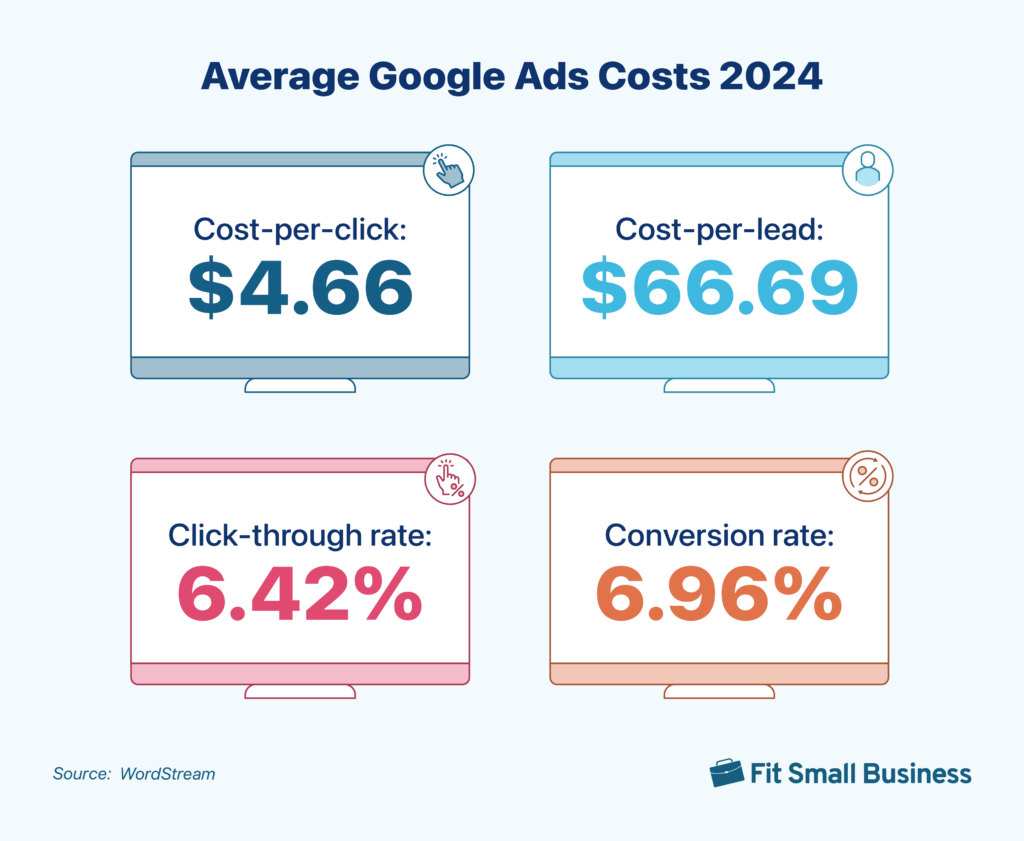
At the core of Google’s business model is Google Ads, the platform where businesses pay to display advertisements across Google’s vast network. This includes search results (Search Ads), websites and apps (Display Network), YouTube (Video Ads), and shopping listings (Shopping Ads). The pricing model is predominantly pay-per-click (PPC), meaning advertisers only pay when a user clicks on their ad. However, other models like cost-per-impression (CPM) or cost-per-acquisition (CPA) are also available.
The “cost” of Google Ads is highly variable, depending on factors such as keyword competition, industry, geographic targeting, and ad quality. Businesses set daily or monthly budgets, but the actual spend can range from a few dollars a day for local small businesses to millions annually for global corporations. For many businesses, Google Ads is not just a cost but a vital investment, offering unparalleled reach and targeting capabilities that drive leads, sales, and brand awareness. The effectiveness and scalability of Google Ads make it a significant expenditure for nearly every company with an online presence, representing Google’s most substantial revenue generator.
Powering the Cloud: Google Cloud Platform (GCP)
As businesses increasingly migrate their operations to the cloud, Google Cloud Platform (GCP) has emerged as a formidable competitor to AWS and Azure. GCP offers a comprehensive suite of cloud computing services, including infrastructure as a service (IaaS), platform as a service (PaaS), and serverless computing. This includes virtual machines (Compute Engine), data storage (Cloud Storage, BigQuery), machine learning tools (AI Platform), networking, and much more.

The cost of GCP is highly granular and based on usage – compute time, storage capacity, data transfer, API calls, and specific service usage. Pricing models are complex, often involving combinations of pay-as-you-go rates, committed use discounts, and custom pricing for large enterprises. For businesses, GCP represents a significant operational expenditure, but one that offers scalability, security, and access to cutting-edge technologies. The investment in GCP allows companies to build, deploy, and scale applications without the overhead of managing physical infrastructure, making it a critical cost center for tech-driven businesses.
Enterprise Productivity: Google Workspace for Business
Beyond individual plans, Google Workspace for Business offers robust collaboration and productivity tools tailored for organizations of all sizes. These plans include custom email addresses, increased cloud storage, advanced administrative controls, enhanced security and compliance features, and enterprise-grade video conferencing. Pricing is typically per user per month, with different tiers (Business Starter, Standard, Plus, Enterprise) offering varying levels of features and support.
For businesses, the cost of Google Workspace is an investment in streamlined communication, efficient collaboration, and robust data management. It replaces traditional on-premise software and servers, offering a cloud-native solution that reduces IT overhead while enhancing productivity across the organization. The costs here are predictable monthly or annual subscriptions, making it a manageable operational expense for most companies.
Investing in Google: The Cost of Ownership
The question “how much does Google cost” can also be interpreted from an investment perspective: What is the cost of owning a piece of this global technology giant? Google’s parent company, Alphabet Inc., trades on the stock market under two primary tickers: GOOGL (Class A shares with voting rights) and GOOG (Class C shares without voting rights).
Buying a Share of Alphabet Inc.
The cost of investing in Google refers to the market price of its shares. This price fluctuates constantly based on market demand, company performance, economic outlook, and investor sentiment. To “buy Google,” an investor purchases shares of GOOGL or GOOG through a brokerage account. The cost per share, multiplied by the number of shares purchased, plus any brokerage fees, represents the direct monetary cost of ownership.
Beyond the initial purchase price, there are other considerations for investors:
- Opportunity Cost: Investing in Google means foregoing investment in other companies or asset classes.
- Risk: Like any stock, Alphabet shares carry market risk. Their value can decrease, leading to potential losses for investors.
- Research & Due Diligence: The “cost” also includes the time and effort spent understanding Alphabet’s business model, financial statements, competitive landscape, and future growth prospects.
Alphabet is one of the world’s largest and most valuable companies, reflecting its dominant position in search, advertising, cloud computing, and various other ventures. Its stock price reflects this immense market capitalization and its perceived future earnings potential. Investors buy into Alphabet not for dividends (as the company typically reinvests earnings) but for capital appreciation, hoping the stock price will increase over time as the company continues to innovate and expand.
Indirect Investment through Funds
For investors who prefer a diversified approach, owning Google can also be achieved indirectly through mutual funds or exchange-traded funds (ETFs) that hold Alphabet shares as part of their portfolio. Many broad-market index funds (like S&P 500 ETFs) or technology-focused funds will include GOOGL/GOOG due to its large market capitalization. The “cost” here includes the fund’s expense ratio and any trading fees, providing a more diversified way to gain exposure to Google’s growth without buying individual shares.
Understanding the True Cost: Value vs. Price
Ultimately, understanding “how much Google costs” requires moving beyond mere financial figures to consider the broader economic and societal implications. The relationship between the explicit price paid, the implicit data exchanged, and the immense value derived presents a nuanced picture.
The Economic Value Proposition
For individual users, the “cost” of Google’s free services is dwarfed by the immense value they provide. The ability to instantly access information, communicate globally, navigate unfamiliar territories, and organize personal lives, all without direct monetary payment, represents an unprecedented consumer surplus. This value translates into increased productivity, convenience, and access to knowledge, driving societal benefits that are hard to quantify in monetary terms.
For businesses, the cost of Google Ads, Google Cloud, or Google Workspace is an investment with a clear return on investment (ROI). Advertising spend translates into customer acquisition and revenue growth. Cloud infrastructure provides scalability, innovation, and cost efficiencies. Productivity suites enhance collaboration and operational effectiveness. These costs are justified by the tangible benefits they deliver, making Google an indispensable partner in the digital economy.
The Non-Monetary “Costs”: Privacy and Market Dominance
While Google’s services offer immense value, it’s crucial to acknowledge the non-monetary “costs” that accompany its pervasive presence. The primary concern is data privacy. The implicit exchange of personal data for free services raises questions about surveillance, targeted manipulation, and the potential for misuse of information. Users grapple with the trade-off between convenience and the relinquishment of control over their digital footprint.
Another significant “cost” is the impact of Google’s market dominance. Its near-monopoly in search and advertising has led to concerns about competition, innovation, and the potential for anti-competitive practices. Regulators globally are increasingly scrutinizing Google’s power, suggesting that the “cost” to the broader market might be reduced competition and less choice for consumers and businesses alike. These are complex ethical and economic costs that extend beyond simple dollar figures.

Conclusion
The question “how much does Google cost” is not merely about a single price point but a dynamic investigation into a multifaceted financial ecosystem. It encompasses the non-monetary exchange of data and attention for its free core services, the explicit subscriptions and purchases for its premium offerings and hardware, and the substantial business expenditures for advertising, cloud computing, and enterprise productivity tools. Furthermore, it delves into the investment costs associated with owning a piece of its parent company, Alphabet Inc.
From a personal finance perspective, Google largely offers incredible value for “free,” albeit at the cost of personal data. For businesses, Google represents a critical and often substantial expenditure, viewed as an investment in growth, efficiency, and market reach. For investors, the cost is the market price of its shares, a bet on the continued innovation and profitability of one of the world’s most influential companies. Ultimately, understanding Google’s cost involves appreciating its complex economic model, where monetary transactions, data exchanges, and market valuations intertwine to define the price and value of the digital behemoth that shapes our modern world.
aViewFromTheCave is a participant in the Amazon Services LLC Associates Program, an affiliate advertising program designed to provide a means for sites to earn advertising fees by advertising and linking to Amazon.com. Amazon, the Amazon logo, AmazonSupply, and the AmazonSupply logo are trademarks of Amazon.com, Inc. or its affiliates. As an Amazon Associate we earn affiliate commissions from qualifying purchases.