
For millions of Americans, Social Security represents a cornerstone of their retirement security. Yet, the precise method by which these vital benefits are calculated remains a mystery to many. Far from being a simple average of your lifetime earnings, the Social Security Administration (SSA) employs a sophisticated, multi-step formula designed to provide a progressive safety net, offering a higher replacement rate for lower-income workers. Understanding this calculation is not merely an academic exercise; it’s a critical step in effective retirement planning, empowering you to make informed decisions about when to claim benefits and how to optimize your financial future.
This guide will demystify the Social Security calculation process, breaking down the key factors and formulas that determine your Primary Insurance Amount (PIA) and, ultimately, your monthly benefit check. We’ll explore everything from your earnings record to the impact of your claiming age, providing the clarity needed to navigate this essential aspect of personal finance.
Understanding the Pillars of Social Security Benefits
The journey to calculating your Social Security benefit begins with your work history. The system is fundamentally based on the concept that the more you’ve contributed through payroll taxes over your working life, the higher your potential benefits. However, it’s not a direct dollar-for-dollar return. Several key elements come into play before a final figure is reached.
The Foundation: Your Earnings Record
Your Social Security benefit is primarily based on your “covered earnings” – the income on which you paid Social Security taxes. The SSA tracks your earnings for every year you’ve worked, up to an annual maximum known as the Social Security “taxable maximum” or “wage base.” For example, in 2024, earnings above $168,600 are not subject to Social Security taxes and, therefore, do not count towards your benefit calculation. The SSA focuses on your 35 highest-earning years. If you have fewer than 35 years of earnings, the missing years will be recorded as zeros, which can significantly reduce your overall average. This highlights the importance of a consistent and long work history. Even if you earn above the taxable maximum for many years, the system still takes into account a substantial portion of your lifetime contributions.
Inflation’s Role: Indexed Earnings
Simply adding up your historical earnings wouldn’t be fair, as a dollar earned in 1985 had significantly more purchasing power than a dollar today. To account for inflation and general wage growth, the SSA “indexes” your past earnings. This process adjusts your earnings from previous years to reflect what those wages would be worth in current dollars. The indexing factor is determined by national average wage levels in a specific year, typically two years before you turn 62 (the earliest age you can claim retirement benefits). Earnings from the year you turn 62 and onward are not indexed, as they are considered recent enough to reflect current economic conditions. This indexing ensures that your earlier contributions maintain their real value and are given appropriate weight in the benefit calculation. Without indexing, someone with significant earnings decades ago would see their contributions severely devalued.
The Critical Metric: Average Indexed Monthly Earnings (AIME)
Once your highest 35 years of earnings have been selected and indexed, the next step is to calculate your Average Indexed Monthly Earnings (AIME). The sum of your indexed earnings from those 35 years is divided by 420 (the number of months in 35 years). The AIME is a crucial figure because it directly feeds into the formula that determines your Primary Insurance Amount (PIA), essentially acting as the foundation for your monthly benefit before any adjustments for claiming age. A higher AIME directly translates to a higher potential benefit, underscoring the long-term impact of consistent contributions and substantial earnings over your career.
The Core Calculation: From AIME to Primary Insurance Amount (PIA)
With your AIME established, the SSA applies a progressive formula to determine your Primary Insurance Amount (PIA). The PIA is the monthly benefit you would receive if you began collecting Social Security at your Full Retirement Age (FRA). This is the base amount from which all other benefit adjustments are made.
Bend Points: The Progressive Formula
The Social Security system is designed to be progressive, meaning it replaces a higher percentage of pre-retirement earnings for lower-income workers than for higher-income workers. This is achieved through a series of “bend points” applied to your AIME. For the year you become eligible (age 62), your AIME is divided into three segments:
- A certain percentage (e.g., 90%) of the first segment of your AIME.
- A lower percentage (e.g., 32%) of the AIME amount between the first and second bend points.
- An even lower percentage (e.g., 15%) of the AIME amount above the second bend point.
These bend points are adjusted annually based on the national average wage index. For instance, for someone turning 62 in 2024, the bend points are $1,174 and $7,078. This means:
- 90% of the first $1,174 of your AIME.
- 32% of your AIME between $1,174 and $7,078.
- 15% of your AIME above $7,078.
By applying these percentages, the system ensures that while everyone receives a benefit based on their contributions, lower earners receive a larger portion of their average earnings back as benefits, providing a more robust safety net.
The Importance of Your Full Retirement Age (FRA)
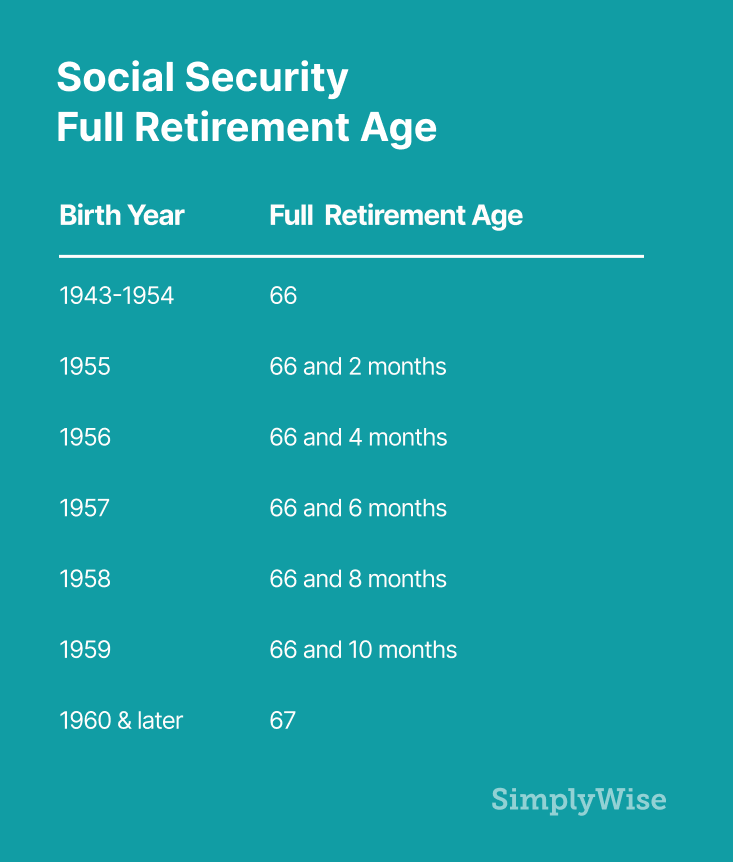
Your Full Retirement Age (FRA) is the age at which you are entitled to receive 100% of your PIA. The FRA is not a fixed age for everyone; it depends on your birth year. For those born between 1943 and 1954, FRA is 66. It gradually increases for subsequent birth years, reaching 67 for anyone born in 1960 or later. Understanding your FRA is paramount, as claiming benefits before or after this age directly impacts the size of your monthly payment. Claiming at FRA avoids any reductions for early filing and maximizes the delayed retirement credits if you choose to wait.
What is Your Primary Insurance Amount (PIA)?
After applying the bend points to your AIME, the resulting figure is your Primary Insurance Amount (PIA). This is your base monthly benefit amount, before any cost-of-living adjustments (COLAs) and before any reductions or increases due to claiming benefits before or after your FRA. The PIA is the benchmark against which all claiming decisions are measured. It’s the theoretical “full” benefit you’ve earned, and while it’s adjusted over time for inflation, your claiming choices will determine whether you actually receive an amount higher or lower than this figure each month.
Adjusting Your Benefits: When You Claim Matters
While your PIA is the foundational figure, the actual monthly benefit you receive will depend heavily on the age at which you choose to begin collecting Social Security. This decision is one of the most critical financial choices you’ll make in retirement.
Claiming Early: The Permanent Reduction

You can begin collecting Social Security benefits as early as age 62. However, choosing to do so results in a permanent reduction of your monthly benefit check. The reduction rate is approximately 5/9 of 1% for each month before your FRA, up to 36 months. If you claim more than 36 months early, an additional reduction of 5/12 of 1% per month applies. For example, if your FRA is 67 and you claim at 62, your benefits will be reduced by about 30%. This reduction is permanent, meaning you will receive a lower monthly payment for the rest of your life. While claiming early can provide much-needed income sooner, it comes at a significant long-term cost, making it crucial to weigh immediate needs against long-term financial security.
Claiming Late: Maximizing Your Monthly Check
Conversely, if you delay claiming Social Security benefits past your FRA, you can earn delayed retirement credits, which permanently increase your monthly benefit. These credits accrue at a rate of 8% per year (2/3 of 1% per month) for each year you delay, up to age 70. There is no additional benefit to delaying past age 70. This means that if your FRA is 67 and you delay claiming until age 70, your monthly benefit will be 124% of your PIA (an additional 24%). This increase can be substantial over a long retirement, representing a powerful strategy for maximizing your lifetime Social Security income, particularly for those who can afford to wait. The decision to delay often hinges on other retirement income sources, health, and life expectancy.
Spousal and Survivor Benefits: Additional Considerations
Social Security isn’t just for individual retirees; it also provides benefits for spouses, divorced spouses, and survivors (widows/widowers).
- Spousal Benefits: A spouse can claim up to 50% of their partner’s PIA if they claim at their own FRA. If they claim early, their spousal benefit is also reduced. For a spouse to claim, the primary earner must have already filed for benefits.
- Survivor Benefits: A widow or widower can claim up to 100% of their deceased spouse’s PIA if they claim at their own FRA. They can claim as early as age 60 (or age 50 if disabled), but with a permanent reduction.
- Divorced Spousal Benefits: A divorced spouse may be eligible for benefits based on their ex-spouse’s record if the marriage lasted at least 10 years, they are currently unmarried, and are at least 62 years old. The ex-spouse does not need to have filed for benefits, provided the divorce occurred at least two years prior.
These provisions offer vital financial protection and add layers of complexity to claiming strategies, often requiring careful coordination between partners or consideration of individual circumstances.
Practical Tools and Strategies for Estimating Your Benefits
While the calculation can seem intricate, the Social Security Administration provides excellent resources to help you understand and estimate your benefits. Taking advantage of these tools is a crucial step in financial planning.
Your “My Social Security” Account: The Best Resource
The single most valuable tool for estimating your Social Security benefits is your “My Social Security” online account. Creating an account is free and secure. Once logged in, you can:
- View your complete earnings record.
- Verify that your employers have accurately reported your earnings.
- Get personalized benefit estimates based on your actual work history at different claiming ages (62, FRA, 70).
- Review your Social Security statement, which used to be mailed annually but is now primarily digital.
- Apply for benefits online.
Regularly checking your earnings record is important to correct any discrepancies that could impact your future benefits. This account provides the most accurate and personalized projections available.
Leveraging Online Calculators and Planners
Beyond your “My Social Security” account, numerous reputable financial planning websites and independent organizations offer Social Security calculators. These tools can often perform more complex scenario planning, allowing you to:
- Model the impact of different retirement ages.
- Compare various claiming strategies for individuals and couples.
- Factor in life expectancy projections.
- Integrate Social Security benefits into a broader retirement income plan.
While these calculators can provide valuable insights, always ensure they are from trusted sources and understand that their estimates are only as good as the data you input. Use them as complementary tools to your official SSA statements.
Strategies to Optimize Your Future Social Security Income
Understanding the calculation naturally leads to considering strategies to maximize your benefits:
- Work at Least 35 Years: Ensure you have 35 years of earnings, ideally high-earning years, to avoid zero-income years dragging down your AIME.
- Maximize Earnings: Work as much as possible, especially during your peak earning years, as this directly impacts your indexed earnings and AIME.
- Consider Delayed Claiming: If financially feasible, delaying benefits past your FRA, up to age 70, can result in significantly higher monthly payments for life.
- Coordinate with Your Spouse: For married couples, strategic claiming can maximize combined lifetime benefits. This often involves the higher earner delaying while the lower earner claims earlier, or one spouse claiming spousal benefits while the other’s benefit grows.
- Monitor Your Earnings Record: Regularly check your “My Social Security” account to ensure your earnings are correctly reported.
These strategies, informed by a clear understanding of the calculation mechanics, can substantially enhance your financial security in retirement.
Navigating Complex Scenarios and Future Outlook
While the core calculation principles apply broadly, specific situations can introduce additional complexities. Furthermore, it’s prudent to consider the long-term health of the Social Security system.
Windfall Elimination Provision (WEP) and Government Pension Offset (GPO)
Two provisions, the Windfall Elimination Provision (WEP) and the Government Pension Offset (GPO), can significantly impact benefits for individuals who also receive a pension from employment not covered by Social Security (e.g., some government jobs).
- WEP: Affects individuals who receive a pension from non-covered employment and also have enough Social Security covered earnings to qualify for their own Social Security retirement benefits. It modifies the Social Security benefit formula, resulting in a lower PIA than would otherwise be calculated.
- GPO: Primarily affects individuals who receive a government pension from non-covered employment and also qualify for Social Security spousal or survivor benefits. It can reduce their spousal or survivor benefit by two-thirds of the amount of their non-covered government pension.
These provisions are designed to prevent “windfalls” for those who benefit from both non-covered pensions and Social Security, but they often come as a surprise and can significantly alter expected benefit amounts, requiring careful planning.

The Future of Social Security: Understanding the Broader Context
It’s natural to have questions about the long-term solvency of the Social Security system. While projections indicate that the system faces financial challenges in the coming decades, often requiring adjustments to ensure its long-term viability, it’s crucial to understand that Social Security is not “going broke.” Changes might include adjustments to the full retirement age, modifications to the taxable maximum, or changes to the benefit formula. However, the program has always been a bedrock of American retirement, and policymakers are continually working on solutions to ensure its continued strength. Your understanding of the calculation today provides a robust framework for adapting to any future modifications.
In conclusion, the calculation of Social Security benefits is a multifaceted process rooted in your lifetime earnings, indexed for inflation, and then adjusted based on your claiming age. By actively engaging with your “My Social Security” account, understanding the bend points, and strategizing your claiming decision, you can confidently estimate and potentially optimize a vital component of your retirement income. This knowledge empowers you to plan proactively, ensuring greater financial security for your future.
aViewFromTheCave is a participant in the Amazon Services LLC Associates Program, an affiliate advertising program designed to provide a means for sites to earn advertising fees by advertising and linking to Amazon.com. Amazon, the Amazon logo, AmazonSupply, and the AmazonSupply logo are trademarks of Amazon.com, Inc. or its affiliates. As an Amazon Associate we earn affiliate commissions from qualifying purchases.