
Understanding how to work out percentages is not merely a mathematical exercise; it is a fundamental pillar of financial literacy. In the realms of personal finance, investing, and business management, percentages provide a standardized language to evaluate performance, measure risk, and track growth. Whether you are calculating the interest on a high-yield savings account, determining the profit margin of a side hustle, or assessing the impact of inflation on your purchasing power, the ability to manipulate these figures with precision is essential for making informed economic decisions.
The Fundamentals: Why Percentages are the Language of Money
At its core, a percentage is a ratio expressed as a fraction of 100. The word stems from the Latin per centum, meaning “by the hundred.” In finance, this allows for the comparison of values across different scales. For instance, earning $50 on a $500 investment is the same “performance” as earning $5,000 on a $50,000 investment—both represent a 10% return.
The Basic Formula for Financial Calculation
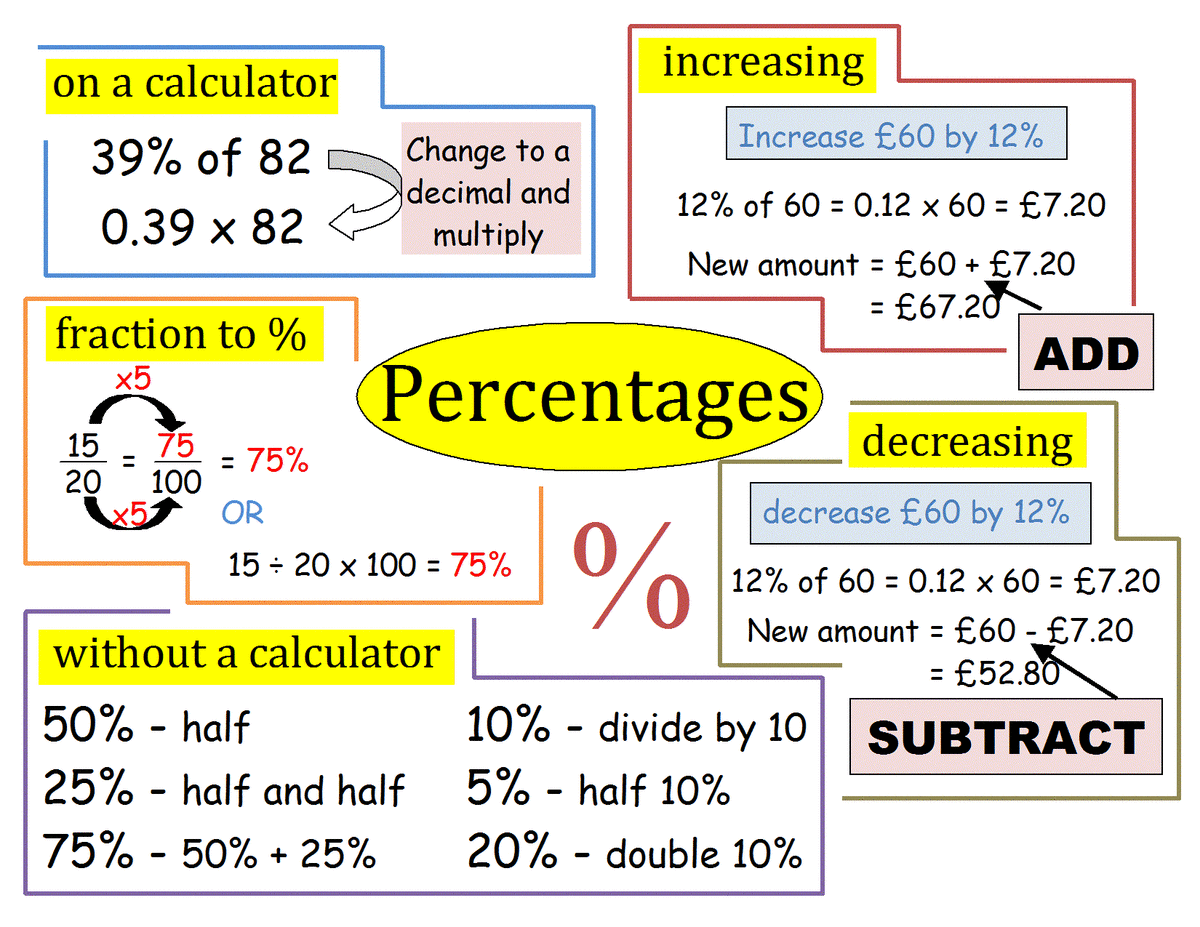
To find the percentage of a specific amount, the formula is straightforward:
(Part / Whole) × 100 = Percentage.
For example, if you set aside $200 from a $2,000 monthly paycheck for savings, you are saving 10% of your income. Understanding this basic building block allows you to move into more complex financial analysis, such as calculating percentage increases and decreases, which are vital for tracking market trends.
Calculating Percentage Change
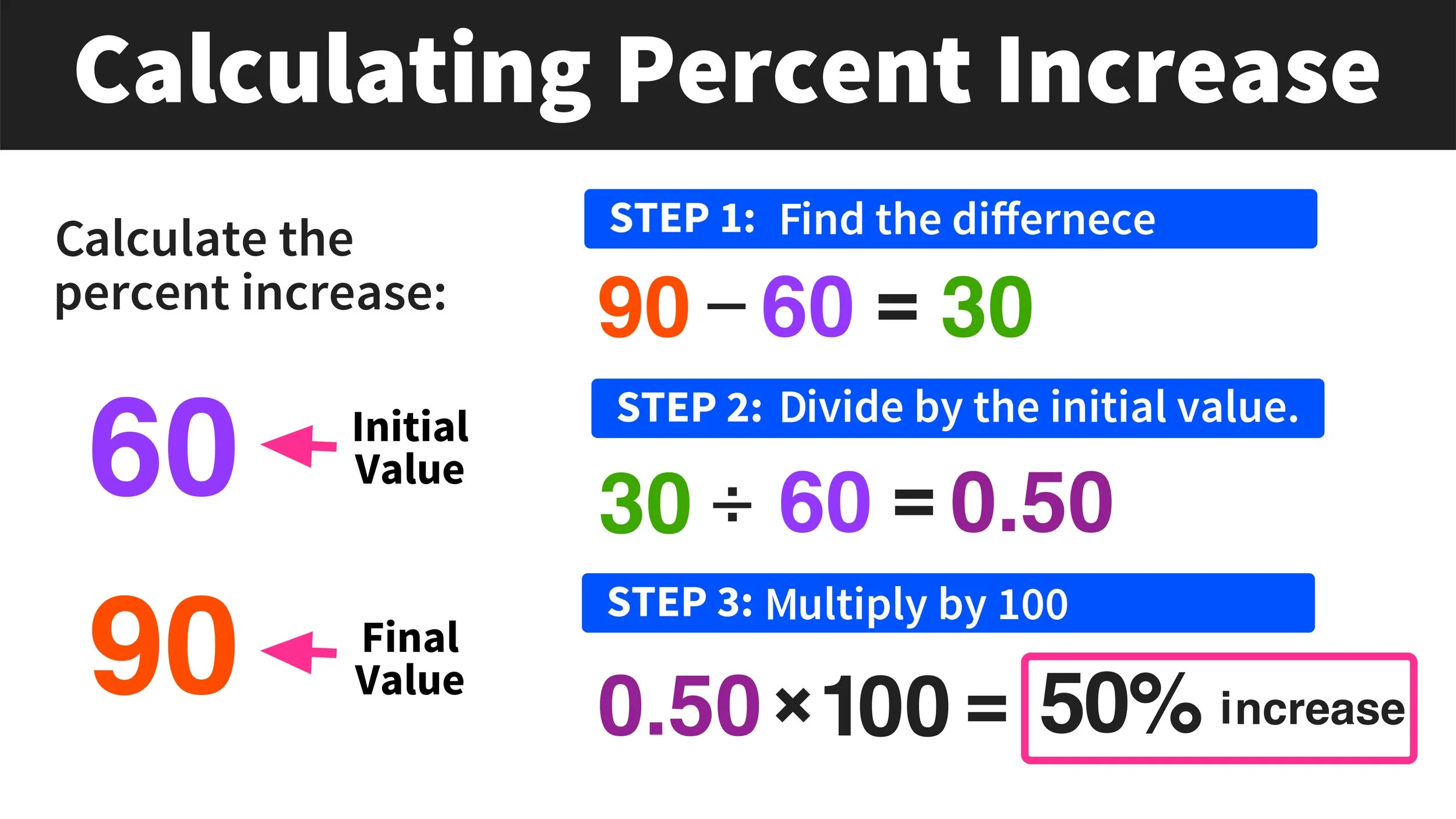
In the world of money, we rarely look at static numbers. We look at movement. The formula for percentage change is:
((New Value – Old Value) / Old Value) × 100.
If a stock you purchased for $150 rises to $180, the calculation would be ($180 – $150) / $150, which equals 0.2. Multiplied by 100, that is a 20% increase. Conversely, if the stock drops to $120, the result is a 20% decrease. Mastering this formula helps investors detach from the “dollar amount” and focus on the relative performance of their assets.
Applying Percentages to Personal Finance and Budgeting
Strategic budgeting is built entirely on the foundation of percentages. While nominal values (the actual dollar amounts) are necessary for paying bills, percentages help you understand the health of your financial ecosystem.
The 50/30/20 Rule
One of the most popular personal finance frameworks is the 50/30/20 rule. This suggests that 50% of your after-tax income should go toward “Needs” (rent, utilities, groceries), 30% toward “Wants” (dining out, hobbies), and 20% toward “Financial Goals” (debt repayment, emergency funds, investing). To work this out, you take your total monthly take-home pay and multiply it by 0.50, 0.30, and 0.20 respectively. If your income fluctuates, using percentages ensures that your lifestyle scales appropriately without compromising your future security.
Understanding Interest Rates and APR
When you borrow money, the “price” of that money is expressed as a percentage. The Annual Percentage Rate (APR) is a critical figure because it includes both the interest rate and any additional fees. For a credit card with an 18% APR, the interest is typically calculated daily. To work out the monthly interest on a $1,000 balance, you would divide the annual rate by 12 (1.5%) and apply it to the balance, resulting in approximately $15 of interest for that month. Recognizing how these percentages compound is the first step toward debt freedom.
Tax Brackets and Effective Rates
Taxation is another area where understanding percentages is vital. Most modern economies use a progressive tax system. If you are in the “24% tax bracket,” it does not mean you pay 24% on your total income. It means you pay that percentage only on the portion of your income that falls within that specific range. Your “effective tax rate” is the actual percentage of your total income that goes to the government, calculated as (Total Tax Paid / Total Taxable Income) × 100. Knowing this number is essential for accurate annual budgeting.
Calculating Investment Returns and Portfolio Metrics
In investing, percentages are the ultimate scorecard. They allow you to compare the performance of a real estate property against a mutual fund or a cryptocurrency asset.
Return on Investment (ROI)
ROI is the most common metric used to evaluate the efficiency of an investment. The formula is:
(Net Profit / Cost of Investment) × 100.
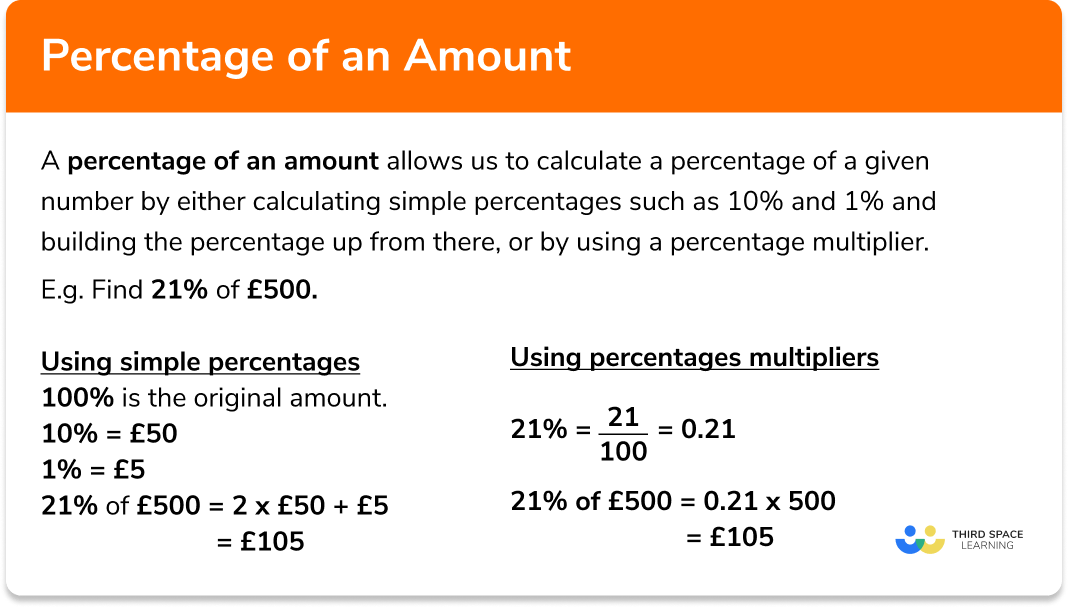
If you spend $1,000 on a marketing campaign for your online business and it generates $1,500 in profit, your ROI is 50%. In the context of the stock market, ROI must often be “annualized” to account for the time the money was invested. A 10% return over one year is significantly better than a 10% return over five years.
Dividend Yield and Interest Income
For income-focused investors, the dividend yield is a key percentage. It represents how much a company pays out in dividends each year relative to its stock price.
Dividend Yield = (Annual Dividend per Share / Price per Share) × 100.
If a stock costs $100 and pays $4 in annual dividends, the yield is 4%. Comparing yields across different stocks or bonds helps investors build a portfolio that generates consistent cash flow.
Inflation’s Impact on Purchasing Power
Inflation is expressed as a percentage representing the increase in the price of goods and services over time. If the inflation rate is 3%, $100 today will only have the purchasing power of $97 next year. To calculate your “real rate of return” on an investment, you must subtract the inflation percentage from your nominal return. If your savings account pays 2% interest but inflation is 3%, your “real” return is -1%. This realization is often the catalyst for individuals to move money from low-yield savings into higher-growth assets.
Strategic Percentages in Business and Side Hustles
For entrepreneurs and business owners, percentages are the vital signs of the company. They dictate whether a business is sustainable or headed for insolvency.
Gross vs. Net Profit Margins
Profitability is rarely measured in total dollars; it is measured in margins.
- Gross Profit Margin: (Revenue – Cost of Goods Sold) / Revenue × 100. This shows how efficiently a company produces its products.
- Net Profit Margin: (Net Income / Revenue) × 100. This is the “bottom line” percentage, showing how much of every dollar earned actually remains as profit after all expenses, taxes, and interest are paid.
A business with high revenue but a 2% net profit margin is extremely vulnerable to even minor increases in operating costs.
Markup vs. Margin: A Critical Distinction
Many new business owners confuse markup with margin, which can lead to pricing errors.
- Markup is the percentage added to the cost to get the selling price. (Profit / Cost).
- Margin is the percentage of the selling price that is profit. (Profit / Selling Price).
If an item costs $70 and you sell it for $100, your markup is 42.8% ($30/$70), but your margin is 30% ($30/$100). If you want a 50% margin, you cannot simply add a 50% markup; you must double the price.
Customer Acquisition Cost (CAC) and Lifetime Value (LTV)
In digital business, the ratio between CAC and LTV is a primary indicator of scalability. If it costs $20 to acquire a customer (CAC) and that customer spends $100 over their lifetime (LTV), your CAC is 20% of your LTV. Most venture-backed startups look for an LTV that is at least 300% (or 3x) the CAC.
Advanced Financial Formulas and Practical Shortcuts
While calculators are ubiquitous, the ability to perform mental “back-of-the-napkin” math is a hallmark of financial competence.
The Rule of 72
The Rule of 72 is a quick way to estimate how long it will take for an investment to double at a fixed annual rate of interest. You simply divide 72 by the annual interest rate.
- At a 6% return, your money doubles in 12 years (72 / 6).
- At a 10% return, your money doubles in 7.2 years (72 / 10).
This percentage-based shortcut is invaluable for long-term retirement planning.
Working with Excel and Google Sheets
In the professional world, most percentage work is done in spreadsheets.
- To format a decimal as a percentage, use the shortcut
Ctrl + Shift + %. - To calculate the percentage of a total in a list, use
=A1/SUM($A$1:$A$10). - To calculate a percentage increase in a cell, use
=(New_Cell - Old_Cell) / Old_Cell.
The Importance of the “Percentage Point”
It is vital to distinguish between a “percentage” and a “percentage point.” If an interest rate rises from 10% to 12%, it has increased by 2 percentage points. However, the percentage increase of the rate itself is actually 20% (since 2 is 20% of 10). In financial reporting, misinterpreting these two terms can lead to significant errors in analysis.
By mastering the various ways to work out and apply percentages, you gain a deeper level of control over your financial destiny. Whether you are optimizing a household budget or steering a multi-million dollar corporate ship, percentages provide the clarity needed to navigate the complexities of the modern economic landscape.
aViewFromTheCave is a participant in the Amazon Services LLC Associates Program, an affiliate advertising program designed to provide a means for sites to earn advertising fees by advertising and linking to Amazon.com. Amazon, the Amazon logo, AmazonSupply, and the AmazonSupply logo are trademarks of Amazon.com, Inc. or its affiliates. As an Amazon Associate we earn affiliate commissions from qualifying purchases.