
In the intricate world of personal finance, business operations, and investment strategies, numbers speak a universal language. Yet, raw figures alone often lack the power to convey true meaning or facilitate meaningful comparisons. This is where percentages step in, transforming isolated data points into actionable insights. Understanding “how to find the percent of two numbers” isn’t merely a mathematical exercise; it’s a fundamental skill, an indispensable tool that empowers individuals and organizations to make informed, strategic financial decisions. From calculating interest rates on loans, assessing investment returns, understanding profit margins, or simply budgeting household expenses, the ability to correctly interpret and compute percentages is the bedrock of financial literacy and success. This article delves into the core mechanics of percentage calculation, framed exclusively within its crucial applications in the money domain, offering a comprehensive guide to mastering this vital financial skill.
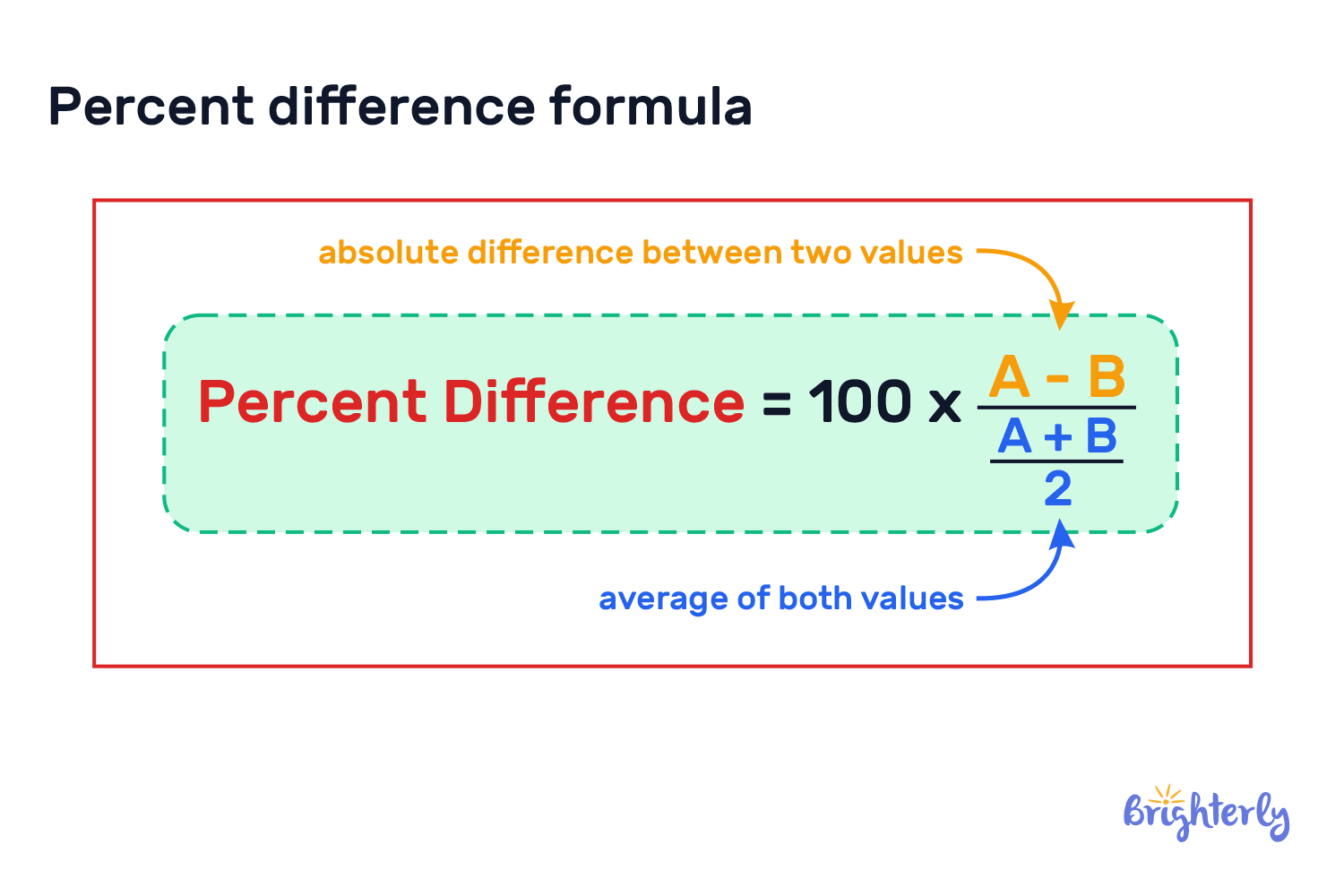
Understanding the Language of Finance: What is a Percentage?
At its heart, a percentage is a way of expressing a number as a fraction of 100. The term “percent” literally means “per hundred” or “out of one hundred.” It’s a standardized method for representing proportions, changes, or relationships between two numbers in a clear, comparable format. Instead of saying “you saved 10 dollars out of your 50-dollar purchase,” which requires mental calculation, stating “you saved 20 percent” immediately conveys the significance of the saving relative to the original amount.
The Core Concept: Part vs. Whole
Every percentage calculation fundamentally involves two key components: the part and the whole.
- The “whole” represents the total or original amount against which a comparison is being made. In financial terms, this could be your total income, the original investment amount, the full price of an item, or the total market size.
- The “part” is the specific portion or amount you are interested in expressing as a percentage of the whole. This might be your expenses, the profit generated, the discount offered, or the interest earned.
The clarity in distinguishing between the “part” and the “whole” is paramount. A common financial misstep arises from incorrectly identifying these elements, leading to skewed percentages and flawed conclusions. For instance, calculating the percentage of a budget spent requires the expense (part) to be divided by the total budget (whole), not by the remaining balance.
Why Percentages Reign Supreme in Money Matters
Percentages are not just an alternative way to express fractions; they are a superior method for financial analysis due to their inherent ability to standardize and compare diverse data.
- Comparability: Financial figures can vary wildly in scale. A $10,000 profit might seem large, but if it’s on a $1,000,000 investment, its significance (1% return) is different than if it’s on a $50,000 investment (20% return). Percentages allow for an apples-to-apples comparison across different scales, making it easy to evaluate performance, growth, or decline regardless of the absolute dollar amounts involved. This is crucial for comparing investment portfolios of different sizes, the growth rates of companies with varying revenues, or the effectiveness of different marketing campaigns.
- Standardization: Because percentages are always “out of 100,” they provide a universal metric. Whether you’re discussing inflation rates in different countries, comparing interest rates from various lenders, or analyzing the profit margins of competing businesses, percentages offer a consistent benchmark. This standardization facilitates clear communication and understanding, cutting through the noise of large, complex financial statements.
- Decision-Making: Ultimately, percentages empower better financial decision-making. Should you take a loan with a 5% interest rate or one with 7%? Is a stock with a 15% annual return outperforming one with 10%? Is your spending category for dining out representing 5% or 25% of your income? These questions are answered not by raw numbers, but by their percentage representation, guiding choices in budgeting, investing, borrowing, and business strategy.
The Fundamental Formula for Financial Clarity
At the core of all percentage calculations lies a simple, yet powerful, formula. Mastering this equation is the gateway to unlocking deeper financial understanding and making more astute monetary decisions.
Decoding the Percentage Equation: (Part / Whole) * 100
The universal formula for calculating a percentage is:
Percentage = (Part ÷ Whole) × 100
Let’s break down each element within a financial context:
- Part: This is the specific amount or quantity you want to express as a percentage. It could be the discount amount, the profit earned, the interest paid, or a particular expense category.
- Whole: This represents the total, the original amount, or the base against which the “part” is being compared. Examples include the original price of an item, the initial investment, the total loan amount, or your gross monthly income.
- ÷ (Division): This step calculates the decimal equivalent of the part’s proportion relative to the whole. The result will always be a decimal (e.g., 0.25 for 25%).
- × 100 (Multiplication by 100): This final step converts the decimal proportion into its percentage form. Multiplying by 100 effectively states “out of one hundred.”
Step-by-Step Calculation for Financial Scenarios
Let’s apply this formula to common financial situations:
Example: Calculating a Discount
Imagine you bought an item originally priced at $80 and received a $20 discount. What was the percentage discount?
- Identify the Part: The discount amount is $20.
- Identify the Whole: The original price is $80.
- Apply the Formula:
Percentage Discount = ($20 ÷ $80) × 100
Percentage Discount = 0.25 × 100
Percentage Discount = 25%
This tells you that you saved 25% on your purchase.
Example: Determining a Profit Margin
A small business made a profit of $15,000 on total revenues of $100,000. What is their profit margin percentage?
- Identify the Part: The profit is $15,000.
- Identify the Whole: The total revenues are $100,000.
- Apply the Formula:
Profit Margin = ($15,000 ÷ $100,000) × 100
Profit Margin = 0.15 × 100
Profit Margin = 15%
A 15% profit margin provides a standardized metric to compare this business’s profitability against industry benchmarks or its own performance over time.
Example: Understanding Tax Rates
If you paid $3,000 in taxes on an income of $50,000, what percentage of your income went to taxes?
- Identify the Part: Taxes paid are $3,000.
- Identify the Whole: Your income is $50,000.
- Apply the Formula:
Tax Rate = ($3,000 ÷ $50,000) × 100
Tax Rate = 0.06 × 100
Tax Rate = 6%
This quick calculation helps you understand your effective tax rate.
Mastering Key Financial Percentage Calculations
Beyond the basic “part of a whole” calculation, financial analysis often requires more nuanced applications of percentages. Understanding these specific scenarios can significantly enhance your financial acumen.
Calculating Percentage Increase and Decrease
One of the most frequent uses of percentages in finance is to measure change over time – be it the growth of an investment, the rise in inflation, or a reduction in expenses.
The formula for percentage change is:
Percentage Change = ((New Value – Original Value) ÷ Original Value) × 100
- If the result is positive, it’s a percentage increase.
- If the result is negative, it’s a percentage decrease (often stated as a positive percentage decrease, e.g., “expenses decreased by 10%”).
Example: Portfolio Growth
Your investment portfolio was valued at $50,000 at the beginning of the year and grew to $57,500 by year-end. What is the percentage increase?
- Original Value: $50,000
- New Value: $57,500
- Apply the Formula:
Percentage Increase = (($57,500 – $50,000) ÷ $50,000) × 100
Percentage Increase = ($7,500 ÷ $50,000) × 100
Percentage Increase = 0.15 × 100
Percentage Increase = 15%
Your portfolio achieved a 15% return, a far more insightful metric than simply stating a $7,500 gain.
Example: Budget Cuts
A department’s budget was $200,000 last year and was reduced to $180,000 this year. What is the percentage decrease?
- Original Value: $200,000
- New Value: $180,000
- Apply the Formula:
Percentage Change = (($180,000 – $200,000) ÷ $200,000) × 100
Percentage Change = (-$20,000 ÷ $200,000) × 100
Percentage Change = -0.10 × 100
Percentage Change = -10%
The budget was cut by 10%.

Understanding Basis Points and Percentage Points
In advanced financial discussions, particularly concerning interest rates, bond yields, or market spreads, you might encounter “basis points” and “percentage points.” These are distinct from percentage change.
- Percentage Points: This refers to the absolute difference between two percentages. If an interest rate increases from 3% to 4%, it’s a 1 percentage point increase (4% – 3% = 1%). It is not a 33.33% increase (which would be the percentage change: ((4-3)/3)*100). Misinterpreting this can lead to significant errors in financial analysis.
- Basis Points (bps): Often used for very small changes in interest rates or yields. One basis point is equal to 0.01% (one-hundredth of a percentage point). So, 100 basis points equals 1 percentage point. If an interest rate rises by 25 basis points, it means it increased by 0.25% (e.g., from 3.00% to 3.25%).
Understanding these distinctions is crucial for accurately interpreting financial news and professional reports.
Reverse Percentage Calculations
Sometimes, you know the final value after a percentage change and need to find the original amount. This is common in pricing, tax calculations, or when figuring out an initial investment.
The general approach is to understand that if an amount increased by X%, the new amount is (100+X)% of the original. If it decreased by X%, the new amount is (100-X)% of the original.
Original Amount = Final Amount / (1 + (Percentage Increase / 100))
Original Amount = Final Amount / (1 – (Percentage Decrease / 100))
Example: Price Before Tax
You bought a gadget for $108, which included a 8% sales tax. What was the price of the gadget before tax?
- Final Amount: $108
- Percentage Increase (Tax): 8%
- Apply the Formula:
Original Price = $108 / (1 + (8 / 100))
Original Price = $108 / (1 + 0.08)
Original Price = $108 / 1.08
Original Price = $100
The gadget cost $100 before tax.
Practical Applications: Leveraging Percentages for Smarter Money Decisions
The theoretical understanding of percentage calculations truly comes to life when applied to real-world financial scenarios. Percentages are the bedrock of sound financial management, from personal budgeting to complex corporate finance.
Personal Finance: Budgeting, Savings, and Debt Management
For individuals, percentages offer unparalleled clarity in managing daily finances and long-term goals.
- Budgeting: How much of your income goes towards housing (e.g., 30%), food (e.g., 15%), or savings (e.g., 20%)? Expressing expenses as a percentage of your total income allows you to quickly identify areas where you might be overspending or under-saving relative to financial guidelines (like the 50/30/20 rule). This helps in tracking spending, identifying areas for cutbacks, and ensuring financial health.
- Savings Goals: Calculating your savings rate (savings as a percentage of income) helps you gauge progress towards financial milestones like a down payment or retirement. Understanding compound interest, expressed as a percentage yield, demonstrates the power of consistent saving and investing over time.
- Debt Management: Interest rates on credit cards, mortgages, and personal loans are all expressed as percentages. Comparing these rates (Annual Percentage Rate – APR) is fundamental to choosing the most affordable borrowing options and understanding the true cost of debt. Recognizing how much of your monthly payment goes towards interest versus principal (especially in early mortgage years) provides critical insight.
Investing: Evaluating Returns and Risk
In the investment world, percentages are the primary language for assessing performance and making strategic allocations.
- Return on Investment (ROI): This critical metric measures the profitability of an investment as a percentage of its cost. Whether it’s a stock, real estate, or a business venture, ROI (Profit/Initial Investment × 100) allows investors to compare the efficiency of different opportunities.
- Portfolio Allocation: Investors typically diversify their holdings across various asset classes (stocks, bonds, real estate) based on percentages (e.g., 60% stocks, 30% bonds, 10% cash). Rebalancing a portfolio means adjusting the amounts to maintain these target percentages as market values fluctuate.
- Inflation Rates: Understanding the rate of inflation (the percentage increase in prices over time) is crucial for preserving purchasing power. If your investments are returning 5% but inflation is 3%, your real return is only 2%.
- Yields: Bond yields, dividend yields, and cap rates in real estate are all percentage-based metrics used to evaluate the income generated by an investment relative to its price.
Business Finance: Profitability and Performance Metrics
For businesses, percentages are indispensable for analyzing operational efficiency, financial health, and strategic growth.
- Gross and Net Profit Margins: These are among the most fundamental indicators of a company’s profitability. Gross Profit Margin (Gross Profit / Revenue × 100) shows the profitability of core operations, while Net Profit Margin (Net Income / Revenue × 100) reveals the percentage of revenue left after all expenses, including taxes.
- Return on Assets/Equity: These ratios (e.g., Net Income / Total Assets × 100) indicate how efficiently a company is using its assets or shareholder equity to generate profits, providing insight into management effectiveness.
- Sales Growth: Tracking sales growth as a percentage year-over-year or quarter-over-quarter is a key indicator of a business’s expansion and market penetration.
- Expense Ratios: Analyzing individual expense categories (e.g., marketing, salaries) as a percentage of total revenue helps businesses control costs and optimize resource allocation.
Tools and Tips for Accurate Percentage Calculations
While the underlying math is straightforward, accuracy and efficiency in calculating percentages are enhanced by leveraging modern tools and being aware of common pitfalls.
Leveraging Spreadsheets and Financial Calculators
For most financial professionals and informed individuals, manual calculations are a thing of the past.
- Spreadsheets (e.g., Excel, Google Sheets): These are perhaps the most powerful and versatile tools. They allow for complex calculations, automatic updates, scenario analysis, and clear presentation of data. Using formulas like
= (Part/Whole)*100or= ( (New-Old)/Old ) * 100makes calculations instant and less prone to error. They are indispensable for budgeting, investment tracking, and business financial modeling. - Dedicated Financial Calculators: Devices like the HP 12c or Texas Instruments BA II Plus are designed for financial computations, offering built-in functions for percentages, interest, present/future value, and more.
- Online Calculators and Apps: Numerous websites and mobile applications offer quick percentage calculations, tip calculators, loan payment calculators, and compound interest estimators.
Common Pitfalls and How to Avoid Them
Even with tools, understanding common mistakes ensures accuracy:
- Misinterpreting the Base (“Whole”): This is arguably the most common error. Always ensure you are dividing by the correct “original” or “total” amount. For instance, a salary increase is calculated against your previous salary, not your new one.
- Rounding Errors: Be mindful of when and how you round. For critical financial decisions, carry more decimal places during intermediate steps and only round at the final output. Slight rounding discrepancies can accumulate significantly over large sums or long periods (e.g., compound interest).
- Percentage Points vs. Percentage Change: As discussed, confusing these two can lead to drastic misinterpretations of financial data, especially concerning interest rates and yields.
- Lack of Context: A percentage, without context, is just a number. A 100% return sounds great, but if it’s on a $1 investment, it’s not financially significant. Always relate percentages back to their absolute dollar amounts and the larger financial picture.

Cultivating a Percentage Mindset for Financial Acumen
Ultimately, mastering percentages isn’t just about memorizing a formula; it’s about developing a “percentage mindset.” This means instinctively looking for relative values rather than just absolute ones. When you see a price discount, immediately think about the percentage saved. When evaluating an investment, think about its percentage return relative to its risk. When analyzing your budget, consider what percentage of your income each category consumes. This way of thinking fosters a deeper, more insightful understanding of financial information, making you a more astute consumer, investor, and financial manager.
By thoroughly understanding how to find the percent of two numbers and its myriad applications, individuals and businesses unlock a powerful analytical tool that is critical for navigating the complexities of the financial world, making smarter choices, and ultimately, achieving monetary success.
aViewFromTheCave is a participant in the Amazon Services LLC Associates Program, an affiliate advertising program designed to provide a means for sites to earn advertising fees by advertising and linking to Amazon.com. Amazon, the Amazon logo, AmazonSupply, and the AmazonSupply logo are trademarks of Amazon.com, Inc. or its affiliates. As an Amazon Associate we earn affiliate commissions from qualifying purchases.