
In the dynamic world of finance, business, and personal wealth management, understanding the trajectory of change is paramount. Whether you’re assessing a company’s financial health, tracking your investment portfolio’s performance, or analyzing economic trends, the ability to accurately calculate growth percentage is a fundamental skill. This metric provides a clear, standardized way to quantify change over time, offering invaluable insights into progress, regression, and overall momentum. It transforms raw numbers into actionable intelligence, enabling better decision-making for investors, entrepreneurs, and individuals alike.
Understanding the Essence of Growth Percentage
At its core, growth percentage is a mathematical concept that expresses the relative change in a quantity over a specific period, represented as a percentage. It moves beyond simply stating the absolute difference, providing context that scales the change against the initial value. This scaling is crucial because an absolute increase of $100 might be negligible for a multi-million dollar corporation but transformative for a small startup.
What is Growth Percentage?
Growth percentage, also known as percentage change, measures the rate of increase (or decrease) of a variable over time. It’s a dimensionless number, meaning it’s not expressed in units like dollars or units, but as a percentage, making it universally applicable and easy to compare across different scales and metrics. From revenue and profit to customer acquisition, market share, or even personal savings, growth percentage is the universal language for measuring progress.
The fundamental idea is to compare an “ending value” to a “starting value” and then express that difference as a proportion of the starting value. This normalization allows for meaningful comparisons across disparate data sets and varying magnitudes. A 10% growth rate signifies the same proportional increase, regardless of whether the initial value was $100 or $1,000,000.
Why Growth Percentage Matters in Finance and Business
The significance of growth percentage cannot be overstated within the financial and business realms. It serves multiple critical functions:
- Performance Evaluation: For businesses, growth percentage is a key indicator of success and operational efficiency. Tracking revenue growth, profit growth, or sales growth over quarters and years allows management to assess strategies, identify successful initiatives, and pinpoint areas needing improvement. Investors heavily rely on these figures to gauge a company’s potential and health.
- Investment Analysis: For investors, understanding the growth rate of a company’s earnings, dividends, or market value is fundamental. It helps in identifying growth stocks, evaluating the return on investment (ROI) of a portfolio, and making informed decisions about buying, holding, or selling assets.
- Forecasting and Planning: Businesses use historical growth rates to forecast future performance, set realistic targets, and allocate resources effectively. Financial analysts use them to project future cash flows and valuations.
- Comparative Analysis: Growth percentages allow for apples-to-apples comparisons. You can compare the growth of one company against its competitors, against industry benchmarks, or against its own historical performance, even if their absolute sizes are vastly different.
- Economic Indicators: At a macroeconomic level, growth rates for GDP, inflation, employment, and consumer spending provide vital insights into the overall health and direction of an economy.
The Fundamental Formula for Growth Percentage
The calculation of growth percentage is straightforward, rooted in a simple yet powerful formula. Mastering this basic equation is the cornerstone for all subsequent, more complex financial analyses.
The Simple Growth Rate Calculation
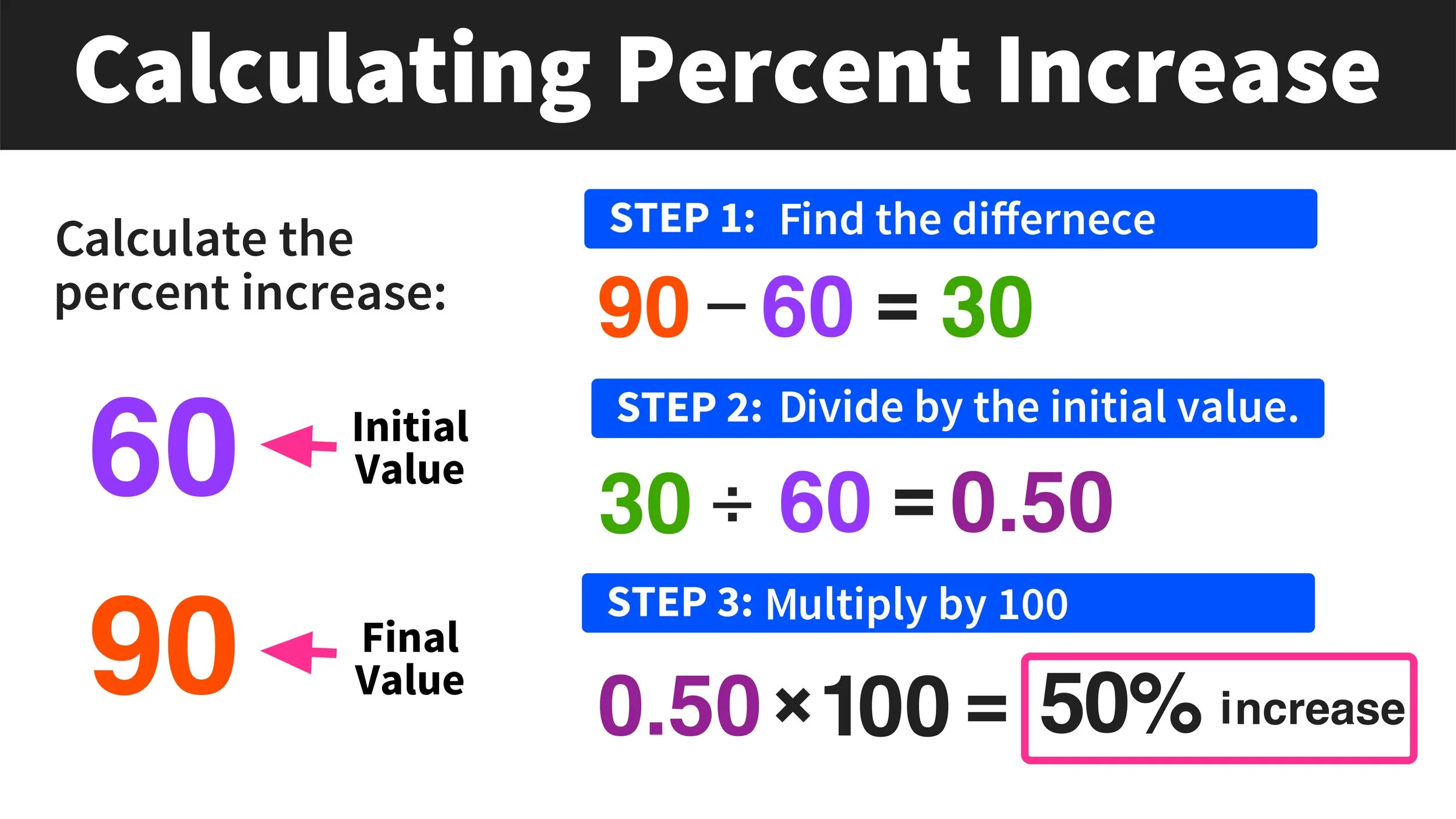
The most common and fundamental formula for calculating growth percentage is:
Growth Percentage = [(Ending Value – Starting Value) / Starting Value] * 100
Let’s break down each component:
- Ending Value: This is the value of the metric at the end of the period you are analyzing (e.g., current revenue, latest stock price, end-of-year savings).
- Starting Value: This is the value of the metric at the beginning of the period (e.g., previous year’s revenue, initial stock price, beginning-of-year savings).
- Difference (Ending Value – Starting Value): This calculates the absolute change in the metric.
- Division by Starting Value: Dividing the difference by the starting value normalizes the change, expressing it as a proportion of the initial base.
- Multiplication by 100: This converts the decimal proportion into a percentage, making it easily interpretable.
If the result is positive, it indicates growth. If it’s negative, it indicates a decline (negative growth).
Practical Examples Across Domains
Let’s illustrate this formula with examples relevant to the “Money” category:
Example 1: Business Revenue Growth
A company’s annual revenue was $500,000 in Year 1 and grew to $650,000 in Year 2.
- Starting Value = $500,000
- Ending Value = $650,000
- Growth Percentage = [($650,000 – $500,000) / $500,000] * 100
- Growth Percentage = [$150,000 / $500,000] * 100
- Growth Percentage = 0.30 * 100 = 30%
The company’s revenue grew by 30%.
Example 2: Investment Portfolio Growth
You invested $10,000 in a mutual fund. After one year, your investment is worth $10,750.
- Starting Value = $10,000
- Ending Value = $10,750
- Growth Percentage = [($10,750 – $10,000) / $10,000] * 100
- Growth Percentage = [$750 / $10,000] * 100
- Growth Percentage = 0.075 * 100 = 7.5%
Your investment grew by 7.5%.
Example 3: Decline in Sales
A product line sold 1,200 units last quarter and 1,080 units this quarter.
- Starting Value = 1,200
- Ending Value = 1,080
- Growth Percentage = [(1,080 – 1,200) / 1,200] * 100
- Growth Percentage = [-120 / 1,200] * 100
- Growth Percentage = -0.10 * 100 = -10%
Sales declined by 10%.
Beyond Simple Growth: Advanced Considerations
While the simple growth rate is powerful, many financial scenarios require a more nuanced approach, especially when dealing with multiple periods or compounding effects.
Annualized Growth Rates
When comparing growth over different timeframes (e.g., quarterly vs. monthly), it’s often useful to annualize the growth rate to provide a standardized, comparable metric.
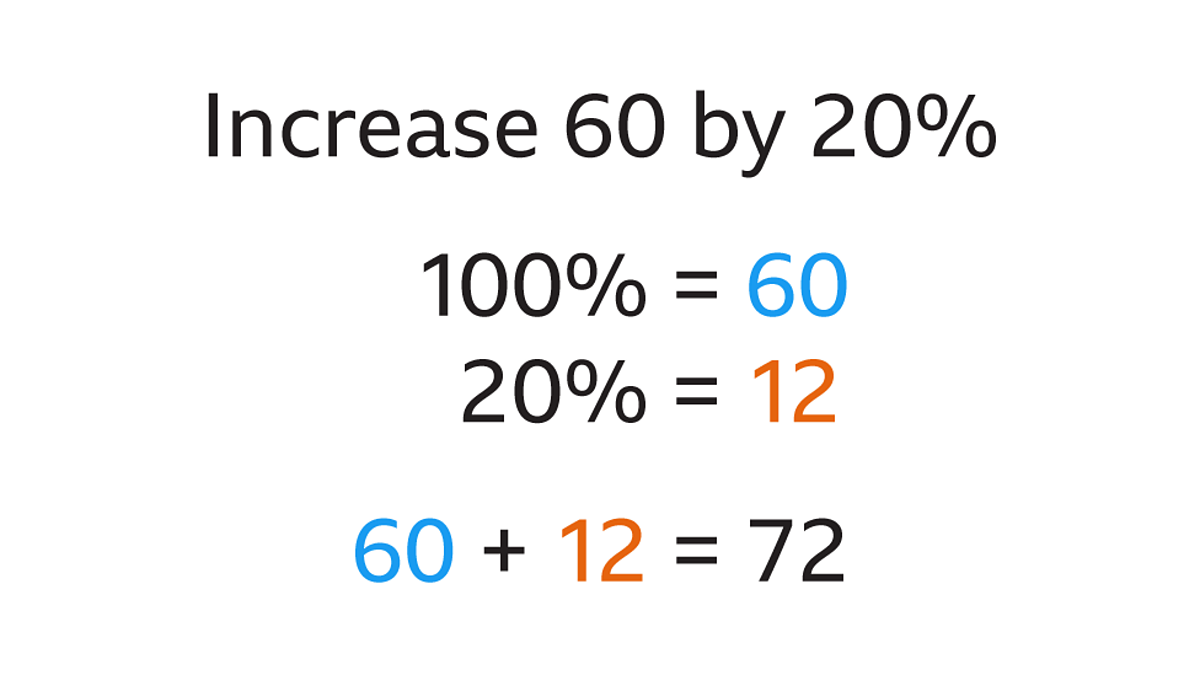
For example, if a business grew 2% in a single quarter, its annualized growth rate (assuming consistent growth) would be:
(1 + Quarterly Growth Rate)^4 – 1
(1 + 0.02)^4 – 1 = 1.0824 – 1 = 0.0824 or 8.24%
This helps in comparing a company’s quarterly performance to its yearly targets or to the annual performance of other companies.
Compound Annual Growth Rate (CAGR)
The Compound Annual Growth Rate (CAGR) is a crucial metric for evaluating investments and businesses over multiple periods, especially when growth is not linear. CAGR provides a smoothed, average annual growth rate assuming the profits were reinvested at the end of each period. It effectively accounts for the compounding effect.
The formula for CAGR is:
CAGR = [(Ending Value / Starting Value)^(1 / Number of Years)] – 1
Let’s illustrate with an investment example:
Suppose an investment grew from $10,000 to $15,000 over 5 years.
- Starting Value = $10,000
- Ending Value = $15,000
- Number of Years = 5
- CAGR = [($15,000 / $10,000)^(1/5)] – 1
- CAGR = [(1.5)^(0.2)] – 1
- CAGR = 1.08447 – 1 = 0.08447 or 8.45%
This means, on average, the investment grew by 8.45% each year, even if the actual year-to-year growth fluctuated. CAGR is particularly useful for presenting the “average” growth over a period, making it a favorite for venture capitalists and long-term investors.
Handling Negative Growth and Fluctuations
When dealing with negative growth (declines), the standard growth percentage formula still applies, yielding a negative result. It’s essential to interpret this correctly as a contraction rather than an expansion.
Fluctuations are common in financial data. While CAGR provides a smoothed average, it’s also important to look at individual period growth rates to understand volatility. A high CAGR achieved through highly volatile year-on-year growth (e.g., +50%, -20%, +30%) might indicate higher risk compared to a consistent, albeit lower, annual growth. Always consider the context and the nature of the data when interpreting growth figures.
Applying Growth Percentage in Real-World Scenarios
The versatility of growth percentage makes it an indispensable tool across various financial and business applications.
Business Performance Analysis
Businesses use growth percentage extensively to track and analyze key performance indicators (KPIs):
- Revenue Growth: A primary measure of a company’s expansion and market acceptance.
- Profit Growth (EBITDA, Net Income): Indicates efficiency and profitability improvement.
- Customer Growth: Shows expansion of customer base.
- Market Share Growth: Reveals competitive positioning.
- Sales per Employee Growth: A productivity metric.
Managers use these figures to evaluate strategic initiatives, justify budget requests, and report to stakeholders. Investors scrutinize these percentages to assess a company’s financial health, competitive strength, and future prospects.
Personal Finance and Investment Tracking
For individuals, growth percentage is equally vital:
- Investment Portfolio Performance: Calculate the growth of your 401(k), IRA, or brokerage account over various periods to understand your returns and compare them against benchmarks or personal goals.
- Savings Growth: Track the growth of your emergency fund or other savings accounts to ensure you’re meeting your financial objectives.
- Net Worth Growth: Calculate the percentage change in your net worth (assets minus liabilities) year over year to get a comprehensive view of your financial progress.
- Income Growth: Monitor the percentage increase in your salary or passive income streams to assess your earning trajectory.
Understanding these growth rates empowers you to make informed decisions about budgeting, saving, and investing to achieve your personal financial goals.
Economic and Market Insights
At a broader level, growth percentages are critical for understanding economic health and market trends:
- Gross Domestic Product (GDP) Growth: The most common indicator of economic growth, representing the percentage change in the total value of goods and services produced in a country.
- Inflation Rate: The percentage increase in the general price level of goods and services, indicating the erosion of purchasing power.
- Unemployment Rate Change: Though not a direct growth percentage, changes in the unemployment rate are closely watched as an indicator of economic health.
- Stock Market Index Growth: The percentage change in indices like the S&P 500 or Dow Jones Industrial Average reflects overall market performance and investor sentiment.
These macroeconomic growth rates influence policy decisions, investment strategies, and public confidence.
Leveraging Tools and Avoiding Common Pitfalls
While the calculation is straightforward, leveraging the right tools and being mindful of common pitfalls ensures accurate and meaningful analysis.
Digital Tools for Calculation
For simple calculations, a basic calculator or spreadsheet software like Microsoft Excel or Google Sheets is sufficient.
- Spreadsheets: Offer immense flexibility. You can set up templates for recurring calculations, link data, and visualize trends with charts. The formula
=(B2-A2)/A2(where A2 is starting and B2 is ending value) and then formatting as a percentage is standard. For CAGR, you’d use=(B2/A2)^(1/C2)-1(where C2 is the number of periods). - Financial Calculators: Many online financial calculators specifically handle CAGR and other multi-period growth calculations.
- Business Intelligence (BI) Tools: For large datasets and complex analysis, BI tools like Tableau or Power BI can automate growth percentage calculations and present them in interactive dashboards.

Misinterpretations and Contextual Nuances
Merely stating a growth percentage without context can be misleading. Consider these nuances:
- Small Base Effect: A large percentage growth from a very small starting base can appear impressive but may not translate to significant absolute gains. For example, growing from $100 to $200 is 100% growth, but only a $100 absolute increase.
- Time Period: Always specify the period over which growth is measured (e.g., year-over-year, quarter-over-quarter, five-year CAGR).
- Industry Benchmarks: Compare growth rates against industry averages and competitors to understand if the performance is truly exceptional or merely average.
- External Factors: Be aware of economic cycles, market trends, regulatory changes, or one-time events that might distort growth figures. A sudden spike due to a single large contract might not be sustainable.
- Accounting Practices: Understand the underlying accounting methods. Changes in how revenue is recognized or expenses are categorized can impact reported growth rates.
- Non-Financial Factors: While growth percentage is quantitative, qualitative factors (e.g., brand reputation, management quality, competitive landscape) also play a crucial role in a company’s long-term prospects.
In conclusion, the ability to calculate and critically interpret growth percentage is a foundational skill for anyone navigating the financial landscape. From assessing personal investments to evaluating corporate performance or understanding economic shifts, this metric provides clarity and context. By understanding its formula, applying it correctly, and considering its nuances, you equip yourself with a powerful tool for informed decision-making in the complex world of money.
aViewFromTheCave is a participant in the Amazon Services LLC Associates Program, an affiliate advertising program designed to provide a means for sites to earn advertising fees by advertising and linking to Amazon.com. Amazon, the Amazon logo, AmazonSupply, and the AmazonSupply logo are trademarks of Amazon.com, Inc. or its affiliates. As an Amazon Associate we earn affiliate commissions from qualifying purchases.