
Understanding how to add a percentage to a number is a fundamental skill that underpins a vast array of financial decisions, from calculating sales tax and investment returns to understanding price increases and business markups. It’s not merely a mathematical operation; it’s a gateway to informed financial literacy, empowering individuals and businesses to make smarter choices. In the world of money, percentages are everywhere, influencing everything from the interest rate on your savings account to the discount on a new purchase. Mastering this seemingly simple calculation can dramatically improve your ability to manage personal finances, analyze business opportunities, and strategize for future growth.
This article will demystify the process of adding a percentage to a number, grounding the concept firmly within the “Money” niche. We’ll explore the core mechanics, delve into practical applications in personal and business finance, and discuss how to leverage financial tools to perform these calculations efficiently and accurately.
The Fundamentals of Percentage Calculation: A Financial Lens
At its core, a percentage represents a fraction of a whole, specifically a hundredth. So, 5% is equivalent to 5/100 or 0.05. When we talk about adding a percentage to a number, we are essentially calculating an increase. This increase could be a profit margin, a tax, an interest accrual, or a growth rate.
Understanding Percentages as Decimals for Financial Accuracy
The most straightforward way to work with percentages in calculations is to convert them into their decimal equivalents. This transformation simplifies the arithmetic and makes it compatible with standard calculators and financial software.
To convert a percentage to a decimal, simply divide the percentage by 100, or move the decimal point two places to the left.
- 10% becomes 0.10
- 25% becomes 0.25
- 7.5% becomes 0.075
- 120% becomes 1.20
This decimal form is crucial because it allows us to directly multiply by the base number to find the percentage amount. For instance, to find 5% of $100, you multiply $100 * 0.05 = $5.
The Basic Formula: Calculating a Percentage Increase
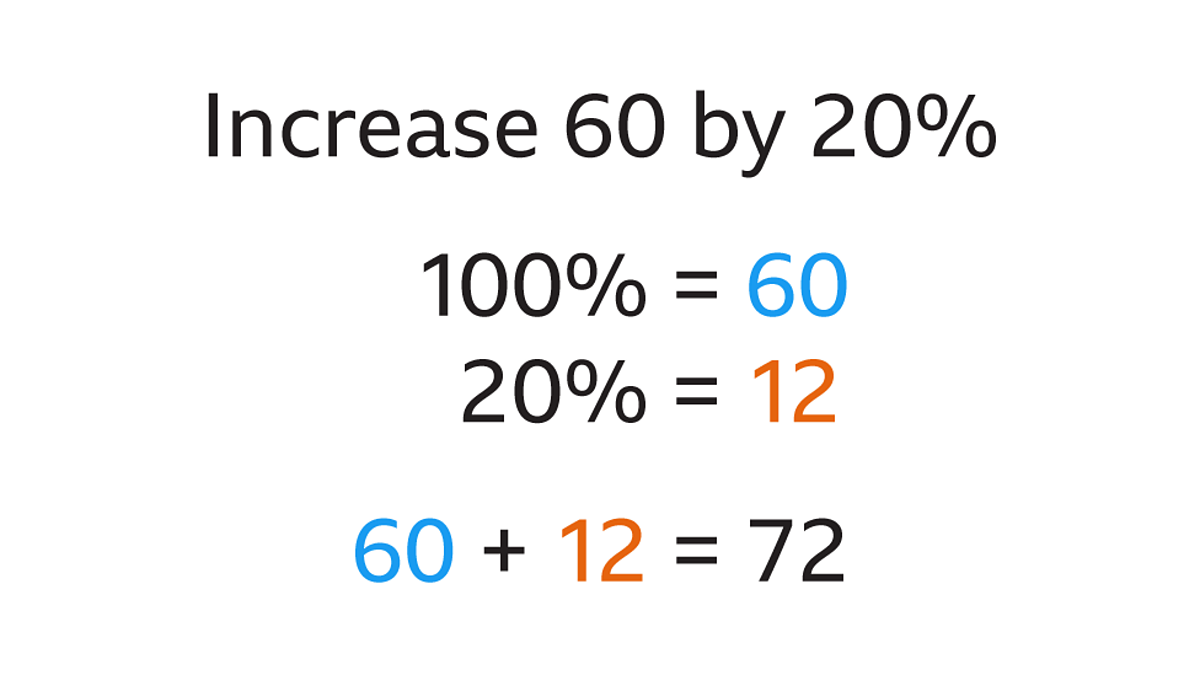
Once you have the decimal equivalent, adding a percentage to a number involves two main steps:
- Calculate the Percentage Amount: Multiply the original number by the decimal form of the percentage.
- Percentage Amount = Original Number × (Percentage / 100)
- Add to the Original Number: Add the calculated percentage amount back to the original number.
- Final Number = Original Number + Percentage Amount
Let’s illustrate with a simple financial example: If you have an investment of $1,000 that grows by 8%.
- Percentage Amount = $1,000 × (8 / 100) = $1,000 × 0.08 = $80
- Final Investment Value = $1,000 + $80 = $1,080
There’s also a shortcut method, especially useful when you want to find the final amount directly:
- Shortcut Formula: Final Number = Original Number × (1 + (Percentage / 100))
Using the same investment example:
- Final Investment Value = $1,000 × (1 + (8 / 100)) = $1,000 × (1 + 0.08) = $1,000 × 1.08 = $1,080.
This shortcut is particularly efficient for rapid calculations and is the foundation for many financial models, including compound interest.
Real-World Applications in Personal Finance
For individuals, understanding how to add a percentage to a number is indispensable for everyday financial management. It allows for accurate budgeting, smart shopping, and clear comprehension of financial obligations.
Calculating Sales Tax, Gratuities, and Surcharges
Perhaps the most common daily application is in calculating additional costs like sales tax and tips.
-
Sales Tax: Imagine you buy an item for $50, and the local sales tax is 7%.
- Tax Amount = $50 × 0.07 = $3.50
- Total Cost = $50 + $3.50 = $53.50
- Using the shortcut: Total Cost = $50 × 1.07 = $53.50
-
Gratuities (Tips): When dining out, a 15-20% tip is customary. For a $75 meal, a 18% tip would be:
- Tip Amount = $75 × 0.18 = $13.50
- Total Bill = $75 + $13.50 = $88.50
- Using the shortcut: Total Bill = $75 × 1.18 = $88.50
These calculations ensure you’re never caught off guard by the final bill and can budget accurately for all expenses.
Understanding Loan Interest and Savings Growth
Percentages are the bedrock of understanding how interest works on loans, mortgages, and credit cards, as well as how your savings and investments grow.
- Simple Interest on a Loan: If you borrow $5,000 at a simple annual interest rate of 6%, the interest added for one year would be:
- Interest Amount = $5,000 × 0.06 = $300
- Total Repayable (after one year) = $5,000 + $300 = $5,300

- Compound Interest (Simplified): While compound interest is more complex, involving successive calculations, the core principle is adding a percentage. If you have $1,000 in a savings account earning 2% interest compounded annually:
- Year 1 Balance = $1,000 × 1.02 = $1,020
- Year 2 Balance = $1,020 × 1.02 = $1,040.40
This demonstrates how the percentage is added to the new, increased principal each period, leading to exponential growth.
Budgeting for Increases (Rent, Utilities, Groceries)
Inflation and market changes mean that the cost of living rarely stays stagnant. Being able to project percentage increases is vital for effective budgeting.
- Rent Increase: If your current rent is $1,500 and your landlord announces a 4% increase for the next year:
- Increase Amount = $1,500 × 0.04 = $60
- New Monthly Rent = $1,500 + $60 = $1,560
Knowing this allows you to adjust your budget proactively.
- Utility Cost Projections: If your average monthly utility bill is $120 and you anticipate a 5% increase due to rising energy costs:
- Projected Increase = $120 × 0.05 = $6
- New Projected Bill = $120 + $6 = $126
Business Finance and Investment Growth
For businesses and investors, adding percentages is an everyday operation essential for pricing products, analyzing profitability, and forecasting financial performance.
Markup, Profit Margins, and Pricing Strategies
Businesses often use percentages to determine selling prices, ensuring they cover costs and achieve desired profit margins.
-
Calculating Markup: If a product costs a retailer $20 to acquire, and they want to apply a 50% markup to cover overhead and profit:
- Markup Amount = $20 × 0.50 = $10
- Selling Price = $20 + $10 = $30
- Using the shortcut: Selling Price = $20 × 1.50 = $30
-
Pricing for Profit: If a service costs $500 to deliver and the business aims for a 30% profit margin on the cost:
- Profit Amount = $500 × 0.30 = $150
- Client Invoice = $500 + $150 = $650
These calculations are critical for sustainable business operations and competitive pricing.
Projecting Investment Returns and Compound Interest
Investors heavily rely on percentage additions to forecast potential returns and understand the power of compound interest.
-
Single Period Return: If you invest $10,000 in a stock that is projected to grow by 12% in a year:
- Expected Growth = $10,000 × 0.12 = $1,200
- Projected Value = $10,000 + $1,200 = $11,200
-
Understanding Compounding: As seen in personal finance, the formula
Original Number × (1 + (Percentage / 100))becomes incredibly powerful over multiple periods. This is the essence of compound interest, where your earnings also start earning interest. For example, a $5,000 investment with an average annual return of 7% over 5 years (compounded annually):- Year 1: $5,000 × 1.07 = $5,350
- Year 2: $5,350 × 1.07 = $5,724.50
- Year 3: $5,724.50 × 1.07 = $6,125.21
- Year 4: $6,125.21 × 1.07 = $6,554.97
- Year 5: $6,554.97 × 1.07 = $7,013.82
This highlights how consistent percentage additions over time lead to significant wealth accumulation.
Analyzing Business Growth and Inflation
Beyond individual transactions, percentages are vital for macro-financial analysis.
- Revenue Growth: If a company’s revenue was $1,000,000 last year and they project a 15% growth this year:
- Projected Revenue = $1,000,000 × 1.15 = $1,150,000
This helps in setting targets and evaluating performance.
- Projected Revenue = $1,000,000 × 1.15 = $1,150,000
- Impact of Inflation: Inflation effectively adds a percentage to the cost of goods and services over time, eroding purchasing power. If an item costs $100 today and inflation is 3% annually, in one year it will effectively cost $100 × 1.03 = $103 to buy the same item (or rather, your $100 will only buy $97.08 worth of goods compared to today). Understanding this helps in financial planning and investment strategies.
Leveraging Tools for Percentage Calculations
While the underlying math is simple, efficiency and accuracy are paramount in financial calculations. Modern tools can streamline this process, especially when dealing with complex scenarios or large datasets.
Using Calculators and Spreadsheets Effectively
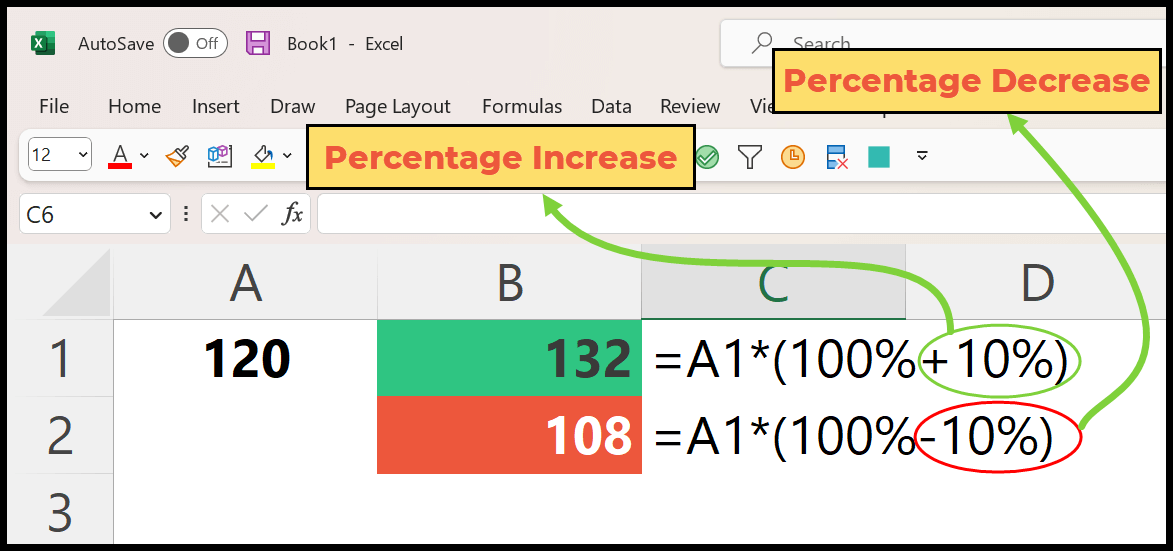
For most basic calculations, a standard calculator or the calculator app on your phone is sufficient. For more intricate financial planning, especially involving multiple percentage additions or large datasets, spreadsheets like Microsoft Excel or Google Sheets are invaluable.
- Calculators: Enter the original number, then multiply by
1 + (percentage as decimal). E.g., for $100 + 5%, enter100 * 1.05 =. - Spreadsheets: Spreadsheets allow you to set up formulas that automatically calculate percentage additions.
- If your original number is in cell A1 and the percentage (as a decimal) is in B1, your formula for the final number would be
=A1 * (1 + B1). - This is incredibly useful for creating budgets, sales projections, or investment tracking sheets where you can easily update percentages or original values and see instant results. You can also drag formulas to apply them across hundreds or thousands of rows of data.
- If your original number is in cell A1 and the percentage (as a decimal) is in B1, your formula for the final number would be
Financial Software and Apps
Many financial software programs and apps incorporate percentage calculations automatically, often without you even realizing it.
- Budgeting Apps: When you categorize an expense and set a budget, percentage-based tools might project future spending based on historical data.
- Investment Platforms: These platforms display portfolio growth in percentage terms and allow you to model future growth based on assumed annual percentage returns, often incorporating compound interest calculations seamlessly.
- Accounting Software: For businesses, accounting software automatically calculates sales tax, applies markups, and processes payroll deductions and benefits (which are often percentage-based).
While these tools simplify the process, a foundational understanding of “how do you add a percentage to a number” ensures you can verify their outputs, understand the underlying logic, and confidently adapt to new financial scenarios. It’s the difference between blindly trusting a number and genuinely understanding its derivation and implications for your financial well-being.
In conclusion, the ability to add a percentage to a number is a cornerstone of financial literacy. From personal budgeting and shopping to complex business forecasting and investment strategies, this skill empowers you to navigate the monetary landscape with clarity and confidence. By mastering the simple formulas and understanding their diverse applications, you gain an invaluable tool for making informed financial decisions in all aspects of life.
aViewFromTheCave is a participant in the Amazon Services LLC Associates Program, an affiliate advertising program designed to provide a means for sites to earn advertising fees by advertising and linking to Amazon.com. Amazon, the Amazon logo, AmazonSupply, and the AmazonSupply logo are trademarks of Amazon.com, Inc. or its affiliates. As an Amazon Associate we earn affiliate commissions from qualifying purchases.