
In the dynamic world of personal finance, investing, and business operations, understanding growth is paramount. Whether you’re tracking the appreciation of your investments, analyzing a boost in your salary, or evaluating your company’s quarterly revenue, the ability to accurately calculate the “percent of increase” is an indispensable skill. It transforms raw numbers into meaningful insights, allowing you to gauge performance, make informed decisions, and set realistic financial goals. This guide will demystify the process, providing a comprehensive, step-by-step approach to calculating percent of increase, anchored firmly within the domain of money and finance.
Understanding the Core Concept of Percent of Increase in Finance
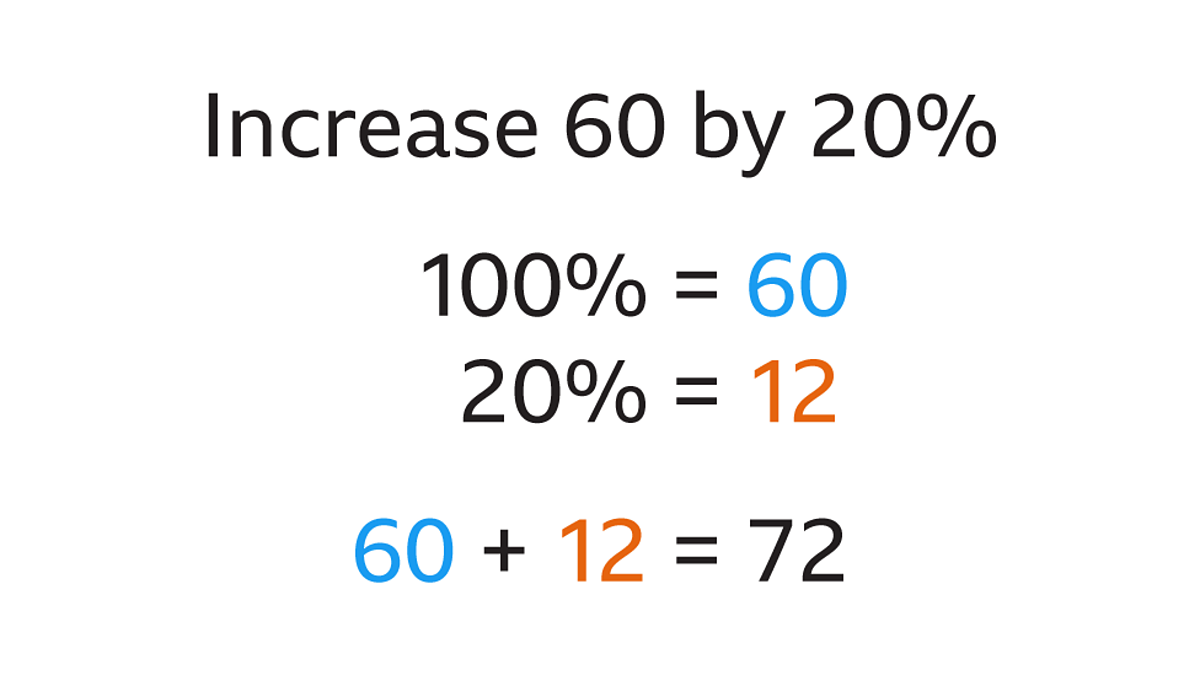
At its heart, the percent of increase is a simple yet powerful mathematical tool. It quantifies the relative change between an original value and a new, larger value. In financial terms, it tells us “by what percentage” something has grown or risen.
What is Percent of Increase?
Simply put, the percent of increase measures the magnitude of growth as a proportion of the starting amount. It’s not just about knowing that your investment grew by $1,000; it’s about understanding that it grew by 10% or 20%. This relative measure is crucial because a $1,000 increase means very different things if your starting investment was $5,000 versus $100,000. It provides context, allowing for apples-to-apples comparisons across different scales and timeframes.
Why is it Crucial for Financial Analysis?
The utility of percent of increase in financial analysis cannot be overstated. It’s a foundational metric for:
- Performance Comparison: How did your investment portfolio perform this year compared to last? Did it outpace inflation or other market benchmarks?
- Goal Tracking: Are you on track to meet your savings goals? By what percentage has your emergency fund grown?
- Decision Making: Should you accept a job offer with a 5% raise or hold out for 10%? Is a particular stock’s 15% annual gain truly good compared to its peers or market averages?
- Trend Identification: Recognizing patterns of growth or decline in personal spending, business revenue, or asset values over time.
- Business Valuation: Analyzing the growth trajectory of a company’s sales, profits, or customer base to assess its potential.
Without understanding this concept, financial data remains just numbers. With it, you unlock a deeper comprehension of financial health, opportunity, and risk.
The Definitive Formula: Step-by-Step Calculation for Financial Growth
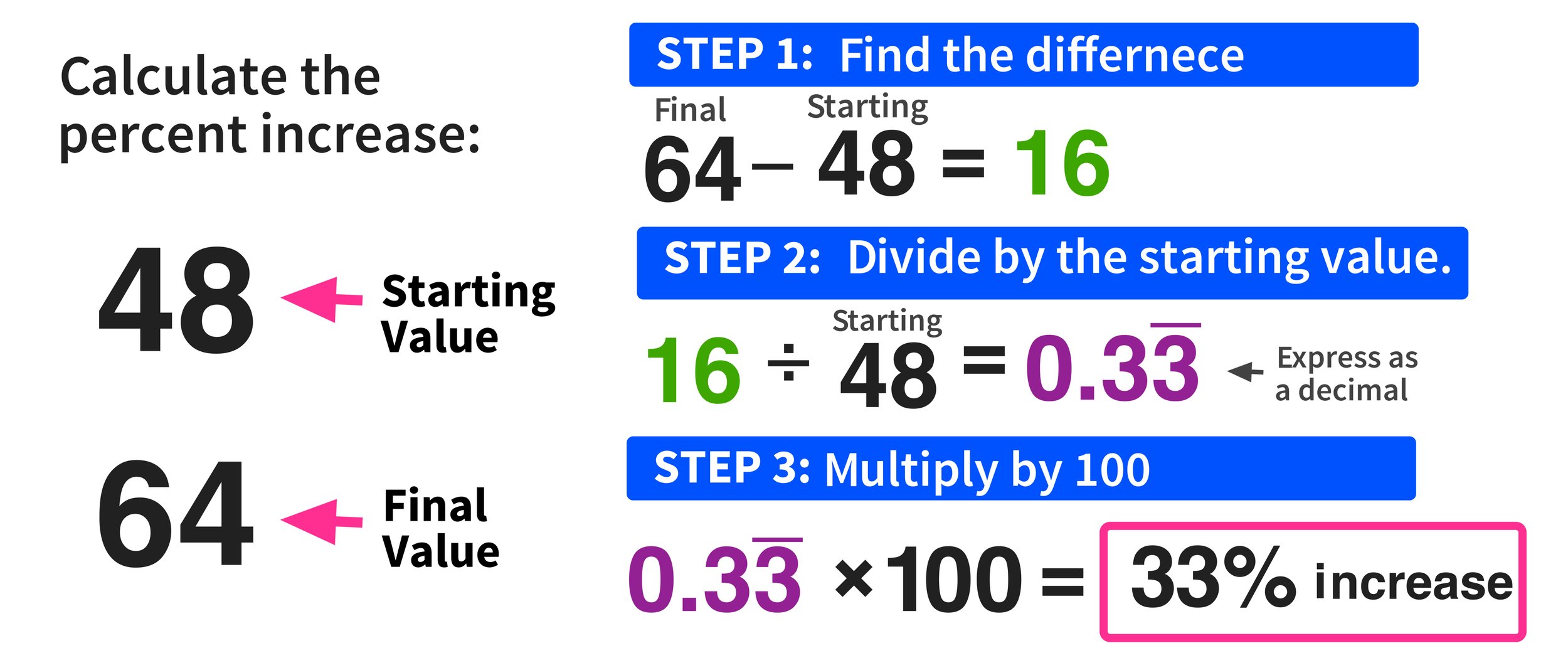
Calculating the percent of increase involves a straightforward, three-step process. Each step builds upon the last, leading you to an accurate and interpretable percentage.
Step 1: Calculate the Absolute Increase (The Difference)
The first step is to determine the raw, absolute amount by which the value has increased. This is done by subtracting the original (or starting) value from the new (or ending) value.
Formula: Absolute Increase = New Value - Original Value
Let’s illustrate with a financial example:
- Scenario 1 (Investment): You invested $10,000 in a stock, and it’s now worth $12,500.
- Absolute Increase = $12,500 (New Value) – $10,000 (Original Value) = $2,500
- Scenario 2 (Salary): Your annual salary increased from $60,000 to $63,000.
- Absolute Increase = $63,000 (New Value) – $60,000 (Original Value) = $3,000
- Scenario 3 (Business Revenue): A company’s quarterly revenue rose from $500,000 to $575,000.
- Absolute Increase = $575,000 (New Value) – $500,000 (Original Value) = $75,000
This absolute increase is the numerator in our percentage calculation.
Step 2: Divide by the Original Value (Relative Change)
Once you have the absolute increase, the next step is to divide this increase by the original value. This step converts the absolute change into a relative proportion, expressing the increase as a fraction or decimal of the starting amount. This normalization is critical for comparing growth rates across different base values.
Formula: Relative Increase = Absolute Increase / Original Value
Continuing with our examples:
- Scenario 1 (Investment): Absolute Increase = $2,500; Original Value = $10,000
- Relative Increase = $2,500 / $10,000 = 0.25
- Scenario 2 (Salary): Absolute Increase = $3,000; Original Value = $60,000
- Relative Increase = $3,000 / $60,000 = 0.05
- Scenario 3 (Business Revenue): Absolute Increase = $75,000; Original Value = $500,000
- Relative Increase = $75,000 / $500,000 = 0.15
At this stage, you have the increase as a decimal.
Step 3: Convert to a Percentage (Making it Digestible)
The final step is to convert this decimal into a percentage, which is a more universally understood and digestible format for expressing rates of change. You do this by multiplying the decimal by 100 and adding the percent symbol (%).
Formula: Percent of Increase = Relative Increase * 100%
Finalizing our examples:
- Scenario 1 (Investment): Relative Increase = 0.25
- Percent of Increase = 0.25 * 100% = 25%
- Interpretation: Your investment grew by 25%.
- Scenario 2 (Salary): Relative Increase = 0.05
- Percent of Increase = 0.05 * 100% = 5%
- Interpretation: You received a 5% salary increase.
- Scenario 3 (Business Revenue): Relative Increase = 0.15
- Percent of Increase = 0.15 * 100% = 15%
- Interpretation: The company’s revenue increased by 15%.
By following these three steps, you can confidently calculate the percent of increase for any financial data point, gaining a clearer picture of growth.
Practical Applications: Real-World Financial Scenarios
The utility of percent of increase extends across virtually every facet of financial management, from personal budgeting to corporate strategic planning.
Personal Finance: Tracking Your Wealth Journey
For individuals, understanding percent of increase is fundamental to managing and growing personal wealth.
- Investment Portfolio Growth: Regularly calculate the percent increase of your stock holdings, mutual funds, ETFs, or cryptocurrency investments to assess their performance. A 10% increase might be excellent for a conservative bond fund but underwhelming for a high-growth tech stock.
- Savings Account Interest: While often modest, calculating the percent increase due to interest helps you understand the true growth of your savings over time, especially with compounding.
- Budget Variances: If your monthly grocery bill went from $400 to $450, that’s a 12.5% increase. Identifying these percentage changes helps you pinpoint spending categories that are growing disproportionately and adjust your budget accordingly.
- Salary Raises: Knowing you received a 3% raise allows you to compare it against inflation (cost of living increase) and market averages, indicating whether your purchasing power is truly increasing.
Business Finance: Gauging Performance and Profitability
In the business world, percent of increase is a vital metric for stakeholders, investors, and management alike.
- Revenue Growth: Companies obsess over year-over-year (YoY) or quarter-over-quarter (QoQ) revenue increases. A 15% revenue increase might indicate strong market demand or successful marketing campaigns.
- Profit Margin Expansion: If net profit increased from 10% to 12% of revenue, that’s a 20% increase in the profit margin itself (from 10 to 12 is 2; 2/10 = 0.20 or 20%), signifying improved operational efficiency.
- Cost Increases: Monitoring the percent increase in operating costs (e.g., raw materials, labor, rent) is crucial for controlling expenses and maintaining profitability. A 5% increase in production costs might necessitate price adjustments or efficiency improvements.
- Market Share Growth: If a company’s market share grew from 10% to 12%, this 20% increase in market share (2/10=0.20) signals a stronger competitive position.
Investing: Decoding Returns and Risk
Investors rely heavily on percent of increase to evaluate opportunities and manage their portfolios.
- Stock Performance: Calculating the percentage gain of a stock from its purchase price to its current value is fundamental to understanding your return on investment (ROI).
- Real Estate Appreciation: The percent increase in a property’s value over time determines the equity growth and potential capital gains upon sale.
- Compound Annual Growth Rate (CAGR): For investments that grow over multiple periods, CAGR is an advanced application of percent increase. It smooths out volatile returns to provide a consistent annual growth rate over a specified period, offering a more realistic view of long-term investment performance.
Avoiding Common Pitfalls and Maximizing Accuracy
While the calculation is straightforward, certain considerations ensure accuracy and proper interpretation, especially in financial contexts.
Ensuring Consistent Units and Timeframes
Always compare “apples to apples.” Ensure that your original and new values are in the same currency, reflect the same units (e.g., monthly, annual), and cover consistent timeframes. Comparing a quarterly revenue to an annual revenue without adjustment will yield misleading results. Similarly, comparing a pre-tax salary to a post-tax salary would be inaccurate for calculating a “raise” percentage.
Differentiating Percent Increase from Percentage Points
A common mistake, especially in discussions about interest rates or market share, is confusing a “percent increase” with an “increase in percentage points.”
- Example: If an interest rate goes from 5% to 7%, it’s an increase of 2 percentage points. However, to calculate the percent increase of the rate itself, it’s
(7-5)/5 = 2/5 = 0.40, or a 40% increase in the interest rate. This distinction is critical for financial communication and analysis.
The Importance of Context: Beyond the Numbers
A significant percent increase might look impressive on its own, but its true meaning is often found in its context.
- Inflation: A 5% salary increase is less impactful if inflation is also 5%, meaning your purchasing power hasn’t changed.
- Market Conditions: A 10% investment gain might be considered poor if the overall market gained 20% during the same period. Conversely, a 5% gain during a bear market could be outstanding.
- Industry Benchmarks: For businesses, a 10% revenue increase might be excellent in a mature industry but below average for a high-growth tech sector. Always compare against relevant benchmarks.
Leveraging Financial Tools for Calculation
While manual calculation is good for understanding, for complex or repetitive tasks, leverage financial tools. Spreadsheets like Excel or Google Sheets, financial calculators, and specialized accounting software can automate these calculations, reduce errors, and provide advanced analytical capabilities. Functions like =(New_Value - Original_Value) / Original_Value in Excel can quickly yield the decimal form, which you can then format as a percentage.
Beyond Basic Increase: Related Financial Concepts
Mastering the percent of increase naturally opens doors to understanding other critical financial concepts.
Understanding Percent Decrease
Just as values can increase, they can also decrease. The formula for percent decrease is very similar:
Percent Decrease = ((Original Value - New Value) / Original Value) * 100%
This is essential for tracking losses on investments, reductions in spending, or declines in business metrics.
Introduction to Compound Growth
The power of percent increase becomes exponential when applied to compound growth. This is where an initial investment (or principal) grows, and then the interest earned also starts earning interest. Understanding percent increase is the first step to grasping how your money can grow significantly over time through compounding in savings accounts, retirement funds, and long-term investments.

Conclusion
The ability to calculate and interpret the percent of increase is an indispensable financial superpower. It empowers you to move beyond surface-level numbers, providing a deeper, contextualized understanding of growth in your personal finances, investment endeavors, and business ventures. By consistently applying the straightforward three-step formula – calculating the absolute increase, dividing by the original value, and converting to a percentage – you equip yourself with a critical analytical tool. Remember to consider context, avoid common pitfalls, and leverage technology to maximize accuracy. Embrace this fundamental skill, and you’ll unlock a clearer perspective on your financial trajectory, enabling more informed decisions and greater success in achieving your monetary goals.
aViewFromTheCave is a participant in the Amazon Services LLC Associates Program, an affiliate advertising program designed to provide a means for sites to earn advertising fees by advertising and linking to Amazon.com. Amazon, the Amazon logo, AmazonSupply, and the AmazonSupply logo are trademarks of Amazon.com, Inc. or its affiliates. As an Amazon Associate we earn affiliate commissions from qualifying purchases.