
In an increasingly data-driven world, the ability to calculate accurately and efficiently is no longer just a fundamental skill but a critical competency. From managing personal finances to executing complex scientific research or streamlining business operations, calculations are the bedrock upon which informed decisions are built. The evolution of technology has transformed how we approach computation, moving beyond simple arithmetic to sophisticated algorithms powered by advanced software and artificial intelligence. This article delves into the diverse landscape of digital calculation tools, offering insights into their effective use, exploring advanced techniques, and highlighting how technology continues to redefine the boundaries of what’s possible in the realm of numbers.
The Evolution of Calculation: From Abacus to AI
The journey of calculation tools is a testament to humanity’s continuous quest for greater precision and efficiency. What began with manual methods and rudimentary devices has blossomed into a sophisticated ecosystem of digital solutions, each designed to tackle specific computational challenges. Understanding this evolution provides context for appreciating the power at our fingertips today.
Historical Milestones in Computational Aids
For millennia, calculation was a laborious process. The abacus, one of the earliest known calculating devices, allowed for quick arithmetic. As societies grew more complex, so did the need for more advanced tools. Mechanical calculators emerged in the 17th century with Blaise Pascal’s Pascaline and Gottfried Leibniz’s stepped reckoner, revolutionizing commercial and scientific computation. The 19th century saw Charles Babbage’s conceptual designs for the Analytical Engine, laying theoretical groundwork for modern computers.
The 20th century marked the true digital revolution. Early electronic calculators in the mid-20th century were bulky and expensive, but rapid miniaturization led to widespread availability. The personal computer, launched in the late 1970s, integrated powerful calculation capabilities into a versatile desktop machine. These developments paved the way for dedicated software applications and, more recently, cloud-based services and AI-driven platforms that perform calculations at unprecedented scales and speeds.
The Digital Shift: Software, Apps, and Online Platforms
Today, digital calculation tools are ubiquitous, residing on smartphones, tablets, laptops, and web browsers. They range from simple, built-in calculator apps to highly specialized software suites. This shift to digital platforms offers several key advantages:
- Portability and Accessibility: Calculations can be performed anywhere, anytime, with just a few taps or clicks.
- Versatility: A single device or application can host multiple types of calculators (basic, scientific, financial, etc.).
- Automation: Repetitive calculations can be automated through scripting or advanced features, reducing manual errors.
- Integration: Calculation tools can integrate with other applications (spreadsheets, databases, design software) to streamline workflows.
This digital transformation has democratized complex computation, making advanced analytical capabilities accessible to a much broader audience, from students to seasoned professionals.
Essential Digital Calculation Tools and Their Applications
The digital landscape offers a diverse array of tools, each tailored for different computational needs. Navigating this ecosystem effectively requires understanding the strengths and ideal applications of each.
General-Purpose Calculators and Smartphone Apps
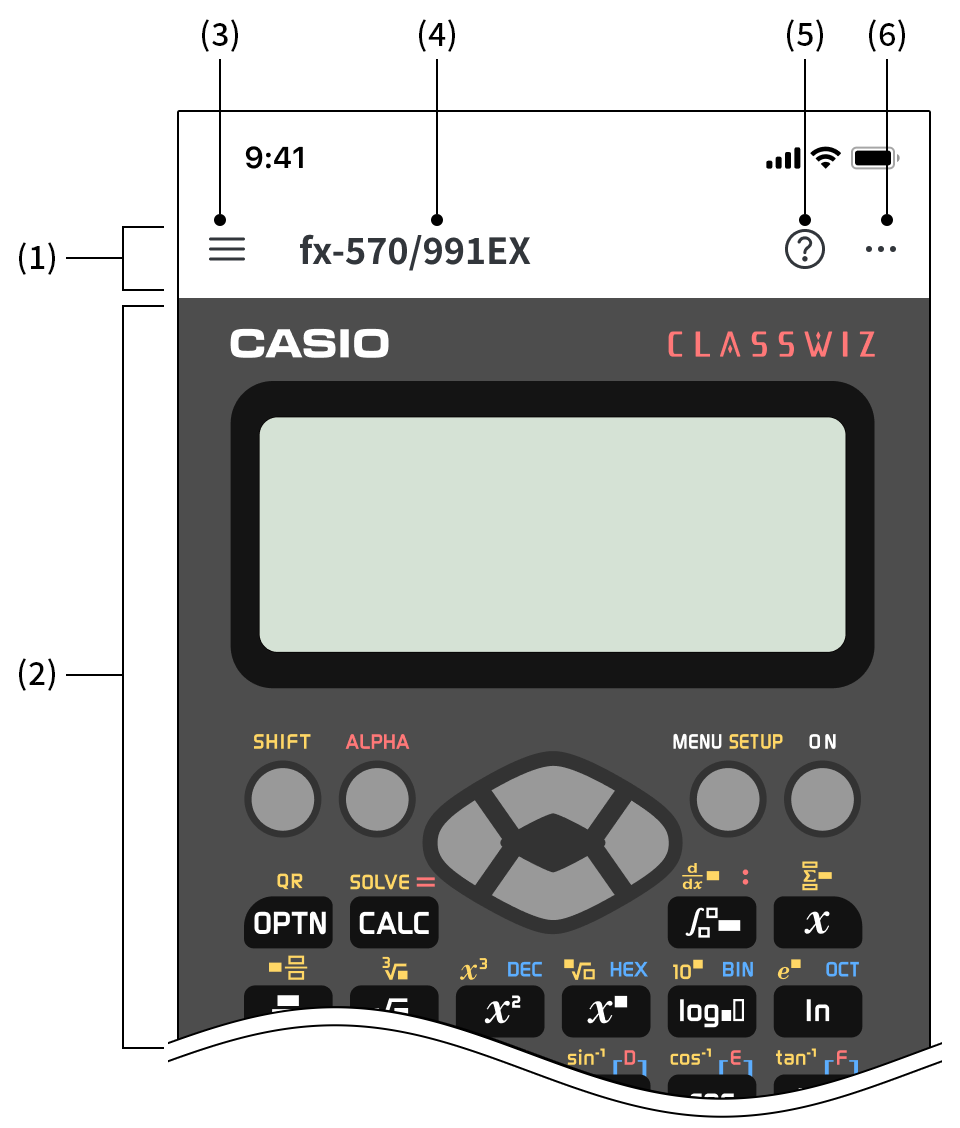
For everyday arithmetic, quick conversions, or basic percentage calculations, the built-in calculator apps on smartphones and operating systems (Windows Calculator, macOS Calculator) are perfectly adequate. They often include both standard and scientific modes, allowing users to switch between basic operations and more complex functions like logarithms, trigonometric functions, and exponents.
- Key Features: Basic arithmetic (+, -, *, /), percentage calculation, memory functions (M+, M-, MR, MC), square root, reciprocals.
- Scientific Mode Additions: Trigonometric functions (sin, cos, tan), logarithmic functions (log, ln), exponential functions (e^x, x^y), factorials, constants (pi, e).
- Tips for Use: Familiarize yourself with keyboard shortcuts (if on desktop) and the layout for quick input. Utilize memory functions for multi-step calculations to avoid re-entering intermediate results.
These tools are invaluable for students, quick budgeting, recipe adjustments, and countless other daily tasks.
Spreadsheet Software: The Powerhouse of Data Calculation
Spreadsheets like Microsoft Excel, Google Sheets, and LibreOffice Calc are arguably the most powerful and versatile digital calculation tools available. They go far beyond simple arithmetic, enabling complex data analysis, financial modeling, statistical computations, and custom formula creation.
- Core Capabilities:
- Formulas and Functions: Thousands of built-in functions covering mathematics, statistics, finance, logic, text manipulation, and more. Examples include SUM, AVERAGE, IF, VLOOKUP, PV (Present Value), STDEV (Standard Deviation).
- Data Organization and Manipulation: Sorting, filtering, pivot tables, and data validation.
- Charting and Graphing: Visualizing data trends and results.
- Scenario Analysis: Using “What-If” tools to explore different outcomes based on varying inputs.
- Applications: Budgeting, financial forecasting, scientific data analysis, inventory management, project planning, statistical surveys.
- Maximizing Efficiency: Learn to use absolute and relative cell references ($A$1 vs. A1), master basic and advanced functions, understand array formulas, and leverage conditional formatting for data insights. Macros and VBA (Visual Basic for Applications) in Excel can automate repetitive tasks, turning spreadsheets into powerful custom applications.
Specialized Calculators and Software
Beyond general-purpose tools, a range of specialized calculators and software caters to specific professional and academic needs.
- Financial Calculators: Dedicated apps or online tools (e.g., mortgage calculators, loan amortizers, investment return calculators) simplify complex financial planning. These are crucial for personal finance, real estate, and banking.
- Statistical Software: Programs like R, Python with libraries like NumPy and SciPy, SPSS, and SAS are essential for advanced statistical analysis, hypothesis testing, and predictive modeling in research, data science, and social sciences.
- Engineering and Scientific Software: MATLAB, Mathematica, and Wolfram Alpha provide environments for symbolic computation, numerical analysis, data visualization, and algorithm development, indispensable for engineering, physics, and advanced mathematics.
- Programming Languages: Languages like Python and JavaScript can be used to write custom scripts for any calculation imaginable, offering unparalleled flexibility and control. They are fundamental for automation, algorithm development, and integrating calculations into larger software systems.
Choosing the right tool depends entirely on the complexity of the calculation, the volume of data, and the specific domain requirements.
Advanced Techniques and Best Practices for Digital Calculation
Simply knowing which tool to use isn’t enough; mastering effective techniques and adhering to best practices ensures accuracy, efficiency, and reliability in your computational work.
Ensuring Accuracy and Validating Results
Errors in calculation can have significant consequences. Therefore, implementing strategies to ensure accuracy is paramount.
- Double-Check Inputs: The most common source of error is incorrect data entry. Always verify numbers before and after inputting them into a calculator or spreadsheet.
- Break Down Complex Problems: For intricate calculations, break them into smaller, manageable steps. Calculate intermediate results and verify them before proceeding.
- Use Parentheses Wisely: Understand the order of operations (PEMDAS/BODMAS) and use parentheses liberally to ensure calculations are performed in the intended sequence.
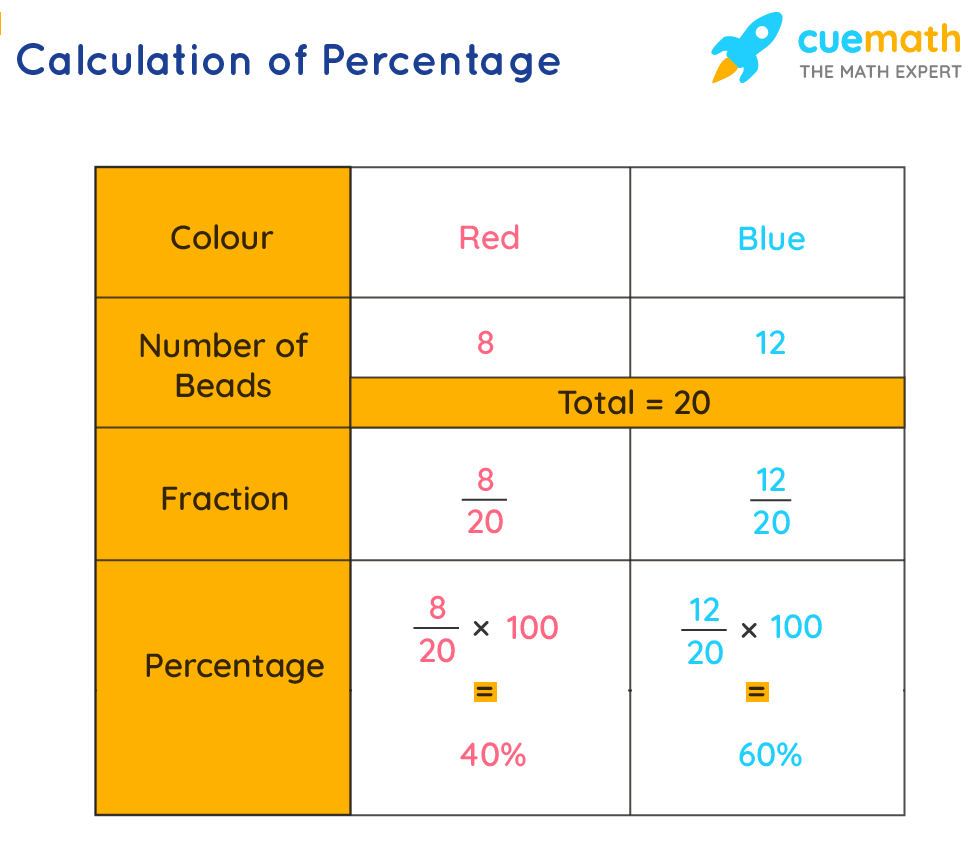
- Cross-Reference Methods: Whenever possible, use an alternative method or tool to perform the same calculation and compare results. For instance, calculate a percentage manually, then verify with a calculator.
- Understand Limitations: Be aware of the precision limits of your tools (e.g., floating-point inaccuracies in computer arithmetic) and significant figures required for your context.
Leveraging Automation and Integration
Digital tools excel at automation, reducing manual effort and potential for human error.
- Spreadsheet Macros: For repetitive tasks in spreadsheets, record or write macros (VBA in Excel, Google Apps Script in Google Sheets) to automate sequences of operations.
- API Integration: Many online services and software tools offer Application Programming Interfaces (APIs) that allow you to programmatically send data and retrieve calculated results, integrating them directly into your own applications or workflows.
- Scripting: Use programming languages (Python, R) to write scripts that fetch data, perform complex calculations, and output results, especially for large datasets or scheduled tasks.
- Workflow Automation Tools: Tools like Zapier or IFTTT can link different applications, triggering calculations when certain events occur (e.g., automatically calculating tax on a new sales record in a CRM).
Data Visualization for Insightful Interpretation
Numbers alone can be overwhelming. Visualizing calculated data through charts, graphs, and dashboards can transform raw results into actionable insights.
- Choosing the Right Chart Type: Select chart types that best represent your data: bar charts for comparisons, line graphs for trends over time, pie charts for proportions, scatter plots for correlations.
- Interactive Dashboards: Tools like Tableau, Power BI, or even advanced spreadsheet features allow you to create interactive dashboards where users can explore data and calculations dynamically.
- Focus on Clarity: Ensure labels are clear, scales are appropriate, and the visual design enhances understanding rather than obfuscating it. Effective visualization makes complex calculations immediately comprehensible.
The Future of Calculation: AI, Quantum Computing, and Beyond
The realm of calculation is continuously evolving, driven by advancements in artificial intelligence and emerging computing paradigms. The future promises even more sophisticated, intuitive, and powerful ways to process numbers.
Artificial Intelligence and Machine Learning in Computation
AI and ML are already transforming calculation, particularly in areas involving vast datasets and complex pattern recognition.
- Predictive Analytics: ML algorithms can analyze historical data to make highly accurate predictions (e.g., stock prices, sales forecasts, risk assessment), where traditional formulas would be insufficient.
- Natural Language Processing (NLP) for Calculation: AI-powered assistants and search engines can now understand natural language queries like “What is 25% of 350?” or “Calculate my loan payment for this amount,” abstracting away the need for explicit formula input.
- Automated Data Cleansing and Preparation: AI tools can automatically identify and correct errors in datasets, streamlining the notoriously time-consuming process of data preparation for calculation.
- Optimization: AI algorithms are adept at finding optimal solutions for complex problems, from logistics and supply chain management to resource allocation, far beyond the scope of manual calculation or simple programming.
Quantum Computing: A Paradigm Shift in Processing Power
While still in its nascent stages, quantum computing holds the potential to revolutionize calculation on an unprecedented scale. Traditional computers rely on bits that represent 0 or 1; quantum computers use qubits, which can represent 0, 1, or both simultaneously (superposition), and can be entangled, allowing for exponential processing power for certain types of problems.
- Solving Intractable Problems: Quantum computers could solve problems that are currently impossible even for the most powerful supercomputers, such as factoring very large numbers (critical for cryptography), simulating complex molecular interactions (transformative for drug discovery), and optimizing highly intricate systems.
- Accelerated Algorithms: For specific computational challenges, quantum algorithms promise dramatically faster results than their classical counterparts.
- Implications: While not a general-purpose replacement for classical calculators, quantum computing could profoundly impact fields like materials science, finance (e.g., complex derivatives pricing), and AI itself, by enabling new forms of data processing and calculation.
Augmented Reality and Intuitive Interfaces
Future calculation tools may also integrate with augmented reality (AR) and more intuitive interfaces. Imagine pointing your smartphone camera at a set of figures on a whiteboard and having an AR overlay instantly calculate sums, averages, or projections, or using natural gestures to manipulate data in a 3D environment. This convergence of computational power with seamless interaction could make calculation more integrated with our physical world than ever before.
Conclusion
The journey of calculation from basic tools to sophisticated digital platforms is a testament to human ingenuity. Mastering how to calculate in the digital age involves not just knowing basic arithmetic but understanding the vast array of technological tools available, from ubiquitous smartphone apps and powerful spreadsheet software to specialized statistical packages and the nascent capabilities of AI and quantum computing. By embracing these tools, adopting best practices for accuracy and efficiency, and staying abreast of emerging trends, individuals and organizations can unlock unparalleled insights, drive innovation, and make more precise, informed decisions in an increasingly complex world. The future of calculation promises even greater automation, intelligence, and integration, continuously reshaping our interaction with numbers and data.
aViewFromTheCave is a participant in the Amazon Services LLC Associates Program, an affiliate advertising program designed to provide a means for sites to earn advertising fees by advertising and linking to Amazon.com. Amazon, the Amazon logo, AmazonSupply, and the AmazonSupply logo are trademarks of Amazon.com, Inc. or its affiliates. As an Amazon Associate we earn affiliate commissions from qualifying purchases.