
The ebb and flow of financial markets are a fundamental aspect of the global economy, yet few phrases strike more trepidation into the hearts of investors, entrepreneurs, and policymakers than “the market is going down.” When major indices like the S&P 500, Dow Jones Industrial Average, or NASDAQ Composite begin a sustained decline, it signals more than just a momentary dip; it often reflects a complex interplay of macroeconomic forces, shifting investor sentiment, and specific sector vulnerabilities. Understanding these underlying drivers is crucial not just for navigating the current climate, but for developing a resilient long-term financial strategy.
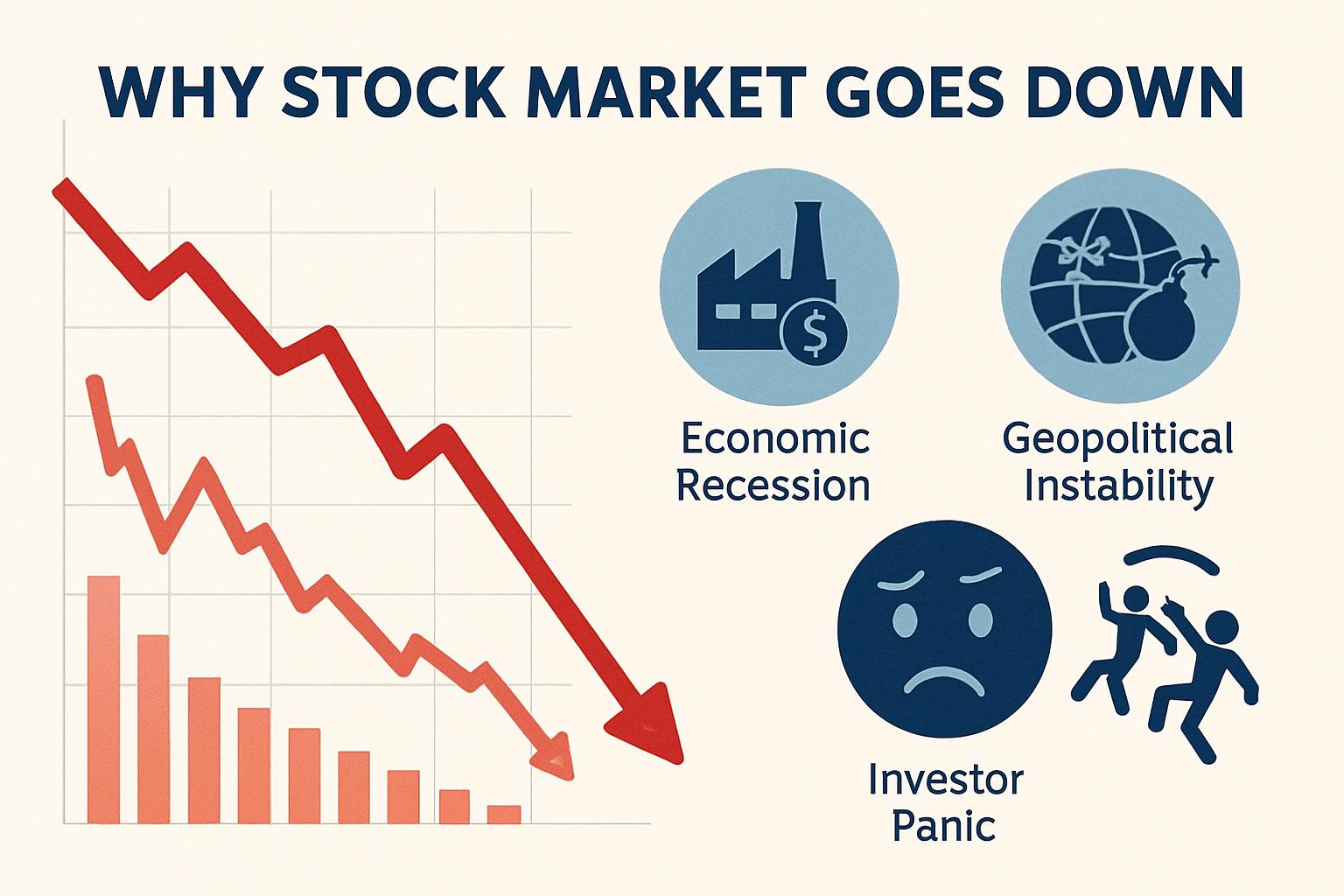
A market downturn is rarely attributable to a single cause. Instead, it typically emerges from a confluence of factors, each feeding into the others to create a pervasive atmosphere of caution or outright fear. From inflationary pressures eroding purchasing power to geopolitical conflicts disrupting global supply chains, and from central banks tightening monetary policy to a natural cooling of exuberant valuations, the reasons are multifaceted. This comprehensive analysis will delve into the primary forces currently shaping the market’s trajectory, offering insights into why we are witnessing a period of contraction and what it means for various stakeholders.
Understanding the Macroeconomic Headwinds
Macroeconomic indicators serve as the compass for the overall health of the global economy. When these indicators signal stormy weather, financial markets often react preemptively, pricing in potential future challenges. Several significant macroeconomic headwinds have converged recently, creating a challenging environment for equities and other asset classes.
The Specter of Inflation and Monetary Policy Tightening
Perhaps the most dominant force driving market uncertainty is persistent inflation. After decades of relatively subdued price increases, many major economies are now grappling with inflation rates not seen in generations. This surge in prices—driven by a combination of robust demand post-pandemic, supply chain bottlenecks, and geopolitical events—erodes the purchasing power of consumers and increases the cost of doing business for corporations.
Central banks worldwide, including the Federal Reserve in the United States and the European Central Bank, have responded aggressively to combat inflation. Their primary tool is monetary policy tightening, primarily through raising benchmark interest rates. Higher interest rates make borrowing more expensive for businesses and consumers alike, theoretically cooling demand and slowing economic activity. While necessary to bring inflation under control, this tightening has several direct negative impacts on the market. It increases the cost of capital for companies, making future earnings less valuable in present terms and reducing the attractiveness of growth stocks. It also diverts investment from riskier assets like stocks into safer, higher-yielding alternatives like bonds, as fixed-income instruments become more appealing. The speed and magnitude of these rate hikes have caught many off guard, leading to a significant repricing of assets across the board.
Global Supply Chain Disruptions and Their Ripple Effect
The COVID-19 pandemic exposed the fragility of highly interconnected global supply chains. Lockdowns, labor shortages, and shifting consumer demand patterns led to unprecedented disruptions, from semiconductor shortages crippling automobile production to delays in shipping consumer goods. While some of these issues have begun to ease, new challenges have emerged.
Geopolitical conflicts, particularly the war in Ukraine, have exacerbated these problems. Russia and Ukraine are significant global suppliers of key commodities, including oil, natural gas, wheat, and industrial metals. The conflict has led to drastic price increases and supply uncertainties for these critical inputs, sending shockwaves through various industries. Higher energy costs directly impact transportation and manufacturing, increasing operational expenses for businesses and putting upward pressure on consumer prices. Food inflation, partly a result of supply chain issues and the conflict, disproportionately affects lower-income households and can lead to broader economic instability. These disruptions create an environment of higher costs, reduced profitability, and unpredictable production schedules for many companies, weighing heavily on their stock valuations.
Geopolitical Tensions and Their Economic Impact
Beyond supply chain ramifications, broader geopolitical tensions inherently introduce uncertainty and risk into the global economic landscape. The ongoing conflict in Eastern Europe, coupled with strained relations between major global powers, creates an environment where investors are more cautious. Wars and political instability can disrupt trade routes, trigger sanctions, and even lead to military buildups, all of which have direct economic costs.
Such events can cause foreign direct investment to dry up, lead to capital flight from affected regions, and make long-term planning incredibly difficult for multinational corporations. The uncertainty often translates into a “risk-off” sentiment in financial markets, where investors seek safe-haven assets like gold or government bonds, withdrawing capital from equities. This shift reduces liquidity in the stock market and can amplify selling pressures, contributing to overall market declines. The threat of broader economic fragmentation or even a deglobalization trend further adds to the long-term anxieties.
Decoding Investor Sentiment and Market Psychology
While macroeconomic fundamentals provide the backdrop, market movements are often amplified, and sometimes even driven, by the collective psychology of investors. Sentiment can quickly shift from euphoria to fear, leading to rapid revaluations of assets.
Fear, Uncertainty, and Doubt (FUD)
In times of economic uncertainty, Fear, Uncertainty, and Doubt (FUD) can become a dominant force. Negative news, whether about inflation, interest rates, corporate earnings, or geopolitical events, can trigger a cascading effect. Individual investors and institutional funds may react by selling off holdings to protect capital or to meet redemption requests from their own clients. This selling pressure creates a downward spiral, where falling prices beget more selling, regardless of the underlying fundamentals of individual companies.
Social media and 24/7 news cycles can accelerate the spread of FUD, leading to panic selling that might not be entirely rational. Behavioral economics shows that people tend to overweight recent negative information and exhibit herd mentality, making them more likely to follow what others are doing, even if it contradicts their long-term investment strategy. This collective psychological shift can push markets below their fundamental valuations, creating what some call “oversold” conditions.
The Role of Valuations and Earnings Expectations
At the peak of a bull market, particularly one fueled by easy money and low interest rates, valuations can become stretched. High-growth technology companies, in particular, often trade at elevated price-to-earnings (P/E) ratios or enterprise value-to-sales multiples, justified by their expected future growth. However, when interest rates rise, the present value of those future earnings diminishes, making high-valuation stocks less attractive.
Simultaneously, the macroeconomic headwinds discussed earlier begin to impact corporate earnings. Higher input costs, wage inflation, supply chain disruptions, and slowing consumer demand can squeeze profit margins. As companies report weaker-than-expected earnings or issue downward revisions to their future guidance, investors recalibrate their expectations. This recalibration often leads to significant price corrections, especially for companies whose stock prices were predicated on aggressive growth projections that no longer seem attainable in the current economic climate. The market is forward-looking, meaning it attempts to discount future earnings, and if those earnings look less robust, prices will adjust accordingly.
Liquidity and Investor Behavior
Market liquidity refers to the ease with which assets can be bought or sold without significantly impacting their price. In a downward market, liquidity can sometimes dry up. When many investors try to sell simultaneously, and there are fewer buyers, bid-ask spreads widen, and prices can fall sharply. Furthermore, strategies like margin calls (where brokers demand additional funds from investors who have borrowed money to buy securities) can force selling, exacerbating the decline.
Another aspect of investor behavior is “flight to safety.” During periods of high uncertainty, investors tend to move capital out of riskier assets like equities and into perceived safe havens, such as government bonds (particularly U.S. Treasuries), gold, or cash. This reallocation of capital reduces the demand for stocks, contributing to their decline. Institutional investors, who manage vast sums, can trigger significant market movements when they shift their asset allocations in response to changing risk perceptions or mandates.
Sector-Specific Weaknesses and Contagion Risk
While market downturns often affect broad indices, certain sectors can be more vulnerable due to their inherent characteristics or specific pressures they face. Weakness in one sector can also have a ripple effect, creating contagion risk across the wider market.
Tech Sector Correction and High-Growth Scrutiny
The technology sector, particularly growth-oriented tech companies, often leads bull markets due to its innovation and disruptive potential. However, it is also frequently the most vulnerable during periods of rising interest rates and economic uncertainty. Many tech companies are valued heavily on their projected future earnings, which are discounted more steeply when interest rates climb. Furthermore, many high-growth tech firms have historically prioritized market share and expansion over immediate profitability, relying on venture capital or cheap debt.
With capital becoming more expensive and investors scrutinizing profitability more closely, the narrative for these companies has changed. Companies that were once rewarded for rapid user acquisition or revenue growth at any cost are now being penalized if they cannot demonstrate a clear path to sustainable profits. Layoffs across various tech giants and startups signal a shift towards cost-cutting and efficiency, reflecting this new market reality. This correction in the tech sector has a significant impact on overall market indices, given its large weighting in benchmarks like the S&P 500 and NASDAQ.
Impact on Consumer Discretionary and Cyclical Stocks
Consumer discretionary stocks, which include companies that sell non-essential goods and services (e.g., luxury items, entertainment, travel, high-end electronics), are particularly susceptible during economic downturns. When inflation erodes purchasing power, and economic uncertainty makes consumers hesitant about their financial future, discretionary spending is often the first thing to be cut back.
Similarly, cyclical stocks—companies whose fortunes are closely tied to the overall economic cycle, such as automotive manufacturers, airlines, or industrial companies—face significant headwinds. A slowdown in global growth, reduced consumer spending, and higher input costs directly impact their sales volumes and profit margins. Investors anticipate these trends and often sell off shares in these sectors proactively, further contributing to the market’s decline.
Real Estate Market Pressures
While not always directly reflected in stock market indices, the real estate market is closely intertwined with the broader economy and financial markets. Rising interest rates directly impact mortgage rates, making homeownership more expensive and potentially cooling off a previously hot housing market. This can affect consumer wealth (for homeowners) and have implications for construction companies, mortgage lenders, and related industries.
A significant slowdown or correction in real estate can reduce consumer confidence and spending, as the “wealth effect” reverses. If property values decline, people feel less wealthy and tend to spend less. Furthermore, commercial real estate can suffer if businesses cut back on expansion or adopt more remote work models, leading to higher vacancy rates and reduced property values, which can impact financial institutions holding these assets.
Navigating the Downturn: Strategies for Investors
Market downturns, while unsettling, are a normal part of the economic cycle. For astute investors, they can present opportunities for long-term wealth creation. However, successfully navigating these periods requires discipline, a clear strategy, and a focus on long-term goals.
The Importance of Diversification
Diversification remains a cornerstone of prudent investing, especially during volatile times. Spreading investments across different asset classes (stocks, bonds, real real estate, commodities), industries, geographies, and company sizes can mitigate risk. When one sector or asset class is performing poorly, others might be holding steady or even increasing in value. For example, during periods of equity market stress, high-quality bonds often perform well as investors seek safety. A well-diversified portfolio is more resilient to the specific shocks affecting any single component of the market.
Long-Term Perspective and Dollar-Cost Averaging
One of the greatest mistakes investors make during a downturn is panic selling. A long-term perspective is crucial. Historically, markets have always recovered from downturns, eventually reaching new highs. Rather than attempting to “time the market” (which is notoriously difficult), maintaining a long-term view allows investors to ride out the volatility.
Dollar-cost averaging, which involves investing a fixed amount of money at regular intervals regardless of market fluctuations, can be a highly effective strategy during a downturn. When prices are low, your fixed investment buys more shares, reducing your average cost per share over time. This approach removes emotional decision-making from investing and allows investors to systematically build wealth, taking advantage of lower valuations.
Identifying Opportunities Amidst Volatility
Bear markets, while painful, also create opportunities. Many high-quality companies with strong fundamentals and solid long-term prospects may see their stock prices unfairly hammered alongside the rest of the market. For investors with a long-term horizon, these periods can be excellent times to acquire shares in such companies at discounted valuations. This requires careful research and a contrarian mindset, looking for value where others see only risk. Identifying companies with strong balance sheets, sustainable competitive advantages, and robust cash flows can be particularly rewarding when the market eventually recovers.
The Path Forward: Economic Outlook and Potential Catalysts
Predicting the exact bottom of a market downturn or the timing of a recovery is impossible. However, understanding potential catalysts for a turnaround and keeping an eye on key economic indicators can help investors anticipate the path forward.
When Might the Market Recover?
Market recoveries typically begin when investors gain clarity on key macroeconomic issues or when the economic outlook starts to improve. A sustained decline in inflation, signaling that central banks may slow or cease their interest rate hikes, would be a significant positive catalyst. Signs that supply chain pressures are easing, or that geopolitical tensions are de-escalating, would also contribute to a more optimistic outlook.
Often, markets begin to recover even before the economy officially pulls out of a recession. This is because markets are forward-looking. As soon as investors believe that the worst is over and that economic conditions will improve in the near future, they begin to buy, pushing prices higher. This “leading indicator” characteristic means that by the time good economic news is widely reported, much of the market’s recovery may have already occurred.
Government and Central Bank Interventions
While central banks are currently focused on tightening monetary policy, their actions are constantly recalibrated based on economic data. Should inflation abate and economic growth slow excessively, or should a deep recession become a real threat, central banks may pivot towards a more accommodative stance, potentially easing rates or pausing hikes. Such a pivot would likely be a significant positive for equity markets.
Governments may also implement fiscal stimulus measures, such as infrastructure spending, tax cuts, or direct aid, to boost economic activity during a downturn. While the efficacy and timing of such measures can vary, they represent another lever that policymakers can pull to support the economy and, by extension, the markets.

Innovation and Economic Resilience
Despite the current headwinds, it’s important to remember the underlying resilience of the global economy and the continuous march of human innovation. New technologies, breakthroughs in science, and advancements in business models continue to emerge, creating new industries and driving productivity growth. Companies that innovate, adapt, and operate efficiently will ultimately thrive.
Over the long term, these drivers of progress tend to overcome temporary economic challenges. The market downturn, while painful, forces a reevaluation of unsustainable practices and clears the way for more robust, efficient, and innovative companies to lead the next growth cycle. Understanding this cyclical nature and focusing on the enduring power of innovation and economic adaptation is key to navigating periods of market stress with confidence.
In conclusion, the market is going down due to a potent mix of high inflation, aggressive monetary policy tightening, persistent supply chain disruptions, and heightened geopolitical tensions, all exacerbated by a shift in investor sentiment from exuberance to caution. While the path ahead remains uncertain, a deep understanding of these forces, combined with a disciplined, long-term investment strategy, is essential for every participant in the financial markets.
aViewFromTheCave is a participant in the Amazon Services LLC Associates Program, an affiliate advertising program designed to provide a means for sites to earn advertising fees by advertising and linking to Amazon.com. Amazon, the Amazon logo, AmazonSupply, and the AmazonSupply logo are trademarks of Amazon.com, Inc. or its affiliates. As an Amazon Associate we earn affiliate commissions from qualifying purchases.