
For investors and traders situated within the Central Time Zone, understanding the precise opening and closing hours of the U.S. stock market is not merely a matter of curiosity; it’s a fundamental aspect of strategic planning, trade execution, and risk management. While the major U.S. stock exchanges, primarily the New York Stock Exchange (NYSE) and NASDAQ, operate on Eastern Time (ET), a significant portion of the nation’s financial participants reside in the Central Time (CT) zone. This geographic distinction necessitates a clear conversion and a deeper understanding of how these hours impact daily market activities. This article will demystify the stock market schedule for those operating on Central Time, providing a comprehensive guide to standard trading, extended hours, and the practical implications for their investment strategies.
Understanding Standard U.S. Stock Market Hours
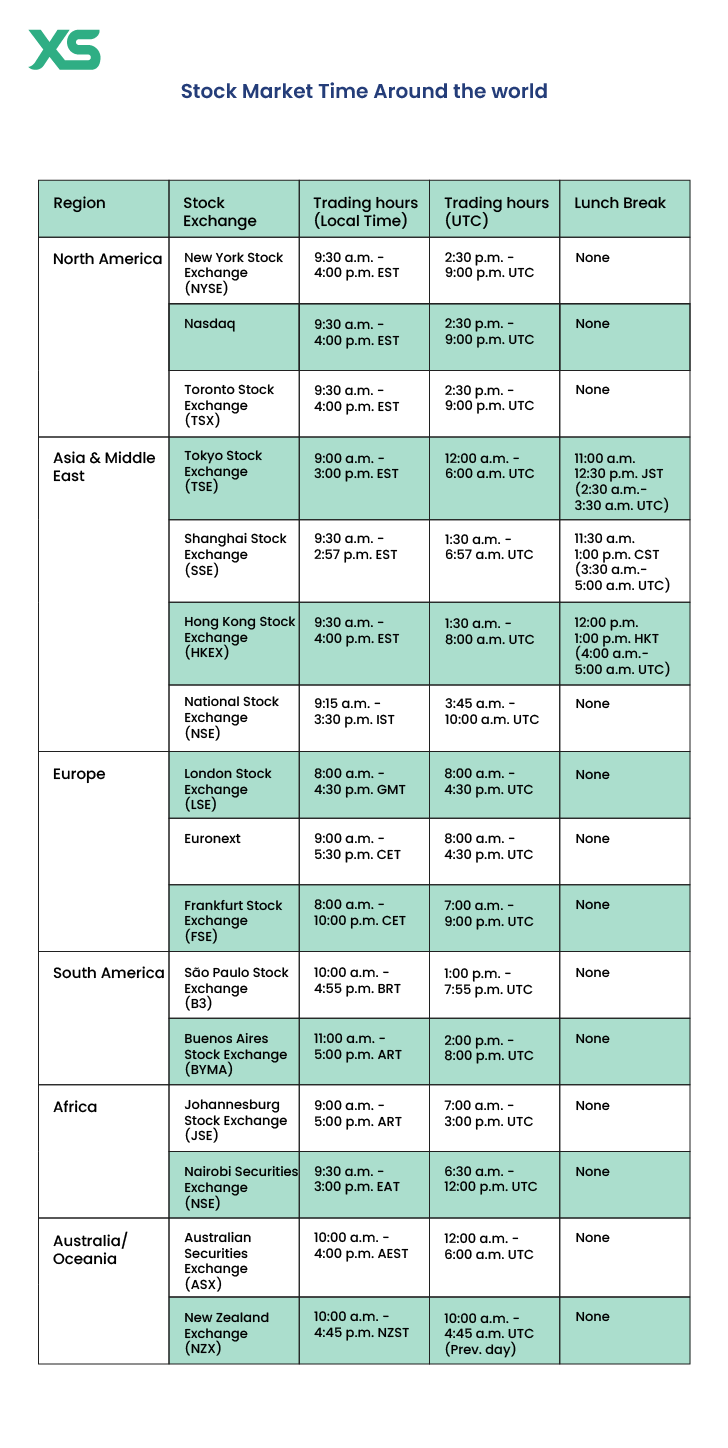
The bedrock of U.S. stock market operations is its regular trading session, which is standardized across the primary exchanges. Grasping these core hours in their native time zone is the first step to accurate conversion.
The Eastern Time Zone Standard
The two largest stock exchanges in the United States, the New York Stock Exchange (NYSE) and the NASDAQ Stock Market, are both headquartered in New York City. Consequently, their official trading hours are set according to Eastern Time (ET). The standard trading day begins at 9:30 AM ET and concludes at 4:00 PM ET, Monday through Friday. This seven-and-a-half-hour window is considered the most liquid and active period for stock trading, characterized by high volumes and typically tighter bid-ask spreads. During these hours, individual investors, institutional traders, hedge funds, and market makers all actively participate, contributing to price discovery and market efficiency. The opening bell, a long-standing tradition at the NYSE, marks the commencement of trading, often accompanied by heightened volatility as overnight news and orders are processed. Similarly, the closing bell at 4:00 PM ET signals the end of the regular session, though activity often remains high in the final minutes as participants try to finalize positions.
Key Trading Periods: Open and Close
Within the standard trading hours, certain periods are particularly significant. The market open (9:30 AM ET) and market close (4:00 PM ET) are often the most volatile and offer unique opportunities and risks. The first 30-60 minutes after the opening bell, sometimes referred to as the “opening print,” see a surge in trading volume as pre-market orders are executed and traders react to news releases from before the market opened or overnight. This period can present significant price swings and rapid movements, making it both attractive to nimble day traders and risky for those without a robust strategy.
Similarly, the last hour of trading, particularly the final 15-30 minutes leading up to the closing bell, known as the “closing print” or “power hour,” also exhibits increased activity. Institutions and mutual funds often execute large orders during this time to adjust their portfolios or meet specific benchmarks before the market closes for the day. This late-day activity can lead to substantial price shifts, which can impact the daily performance of stocks and, by extension, portfolios. Understanding the characteristics of these specific periods is crucial for any trader, but especially for those operating in a different time zone, as it dictates when they need to be most vigilant or active.
Converting Eastern Time to Central Time
Once the standard Eastern Time market hours are understood, the conversion to Central Time becomes straightforward. This simple adjustment is vital for Central Time residents to synchronize their schedules with the financial markets.
The One-Hour Difference
The Central Time Zone (CT) is one hour behind the Eastern Time Zone (ET). This means that if it’s 9:30 AM ET, it’s 8:30 AM CT. Applying this simple rule to the standard market hours provides a clear schedule for Central Time participants.
Therefore, for those in the Central Time Zone:
- The stock market opens at 8:30 AM CT.
- The stock market closes at 3:00 PM CT.
This one-hour shift maintains the seven-and-a-half-hour trading window, simply pushing it back in the local Central Time perspective. While seemingly minor, this difference has profound implications for daily routines, news consumption, and trading strategies for anyone operating within the CT zone. It affects when market-moving news breaks and how that information is absorbed and acted upon locally.
Practical Implications for Central Time Investors
For investors and traders in the Central Time Zone, knowing these adjusted hours is more than just a convenience; it’s an operational necessity.
Firstly, it dictates their daily routine. A trader in Chicago or Dallas, for example, needs to be ready to analyze market data and potentially execute trades by 8:30 AM local time, which for many means an earlier start to their workday compared to their Eastern Time counterparts. This impacts morning routines, pre-market analysis, and setting up their trading environment.
Secondly, news cycles often align with ET. Major economic reports, corporate earnings announcements, and analyst upgrades/downgrades are frequently released either before the 9:30 AM ET open or after the 4:00 PM ET close. For Central Time investors, this means that news released at 8:00 AM ET will already be relevant an hour before their market opens at 8:30 AM CT, requiring them to be vigilant even before their local market commencement. Similarly, post-market news released at 4:30 PM ET translates to 3:30 PM CT, potentially impacting their decision-making for the next day’s open. Effective time management and proactive information gathering are paramount to remain competitive and well-informed.
Beyond Standard Hours: Pre-Market and After-Hours Trading
While the regular 8:30 AM to 3:00 PM CT window defines the primary market activity, the ability to trade outside these hours has become increasingly prevalent, offering both flexibility and unique challenges.
What is Pre-Market Trading?
Pre-market trading refers to the period before the official market open, typically from 4:00 AM ET to 9:30 AM ET. For Central Time participants, this means the pre-market session runs from 3:00 AM CT to 8:30 AM CT. During this time, trading is conducted through electronic communication networks (ECNs) rather than through the traditional exchange floor or direct market access systems used during regular hours. Many major brokers offer access to pre-market trading, allowing investors to react to overnight news, earnings reports released before the open, or global market movements. This extended window can be particularly useful for those looking to capitalize on early information or adjust positions ahead of the main trading rush.
Understanding After-Hours Sessions

Conversely, after-hours trading takes place after the market officially closes. This session typically runs from 4:00 PM ET to 8:00 PM ET. For Central Time traders, this translates to 3:00 PM CT to 7:00 PM CT. Similar to pre-market trading, after-hours activity is facilitated by ECNs. It allows investors to react to news released shortly after the market closes, such as quarterly earnings announcements or unexpected corporate developments. This can be crucial for managing risk or seizing opportunities based on late-breaking information before the next trading day begins. Both pre-market and after-hours trading provide a continuous flow of market activity, essentially extending the trading day significantly beyond the standard session.
Risks and Opportunities of Extended-Hours Trading
While extended-hours trading offers clear opportunities, it also comes with increased risks that Central Time investors must carefully consider.
Opportunities:
- Rapid Reaction to News: The primary benefit is the ability to react immediately to significant news events (earnings, mergers, regulatory decisions) that occur outside regular trading hours, potentially capitalizing on initial price movements.
- Flexibility: It offers flexibility for individuals with busy schedules during regular market hours to still participate in trading.
- Price Discovery: Extended hours contribute to ongoing price discovery, often reflecting initial market sentiment towards new information.
Risks:
- Lower Liquidity: Extended-hours sessions generally have significantly lower trading volume compared to regular hours. This reduced liquidity can lead to wider bid-ask spreads, making it harder to execute trades at desired prices and potentially incurring higher transaction costs.
- Increased Volatility: Lower liquidity often correlates with higher price volatility. Smaller trades can have a disproportionately large impact on stock prices, leading to unpredictable swings.
- Limited Access and Price Information: Not all brokers offer extensive extended-hours trading access, and the depth of market information (Level II data) might be less comprehensive than during regular hours.
- Competition: You might be competing against institutional traders who have superior technology and information advantages, especially during these less liquid periods.
For Central Time investors, these risks are amplified if they are not fully aware of the distinct dynamics of pre-market and after-hours sessions. Careful consideration of order types (e.g., limit orders are highly recommended over market orders) and position sizing is crucial.
Factors Influencing Market Hours and Trading
Beyond the direct time zone conversion, several other factors can influence the trading calendar and effective hours for investors.
Stock Market Holidays
The U.S. stock market observes several national holidays, during which the exchanges are closed for regular trading. These holidays include New Year’s Day, Martin Luther King, Jr. Day, Presidents’ Day, Good Friday, Memorial Day, Juneteenth National Independence Day, Independence Day, Labor Day, Thanksgiving Day, and Christmas Day. It is imperative for Central Time investors to be aware of this calendar to avoid attempting to place trades on non-trading days and to plan their strategies around these closures. Holiday schedules are typically published well in advance by the exchanges. Additionally, sometimes markets may have early closures preceding or following a holiday, typically at 1:00 PM ET (12:00 PM CT), so staying informed about the full holiday schedule is key.
Impact of Daylight Saving Time
Daylight Saving Time (DST) changes, which occur twice a year in the spring and fall, can temporarily complicate the time difference between various regions. While most of the U.S. observes DST, Arizona (excluding the Navajo Nation) and Hawaii do not. Crucially, New York (ET) and the Central Time Zone both observe Daylight Saving Time. This means the one-hour difference between ET and CT remains constant throughout the year, even when the clocks “spring forward” or “fall back.” An investor in Chicago will always be one hour behind New York. Therefore, once the initial adjustment for DST is made to the local time, the 8:30 AM CT open and 3:00 PM CT close remain consistent relative to the local CT clock. The only potential confusion might arise when comparing with regions that do not observe DST or with international markets.
Key U.S. Stock Exchanges: NYSE and NASDAQ
While our focus has been on the general “stock market,” it’s important to remember that this primarily refers to the New York Stock Exchange (NYSE) and the NASDAQ Stock Market. Both operate under the same Eastern Time schedule and thus adhere to the 8:30 AM CT open and 3:00 PM CT close.
- NYSE (New York Stock Exchange): Known as “The Big Board,” the NYSE is the world’s largest stock exchange by market capitalization. It’s famous for its hybrid market, blending traditional floor trading with electronic systems. Many older, established “blue-chip” companies list here.
- NASDAQ (National Association of Securities Dealers Automated Quotations): The NASDAQ is a fully electronic exchange, known for listing technology and growth companies. It was the first electronic exchange and operates solely through a computer network.
Regardless of whether an investor is trading Apple (NASDAQ) or Coca-Cola (NYSE), the trading hours from a Central Time perspective remain identical. Understanding the nuances of each exchange, while not directly impacting the opening hours, can inform trading strategies related to order execution and liquidity depending on the specific stock traded.
Why Knowing Your Market Hours Matters for Central Time Traders
For those operating in the Central Time Zone, a precise understanding of market hours goes far beyond simple scheduling; it’s integral to effective and profitable participation in the financial markets.
Strategic Planning and Execution
Knowing the exact market open and close in CT allows for meticulous strategic planning. Traders can allocate their most focused analysis time to the critical opening and closing periods of the market (8:30-9:30 AM CT and 2:00-3:00 PM CT). They can prepare their watchlists, review economic calendars, and formulate entry/exit strategies well in advance of the 8:30 AM CT open. Furthermore, executing trades efficiently requires being present and attentive during active periods. Missing the first hour of trading due to a simple time zone miscalculation could mean missing significant opportunities or reacting late to crucial price movements. Precision in timing enables precision in execution, which is a hallmark of successful trading.
Access to Real-Time Information
Market-moving news, corporate announcements, and analyst reports are often timed to coincide with specific points relative to the market open or close in Eastern Time. For Central Time investors, this means they need to adjust their internal clock to ensure they are consuming and reacting to this information in real-time or as close to it as possible. An earnings report released at 8:00 AM ET is critical information that a CT trader needs to process by 8:00 AM CT, not 9:00 AM CT, to be ready for their market open at 8:30 AM CT. Access to real-time information, coupled with the ability to act on it promptly, is a significant competitive advantage in the fast-paced world of stock trading.

Managing Volatility and Risk
The stock market is dynamic, and volatility can be pronounced, particularly at the open and close of the trading day. For Central Time investors, being acutely aware of these times (8:30 AM CT and 3:00 PM CT) allows them to manage risk more effectively. They can choose to participate during these volatile periods if their strategy is geared towards rapid movements, or they can choose to hold back until volatility subsides if they prefer a calmer market. Without accurate time zone awareness, a trader might inadvertently step into a highly volatile period unprepared, leading to suboptimal trade entries or exits and increased risk exposure. By internalizing the Central Time market hours, traders can align their risk tolerance and trading styles with the market’s natural ebbs and flows, ultimately contributing to more disciplined and potentially more profitable investment outcomes.
aViewFromTheCave is a participant in the Amazon Services LLC Associates Program, an affiliate advertising program designed to provide a means for sites to earn advertising fees by advertising and linking to Amazon.com. Amazon, the Amazon logo, AmazonSupply, and the AmazonSupply logo are trademarks of Amazon.com, Inc. or its affiliates. As an Amazon Associate we earn affiliate commissions from qualifying purchases.