
For investors, traders, and anyone with a keen interest in the financial world, understanding the operational hours of the stock market is not merely a matter of trivia; it’s a critical component of successful financial planning and execution. The question “What time does the market close today?” is frequently asked, reflecting the dynamic nature of investing where timing can profoundly impact outcomes. While the answer might seem straightforward for the primary trading sessions, a deeper dive reveals a more nuanced landscape, encompassing extended hours, holidays, and global considerations. This comprehensive guide aims to demystify US stock market hours, providing essential insights for both seasoned investors and curious newcomers.
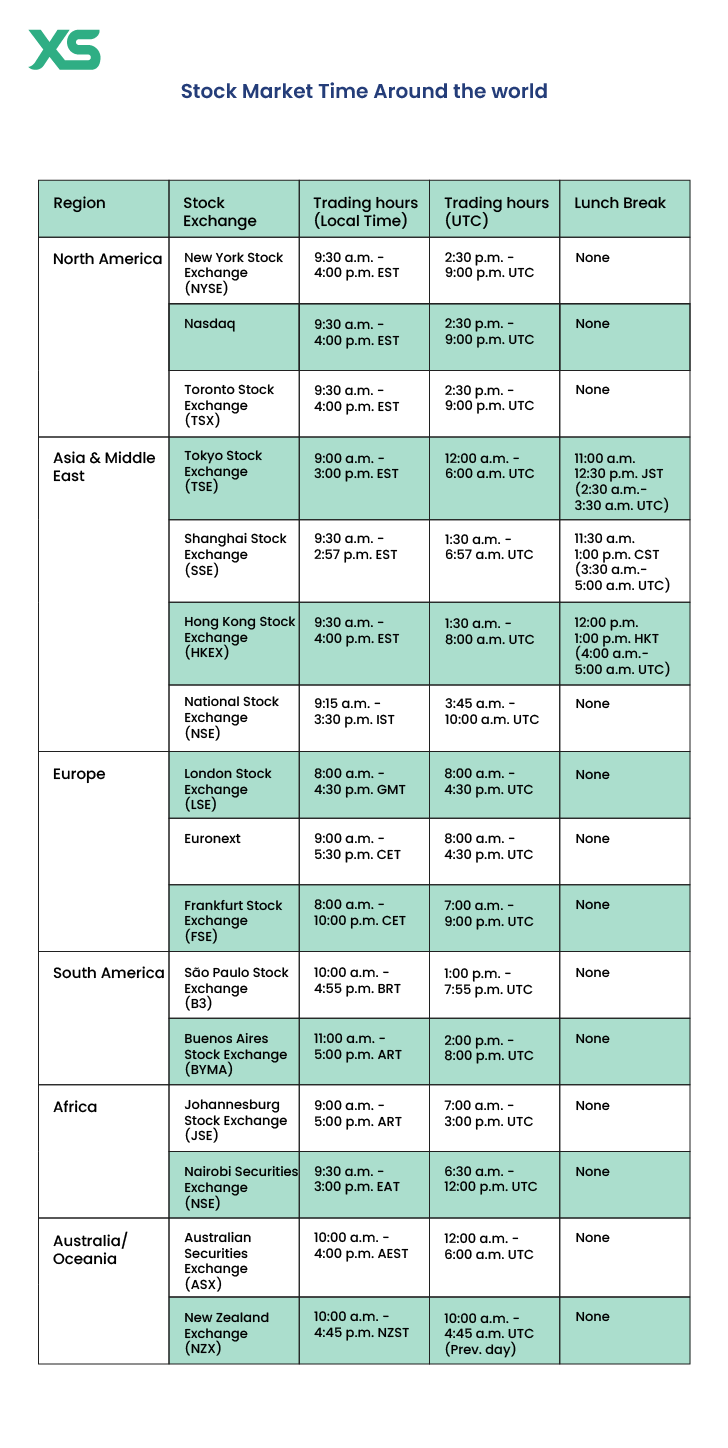
The US stock market, primarily represented by the New York Stock Exchange (NYSE) and the NASDAQ, operates within specific windows designed to facilitate orderly trading and liquidity. However, these “standard” hours are just one piece of a larger puzzle that includes pre-market and after-hours trading, alongside various holidays and special circumstances that can alter the trading schedule. Grasping these intricacies is fundamental to making informed decisions, managing risk, and optimizing your investment strategy. From anticipating market movements to scheduling trades, knowing precisely when the market is open or closed is an indispensable tool in the modern investor’s arsenal.
The Standard Operating Hours: NYSE and NASDAQ
At the heart of the American financial system are the New York Stock Exchange (NYSE) and the NASDAQ Stock Market. These two titans dictate the rhythm of daily trading for countless stocks, ETFs, and other securities. Their standard operating hours form the backbone of the trading day, influencing market participants across the globe.
The Core Trading Session
For the vast majority of retail investors and institutional traders, the “market close” refers to the end of the regular trading session. Both the NYSE and NASDAQ adhere to the same standard schedule:
- Opening Bell: 9:30 AM Eastern Time (ET)
- Closing Bell: 4:00 PM Eastern Time (ET)
This 6.5-hour window, running Monday through Friday, is when the bulk of trading activity occurs. During these hours, liquidity is typically at its highest, bid-ask spreads are narrowest, and market news has its most immediate and pronounced impact. The opening and closing minutes of this session are often characterized by heightened volatility and trading volume, as participants react to overnight news, execute last-minute orders, or rebalance portfolios. The “opening auction” and “closing auction” mechanisms ensure a fair and orderly determination of prices at these critical junctures. Understanding this core session is the first step in navigating the market effectively. For most everyday transactions, investors will interact with the market within these defined limits, benefiting from the robust trading environment and regulatory oversight that characterizes these exchanges.
Understanding Time Zones
While the 9:30 AM to 4:00 PM schedule is absolute, the perception of “what time the market closes” can vary significantly based on an investor’s geographical location. The key is to remember that all times are quoted in Eastern Time (ET), which alternates between Eastern Standard Time (EST) and Eastern Daylight Time (EDT) depending on the season.
- Pacific Time (PT): The market closes at 1:00 PM PT (4:00 PM ET – 3 hours).
- Mountain Time (MT): The market closes at 2:00 PM MT (4:00 PM ET – 2 hours).
- Central Time (CT): The market closes at 3:00 PM CT (4:00 PM ET – 1 hour).
For investors outside the contiguous United States, or even internationally, converting Eastern Time to their local time zone is crucial. This seemingly simple calculation can prevent missed opportunities or misinformed decisions. Many brokerage platforms and financial news sites automatically adjust market hours to the user’s local time, but it’s always prudent to confirm, especially when dealing with time-sensitive trades or news events. For example, an investor in London would see the market open at 2:30 PM GMT and close at 9:00 PM GMT during standard time, or 1:30 PM BST and 8:00 PM BST during daylight saving time, highlighting the importance of being acutely aware of these conversions to align with their local working day.
Beyond the Bell: Exploring Pre-Market and After-Hours Trading
The concept of the market closing at 4:00 PM ET is a traditional view that has been significantly expanded by technological advancements. Modern electronic trading platforms have extended the reach of the market far beyond the traditional opening and closing bells, introducing what are known as pre-market and after-hours trading sessions. These extended hours offer opportunities but also present unique challenges.
Pre-Market Trading Explained
Pre-market trading allows investors to buy and sell securities before the official 9:30 AM ET opening. These sessions typically begin as early as 4:00 AM ET and run until the market opens.
- Early Access to News: Major corporate earnings reports, economic data releases, and significant news events often occur before the market opens. Pre-market trading allows investors to react to this information instantly, rather than waiting for the opening bell.
- Liquidity Considerations: While offering flexibility, pre-market sessions generally suffer from lower liquidity compared to regular hours. This means fewer buyers and sellers, which can lead to wider bid-ask spreads and potentially more volatile price swings on smaller trade volumes.
- Order Types: Not all order types are available during pre-market. Limit orders, which allow you to specify the exact price at which you are willing to buy or sell, are typically favored, as market orders (buying or selling at the best available current price) can execute at unexpectedly unfavorable prices due to low liquidity.
The Dynamics of After-Hours Trading
Similarly, after-hours trading extends beyond the 4:00 PM ET closing bell, often continuing until 8:00 PM ET. This session provides another window for investors to react to developments that occur late in the trading day or immediately after the close.
- Post-Market Reactions: Just as pre-market trading responds to early news, after-hours trading sees reactions to events like late-day earnings calls, analyst downgrades/upgrades, or political announcements that emerge after the standard session.
- Lower Volume and Higher Volatility: Similar to pre-market, after-hours trading typically experiences significantly lower trading volume. This reduced liquidity can amplify price movements, making stocks more susceptible to large swings on relatively small orders. This presents both opportunities for quick gains and risks of rapid losses.
- Institutional vs. Retail Participation: While accessible to retail investors through most major brokerages, after-hours trading is often dominated by institutional players who have dedicated systems and resources to monitor these extended sessions.
Advantages and Disadvantages of Extended Hours
Engaging in pre-market and after-hours trading requires a keen understanding of their unique characteristics.
Advantages:
- Flexibility: Allows investors to react to news and execute trades outside of standard working hours.
- Early/Late Entry/Exit: Potential to get in or out of a position before or after the broader market reacts, possibly capitalizing on immediate news.
- Risk Mitigation: Can be used to close out positions if adverse news breaks after the market closes.
Disadvantages:
- Lower Liquidity: Fewer participants mean it can be harder to find a counterparty for your trade, leading to wider spreads and difficulty executing large orders.
- Increased Volatility: Lower liquidity can lead to larger, more unpredictable price swings, making price discovery less efficient.
- Price Discrepancies: The price at which a stock trades after-hours might differ significantly from its opening price the next day.
- Limited Order Types: Reduced functionality compared to regular hours.
- Brokerage Access: While widely available, some smaller brokerages might have limitations on their extended-hours trading services.
For most individual investors, careful consideration and a clear strategy are paramount before venturing into these extended sessions. The allure of immediate reaction must be balanced against the inherent risks associated with reduced liquidity and increased volatility.
When the Market Takes a Break: Holidays and Special Closures
While the standard trading week is Monday through Friday, the US stock market, like any other institution, observes a number of holidays throughout the year. These scheduled closures, along with occasional unscheduled events, mean that the answer to “what time does the market close today?” is sometimes “not at all.” Understanding these breaks is essential for planning trades and managing expectations.
Key US Stock Market Holidays
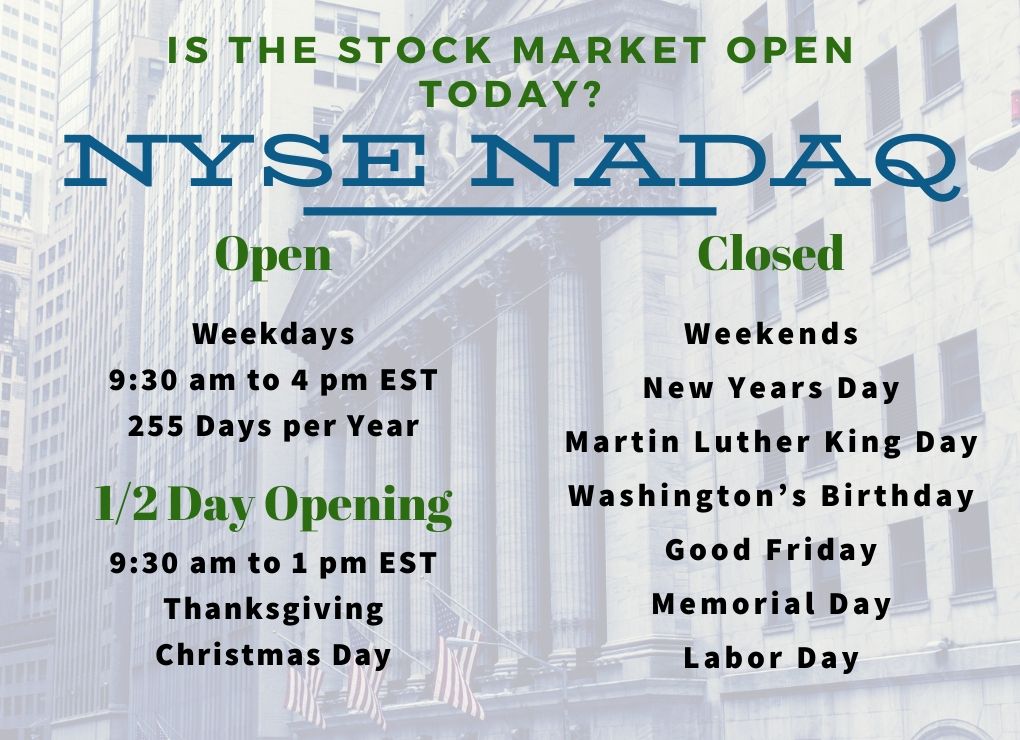
The NYSE and NASDAQ generally follow the US federal holiday calendar, with a few notable exceptions. These holidays result in full-day closures, meaning no trading occurs during the regular or extended hours. Key holidays observed by the stock markets include:
- New Year’s Day: January 1st
- Martin Luther King, Jr. Day: Third Monday in January
- Presidents’ Day (Washington’s Birthday): Third Monday in February
- Good Friday: The Friday before Easter Sunday (a religious holiday not a federal one, but observed by the markets)
- Memorial Day: Last Monday in May
- Juneteenth National Independence Day: June 19th
- Independence Day: July 4th
- Labor Day: First Monday in September
- Thanksgiving Day: Fourth Thursday in November
- Christmas Day: December 25th
If any of these holidays fall on a weekend, the market typically observes the holiday on the preceding Friday or the following Monday. For instance, if Christmas Day falls on a Saturday, the market will likely be closed on Friday, December 24th. It’s crucial for investors to check the official holiday schedule published by the exchanges or their brokerage platforms well in advance.
Half-Day Trading Sessions
In addition to full holidays, the stock market occasionally operates on a shortened schedule, referred to as a “half-day” or “early close.” On these days, the market typically closes at 1:00 PM ET instead of the usual 4:00 PM ET. Pre-market trading might still occur, but after-hours trading is usually either shortened or suspended entirely. Common occasions for early closures include:
- The Day Before Independence Day (July 3rd): If it falls on a weekday.
- The Day After Thanksgiving (Black Friday): A notably shortened session.
- Christmas Eve (December 24th): If it falls on a weekday.
These early closures are significant because they still represent active trading days but with reduced hours. Investors need to be mindful of these shortened sessions to adjust their trading strategies, ensure timely order execution, and account for potentially lower liquidity and higher volatility that can accompany reduced trading windows.
Unforeseen Suspensions
While rare, the stock market can also experience unscheduled closures or trading suspensions due due to extraordinary circumstances. These might include:
- Major Natural Disasters: Such as severe weather events (e.g., hurricanes that impacted New York City).
- National Emergencies: Events of significant national importance that could disrupt market operations or necessitate a period of reflection.
- Technical Glitches: Although rare and usually resolved quickly, widespread technical failures could lead to temporary suspensions.
Such events are exceptional and usually announced with little to no prior notice, making it challenging to prepare. However, they underscore the fact that even the most meticulously scheduled market can be subject to external forces. Staying informed through reliable financial news sources and alerts from your brokerage is the best defense against being caught off guard by such unforeseen events.
The Strategic Importance of Market Hours for Investors
Understanding when the market opens and closes is far more than just knowing the schedule; it’s a foundational element of effective investment strategy. The timing of your trades, the execution of your orders, and even your overall risk management can be significantly influenced by market hours and their associated dynamics.
Impact on Trading Volatility and Liquidity
Market hours directly correlate with liquidity (the ease with which an asset can be converted into cash without affecting its market price) and volatility (the rate at which the price of a security increases or decreases).
- High Liquidity, Lower Volatility (Mid-day): During the core trading hours (e.g., 10:00 AM to 3:00 PM ET), there are typically the most buyers and sellers, leading to higher liquidity and generally tighter bid-ask spreads. This makes it easier to execute trades at desired prices and often results in more stable price movements, assuming no major news.
- High Volatility, Lower Liquidity (Opening/Closing & Extended Hours): The first and last hour of the regular trading session, along with all extended-hours trading, often exhibit higher volatility and lower liquidity. This is when market participants react to overnight news, economic data, or prepare for the next day. News releases can have an amplified effect due to fewer participants. For active traders, these periods offer opportunities for quick gains but also carry elevated risks. Illiquid periods can lead to “slippage,” where the actual execution price differs from the expected price.
Knowing these patterns allows investors to choose the optimal time to place certain types of orders. For instance, large institutional orders or trades in less liquid stocks might be best executed during high-liquidity mid-day hours to minimize market impact. Conversely, nimble day traders might specifically target the volatile opening and closing hours for quick profit opportunities.
Influencing Investment Strategy and Execution
The daily rhythm of market hours should explicitly factor into your investment strategy:
- News Reaction Time: If you are an investor who reacts to breaking news, understanding market hours dictates how quickly you can act. News released after market close will generally lead to pre-market activity the next day, while mid-day news requires immediate attention within the regular session.
- Order Placement: For long-term investors, market orders placed outside regular hours might execute at less favorable prices when the market reopens. Using limit orders or placing market orders during peak liquidity can mitigate this risk.
- Algorithmic Trading: High-frequency trading firms and institutional investors use sophisticated algorithms that are acutely aware of market microstructure and volume patterns during different hours. Retail investors can learn from this by recognizing periods of predictable volume or volatility.
- Risk Management: Investors should be mindful of holding positions overnight, especially if significant news is anticipated after market close. Gaps up or down at the next day’s open can lead to substantial gains or losses, a phenomenon often exacerbated by extended-hours trading.
The Global Market Context: A Brief Overview
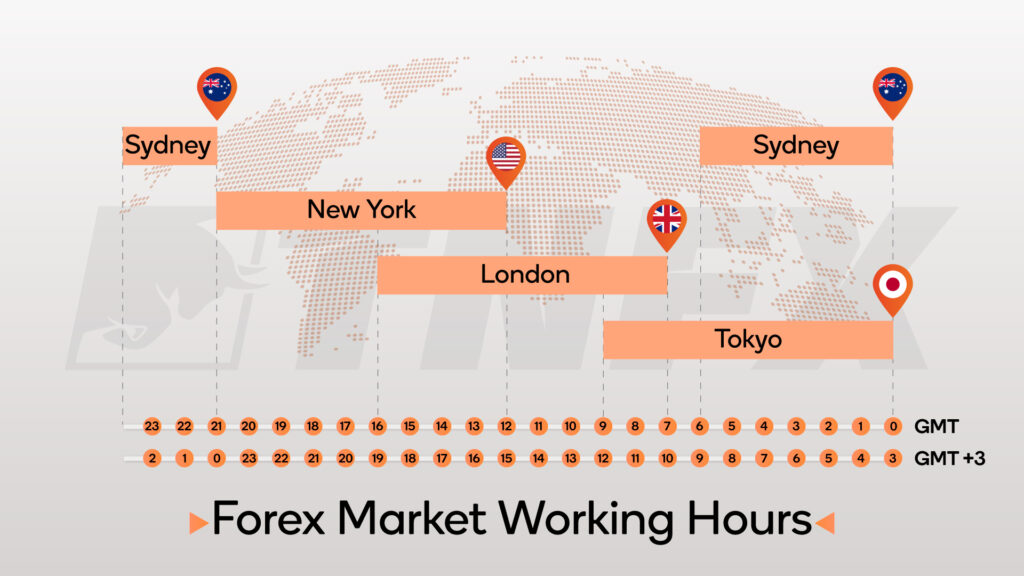
While the focus here is on US market hours, it’s vital to recognize that financial markets are globally interconnected. When the US market closes, other major world markets are often just opening or still active.
- Asia: Markets in Tokyo, Hong Kong, and Shanghai are typically active during the US evening and overnight hours.
- Europe: Markets in London, Frankfurt, and Paris are generally open during the US pre-market and early regular session.
This global overlap means that news and events from one region can influence another. For instance, a major economic announcement in China overnight could significantly impact US futures prices and the US market’s open. Investors with international holdings or those tracking global economic trends must consider these overlapping market hours to fully grasp the continuous flow of global capital and information. This continuous cycle underscores the constant nature of financial market activity, even when a specific national market is closed.
Essential Tools and Best Practices for Staying Informed
In today’s fast-paced financial world, staying updated on market hours and potential changes is straightforward, thanks to a plethora of digital tools and resources. Integrating these into your daily routine can help ensure you’re always aligned with market activity.
Reliable Sources for Market Schedules
To avoid missing important trading windows or being caught off guard by closures, rely on these authoritative sources:
- Brokerage Platforms: Your online brokerage account is typically the most direct and reliable source. Most platforms clearly display current market status (open/closed), upcoming holidays, and extended-hours schedules directly on their dashboards or in dedicated market information sections. They often send alerts for early closures.
- Official Exchange Websites: The NYSE (nyse.com) and NASDAQ (nasdaq.com) websites publish their official holiday and early closure schedules well in advance. These are the definitive sources for market operating hours.
- Reputable Financial News Websites: Major financial news outlets (e.g., Bloomberg, Reuters, The Wall Street Journal, CNBC, Yahoo Finance) invariably report on market holiday schedules and any special closures. Many offer personalized alerts.
- Financial Calendars and Apps: Various financial apps and websites offer interactive calendars that highlight market holidays, earnings report dates, and economic data releases. Customizing these to your specific needs can provide a quick, at-a-glance overview.
Integrating Market Hours into Your Routine
Making market hours a natural part of your investing routine involves a few best practices:
- Set Reminders: For significant holidays or early closures, set calendar reminders on your phone or computer.
- Review Before Trading: Before placing any substantial order, especially during periods around holidays, take a moment to confirm the current day’s market hours.
- Understand Order Types: Always understand how different order types (market, limit, stop-loss) behave during regular versus extended hours. Limit orders are generally safer in low-liquidity environments.
- Plan Ahead: If you anticipate a need to trade around a holiday, plan your strategy in the preceding days. This might involve reducing positions or setting up conditional orders.
- Stay Flexible: The market is dynamic. While schedules are usually firm, unforeseen events can occur. Maintain a degree of flexibility and stay connected to reliable news sources.
By proactively incorporating these tools and practices, investors can navigate the complexities of market hours with confidence, ensuring their strategies are executed effectively and their portfolios are managed wisely, regardless of the clock or calendar.
Conclusion
The question “What time does the market close today?” opens the door to a deeper understanding of the intricate mechanisms that govern financial markets. While the standard 9:30 AM to 4:00 PM ET trading session for the NYSE and NASDAQ forms the core, a comprehensive view encompasses the opportunities and risks presented by pre-market and after-hours trading, alongside the predictable breaks for holidays and the rare instances of unforeseen closures.
For any investor, from the novice to the seasoned professional, an acute awareness of market hours is indispensable. It dictates the optimal timing for trades, influences liquidity and volatility, and directly impacts the execution of investment strategies. Misjudging market hours can lead to missed opportunities, poor trade executions, or unnecessary risk exposure.
By utilizing reliable financial tools, staying abreast of official exchange schedules, and understanding the unique dynamics of different trading periods, investors can operate with greater confidence and precision. The global interconnectedness of markets further emphasizes the continuous nature of financial activity, demanding a holistic perspective. Ultimately, mastering the ebb and flow of market hours is not just about knowing the clock; it’s about empowering yourself with the knowledge to make smarter, more strategic financial decisions in a perpetually moving marketplace.
aViewFromTheCave is a participant in the Amazon Services LLC Associates Program, an affiliate advertising program designed to provide a means for sites to earn advertising fees by advertising and linking to Amazon.com. Amazon, the Amazon logo, AmazonSupply, and the AmazonSupply logo are trademarks of Amazon.com, Inc. or its affiliates. As an Amazon Associate we earn affiliate commissions from qualifying purchases.