
In the world of finance, timing is often just as critical as the assets you choose to hold. For both novice investors and seasoned day traders, understanding the rhythm of the financial markets is fundamental to executing successful strategies. While the question “what time does the stock market close” might seem straightforward, the answer is layered with nuances involving time zones, extended trading sessions, and international variations. Mastering the clock allows an investor to navigate liquidity shifts, react to corporate earnings, and manage risk more effectively in an increasingly globalized economy.
Standard Trading Hours: The Core of the Financial Day
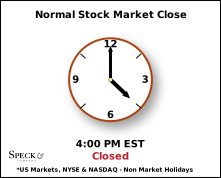
For the vast majority of retail investors in the United States, the stock market follows a rigid schedule. The two primary exchanges, the New York Stock Exchange (NYSE) and the NASDAQ, operate on a standard schedule from Monday through Friday. These exchanges officially open at 9:30 AM Eastern Time (ET) and close their doors at 4:00 PM ET. This six-and-a-half-hour window represents the “core” trading session, during which the highest volume of shares changes hands and price discovery is at its most efficient.
The Significance of the 4:00 PM ET Closing Bell
The closing bell at 4:00 PM ET is more than just a symbolic end to the day; it marks the moment when the official closing price for a security is determined. This “closing price” is the benchmark used by mutual funds to calculate their Net Asset Value (NAV) and by analysts to chart historical performance. The final minutes leading up to 4:00 PM are often the most volatile and high-volume periods of the day. Institutional investors, index funds, and hedge funds frequently execute large “market-on-close” (MOC) orders at this time to ensure their trades are filled at the benchmark price, leading to a flurry of activity known as the “closing cross.”
Why the Standard Session Matters for Liquidity
Liquidity refers to how easily an asset can be bought or sold without affecting its price. During standard hours, liquidity is at its peak. This means the “bid-ask spread”—the difference between what a buyer is willing to pay and what a seller is willing to accept—is typically at its narrowest. For personal finance enthusiasts and long-term investors, executing trades during these hours is generally recommended to avoid “slippage,” which occurs when a trade is executed at a price different than expected due to low market activity.
Time Zone Considerations
It is vital for investors outside the Eastern Time zone to adjust their clocks accordingly. For an investor in Los Angeles, the market opens at 6:30 AM and closes at 1:00 PM PT. For those in London, the US market doesn’t even open until 2:30 PM local time. Failing to account for these shifts can lead to missed opportunities or the inability to react to sudden market downturns.
Beyond the Bell: Understanding Extended-Hours Trading
While the “official” market hours end at 4:00 PM ET, the digital nature of modern finance means that trading does not truly stop. Through Electronic Communication Networks (ECNs), investors can participate in extended-hours trading, which consists of pre-market and after-hours sessions.
Pre-Market Trading Sessions
The pre-market session for US stocks typically runs from 4:00 AM to 9:30 AM ET. However, the bulk of retail activity usually picks up around 8:00 AM ET. This session is critical for reacting to overnight news, such as international economic data, geopolitical events, or early-morning corporate press releases. If a major tech company announces a massive acquisition at 7:00 AM, the stock price will begin moving in the pre-market long before the general public has access to the NYSE floor.
After-Hours Trading: The Earnings Impact
After-hours trading begins immediately after the closing bell at 4:00 PM ET and can run as late as 8:00 PM ET. This is perhaps the most dramatic period for individual stocks because the majority of public companies release their quarterly earnings reports shortly after the 4:00 PM close. A “beat” or a “miss” on earnings can cause a stock to jump or dive by 10% or more in minutes. For investors who want to hedge their positions or capitalize on immediate reactions, the after-hours session is the only venue available.
Risks and Realities of Extended Trading
While the ability to trade until 8:00 PM offers flexibility, it comes with significant risks that the Money niche must respect.
- Lower Liquidity: Far fewer participants trade during these hours, meaning the bid-ask spreads are much wider. You might pay significantly more to buy or receive significantly less to sell than you would during the day.
- Increased Volatility: With fewer shares being traded, a single large order can swing the price of a stock violently.
- Limit Orders Only: Most brokerages require investors to use “limit orders” during extended hours. This means you must specify the exact price you are willing to accept, as “market orders” are deemed too risky when prices are unstable.
International Markets: A Global Perspective on Closing Times
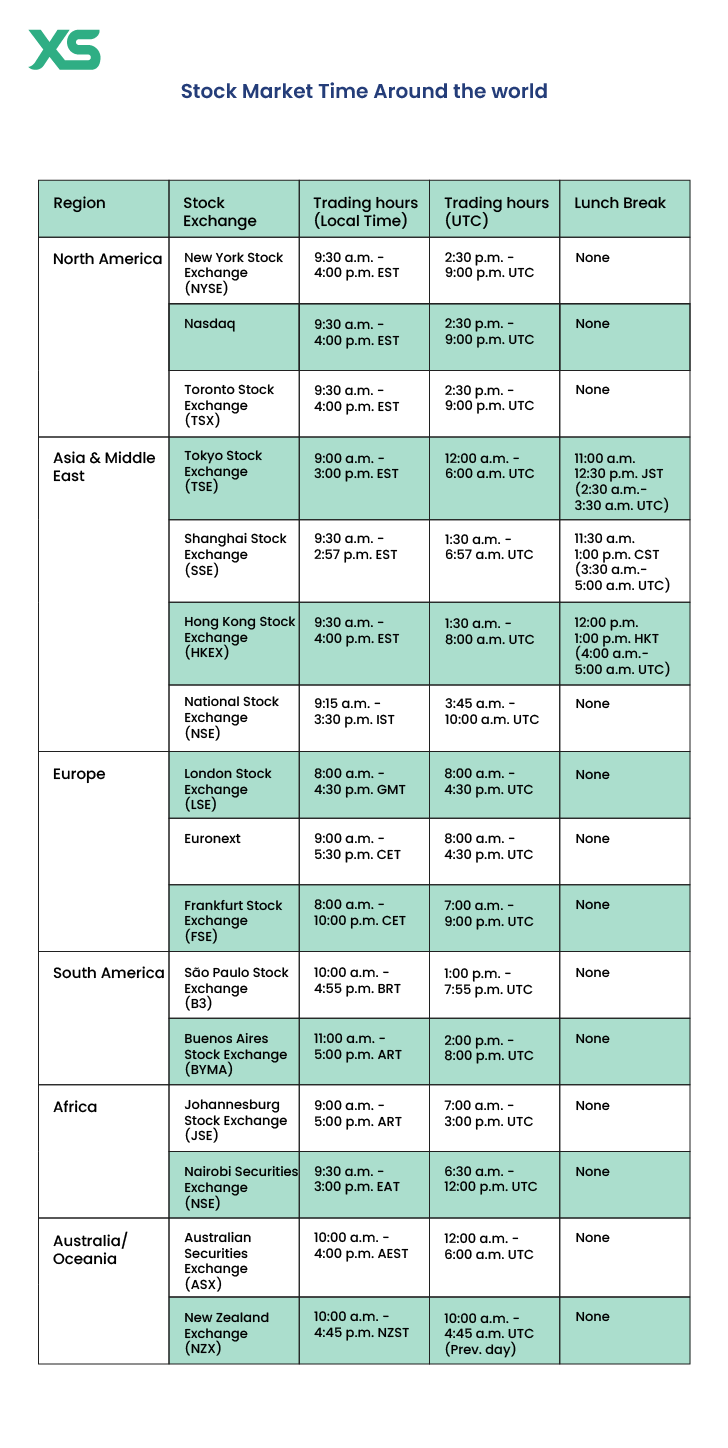
In the modern financial landscape, the “market” is a global entity that never truly sleeps. As one exchange closes, another is likely opening its doors. For investors looking to diversify their portfolios with international equities or ETFs, understanding global closing times is essential.
European Markets
The London Stock Exchange (LSE) is a cornerstone of global finance. It typically operates from 8:00 AM to 4:30 PM Greenwich Mean Time (GMT). Other major European hubs, like the Euronext Paris or the Frankfurt Stock Exchange (DAX), operate on similar schedules adjusted for Central European Time. Because these markets are open during the early morning hours of the US East Coast, European economic trends often set the “tone” for the US opening.
Asian Markets
The “Big Three” in Asia—Tokyo (TSE), Hong Kong (HKEX), and Shanghai (SSE)—operate while the Western world is asleep. A unique feature of many Asian markets is the “lunch break.” For example, the Tokyo Stock Exchange typically trades from 9:00 AM to 11:30 AM, takes a break for ninety minutes, and resumes from 12:30 PM to 3:00 PM local time. This pause allows traders to recalibrate and digest morning movements before the final afternoon push.
The Concept of the 24-Hour Cycle
For those involved in Forex (Foreign Exchange) or Cryptocurrency, the concept of a “closing time” is virtually non-existent. The Forex market operates 24 hours a day, five days a week, moving from Sydney to Tokyo to London to New York in a continuous loop. Cryptocurrency markets, such as Bitcoin or Ethereum, are even more relentless, trading 24/7/365. For the traditional stock investor, however, the “close” remains a vital anchor point for valuation.
Market Holidays and Early Closures
The stock market does not operate every day of the week, and there are specific instances where the “close” comes earlier than expected. Keeping a financial calendar is a hallmark of a disciplined investor.
Federal Holidays
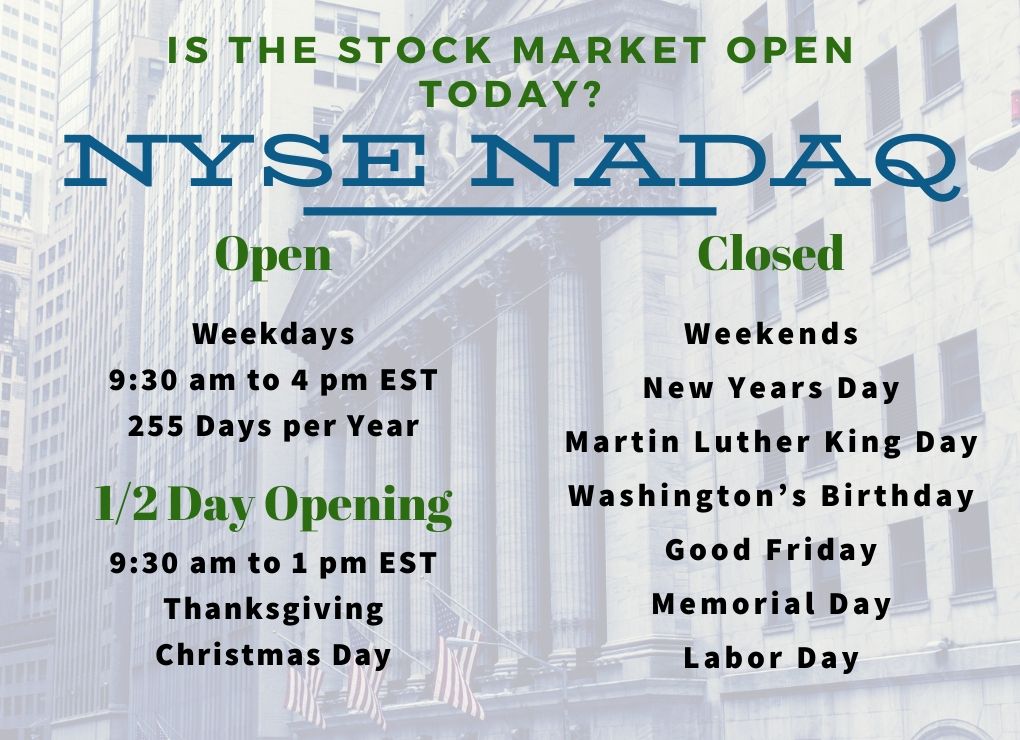
In the United States, the NYSE and NASDAQ are closed on major federal holidays. This includes New Year’s Day, Martin Luther King Jr. Day, Washington’s Birthday (Presidents’ Day), Good Friday, Memorial Day, Juneteenth National Independence Day, Independence Day, Labor Day, Thanksgiving Day, and Christmas Day. If a holiday falls on a Saturday, the market is typically closed on the preceding Friday; if it falls on a Sunday, it is closed on the following Monday.
Half-Day Sessions
There are specific “early close” days where the market shuts down at 1:00 PM ET. These usually occur on the day after Thanksgiving (Black Friday) and sometimes on Christmas Eve or July 3rd, depending on how the calendar falls. These sessions are notoriously quiet, with low volume as institutional traders take time off. For a retail investor, trading on these days can be tricky due to the lack of liquidity, often resulting in erratic price movements.
Unexpected Closures and “Circuit Breakers”
While rare, the stock market can close unexpectedly due to technical glitches or extreme volatility. “Circuit breakers” are automated systems designed to halt trading if the S&P 500 drops by certain percentages (7%, 13%, and 20%) within a single day. A Level 3 decline (20%) results in the market closing for the remainder of the trading day, regardless of what time it occurs. These mechanisms are in place to prevent panic selling and allow investors to absorb information during times of crisis.
Strategic Implications: How Timing Affects Your Portfolio
Understanding when the market closes is not just about knowing when to turn off the computer; it is about recognizing the strategic windows of opportunity that open and shut with the clock.
The Institutional Rebalance
Many large-scale institutional moves happen at the end of the month, the end of the quarter, or the end of the year, specifically in the final minutes before the 4:00 PM close. This is when pension funds and large mutual funds rebalance their portfolios to maintain their target asset allocations. As an individual investor, being aware of these “triple witching” days (when various options and futures contracts expire simultaneously) can help you understand why prices might seem irrational near the close.
Best Times to Place Trades
Financial experts often advise against trading in the first and last 30 minutes of the day unless you are an experienced trader. The “opening” (9:30–10:00 AM) and “closing” (3:30–4:00 PM) are characterized by high volatility and emotional reactions. For the long-term investor looking for stability, the “mid-day lull” (typically 11:30 AM to 2:00 PM ET) often provides a more stable environment for executing trades, as the initial morning excitement has cooled and the end-of-day rush hasn’t yet begun.
Managing Overnight Risk
The period between the 4:00 PM close and the 9:30 AM open is known as “overnight risk.” During this time, you cannot easily exit a position without potentially facing the poor liquidity of the after-hours market. Global events, political shifts, or natural disasters that occur while the US market is closed will be “priced in” the moment the market opens the next day, often resulting in a “gap.” A stock that closed at $100 might “gap down” and open at $90 the next morning. Diversification and the use of stop-loss orders are the primary tools investors use to mitigate the dangers inherent in the hours when the market is closed.
In conclusion, knowing what time the stock market closes is the first step in mastering the temporal element of investing. From the heavy institutional volume of the closing cross to the volatile swings of the after-hours session, the clock dictates the rules of engagement. By aligning your trading activities with the high-liquidity windows of the standard session and respecting the risks of extended hours, you can ensure that your financial decisions are executed with precision and strategic intent.
aViewFromTheCave is a participant in the Amazon Services LLC Associates Program, an affiliate advertising program designed to provide a means for sites to earn advertising fees by advertising and linking to Amazon.com. Amazon, the Amazon logo, AmazonSupply, and the AmazonSupply logo are trademarks of Amazon.com, Inc. or its affiliates. As an Amazon Associate we earn affiliate commissions from qualifying purchases.