
Understanding the operating hours of stock exchanges is a fundamental aspect of navigating financial markets, whether you’re a seasoned institutional investor or a budding retail trader. The precise opening and closing times dictate when buy and sell orders can be executed, when new information impacts prices, and ultimately, the liquidity and volatility of various assets. While a general perception might exist about a universal “market close,” the reality is far more nuanced, varying significantly by geographical region, market type, and specific circumstances. Delving into these details is crucial for effective financial planning, risk management, and strategic investment decisions.
Understanding Standard U.S. Stock Market Hours
For many investors, particularly those based in North America, the term “stock exchange” immediately brings to mind the New York Stock Exchange (NYSE) and the Nasdaq Stock Market. These two titans of the financial world set the rhythm for a significant portion of global equity trading. Their standard operating hours serve as a benchmark, though it’s important to differentiate between the core trading session and extended hours.
The Core Trading Window
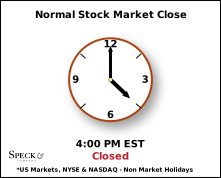
The regular trading session for both the NYSE and Nasdaq runs from 9:30 AM Eastern Time (ET) to 4:00 PM ET on weekdays. This seven-and-a-half-hour window is when the vast majority of trading volume occurs, characterized by high liquidity and efficient price discovery. During these hours, a confluence of market participants—from individual investors and algorithmic trading firms to mutual funds and hedge funds—are actively engaged, leading to a dynamic environment where company news, economic reports, and global events are swiftly assimilated into stock prices. This period is often considered the most reliable for order execution due to the depth of the market.
Pre-Market and After-Hours Trading
Beyond the core trading window, opportunities exist for investors to trade in what are known as “extended-hours sessions.” These include pre-market trading and after-hours trading.
Pre-market trading typically begins as early as 4:00 AM ET and extends until the market opens at 9:30 AM ET.
After-hours trading commences immediately after the 4:00 PM ET close and can continue until 8:00 PM ET.
These extended sessions are facilitated by electronic communication networks (ECNs) rather than the traditional exchange floor. While they offer flexibility, especially for reacting to news released outside regular hours, they often come with reduced liquidity, wider bid-ask spreads, and increased volatility. This can make it more challenging to execute large orders without significantly impacting the price, and can expose traders to greater price swings on smaller volumes.
Weekends and Holidays: When Markets Are Shut
Stock exchanges, including the NYSE and Nasdaq, operate on a Monday-to-Friday schedule. They are closed on weekends (Saturdays and Sundays) to allow for settlement processes, system maintenance, and to provide a period of reflection for market participants. Furthermore, both exchanges observe a number of U.S. federal holidays, during which they remain closed. These holidays typically include New Year’s Day, Martin Luther King, Jr. Day, Washington’s Birthday, Good Friday, Memorial Day, Juneteenth National Independence Day, Independence Day, Labor Day, Thanksgiving Day, and Christmas Day. Occasionally, markets may also have early closures on days preceding or following a major holiday. It is crucial for investors to consult the official exchange calendars to plan their trading activities accordingly and avoid potential settlement delays or missed opportunities.
A Global Perspective: International Stock Exchange Hours
While U.S. market hours are prominent, the world of finance operates around the clock, with different stock exchanges opening and closing as the Earth rotates. Understanding these global timings is essential for international investors, businesses with global operations, and anyone looking to gain a broader market perspective. Time zones play a critical role, meaning that when one major market is closing, another is often just beginning its trading day.
European Markets: London, Frankfurt, Paris
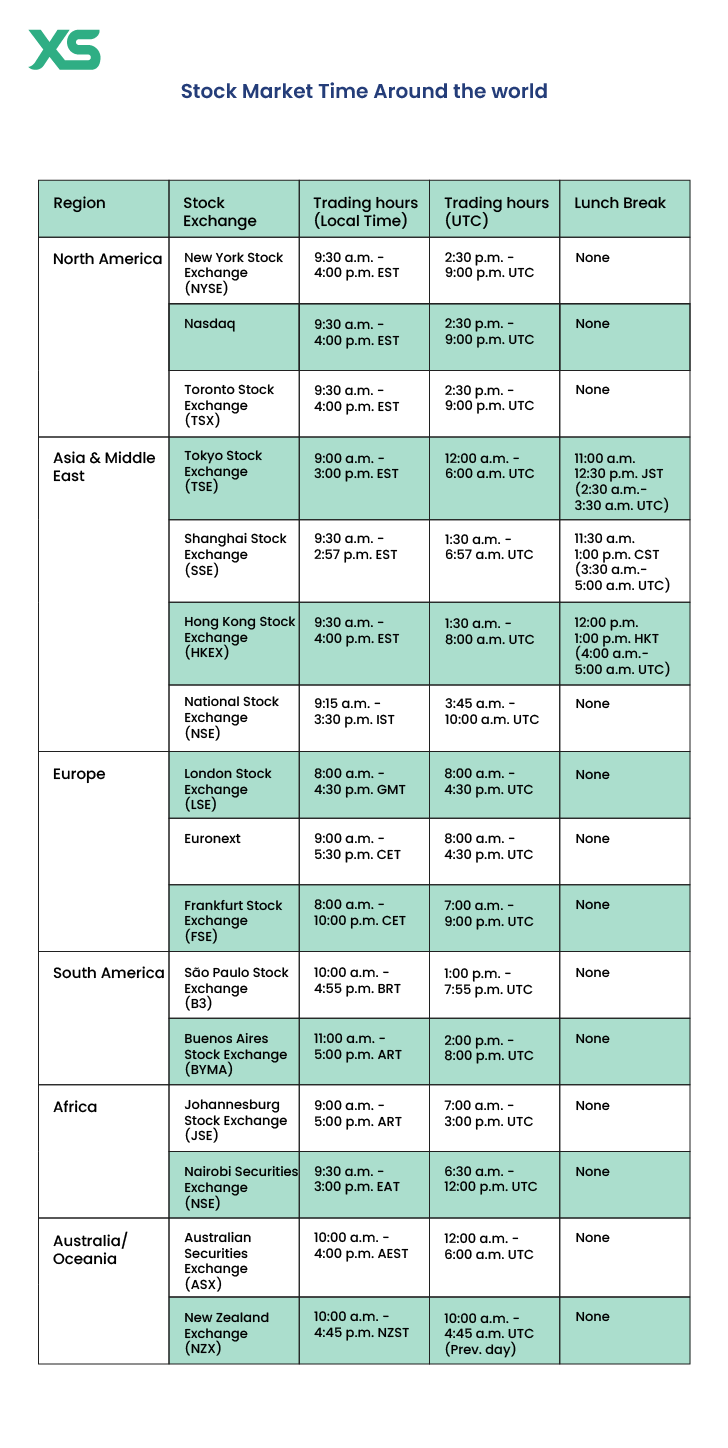
Europe hosts several influential stock exchanges. The London Stock Exchange (LSE), a hub for international trading, operates from 8:00 AM GMT to 4:30 PM GMT (or BST during daylight saving). The Deutsche Börse (Frankfurt Stock Exchange), central to the Eurozone economy, typically runs from 9:00 AM CET to 5:30 PM CET. Euronext, which operates exchanges in Paris, Amsterdam, Brussels, Lisbon, and Dublin, generally follows similar hours, from 9:00 AM CET to 5:30 PM CET. These markets are crucial for understanding the sentiment and economic health of the European Union and the broader EMEA region. Their overlap with the late U.S. pre-market and early regular session can create interesting dynamics.
Asian Powerhouses: Tokyo, Shanghai, Hong Kong
As the first major markets to open each day by Western reckoning, Asian exchanges set the initial tone for global trading. The Tokyo Stock Exchange (TSE), one of the largest in Asia, has trading sessions from 9:00 AM to 11:30 AM JST and then from 12:30 PM to 3:00 PM JST, with a one-hour lunch break. The Shanghai Stock Exchange (SSE) and the Shenzhen Stock Exchange (SZSE), China’s two mainland exchanges, operate from 9:30 AM to 11:30 AM CST and 1:00 PM to 3:00 PM CST, also with a lunch break. The Hong Kong Stock Exchange (HKEX) runs from 9:30 AM to 12:00 PM HKT and 1:00 PM to 4:00 PM HKT. These markets are profoundly influenced by regional economic data, geopolitical events, and the performance of global markets that closed hours before.
Other Key Global Exchanges
Beyond these major players, numerous other exchanges contribute to the global financial tapestry. The Sydney Stock Exchange (ASX) in Australia trades from 10:00 AM to 4:00 PM AEST (or AEDT during daylight saving). The Bombay Stock Exchange (BSE) and the National Stock Exchange (NSE) in India operate from 9:15 AM to 3:30 PM IST. The Toronto Stock Exchange (TSX) aligns closely with U.S. hours, from 9:30 AM ET to 4:00 PM ET. Each of these exchanges has its own set of holidays and conventions, underscoring the importance of localized research for international investors. The continuous rotation of these market openings and closures ensures that capital is always moving somewhere, reflecting global shifts and regional news.
Factors Influencing Market Closure Times
While standard operating hours provide a predictable framework, several factors can alter the exact time a stock exchange closes, or whether it opens at all. These variables are important for investors to track, as unexpected changes can impact trading strategies and portfolio management.
Public Holidays and Early Closures
Every stock exchange observes a calendar of public holidays specific to its jurisdiction. On these days, the markets are fully closed. Additionally, some exchanges may announce early closures on certain dates, often preceding a major holiday or at the end of the year (e.g., Christmas Eve or New Year’s Eve). These shortened trading days mean that the window for executing trades is reduced, potentially concentrating liquidity and volatility into a smaller timeframe. Investors must stay informed about these special schedules, typically published well in advance on the exchange’s official website, to avoid missing opportunities or being unable to adjust positions.
Time Zone Arbitrage and Investor Strategy
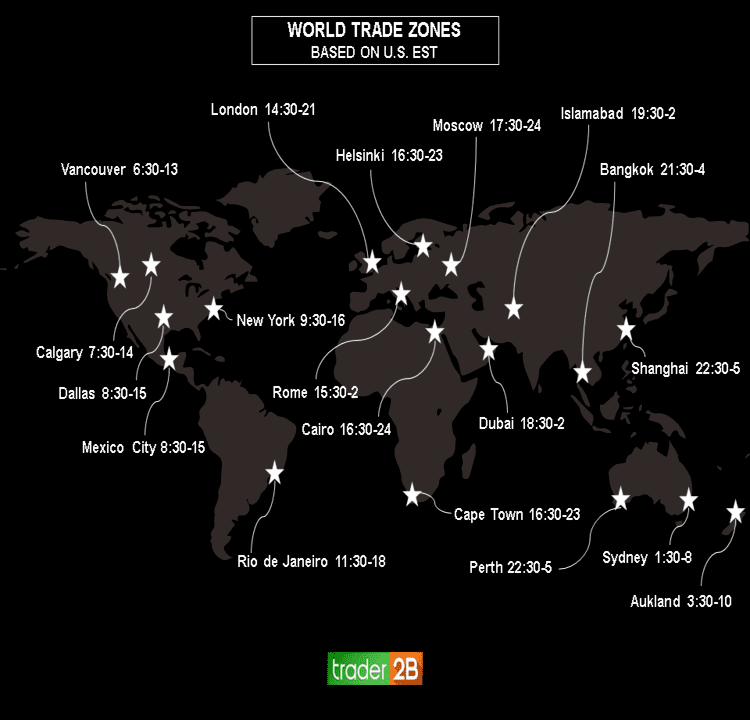
The staggered opening and closing times across different global exchanges create opportunities and challenges related to time zones. Savvy international investors might leverage these differences to react to news. For example, a major economic announcement in Asia might impact European markets before the U.S. markets open, allowing investors to adjust their U.S. positions based on early European reactions. This continuous flow of information means that market sentiment can shift significantly overnight, even for domestic investors, as foreign markets process news and set a precedent for the coming day. Understanding time zone differences is not merely a logistical concern but a strategic imperative for global portfolio management.
Market Interruptions: Circuit Breakers and Extraordinary Events
Beyond scheduled closures, stock exchanges have mechanisms to temporarily halt trading in the face of extreme volatility or extraordinary events. Circuit breakers are automated systems designed to pause trading across an entire market (or for individual stocks) if prices fall or rise by a certain percentage within a defined period. These halts are intended to give investors time to absorb information, cool down panic, and prevent disorderly trading. For instance, the NYSE has different circuit breaker levels that can halt trading for 15 minutes or even for the remainder of the day, depending on the severity of the market decline. Furthermore, unforeseen events such as natural disasters, cyberattacks, or significant geopolitical crises can lead to emergency closures or delays, as seen historically with events like 9/11. While rare, these unplanned interruptions underscore the dynamic nature of market operations.
The Strategic Importance of Market Hours for Investors
Knowing when stock exchanges open and close is far more than a trivial detail; it is a foundational element of effective investment strategy. Market hours directly influence liquidity, volatility, and the overall efficiency of price discovery, impacting how and when investors execute their financial decisions.
Order Execution and Liquidity
The regular trading session, characterized by its high volume and large number of participants, offers the best conditions for order execution. During these hours, liquidity is at its peak, meaning there are plenty of buyers and sellers, leading to tighter bid-ask spreads. This allows investors to buy or sell securities close to their desired price without significantly moving the market. Conversely, trading during extended hours or on days with early closures often means dealing with thinner markets. Reduced liquidity can result in wider spreads, higher transaction costs, and the risk that large orders might move the price unfavorably, making it harder to get the desired fill price.
Volatility and Price Discovery
Market hours are directly linked to volatility and the process of price discovery. Significant news events, such as quarterly earnings reports or central bank announcements, often occur outside regular trading hours. The reaction to this news can then manifest in extended-hours trading, but the full impact is usually absorbed and reflected in prices once the regular session begins. The opening minutes of a trading day, particularly in highly anticipated scenarios, can be characterized by intense volatility as accumulated overnight news and orders are processed. Conversely, the closing hours can also see increased activity as institutional investors rebalance portfolios or try to execute trades before the market shuts down. Understanding these patterns allows investors to anticipate periods of heightened risk or opportunity.
Managing International Portfolios
For investors with diversified portfolios that include international assets, coordinating investment decisions with global market hours is paramount. A U.S.-based investor holding European stocks needs to be aware of CET or GMT hours to react to European economic data or company-specific news. Similarly, an investor in Asian markets must factor in JST or HKT. This requires careful planning of when to place orders, how to monitor positions, and when to interpret news that might affect specific geographical holdings. It also highlights the need for robust trading platforms that offer access to global markets and display relevant market data in an intuitive, time-zone-adjusted format. Managing the risk associated with time differences and overnight price gaps is a key part of international investing.
Beyond Regular Hours: Risks and Opportunities
While the regular market hours offer the most liquid and efficient trading environment, extended-hours trading provides both unique opportunities and heightened risks for investors willing to venture beyond the conventional trading window. This landscape requires a nuanced understanding to leverage its potential while mitigating its inherent drawbacks.
The Landscape of Extended-Hours Trading
Extended-hours trading encompasses both the pre-market and after-hours sessions, facilitated primarily by Electronic Communication Networks (ECNs). These platforms match buy and sell orders electronically, allowing trades to occur outside the traditional exchange open. The primary allure of extended-hours trading is the ability to react immediately to news that breaks after the market closes or before it opens. For instance, a company might release its quarterly earnings report at 4:30 PM ET; investors can trade its stock in the after-hours session based on this news, rather than waiting until the next morning. Similarly, pre-market trading allows investors to position themselves ahead of the official open, anticipating market sentiment based on overnight developments or early economic indicators.
Advantages and Disadvantages for Retail and Institutional Investors
For institutional investors with advanced systems and dedicated trading desks, extended hours can be crucial for hedging strategies, adjusting large positions in response to global events, or executing block trades that require discretion. The ability to trade before or after the regular market allows them to manage risk continuously and capitalize on immediate information flow.
For retail investors, the advantages include flexibility and the potential to act on breaking news before the broader market fully reacts. However, the disadvantages are often more pronounced. The most significant drawback is reduced liquidity. With fewer participants, bid-ask spreads are typically wider, making it more expensive to enter or exit positions. Orders placed during these times might be filled at less favorable prices or might not be filled at all if there aren’t enough willing counterparties. Increased volatility is another major concern; even small trades can cause significant price swings due to low trading volume. Furthermore, the absence of market makers during these hours can lead to less stable pricing and potential manipulation. Technology, while enabling extended hours, also means that retail investors need robust platforms and reliable real-time data to navigate these less predictable sessions effectively. Ultimately, trading outside regular hours demands a higher degree of caution and a clear understanding of the magnified risks involved.
aViewFromTheCave is a participant in the Amazon Services LLC Associates Program, an affiliate advertising program designed to provide a means for sites to earn advertising fees by advertising and linking to Amazon.com. Amazon, the Amazon logo, AmazonSupply, and the AmazonSupply logo are trademarks of Amazon.com, Inc. or its affiliates. As an Amazon Associate we earn affiliate commissions from qualifying purchases.