
The New York trading session stands as a pivotal period in the global financial markets, commanding significant attention from traders, investors, and financial institutions worldwide. Often characterized by heightened volatility, deep liquidity, and a flurry of economic news, understanding its precise opening and closing times is not merely a matter of scheduling but a critical component of a robust trading strategy. This session represents a confluence of major market participants and capital flows, impacting everything from forex pairs to stock indices and commodity prices.
The Significance of the New York Trading Session
The financial world operates in a sequential rhythm, with major trading centers opening and closing their doors in a staggered fashion across different time zones. Among these, the New York session holds a unique and often dominant position, marking a peak in global market activity. Its influence extends far beyond the geographical confines of Wall Street, resonating through every asset class.
Global Market Interconnectedness
Modern financial markets are intrinsically interconnected, forming a continuous 24-hour cycle facilitated by technological advancements. The New York session, alongside London, Tokyo, and Sydney, forms one of the four major pillars of this global network. When New York opens, it integrates the cumulative price action and news from the Asian and European sessions, often amplifying existing trends or initiating new ones. The sheer volume of capital and market participants during this period means that price discovery is often at its most efficient, reflecting a broad consensus of global sentiment. This interconnectedness necessitates that market participants, regardless of their location, pay close attention to the New York hours, as significant shifts can originate or accelerate during this time.
A Hub of Financial Activity
New York City, with its iconic Wall Street, is synonymous with global finance. The opening bell of the New York Stock Exchange (NYSE) and NASDAQ signals the commencement of trading in the world’s largest equity market. Simultaneously, the vast over-the-counter (OTC) foreign exchange market sees a dramatic increase in liquidity, as major banks, hedge funds, and corporate treasuries based in the Americas become active. This surge in activity isn’t limited to equities and forex; it also significantly impacts commodity markets, particularly crude oil, gold, and agricultural products, whose pricing often reacts strongly to U.S. economic data and dollar strength. The concentration of financial power, coupled with the release of key U.S. economic indicators, establishes the New York session as a period of intense financial activity and market movement.
Pinpointing the Opening Hours
Determining the exact opening time for the New York session requires careful consideration of both standard time conventions and the impact of daylight saving adjustments. Traders must be acutely aware of these shifts to avoid miscalculations that could lead to missed opportunities or unexpected risks.
Standard Time vs. Daylight Saving Time
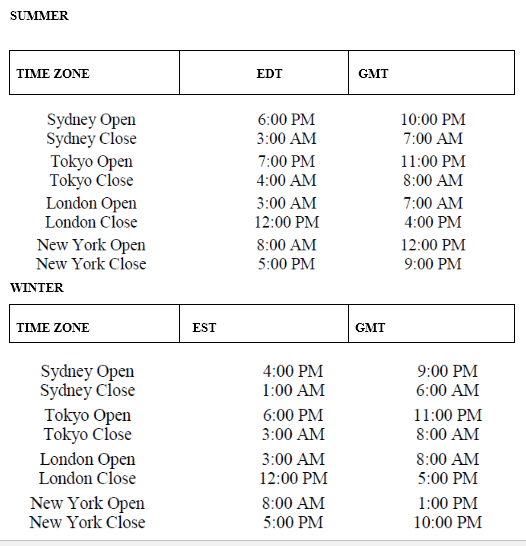
The primary challenge in pinpointing the New York session’s opening is the biannual adjustment for Daylight Saving Time (DST). During Standard Time (approximately early November to mid-March), New York operates on Eastern Standard Time (EST), which is UTC-5. When Daylight Saving Time is in effect (approximately mid-March to early November), New York switches to Eastern Daylight Time (EDT), which is UTC-4. This one-hour shift means that while the local time for market open remains consistent, its equivalent UTC/GMT time changes, affecting how it overlaps with other global sessions.
Major Time Zone Conversions (EST/EDT, GMT/UTC)
For traders globally, converting New York’s local time to their respective time zones, particularly GMT/UTC, is crucial.
- During Eastern Standard Time (EST, UTC-5):
- The New York stock market (NYSE/NASDAQ) opens at 9:30 AM EST (14:30 UTC/GMT) and closes at 4:00 PM EST (21:00 UTC/GMT).
- The broader forex New York session is generally considered to open around 8:00 AM EST (13:00 UTC/GMT) and extend until 5:00 PM EST (22:00 UTC/GMT), though activity can taper off significantly after the stock market close.
- During Eastern Daylight Time (EDT, UTC-4):
- The New York stock market opens at 9:30 AM EDT (13:30 UTC/GMT) and closes at 4:00 PM EDT (20:00 UTC/GMT).
- The forex New York session opens around 8:00 AM EDT (12:00 UTC/GMT) and extends until 5:00 PM EDT (21:00 UTC/GMT).
It is imperative for traders to confirm whether their charts and brokers automatically adjust for DST or if manual adjustments are required, especially when backtesting strategies or setting up alerts.
Key Market Instruments (Forex, Stocks, Commodities)
While the general times frame the “New York session,” specific market instruments have slightly different nuances:
- Forex: The forex market technically trades 24 hours, but the New York session for forex sees a dramatic increase in liquidity and volatility, particularly for USD-related pairs, starting around 8:00 AM EST/EDT.
- Stocks: The NYSE and NASDAQ operate strictly from 9:30 AM to 4:00 PM EST/EDT. Pre-market and after-hours trading extends these periods, but the main session is within these times.
- Commodities: Futures markets for commodities like crude oil (WTI) and gold, traded on exchanges like the NYMEX (part of CME Group), also see their most significant liquidity and price action during the New York market hours, although their electronic trading systems operate almost 24 hours. The main pit session, if applicable, would align with broader New York market hours.
Understanding Session Overlaps and Their Impact
One of the most compelling aspects of the New York trading session is its significant overlap with other major global sessions, particularly London. These overlaps are crucial periods of heightened market activity, offering both opportunities and increased risk.
The Potent London-New York Overlap
The overlap between the London and New York sessions is arguably the most dynamic period in the 24-hour trading cycle. London, the world’s largest forex trading hub, is typically active from 8:00 AM to 5:00 PM GMT/BST. New York, depending on DST, opens either at 12:00 PM GMT (EDT) or 1:00 PM GMT (EST). This creates a powerful four-hour window where both financial powerhouses are fully operational.
- During EDT (Spring/Summer): The overlap is from 8:00 AM EDT (12:00 PM GMT) to 12:00 PM EDT (16:00 PM GMT).
- During EST (Fall/Winter): The overlap is from 8:00 AM EST (13:00 PM GMT) to 12:00 PM EST (17:00 PM GMT).
During this overlap, market depth increases significantly, leading to tighter spreads, higher transaction volumes, and often, the most pronounced price movements of the day. Many key economic data releases from both the U.S. and the Eurozone occur during or just before this period, further fueling market momentum.

Implications for Volatility and Liquidity
The combined forces of London and New York during their overlap lead to:
- Increased Liquidity: With two of the largest financial centers active, there are more buyers and sellers in the market, making it easier to enter and exit trades without significant slippage. This is particularly beneficial for large institutional players.
- Heightened Volatility: The influx of new orders and the reaction to combined economic data releases often translate into larger price swings. This volatility can present significant opportunities for aggressive traders seeking rapid gains but also carries higher risk for those unprepared for quick market reversals.
- Trend Confirmation or Reversal: Strong trends often consolidate or accelerate during this overlap. Conversely, periods of indecision or false breakouts from earlier sessions may be decisively confirmed or reversed as the full weight of both markets takes hold.
Asian Session Influence (Pre-New York Open)
While the direct overlap between New York and Asian sessions (Tokyo, Sydney) is minimal or non-existent, the price action and trends established during the Asian trading hours (which conclude as London begins) still lay the groundwork. Traders in New York often react to overnight developments from Asia, especially concerning commodities, global equity performance, and major economic announcements from China or Japan. This pre-New York influence means that traders should not isolate their analysis to just the New York session but consider the global context that precedes its open.
Strategic Trading During the New York Session
Successfully navigating the New York session requires more than just knowing its opening times; it demands a strategic approach tailored to its unique characteristics, including major news events and prevailing market sentiment.
Key Economic Indicators and News Releases
The U.S. economy generates a continuous stream of high-impact economic data that directly influences global markets. Many of these critical reports are released during the early hours of the New York session, typically between 8:30 AM and 10:00 AM EST/EDT. These include:
- Non-Farm Payrolls (NFP): A monthly report on U.S. employment, highly impactful on USD and global equities.
- Consumer Price Index (CPI) & Producer Price Index (PPI): Inflation gauges that influence interest rate expectations.
- Gross Domestic Product (GDP): The broadest measure of economic activity.
- Retail Sales, Durable Goods Orders, Industrial Production: Indicators of consumer spending and manufacturing health.
- Federal Open Market Committee (FOMC) Announcements: Decisions on interest rates and monetary policy, often released mid-afternoon.
These releases can trigger immediate and substantial market reactions, creating sharp spikes in volatility and swift directional moves. Traders focusing on fundamental analysis often plan their strategies around these release times, using them as catalysts for entry or exit.
Volatility Management and Risk Mitigation
Given the increased volatility during the New York session, particularly during overlaps and news releases, effective risk management is paramount.
- Wider Stop-Losses: Traders might consider using wider stop-loss orders to accommodate larger price swings and avoid being prematurely stopped out by noise.
- Smaller Position Sizes: Reducing position size can help manage exposure during highly volatile periods, ensuring that even significant adverse moves do not disproportionately impact the trading account.
- Event-Based Trading: For those who prefer to avoid the unpredictable immediate aftermath of news releases, it’s often advisable to step aside during these specific times and re-enter the market once the initial volatility subsides and a clearer direction emerges.
- Focus on Major Pairs: During peak volatility, focusing on highly liquid major currency pairs (e.g., EUR/USD, GBP/USD, USD/JPY) can offer better execution and tighter spreads compared to exotic pairs.
Identifying Trading Opportunities
The New York session presents a myriad of trading opportunities across various strategies:
- Trend Following: Strong trends initiated in previous sessions often accelerate during New York hours, offering opportunities for continuation trades.
- Breakout Strategies: The increased liquidity and volatility can lead to decisive breakouts from consolidation patterns or key support/resistance levels.
- Reversal Trading: After sustained moves in Asian or European sessions, New York participants might challenge or reverse these trends, especially if new information or sentiment shifts emerge.
- Correlation Trading: Observing the correlation between the U.S. dollar, commodity prices (like gold or oil), and equity indices can provide valuable insights for multi-asset strategies. For instance, a stronger USD can weigh on gold prices, while U.S. equity performance often correlates with global sentiment.
Adapting to Market Dynamics and Seasonal Changes
The financial markets are dynamic entities, influenced by a multitude of factors beyond mere clock times. Successful trading in the New York session requires an understanding of how holidays, global daylight saving shifts, and accessible tools impact market behavior.
The Impact of Public Holidays
Public holidays in the United States can significantly alter the typical dynamics of the New York session. While major holidays like Christmas Day or New Year’s Day result in a complete market closure, others, such as Presidents’ Day or Thanksgiving, may lead to shortened trading hours or significantly reduced liquidity. Reduced liquidity often translates to wider spreads, lower volatility (though sudden spikes can occur from thin markets), and less predictable price action. Traders must consult official exchange calendars and economic calendars to stay informed about upcoming holidays and adjust their trading plans accordingly. Similarly, major holidays in other significant trading centers, particularly London, can also impact the New York session by reducing the usual overlap liquidity.
Daylight Saving Adjustments Globally
Beyond the U.S. DST changes, other countries also implement daylight saving time on different schedules. This can temporarily alter the perceived start and end times of session overlaps. For instance, if Europe ends DST before the U.S. does, the London-New York overlap period in terms of UTC/GMT might briefly shift by an hour. Keeping track of these global shifts is vital for traders who rely heavily on specific session overlaps for their strategies. Many reputable forex brokers and financial news sites provide updated market hours calendars that account for these international adjustments.

Tools and Resources for Tracking Market Hours
In today’s digital age, numerous tools and resources are available to help traders accurately track market hours and plan their sessions:
- Economic Calendars: Websites like Investing.com, ForexFactory.com, or DailyFX provide comprehensive economic calendars that list major news releases along with their expected impact and release times, often adjustable to the user’s local time zone.
- Market Session Timers: Many trading platforms and independent websites offer real-time market session timers that graphically display the opening and closing of major global sessions, including overlaps, adjusted for DST.
- TradingView and Other Charting Platforms: Advanced charting platforms often allow users to display session breaks directly on their charts, helping to visualize market activity during different periods.
- Broker Information: Most reputable brokers provide detailed information on trading hours for various instruments, including any adjustments for holidays or DST.
By leveraging these resources, traders can ensure they are always operating with the most accurate information regarding the New York session’s timing and its broader context within the global financial landscape. Mastering this aspect of market mechanics is a fundamental step towards consistent and informed decision-making in the trading world.
aViewFromTheCave is a participant in the Amazon Services LLC Associates Program, an affiliate advertising program designed to provide a means for sites to earn advertising fees by advertising and linking to Amazon.com. Amazon, the Amazon logo, AmazonSupply, and the AmazonSupply logo are trademarks of Amazon.com, Inc. or its affiliates. As an Amazon Associate we earn affiliate commissions from qualifying purchases.