
The Dow Jones Industrial Average (DJIA), often simply referred to as “the Dow,” stands as one of the most recognizable and frequently quoted stock market indices in the world. For over a century, it has served as a barometer for the health of the American economy and the broader global financial landscape. When the Dow hits a new “highest ever” point, it’s not just a headline; it’s a moment that captures the attention of investors, economists, and the general public alike, often signaling periods of robust economic growth and strong corporate performance. Understanding what drives these peaks, their historical context, and what they mean for personal finance and investment strategy is crucial for anyone navigating the complexities of the market.

While the specific numerical high point of the Dow Jones Industrial Average is a dynamic figure, constantly being updated as markets trade, at the time of this writing (referencing recent market activity), the Dow has surpassed 40,000 points, reaching new all-time highs in the first half of 2024. This achievement marks a significant milestone, representing a culmination of economic recovery, corporate innovation, and investor confidence following various global challenges. However, simply stating a number doesn’t tell the full story; the journey to these peaks and their underlying causes offer far richer insights for the astute financial observer.
Understanding the Dow Jones Industrial Average
To appreciate the significance of the Dow’s highest ever points, one must first grasp what the index represents and how it functions within the broader financial ecosystem.
A Brief History and Its Composition
The Dow Jones Industrial Average was created by Charles Dow in 1896, initially comprising just 12 industrial stocks. Its purpose was to provide a clear, concise measure of the performance of the U.S. stock market. Today, the DJIA is an index of 30 large, publicly traded companies based in the United States. Despite its name, these companies are not exclusively “industrial” in the traditional sense; they represent a diverse cross-section of major sectors including technology, finance, healthcare, consumer goods, and more. Companies like Apple, Microsoft, Goldman Sachs, Johnson & Johnson, and Walmart are typical components.
Unlike market-capitalization-weighted indices such as the S&P 500, the Dow is a price-weighted index. This means that stocks with higher share prices have a greater impact on the index’s value than those with lower share prices, regardless of the company’s overall market capitalization. While this methodology has drawn criticism for not fully reflecting market breadth, the Dow’s enduring legacy and widespread recognition ensure its continued relevance as a key economic indicator.
Why the Dow Matters to Investors
The Dow’s significance for investors stems from several factors. Firstly, its long history provides a valuable benchmark for evaluating market trends over time. Secondly, the 30 companies it tracks are typically well-established, financially stable, and influential enterprises that broadly reflect the health of the American corporate sector. A rising Dow often suggests that these bellwether companies are performing well, signaling positive earnings, economic expansion, and a favorable business environment. For individual investors, the Dow’s performance can influence market sentiment, investment decisions, and even retirement planning, as many retirement portfolios are invested in funds that track or are highly correlated with major indices like the Dow.
Charting the Dow’s Ascent: Major Milestones and Record Peaks
The journey to the Dow’s highest ever point is a narrative woven through economic booms, technological revolutions, and periods of both stability and upheaval. Each major milestone achieved reflects a unique chapter in financial history.
Early Growth and Post-War Boom
After its inception, the Dow experienced various periods of growth and contraction. The “Roaring Twenties” saw significant bullish activity, only to be famously interrupted by the Great Depression. The post-World War II era ushered in a prolonged period of economic expansion, consumer spending, and industrial growth, propelling the Dow to new highs. As the American middle class expanded and corporate profits soared, the index steadily climbed, reflecting a nation in ascent.
The Dot-Com Era and Beyond
The late 20th century brought another transformative period: the rise of technology. The dot-com boom of the late 1990s, though ultimately unsustainable in some sectors, saw the Dow surge as investors poured capital into innovative companies. While the early 2000s brought market corrections and geopolitical uncertainties, the Dow eventually regained its footing. The mid-2000s witnessed further advances before the seismic shock of the 2008 Global Financial Crisis, which sent the index plummeting.
The Post-Financial Crisis Recovery and Recent Records
The recovery from the 2008 crisis marked one of the most remarkable bull runs in market history. Fueled by accommodative monetary policies, corporate deleveraging, and subsequent strong earnings growth, the Dow embarked on a multi-year rally. This period saw it consistently break new records, crossing significant psychological thresholds like 20,000, 25,000, and 30,000 points. Even the global pandemic in 2020, which caused a sharp but brief downturn, was followed by an astonishing rebound driven by unprecedented fiscal and monetary stimulus, rapid vaccine development, and a resilient corporate sector.
Pinpointing the All-Time High
As mentioned, the Dow has recently crossed the 40,000-point threshold, establishing a new all-time high in the first half of 2024. This achievement is a testament to the enduring strength of the U.S. economy, corporate adaptability, and investor optimism regarding future growth prospects, potentially driven by factors such as moderating inflation, a resilient job market, and breakthroughs in artificial intelligence impacting various industries. This specific number serves as a transient peak, a marker in the ongoing journey of market performance, but its context and implications are what truly matter.
The Drivers Behind the Dow’s Performance
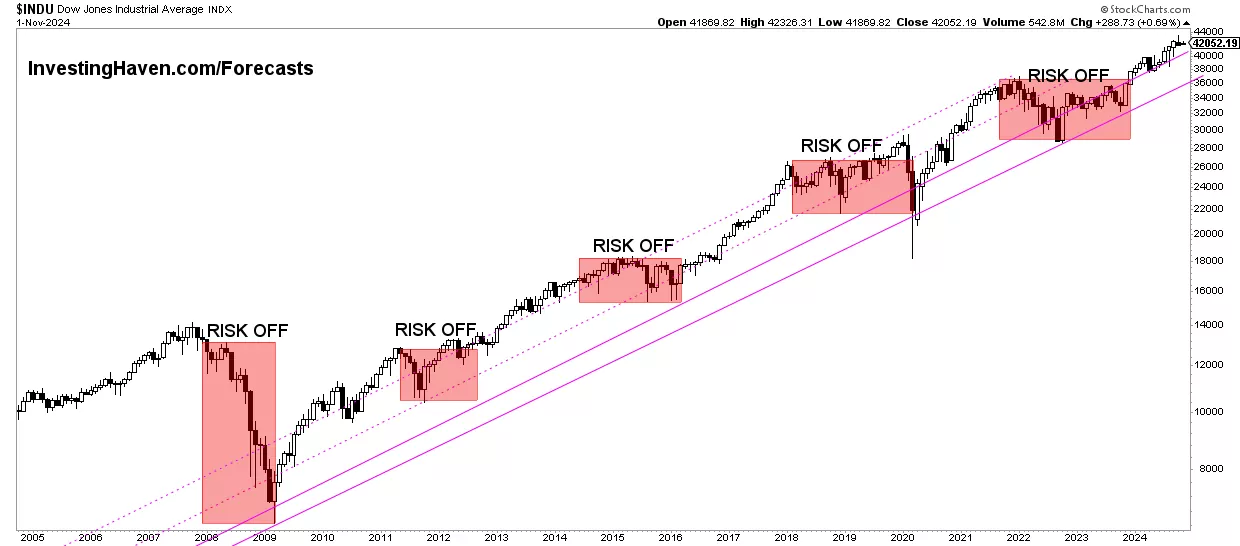
Reaching record highs is rarely the result of a single factor. Instead, it’s typically a confluence of economic, corporate, and psychological elements that align to push stock prices upward.
Corporate Earnings and Economic Growth
At the core of any sustained market rally are strong corporate earnings. When the 30 companies in the Dow report robust profits, it indicates healthy business operations, effective management, and strong demand for their products and services. These positive earnings, combined with broader economic growth indicators such as GDP expansion, low unemployment, and rising consumer spending, create a virtuous cycle that bolsters investor confidence and attracts capital to the stock market. Economic policies that foster business investment and innovation also play a crucial role.
Monetary Policy and Interest Rates
Central bank policies, particularly those of the U.S. Federal Reserve, exert immense influence on the stock market. Periods of low interest rates, often implemented to stimulate economic activity, make borrowing cheaper for companies and consumers, encouraging investment and spending. Lower interest rates also make bonds less attractive, pushing investors towards equities in search of higher returns. Conversely, rising interest rates can make borrowing more expensive and increase the attractiveness of fixed-income assets, potentially dampening stock market enthusiasm. The market’s reaction to the Fed’s stance on inflation and its future rate trajectory is always a critical driver of sentiment and performance.
Geopolitical Stability and Market Sentiment
Global events and geopolitical stability can have profound, albeit sometimes temporary, impacts on market performance. Periods of reduced international tension, stable trade relations, and predictable political environments tend to foster investor confidence. Conversely, conflicts, trade wars, or significant political uncertainty can introduce volatility and cause markets to retract. Market sentiment, a collective psychological state of optimism or pessimism, plays a powerful role. When sentiment is positive, investors are more willing to take risks and buy stocks, contributing to upward momentum.
Technological Innovation and Sectoral Shifts
While the Dow is not solely composed of tech stocks, technological innovation across various sectors significantly impacts the profitability and growth prospects of its component companies. Advances in areas like artificial intelligence, biotechnology, renewable energy, and digital transformation can unlock new revenue streams, improve efficiency, and create entirely new markets. These innovations drive the growth of leading companies, which in turn lifts the overall index. Furthermore, the periodic rebalancing of the Dow, where underperforming companies are replaced by those more representative of current economic drivers, ensures that the index remains relevant and reflective of the evolving corporate landscape.
Interpreting Record Highs: What They Mean for Investors
When the Dow reaches a new all-time high, it sparks diverse reactions: excitement for some, caution for others. Understanding how to interpret these peaks is key to making sound financial decisions.
Bull Market Psychology vs. Market Fundamentals
Record highs are often indicative of a robust bull market, characterized by widespread optimism. This positive sentiment can sometimes lead to “irrational exuberance,” where stock prices detach from underlying fundamental value. While strong fundamentals (earnings, economic growth, innovation) are essential for sustainable growth, pure psychological momentum can sometimes push markets higher in the short term. Savvy investors must discern whether new highs are fundamentally justified or if they are primarily driven by speculative fervor, which can precede corrections.
The Peril of Chasing Peaks
For individual investors, the temptation to “buy high” when the market is setting records can be strong. The fear of missing out (FOMO) can lead to impulsive decisions, causing investors to pour money into the market precisely when it might be most vulnerable to a pullback. While a market at an all-time high can continue to climb, buying without due diligence, driven purely by the latest headline, increases the risk of losses if a correction occurs shortly thereafter. It’s crucial to remember that past performance is not indicative of future results.
Long-Term Perspective Amidst Volatility
History shows that market corrections and bear markets are an inevitable part of the investment cycle. Even after reaching record highs, markets will eventually experience downturns. For long-term investors, these fluctuations are part of the journey. A diversified portfolio, aligned with one’s financial goals and risk tolerance, is designed to weather these cycles. Focusing on long-term growth and capital appreciation, rather than reacting to every daily market move or new record, is a hallmark of successful investing.
Navigating Market Peaks: Strategic Investing Approaches
In periods of record-breaking market performance, adopting a strategic and disciplined approach becomes even more critical for investors.
Diversification and Asset Allocation
One of the most fundamental principles of investing, diversification, remains paramount during market peaks. Spreading investments across various asset classes (stocks, bonds, real estate, commodities), industries, and geographies helps mitigate risk. If one sector or asset class experiences a downturn, others might provide stability or growth. Proper asset allocation, tailored to an investor’s age, goals, and risk profile, ensures that the portfolio is robust enough to handle market volatility, even from high points.
Regular Rebalancing and Risk Management
Rebalancing a portfolio involves periodically adjusting asset allocations back to their target percentages. For example, if a strong bull market has caused the stock portion of a portfolio to grow beyond its target weight, an investor might sell some stocks and reinvest in bonds or other assets to restore the desired balance. This systematic approach forces investors to “sell high” and “buy low” over time, acting as a built-in risk management tool. Setting stop-loss orders or having a clear exit strategy for individual positions can also help protect capital during unexpected downturns.
Focusing on Financial Goals, Not Headlines
Ultimately, the most effective strategy for investors, regardless of whether the Dow is at an all-time high or a temporary low, is to remain focused on their personal financial goals. Whether saving for retirement, a down payment, or education, these objectives should dictate investment decisions, not the latest market headlines. A well-defined investment plan, regular contributions, and a commitment to staying invested for the long term are far more influential on financial success than attempts to time the market’s peaks and troughs. Education, patience, and a willingness to consult with financial professionals can further empower investors to navigate any market environment, including periods of record highs.
In conclusion, while the Dow Jones Industrial Average reaching its highest ever point is a notable achievement, reflecting significant economic and corporate progress, it is just one data point in a much larger, ongoing narrative. For investors, understanding the forces that drive these peaks, maintaining a disciplined investment strategy, and keeping a long-term perspective are far more valuable than simply celebrating a new record. The journey of the Dow is a testament to the dynamic nature of markets and the enduring power of innovation and economic growth.
aViewFromTheCave is a participant in the Amazon Services LLC Associates Program, an affiliate advertising program designed to provide a means for sites to earn advertising fees by advertising and linking to Amazon.com. Amazon, the Amazon logo, AmazonSupply, and the AmazonSupply logo are trademarks of Amazon.com, Inc. or its affiliates. As an Amazon Associate we earn affiliate commissions from qualifying purchases.